At the end of the 18th century, the French chemist Joseph Louis Proust formulated a law referring to the composition of chemical compounds, which was called the law of constant compositionlaw of constant compositionlaw of constant composition.
Today, this law seems obvious to us and not very revealing. But we must remember that it was formulated at a time when nothing was known about the structure of matter, concepts such as the notion of an atom or a molecule were unknown and no one used the chemical formulas of compounds. Currently based on a chemical formula, for example water (),and data contained in the periodic table, we can determine the mass ratio of hydrogen to oxygen in water ( then ), less than 150 years ago, the conclusion of such an application required many tedious experimental works.
The formulation of this law was of fundamental importance for the further development of chemistry. It has become the foundation for further research leading to the creation of the atomic theory of matter.
How can the law of constant composition be used in chemical calculations?
Knowledge of the law of mass conservation and the law of constant composition is the basis of chemical calculations. Thanks to them, it is possible to determine the proportions in which the reactants reacted with each other to form specific products, or to estimate the amount of products produced based on the mass of the substrates used.
Ry2BWWi739DuS
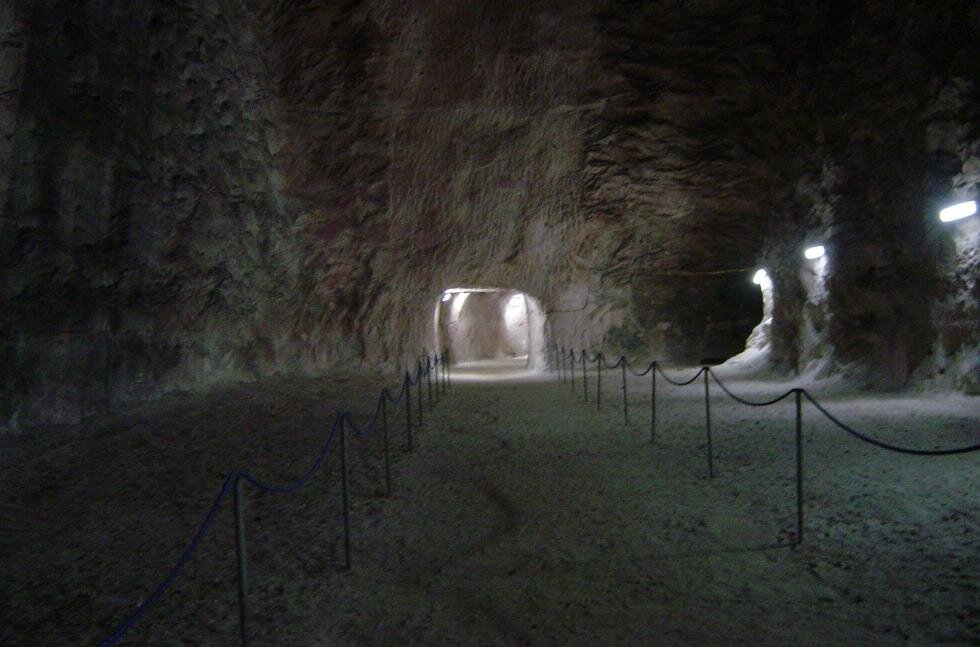
Zdjęcie przedstawia korytarz największej czynnej kopalni soli kamiennej w Polsce, która znajduje się w Kłodawie. Jest to fragment trasy turystycznej, szerokie i bardzo wysokie pomieszczenie z wytyczoną ścieżką dla zwiedzających, w całości wydrążone w pokładzie soli.
In Poland, the largest active salt mine is located in Kłodawa
Source: Ciacho5, licencja: CC BY-SA 4.0.
RGK8GskJofolX
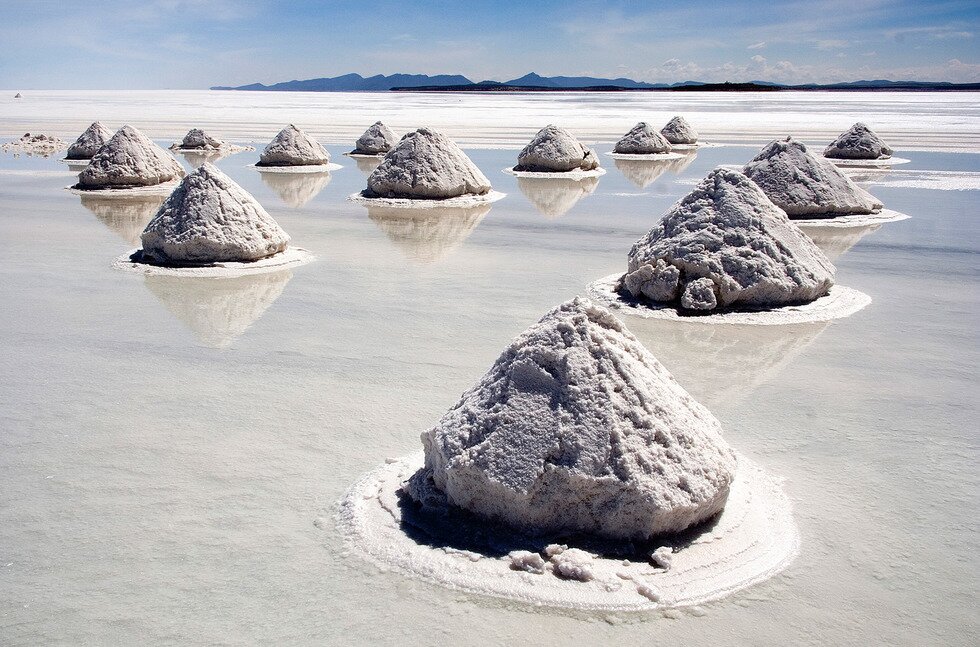
Zdjęcie przedstawia znajdujący się w południowo zachodniej Boliwii największy na świecie obszar zawierający pokłady soli, będący pozostałością po wyschniętym słonym jeziorze. Równina solna przedstawiona w kadrze rozciąga się po horyzont, a na pierwszym planie widoczne są liczne sterty zebranej soli.
The largest area containing salt deposits
Source: Luca Galuzzi, licencja: CC BY-SA 2.5.
R1X8XQTjreqep
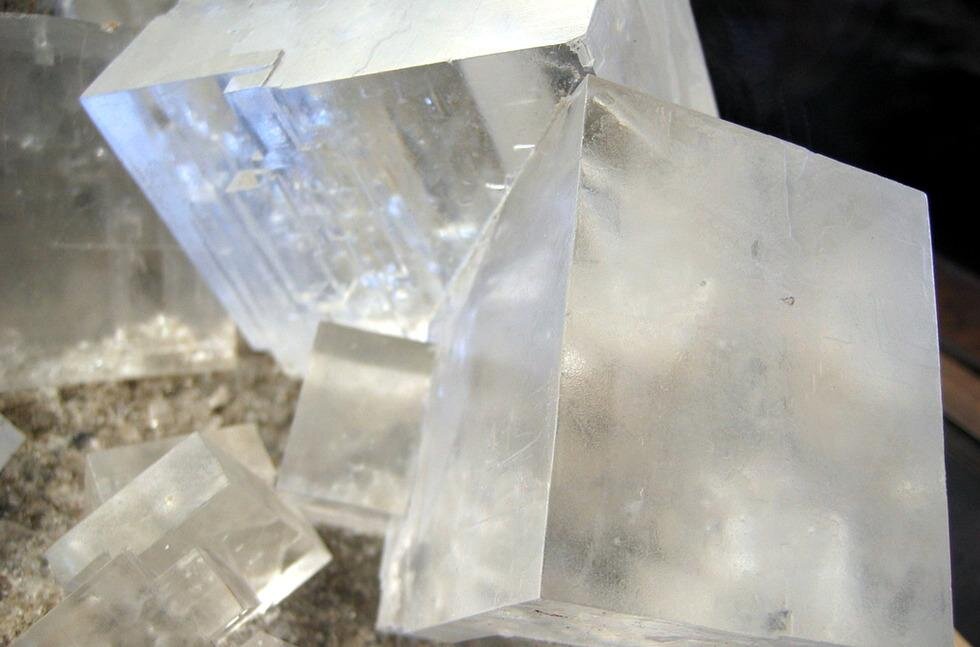
Zdjęcie prezentuje kryształ chlorku sodu czyli soli kamiennej. Można się w nim bez trudu dopatrzyć niemal idealnie prostopadłościennych struktur, a sam kryształ jest mlecznobiały i w dużym stopniu przezroczysty.
A crystal of sodium chloride
Source: w?odi, licencja: CC BY-SA 2.0.
The mass ratio of hydrogen to oxygen in the water molecule, , is , which means that in water for 1 part of the mass of hydrogen there are 8 parts of oxygen mass. Regardless of which units of mass we will use, these relationships will always be the same. For example, if there is 1 g of hydrogen in a given water sample, then oxygen will be 8 g and the water sample will have a mass of: . The same mass ratio will exist both in one molecule of water with a molecular weight of 18 u and in samples of water with a mass of 18 g, 200 kg or 1 ton. The mass ratio of the individual elements in the compound is always constant – independent of the mass of the compound sample as well as the way the compound is obtained.
Task 1
Watch the presentation „Chemical calculations using the law of constant composition of a chemical compound”.
R12BmjcVwB02e
Ilustracja przedstawia napis na niebieskim tle: Chemical calculations using the Law of definite proportions of the chemical compound.
Source: GroMar Sp. z o.o., licencja: CC BY-SA 3.0.
RgskhmEhMgGFI
Ilustracja zawiera napis: The law of constancy of a chemical compound - calculations.
Law of definite proportions of the chemical compoundcan be useful in solving many tasks.
Source: GroMar Sp. z o.o., licencja: CC BY-SA 3.0.
ROYZ3CGRF2iTO
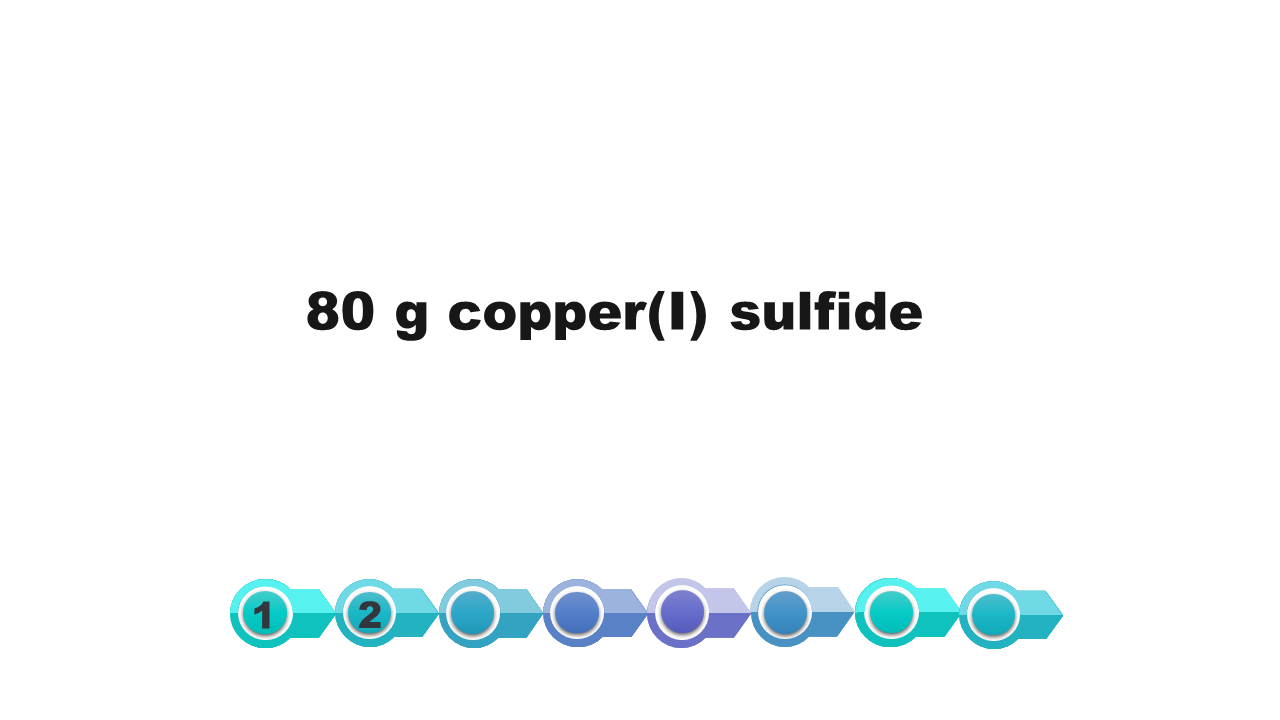
Ilustracja przedstawia napis: 80 g copper (jeden) sulfide.
Let us calculate how many grams of copper and sulphur should be used for the synthesis of 80 g copper(I) sulphide.
Source: GroMar Sp. z o.o., licencja: CC BY-SA 3.0.
RRsb6iBAUEfof
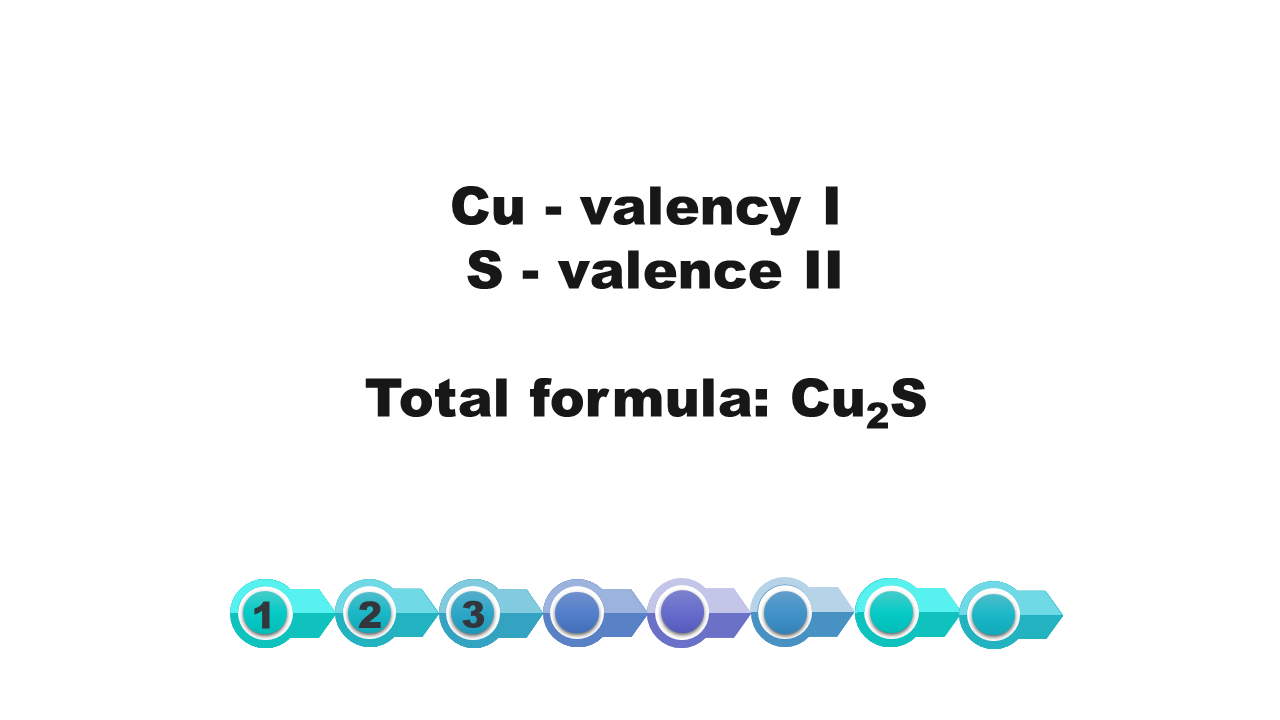
Ilustracja opisuje wzór sumaryczny siarczku miedzi(jeden) C u - valency I, eS - valence II Total formula: ce u dwa es, Cu2S.
First, write down the molecular formula of copper(I) sulphide, knowing the valence of the elements in this compound.
Source: GroMar Sp. z o.o., licencja: CC BY-SA 3.0.
R1BJdfzk1kgln
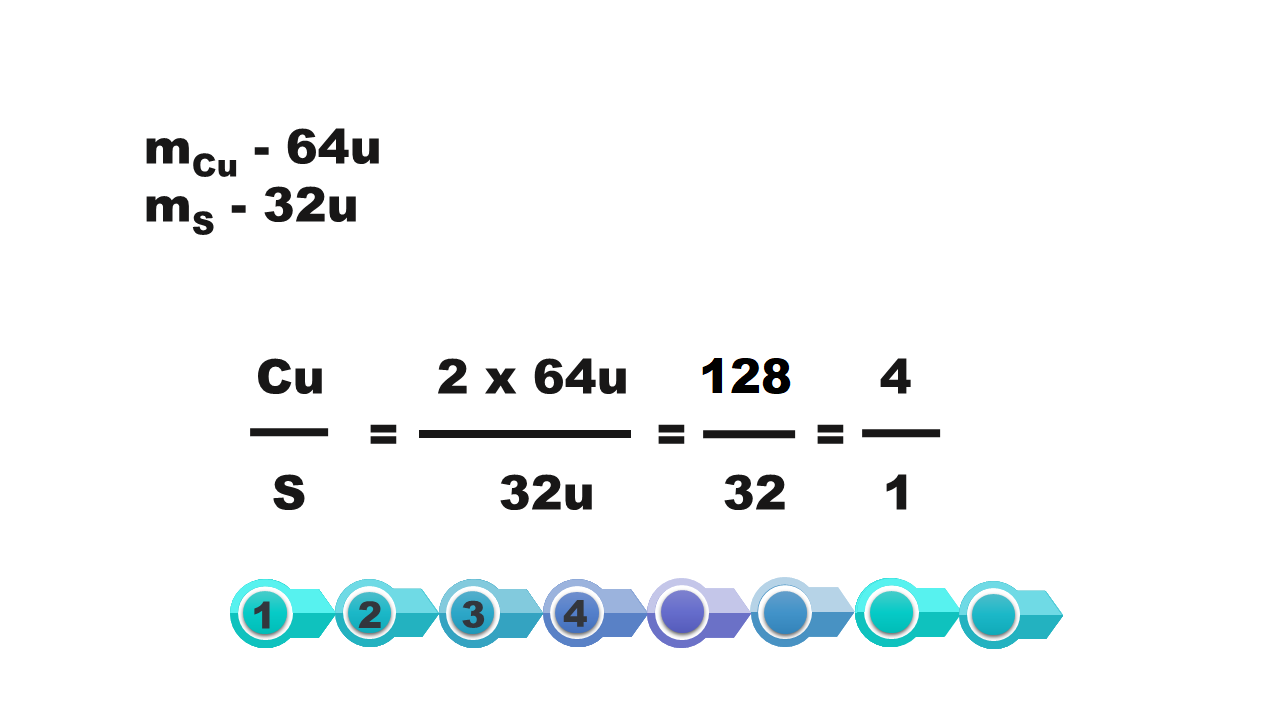
Ilustracja pokazuje masy atomowe miedzi mcu - 64u i siarki ms - 32u, oraz obliczenia stosunku masy pierwiastków w siarczku miedzi(jeden) wyrażone zapisem ce u dzielone na es równa się dwa razy sześćdziesiąt cztery u dzielone na trzydzieści dwa u równa się sto dwadzieścia osiem dzielone na trzydzieści dwa równa się cztery dzielone na jeden.
Let's read the atomic masses of copper and sulphur from the periodic table. Next, let's calculate the mass ratio of the elements in copper(I) sulphide.
Source: GroMar Sp. z o.o., licencja: CC BY-SA 3.0.
R1JRXIXLUdo7A
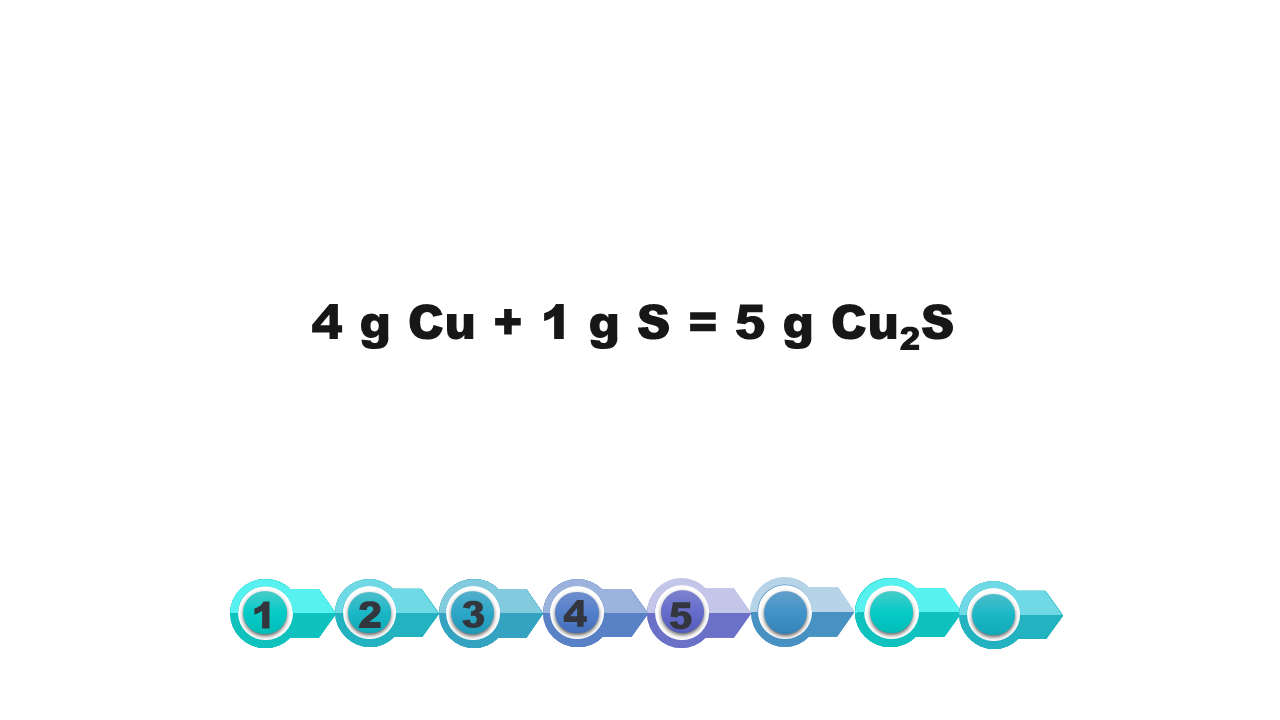
Ilustracja pokazuje wzór: cztery ge ce u plus jeden ge es równa się pięć ge ce u dwa es
Now, let’s assume that 4 g of copper and 1 g of sulphur took part in the reaction from the mass ratio of copper to sulphur.
Source: GroMar Sp. z o.o., licencja: CC BY-SA 3.0.
RQohxqg56U8Wu
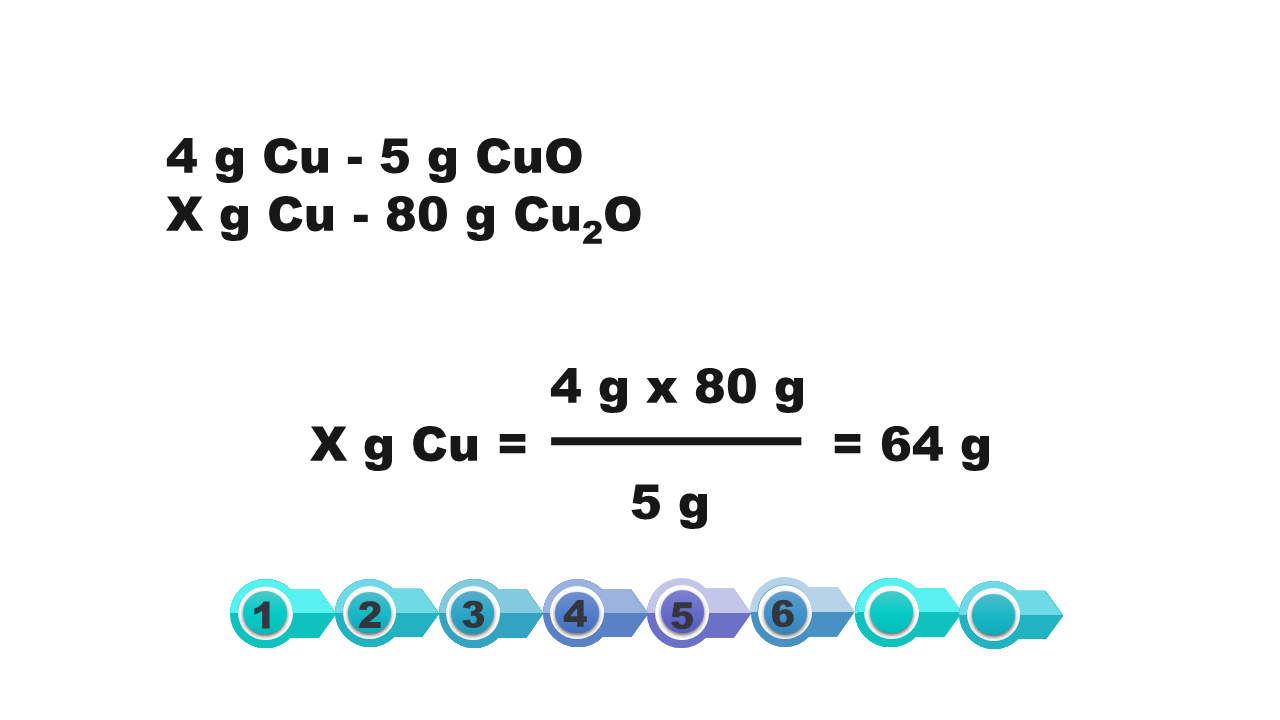
Ilustracja zawiera proporcję: cztery gramy c u kreska pieć gramów c u o, to x gramów c u kreska osiemdziesiąt gramów c u dwa o. W drugim wierszu przedstawiony jest zapis chemiczny iks g c u równa się cztery g razy osiemdziesiąt g dzielone na 5 g równa się sześćdziesiąt cztery g.
Let us now calculate from the proportion the number of grams of copper that has reacted with sulphur.
Source: GroMar Sp. z o.o., licencja: CC BY-SA 3.0.
RfgykaFFKDnPR
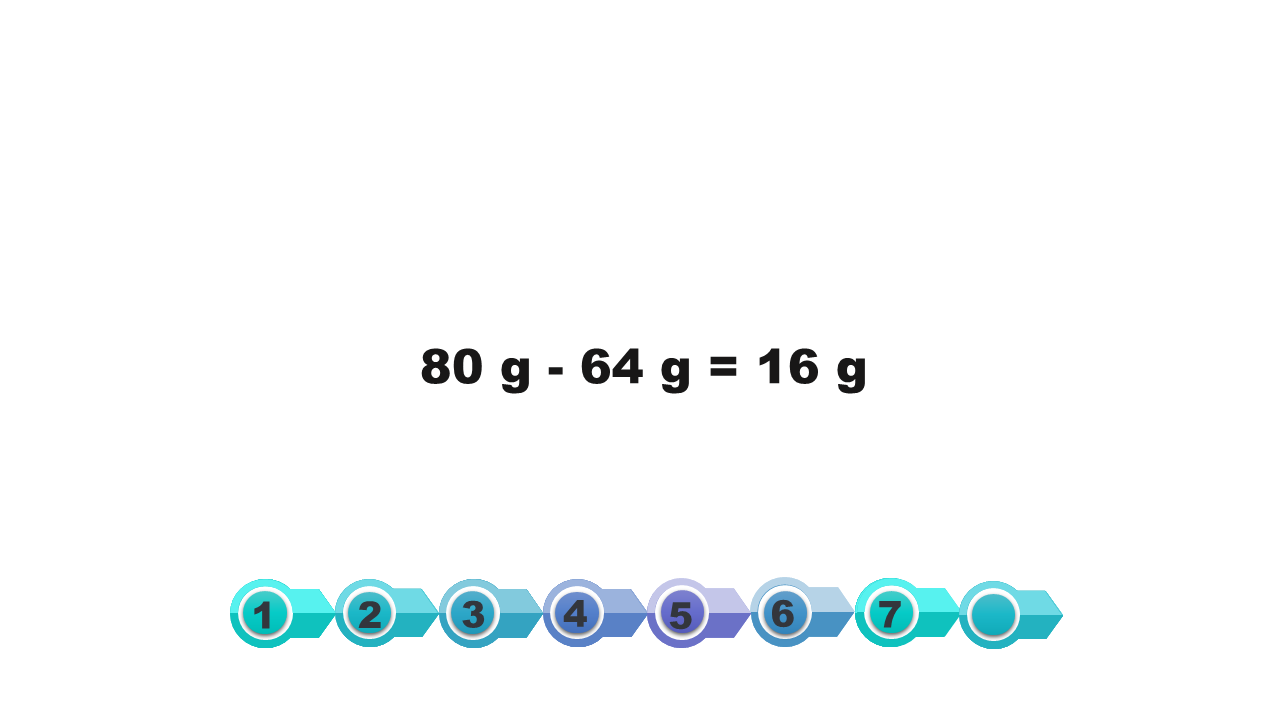
Schemat przedstawia równanie: 80 gram minus 64 gram równa się 16 gram
Now let's calculate the number of grams of sulphur that has reacted with copper.
Source: GroMar Sp. z o.o., licencja: CC BY-SA 3.0.
R13JJWNLXsH4t
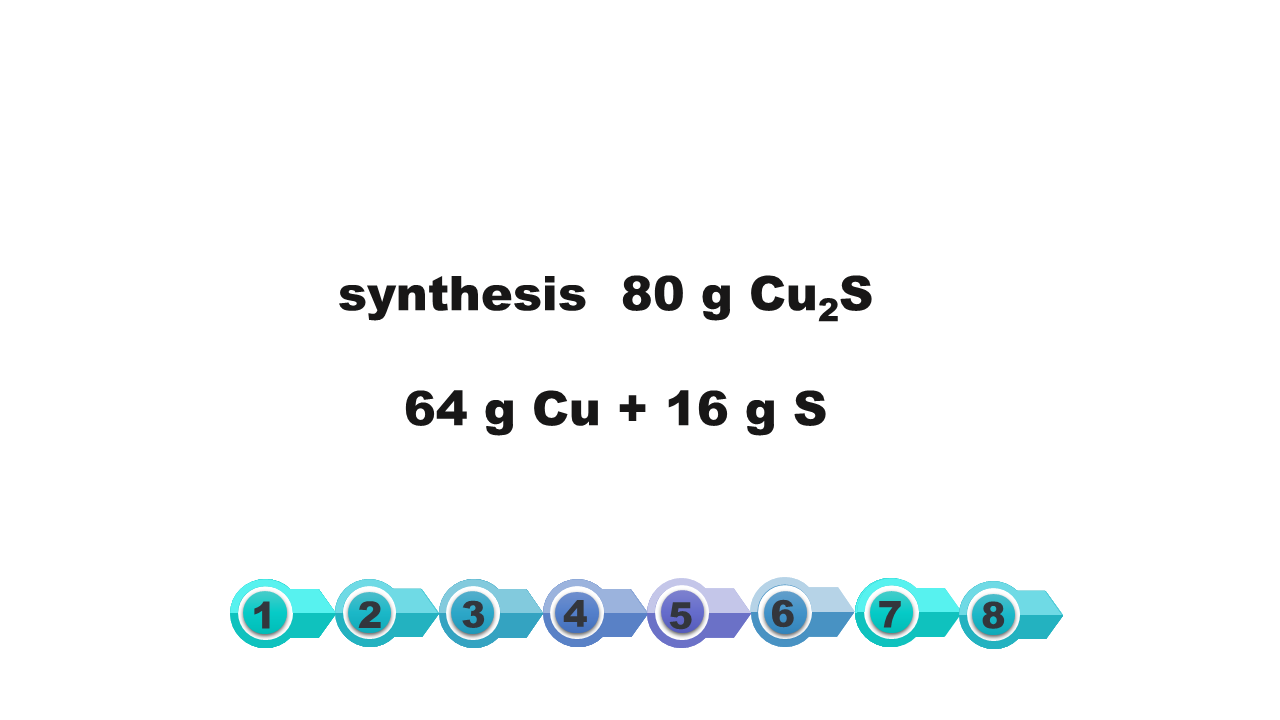
Schemat równania synthesis 80 gram ce u dwa es, Cu2S. Równanie: 64 gram ce u dodać 16 gram es
We have the answer: for the synthesis of 80 g Copper (I) sulphide, 64 g of copper and 16 g of sulphur should be used.
Source: GroMar Sp. z o.o., licencja: CC BY-SA 3.0.
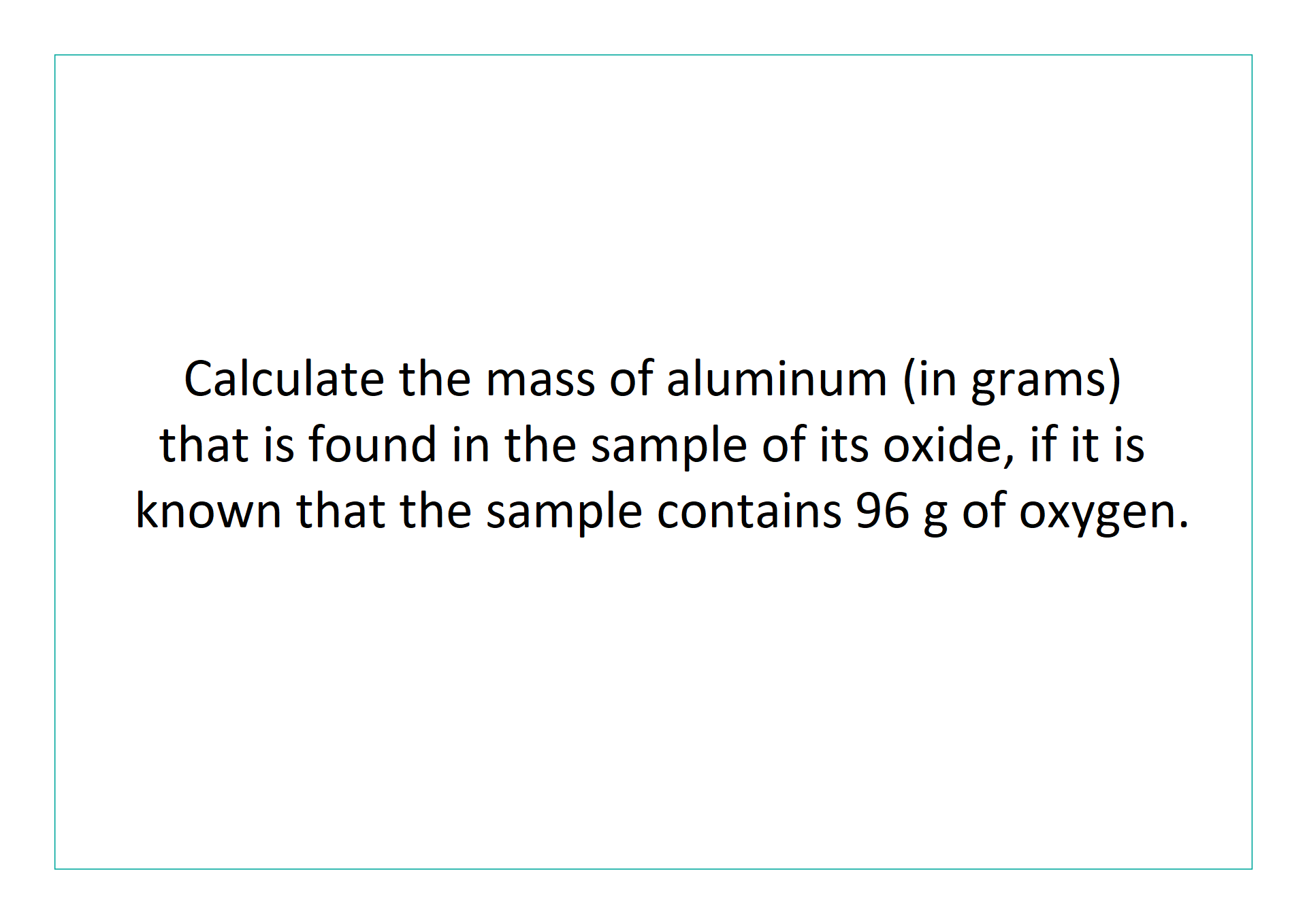
Ilustracja zawiera napis: Calculate the mass of aluminium (in grams) that is found in the sample of its oxide, if it is known that the sample contains 96 gram of oxygen.
RxXv71axRW9HQ
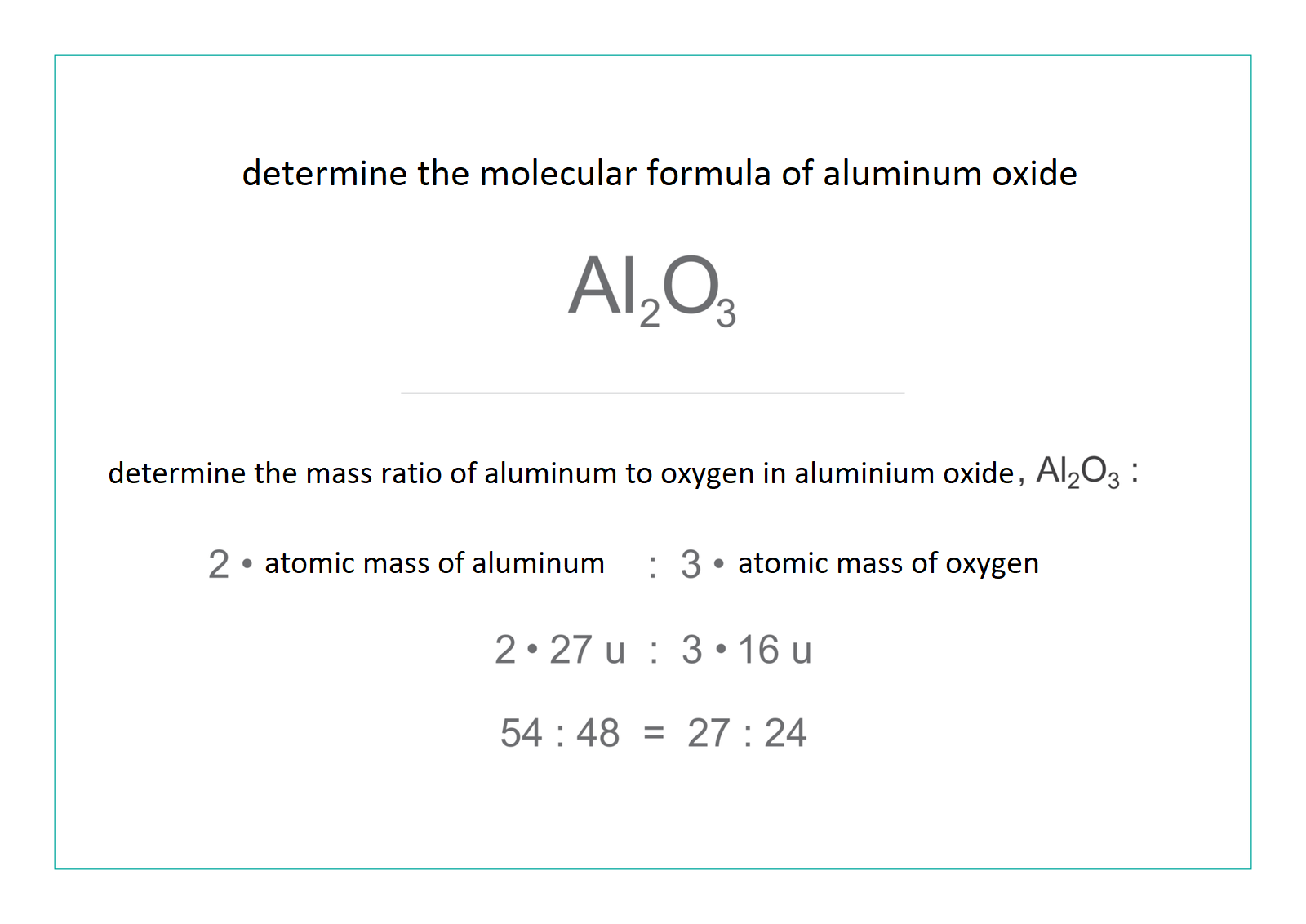
Ilustracja zawiera napis determine the molecular formula of aluminum oxide a el dwa o trzy AL2O3, determine the mass ratio of aluminium to oxygen in aluminium oxide, a el dwa o trzy AL203, 2* atomic mass of aluminium, 3 atomic mass of oxygen.
Rn7lMxLJSoljW
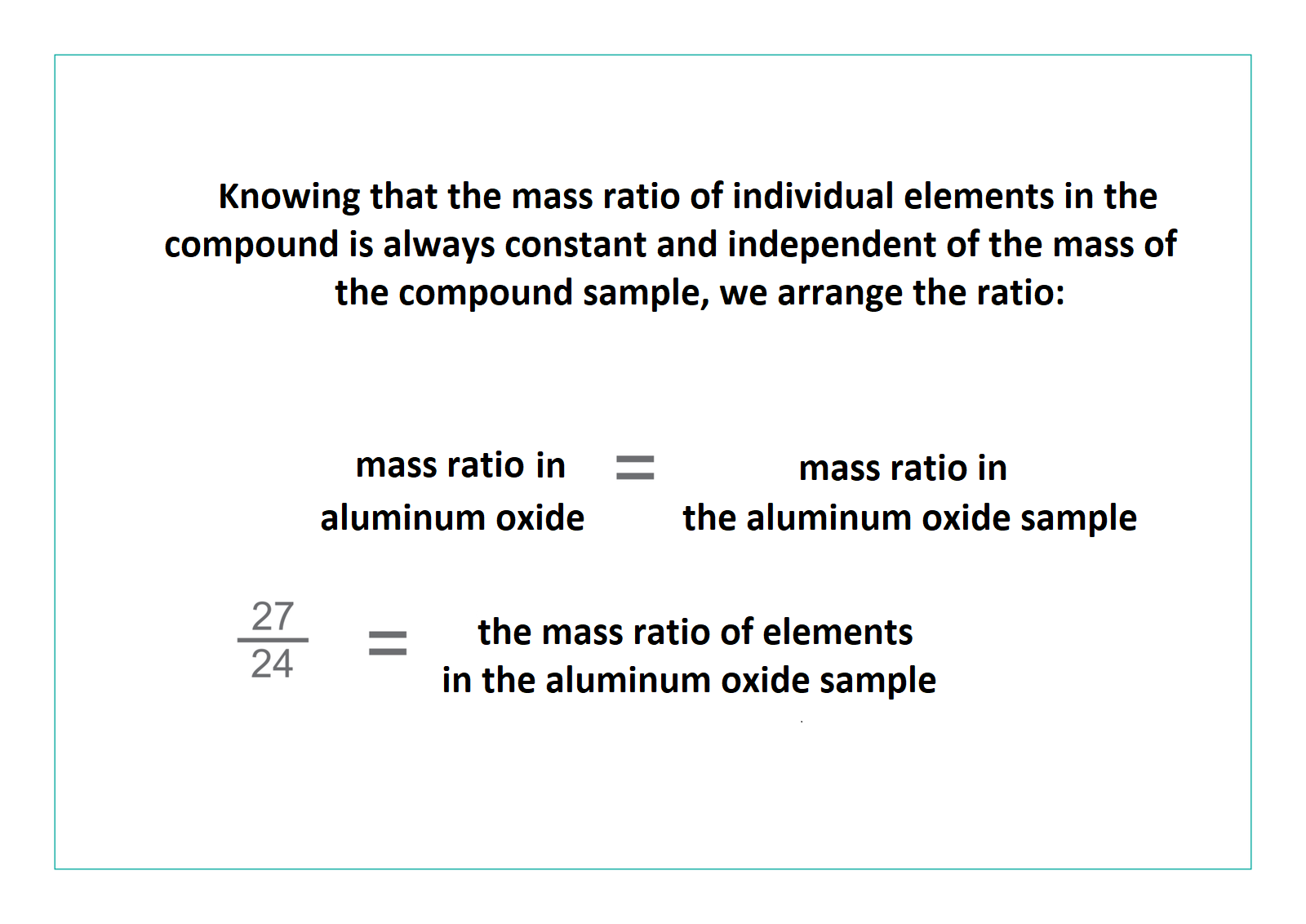
Ilustracja zawiera napis: Knowing that the mass ratio of individual elements in the compound is always constant and independent of the mass of the compound sample, we arrange the ratio: mass ratio in aluminium oxide is equal to mass ratio in the aluminium oxide sample. w liczniku 27, w mianowniku 24 is equal to the mass ratio of elements in the aluminium oxide sample.
RneBmm956ILBP
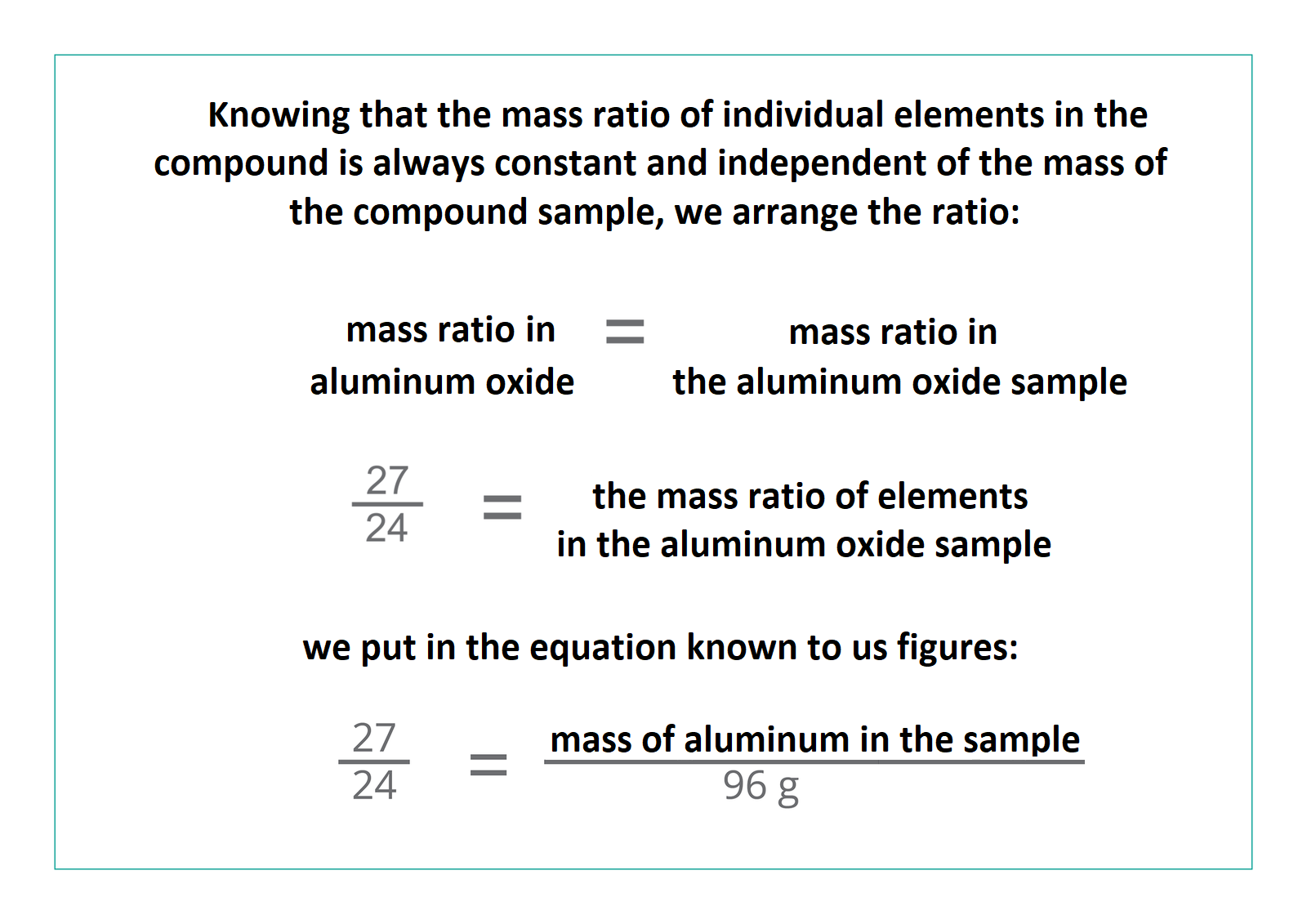
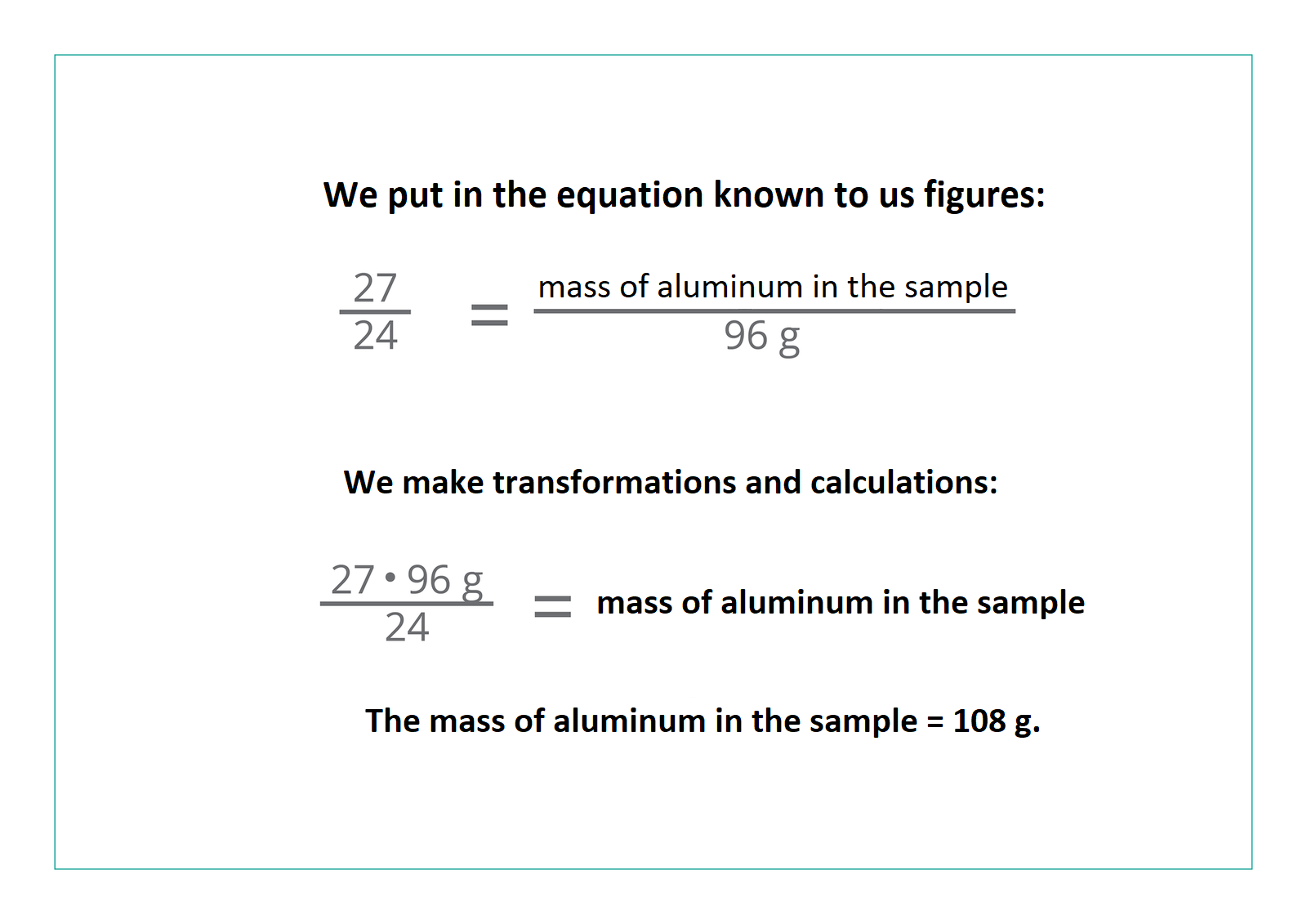
Ilustracja zawiera napisy: Knowing that the mass ratio of individual elements in the compound is always constant and independent of the mass of the compound sample, we arrange the ratio. Mass ratio in aluminium oxide is equal to mass ratio in the aluminium oxide sample. w liczniku 27, w mianowniku 24 is equal to the mass ratio of elements in the aluminium oxide samples. We put in the equation known to us figures: w liczniku 27, w mianowniku 24 is equal to w liczniku mass of aluminium in the sample, w mianowniku 96 gram
Rhllc0GWswmp0
Ilustracja zawiera napis: We put in the equation know to us figures: w liczniku 24, w mianowniku 27 is equal w liczniku to mass of aluminium in the sample, w mianowniku 96 gram. We make transformations and calculations: w liczniku 27 multiply 96 gram, w mianowniku 24 is equal to mass of the aluminium in the sample. The mass of aluminium in the sample = 108 g
RPP3Uzr3YQkWa
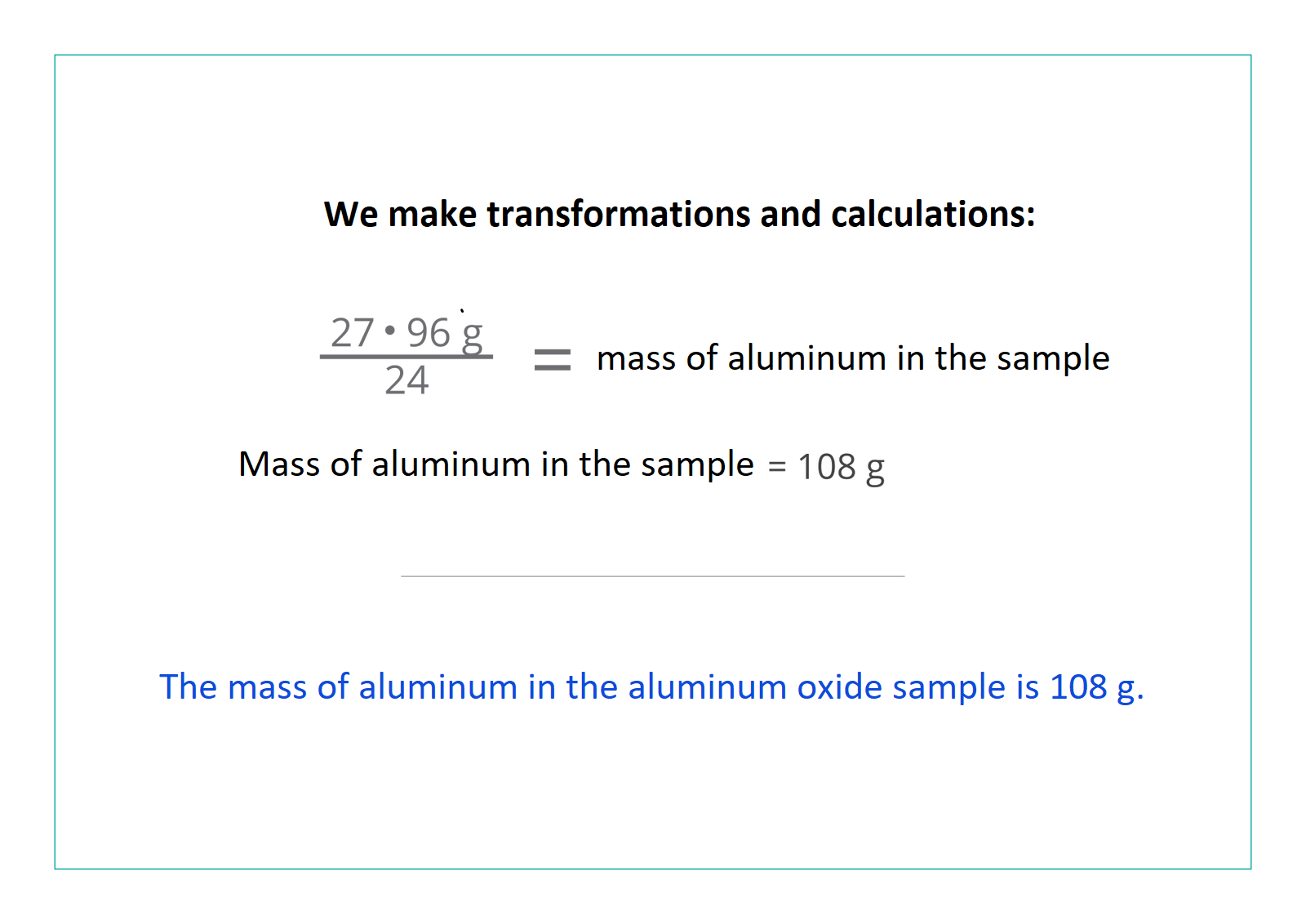
Ilustracja zawiera napis: We make transformations and calculations. W liczniku 27 multiply 96 gram, w mianowniku 24 is equal to mass of aluminium in the sample. Mass of aluminium in the sample is equal to 108 gram. The mass of aluminium in the aluminium oxide sample is 108 g.
R3whM9zKudJeM
Exercise 1
If magnesium combines with sulfur in the mass ratio Mg : S = 3 : 4, it is 15g of magnesium sulfur connections in the amount of: Możliwe odpowiedzi: 1. 20g, 2. 20u, 3. 24g, 4. 24u
If magnesium combines with sulfur in the mass ratio Mg : S = 3 : 4, it is 15g of magnesium sulfur connections in the amount of: Możliwe odpowiedzi: 1. 20g, 2. 20u, 3. 24g, 4. 24u
If magnesium combines with sulfur in the mass ratio Mg : S = 3 : 4, it is 15g of magnesium sulfur connections in the amount of:
20g
20u
24g
24u
R19UnHnS1uNbD
Exercise 2
In the sulfur vapor, 11.2g of iron was heated to give 17.6g of iron sulphide. In what mass ratio did iron and sulfur join? Możliwe odpowiedzi: 1. 1 : 1, 2. 2 : 3, 3. 7 : 4, 4. 7 : 6
In the sulfur vapor, 11.2g of iron was heated to give 17.6g of iron sulphide. In what mass ratio did iron and sulfur join? Możliwe odpowiedzi: 1. 1 : 1, 2. 2 : 3, 3. 7 : 4, 4. 7 : 6
In the sulfur vapor, 11.2g of iron was heated to give 17.6g of iron sulphide. In what mass ratio did iron and sulfur join?
1 : 1
2 : 3
7 : 4
7 : 6
Summary
According to the conservation law, the mass states in each chemical reaction the total mass of substrates is equal to the sum of masses of products obtained as a result.
The mass of one of the substrates or products can be calculated based on the mass conservation law if the residual masses are known.
The law of constancy of composition says that the mass ratio of elements in a chemical compound is always constant and independent of the method and place of its receipt (each chemical compound has an unchanging qualitative and quantitative composition).
Knowledge of the mass ratio of chemical elements in a compound allows to calculate the mass of chemical elements in a given mass of a compound.
On the basis of the mass ratio of elements in a chemical compound, its total formula can be determined.
RPsYKL86TRdki1
Grafika przedstawiająca tablicę szkolną, na której znajdują się zdania do dokończenia. Finish selected sentences. 1 It was easy for me (uzupełnij). 2 It was difficult for me (uzupełnij). 3 Today I learned (uzupełnij). 4 I understood that (uzupełnij). 5 It surprised me (uzupełnij).
Grafika przedstawiająca tablicę szkolną, na której znajdują się zdania do dokończenia. Finish selected sentences. 1 It was easy for me (uzupełnij). 2 It was difficult for me (uzupełnij). 3 Today I learned (uzupełnij). 4 I understood that (uzupełnij). 5 It surprised me (uzupełnij).
Source: GroMar Sp. z o.o., licencja: CC BY-SA 3.0.
prawo stałości składu – prawo odnoszące się do stosunków masowych w związkach chemicznych, zgodnie z którym stosunek masowy pierwiastków w związku chemicznym jest zawsze stały i niezależny od sposobu oraz miejsca jego otrzymania