Areas with water surplus and shortage on the Earth
what the characteristics of particular climates on Earth are;
what the distribution of precipitations on Earth is;
the water cycle in the environment;
that human lives and economy depend on water resources.
to explain the meaning of the term ‘water balance;’
to list factors affecting the water balance;
to indicate, on the world map, the areas of water surplus and shortage.
Water shortage and surplus areas on the Earth
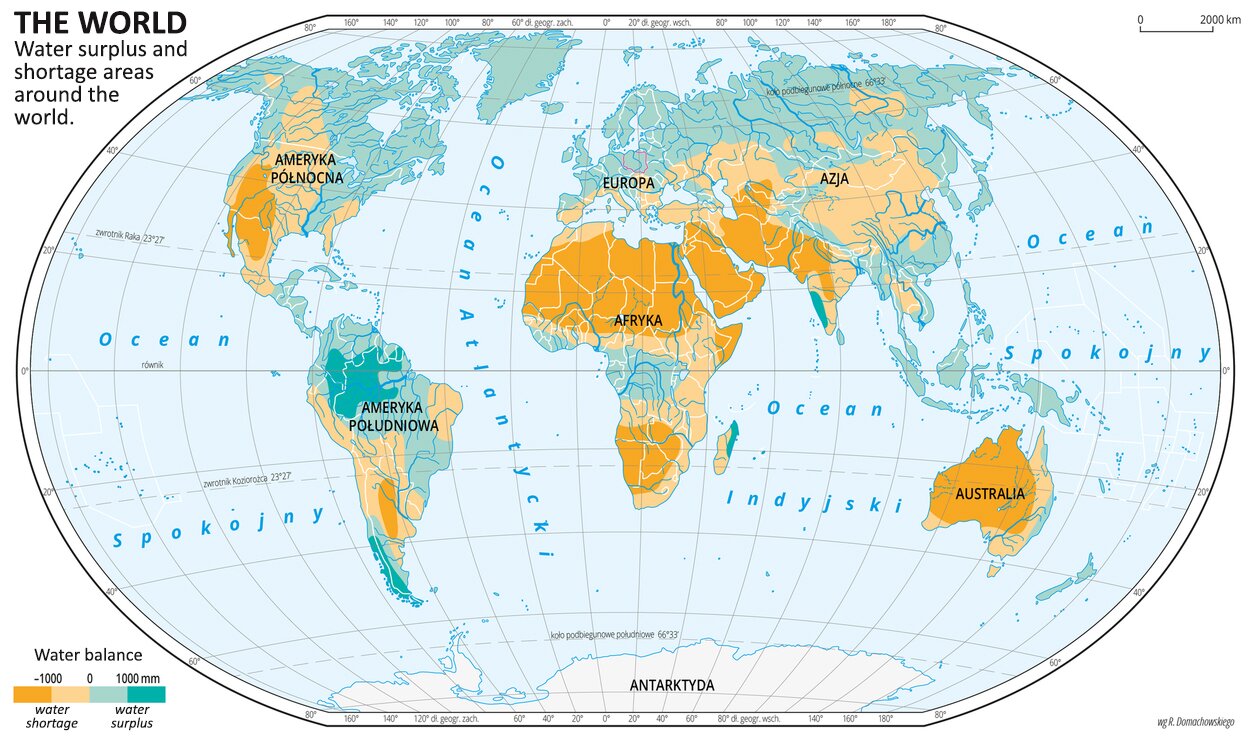
Not only does fresh water comprise less than 3% of the hydrosphere; its vast majority is in the form of ice and underground waters, which means that it is far away from large human settlements or it is difficult to access. For this reason, people use mainly water which takes an active part in the water cycle. This is only approx. 0.3% of fresh water. Therefore, the amount of available water depends on the level of precipitation, on the one hand, and on the level of evaporation and drainage on the other. After comparing those values, we obtain information on areas with water surplus and shortage.
Based on the illustration "The World Water surplus and shortage areas around the world", mark all true statements.
- In Poland, the water balance is positive: the level of precipitation is higher than the level of evaporation and drainage.
- The entire Europe is within a water surplus area; therefore, the issue of water shortage is not specific to this continent.
- The issue of water shortage is relevant only to the northern part of Africa and to central Australia.
- The Amazon Basin is the largest area on the Earth with a significant surplus of water.
- Subarctic zones have a significant deficit of water, which is a global issue.
Move to the appropriate group factors that have an impact and factors that do not affect the water balance of the area.
level of drainage, distance from the sea or ocean, land shape, level of evaporation, geological structure, presence of industrial centres, level of precipitation, population density
| factors affecting the water balance: | |
|---|---|
| factors not affecting the water balance: |
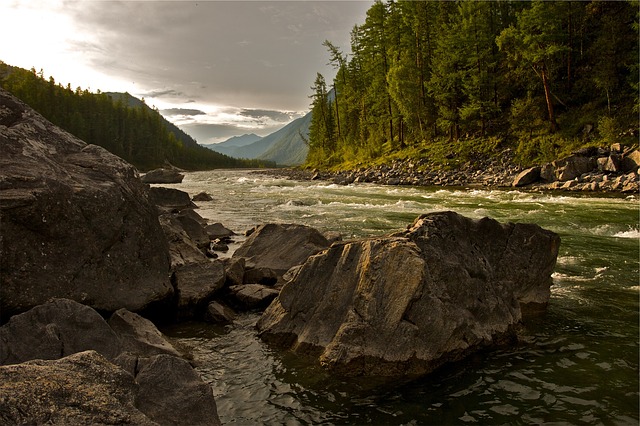
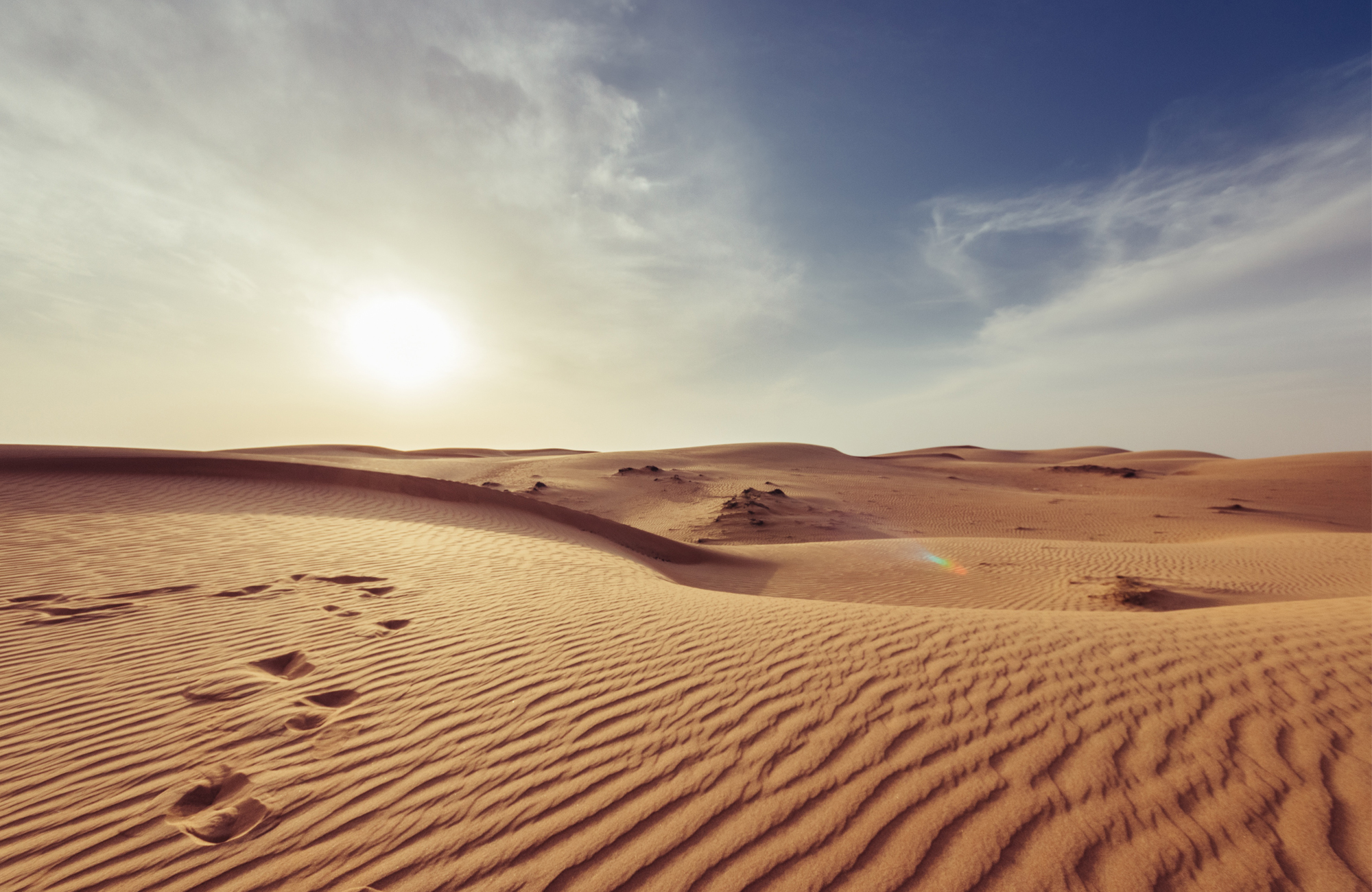
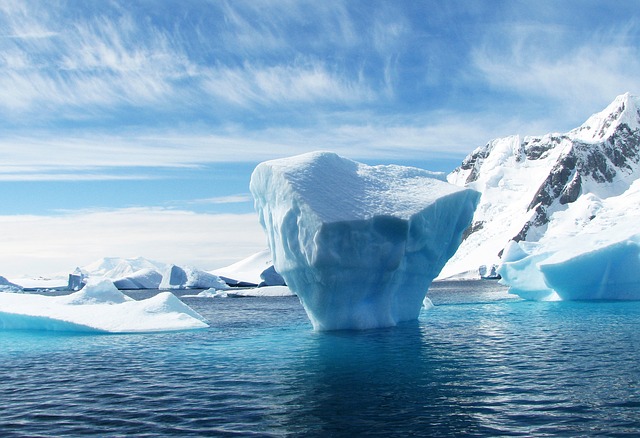
Which picture show area where fresh water is not easily accessible or completely inaccessible to people?
- Description of photo A
- Description of correct photo B
- Description of correct photo C
- Description of photo D
Summary
Available fresh water resources are just 0.3% of water on Earth.
Areas of water scarcity are mainly nearprotective and intercontinental regions.
The main natural factor affecting the shortage of water is rainfall lower than the possibility of evaporation.
The main non‑environmental factors affecting water scarcity include population growth and increased demand for agricultural and industrial products as well as water for consumption and household purposes.
The problem of water, especially in developing countries, is also due to the low quality of chemically and biologically contaminated water.
There are numerous ways to deal with water scarcity, most require knowledge, technology and considerable financial resources.
Keywords
shortage, surplus, water cycle, hydrosphere, water balance, mulchingmulching
Glossary
mulczowanie - pokrywanie gleby materiałem zmniejszającym parowanie wody z gleby, np. słomą, liśćmi
woda wirtualna - woda wykorzystana w procesie produkcji