Przeczytaj
An average person thinks that computer crime does not concern them. Nothing could be further from the truth. Anyone can become a victim of cybercriminals. Has it happened to you or someone you know? Do you know what you can do to avoid it?
Przeciętny człowiek myśli, że przestępczość komputerowa go nie dotyczy. Nic bardziej mylnego. Każdy może paść ofiarą hakerów. Czy przytrafiło się to tobie lub komuś, kogo znasz? Czy wiesz, co można zrobić, żeby tego uniknąć?
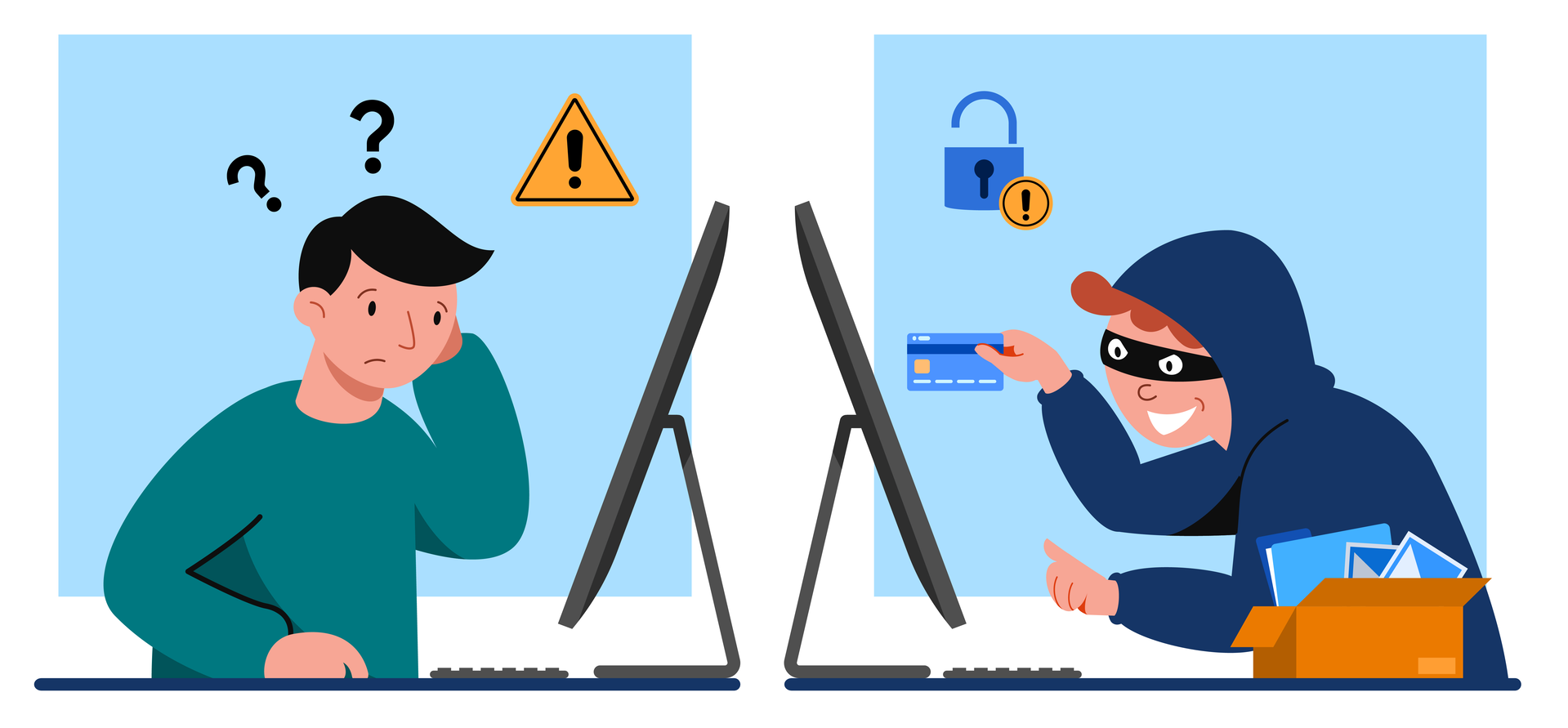
Study the text and do the exercises below.
Cybercrimes --- a Real Danger?Our school newspaper always invites interesting guestsinvites interesting guests. Our journalist, Lisa, has recently talked to a policeman about cybercrimes. Here is the interview with information that might be useful.
Lisa: Good morning, we are really happy that you have accepted our invitationaccepted our invitation. Today we would like to talk to you about cybercrimes. More and more people, even teenagers, are worried about them. A
Policeman: Good morning. Well, they are, I’m afraid. Don’t forget that anybody, even you, your friend or your family member can become a victimbecome a victim. Cybercriminals may cause a lot of problemscause a lot of problems to everybody.
Lisa: B
Policeman: Nowadays in Poland, just like in the whole world, people are committing more and more cybercrimesare committing more and more cybercrimes. Identity theftsIdentity thefts, hackinghacking or digital piracydigital piracy are among the most frequent ones. The number of cybercrimes has become even bigger since the COVID‑19 pandemicpandemic. People have used their computers for work or fun much more since then and that makes them more exposed to those types of crimes.
Lisa: C
Policeman: Most people believe that cybercriminals mainlymainly attack governmentgovernment or banking websites but the statistics show that phishingphishing is the most frequent cybercrime and phishing may happen to all of ushappen to all of us.
Lisa: D
Policeman: Well, they may cause great problems. For example, you can lose all your moneylose all your money from your bank accountbank account. You can also get a virusget a virus and then you may lose all the datalose all the data from your computer.
Lisa: These seem to be really serious consequences. E
Policeman: You should buy and install good antivirus softwareinstall good antivirus software. Remember to use strong passwords. Be carefulBe careful and never open strange emails or links.
Lisa: Thank you very much for the conversation and all the advice.
Policeman: Thank you.
Źródło: GroMar Sp. z o.o., licencja: CC BY‑SA 3.0
B. 1. How can we protect ourselves then?, 2. Are these types of crimes really so common?, 3. What websites do criminals usually hack?, 4. Do the police catch a lot of cybercriminals?, 5. What are the most common cybercrimes nowadays?, 6. Why are cybercrimes so dangerous?
C. 1. How can we protect ourselves then?, 2. Are these types of crimes really so common?, 3. What websites do criminals usually hack?, 4. Do the police catch a lot of cybercriminals?, 5. What are the most common cybercrimes nowadays?, 6. Why are cybercrimes so dangerous?
D. 1. How can we protect ourselves then?, 2. Are these types of crimes really so common?, 3. What websites do criminals usually hack?, 4. Do the police catch a lot of cybercriminals?, 5. What are the most common cybercrimes nowadays?, 6. Why are cybercrimes so dangerous?
E. 1. How can we protect ourselves then?, 2. Are these types of crimes really so common?, 3. What websites do criminals usually hack?, 4. Do the police catch a lot of cybercriminals?, 5. What are the most common cybercrimes nowadays?, 6. Why are cybercrimes so dangerous?
2. Have the police finally found the men who 1. losing her money, 2. bank accounts, 3. get a virus, 4. committed cybercrimes, 5. become a victim in our town five years ago?
3. Don’t install any illegal software. You can 1. losing her money, 2. bank accounts, 3. get a virus, 4. committed cybercrimes, 5. become a victim which will infect all your files.
4. The young woman told her grandma about the Grandchild Trick. This way the elederly lady avoided 1. losing her money, 2. bank accounts, 3. get a virus, 4. committed cybercrimes, 5. become a victim.
5. Nowadays, when you use the Internet a lot, it’s easy to 1. losing her money, 2. bank accounts, 3. get a virus, 4. committed cybercrimes, 5. become a victim of cybercrimes.
Based on the information from the text and your experience, answer the questions. Write 3–4 sentences for each question.
Which cybercrime do you find most dangerous? Why?
What are the possible consequences of cybercrimes? Mention at least two cybercrimes.
Słownik
/ əkˈseptɪd ˈaʊər ˌɪnvɪˈteɪʃn̩ / / əkˈsept ən ˌɪnvɪˈteɪʃn̩ /
przyjął/przyjęła nasze zaproszenie [przyjąć zaproszenie]
/ ə kəˈmɪtɪŋ mɔːr ənd mɔː ˈsaɪbəkraɪms / / kəˈmɪt ə ˈsaɪbəkraɪm /
popełniają coraz więcej cyberprzestępstw [popełnić cyberprzestępstwo]
/ bæŋk əkaʊnt /
konto bankowe
/ bi ˈkeəfʊl /
być ostrożnym, uważać
/ bɪˈkʌm ə ˈvɪktɪm /
stać się ofiarą
/ kɔːz ə lɒt əv ˈprɒbləmz / / kɔːz ə ˈprɒbləm /
powodować dużo problemów [powodować problem]
/ ˈdɪdʒɪtl̩ ˈpaɪərəsi /
piractwo cyfrowe (illegal copying of a film, music, etc.)
/ ˈget ə ˈvaɪərəs /
złapać wirusa
/ ˈɡʌvənmənt /
rząd, rządowy/rządowa
/ ˈhækɪŋ / / hæk /
włamanie do systemu [włamać się do systemu] (break into sb’s computer to control it or steal their data)
/ ˈhæpən tu ɔ:l əv əz / / ˈhæpən tu ˈsʌmbədi /
zdarzyć się nam wszystkim [zdarzyć się komuś]
/ həv ˈfɔːlən ˈvɪktɪm tuː / / fɔːl ˈvɪktɪm tu ˈsʌmthetaɪŋ /
padłeś/padłaś ofiarą [paść ofiarą czegoś]
/ aɪˈdentɪti thetaefts / / aɪˈdentɪti thetaeft /
kradzieże tożsamości [kradzież tożsamości] (the crime of stealing somebody’s personal data)
/ ɪnˈstɔːl gʊd ˈæntivaɪrəs ˈsɒftweə / / ɪnˈstɔːl /
zainstalować dobre oprogramowanie antywirusowe [instalować]
/ ɪnˈvaɪts ˈɪntrəstɪŋ ɡests / / ɪnˈvaɪt ə ɡest /
zaprasza ciekawych gości [zaprosić gościa]
/ luːz ɔ:l jə ˈmʌni / / luːz ˈsʌmthetaɪŋ /
stracić wszystkie twoje/wasze pieniądze [tracić coś]
/ luːz ɔ:l ðə ˈdeɪtə / / luːz ˈsʌmthetaɪŋ /
stracić wszystkie dane [tracić coś]
/ ˈmeɪnli /
głównie
/ pænˈdemɪk /
pandemia (a serious disease that people living in a large area or the whole world come down with)
/ ˈfɪʃɪŋ /
phishing (metoda oszustwa internetowego, której celem zdobycie poufnych informacji) (the crime of making people give you some important information, such as their bank account access details)
Źródło: GroMar Sp. z o.o., licencja: CC BY‑SA 3.0