Aftermath of World War I
to characterize the dangers associated with the post‑war period;
to explain the causes of revolutionary tensions in Europe (in Germany, Italy, and Hungary);
to understand the ideological outcomes of World War I.
On the 11th of November, 1918, a ceasefire ending operations on the fronts of World War I was concluded in France, Compiègne. The warfare resulted in a decrease in the size of the European population. Nearly 9 million people died during the war. Severe damages took place in the territories of all countries involved in the conflict. Tangible goods were devastated. Excessive raw materials economy and abusive exploitation of industry were applied. The incomes of individual countries were insufficient to cover their expenses. As a result, HyperinflationHyperinflation occurred, in some countries reaching up to a million percent. The war revealed the weakness of the great empires. Tsarism in Russia collapsed as early as in 1917, overthrown by the February revolution. At the beginning of November 1918, the German Sailors revolt in Kiel broke out. William II abdicated and left the country and Germany was proclaimed a republic. Friedrich Ebert became its first president. The German communists, after the fashion of the Bolsheviks, demanded the absolute rule of the proletariat. Therefore, at the beginning of January 1919, they caused an armed uprising in Berlin, pacified by volunteer corps (FreikorpsFreikorps). Also in Hungary a revolt took place and on March 21st, 1919, the communist republic was proclaimed in Hungary. Béla Kun became its leader.
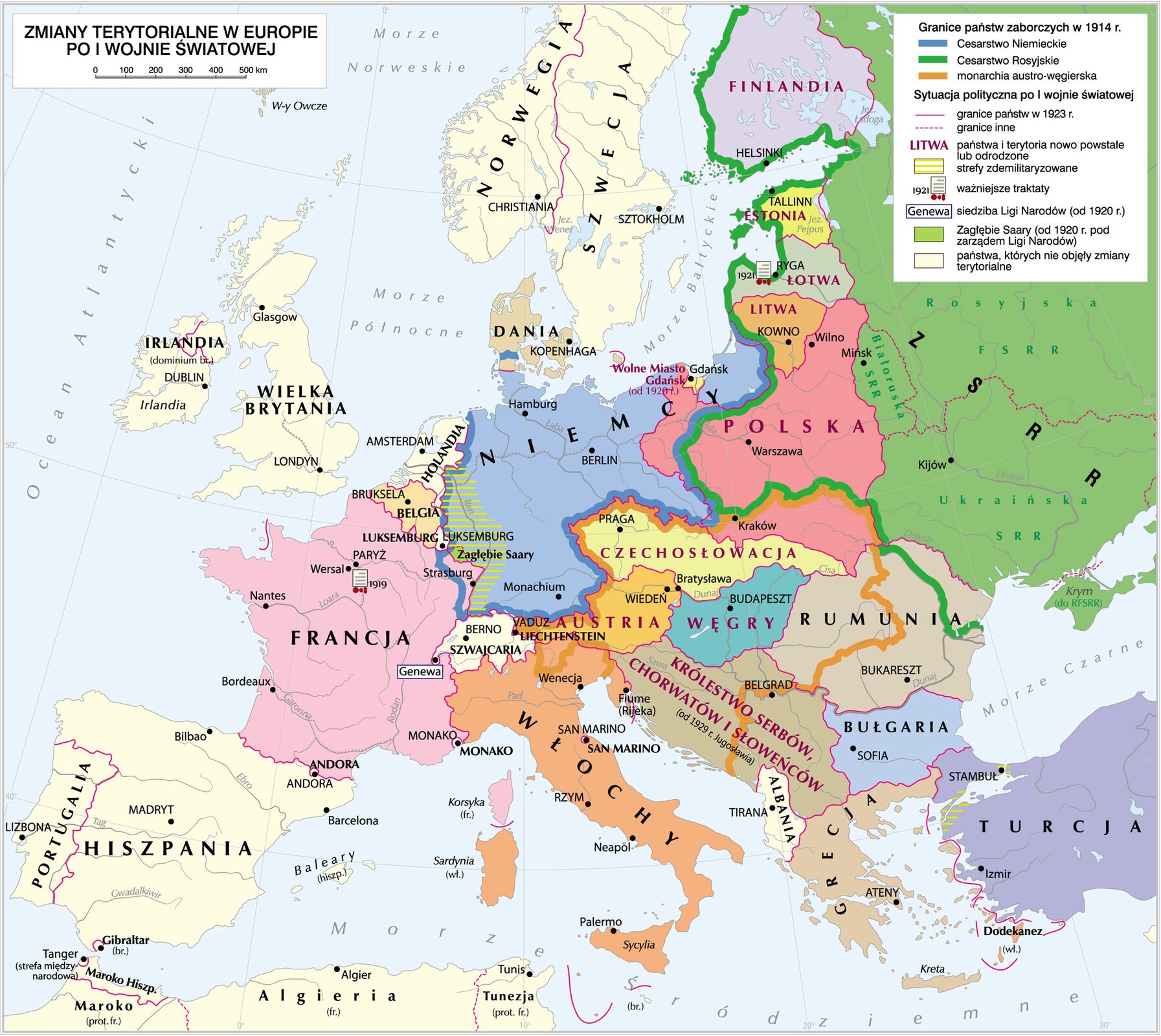
The Great War rearrangements exceeded the political divisions on map of Europe. Check what were the cultural effects of the hecatomb of 1914‑1918.
To convey its long‑term consequences, we used a photographic self‑portrait of the famous writer, playwright, painter, philosopher and photographer, Stanisław Ignacy Witkiewicz, created during the I World War. He also was a victim of the events that the war brought with it. Try to describe these effects in your own words. You will learn more about them in the next lessons. Read the information below.
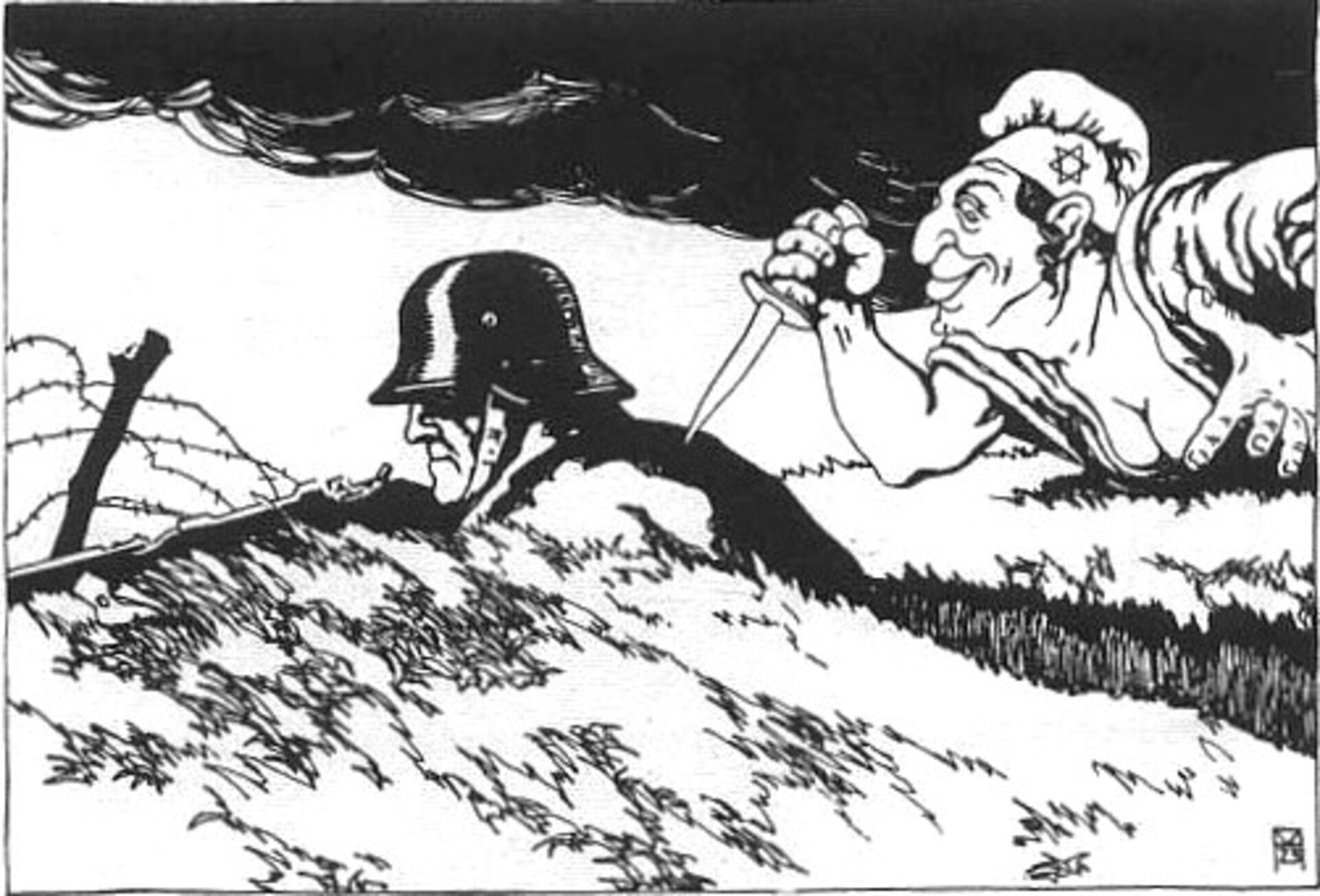
He never wrote or told anyone about his fates during the I World War. Injured in one of the battles, he was released from the army after recovering in late 1917. In Moscow, he witnessed the outbreak of the October Revolution. In June 1918, he managed to leave Russia, which was under a civil war then, and return home to Zakopane.The experience of the Soviet revolution had a profound impact on his subsequent, pessimistic works. In interwar Zakopane, he was considered odd, eccentric, he shocked and at the same time aroused admiration, and his portrait paintings became extremely fashionable.After the outbreak of World War II and during the September campaign, despite his efforts and due to his age and health condition, he was not admitted to the Polish Army. Escaping to the east, like many others, he reached his friends' estate in the village of Jeziory in Polesie. On September 18, after receiving information about the Soviet Union's attack on Poland, Witkiewicz committed suicide. 2. USSR The war brought with it a national-revolutionary disintegration of the three multinational empires: Russian, Ottoman and Habsburg. Only one has been revived - as the Union of Soviet Socialist Republics (USSR). 3. Bolshevism A socio-revolutionary breakthrough began, and one of the movements - Bolshevism - survived until the collapse of communism in 1989. 4. Changes in Germany The systemic transformation in Germany took place - the fall of the monarchy and the creation of the republic, but with the preservation of the previous social structure.After a dozen or so years, the new system of power collapsed under the pressure of political ambitions of Adolf Hitler 5. New ideologies On the ruins of nineteenth-century urban culture, the vanguard and mass culture flourished, which soon used the mass ideologies of the Interwar interwar period as a carrier.Traditional Christian denominations have received powerful competitors – in the form of totalitarian ideologies of class and race. Communism and Nazism promised "paradise on earth" - it was enough to overthrow capitalism and liquidate the exploiters. Or - "break the chain" of the hated Treaty of Versailles and achieve the dream of power, stopped allegedly by the "Jewish-Bolshevik blow in the back" of the allegedly invincible German army.
Explain why saving was necessary. Do you think that saving under hyperinflationary conditions was possible? What goals did the creators of these posters try to achieve?
Explain what connection to the history of Poland had the revolutionaries Róża Luksemburg and Karl Liebknecht. Create short biographies of both characters.
Familiarize yourself with the data in the table, then solve the following exercise.
Country | Estimated Inflation rateInflation rate during last year (percentage‑wise) | Highest denominations | Date of currency stabilization (date of introduction and the name of the new currency) |
Germany | 30 000 000 000 | 100 bln | 1923 (rentenmarka; 1924: reichsmarka) |
Free City of Danzig | 800 000 000 | 10 mld | 1923 (gulden) |
Poland | 36 000 | 10 mld | 1924 (złoty) |
Austria | 7 200 | 5 mln | 1922 (1923: schilling) |
USSR | ? | 10 mln | 1922 (1924: chervonets = 10 rubles) |
3. {tu uzupełnij} Możliwe odpowiedzi: 1. United States, 2. Czech Republic, 3. Hyperinflation, 4. Germany, Free City of Gdansk and Poland, 5. Deflation, 6. Germany involves such a rapid decline in the value of money that credit business and trade dies, production decreases and unemployment grows.
Complete the following sentences.
Czech Republic, Germany, Deflation, United States, Germany, Free City of Gdansk and Poland, Hyperinflation
1. Countries that waited the longest for the stabilization of their currency in Central and Eastern Europe were ...............................................................................
2. The country that experienced the greatest inflation was ...............................................................................
3. .............................................................................. involves such a rapid decline in the value of money that credit business and trade dies, production decreases and unemployment grows.
Of the war consequences listed below, mark those that apply only to the I World War.
- Appointment of a military tribunal, which was to judge the war criminals.
- Radicalization of public sentiment.
- Bipolar balance of power in the world.
- Economic crisis.
- The weakening of Russia caused by revolutions and by losing the war.
- The collapse of the German Empire and the rise of the Weimar Republic.
- Overall destruction.
- Regaining of independence by Poland.
- The division of Germany into occupation zones.
- Population losses.
Keywords
hyperinflation, economic statism,
Glossary
Freikorpsy – ochotnicze formacje paramilitarne o nacjonalistycznym charakterze działające w Niemczech w latach 1918–1922, założone przez zdemobilizowanych żołnierzy.
Hiperinflacja – bardzo wysoka inflacja, przekraczająca zazwyczaj 50 proc. miesięcznie, powodowana zwykle przez całkowite załamanie systemu finansowego kraju i ogromny deficyt budżetowy finansowany przez dodruk pieniędzy.
Reparacje – rekompensata za szkody i straty wojenne, którą wypłaca państwo uznane za winne wywołania konfliktu wojennego. Wysokość reparacji jest ustalana na mocy układów pokojowych.
Reglamentacja – wprowadzone na stałe lub czasowo ograniczenie wolnego obrotu pewnymi dobrami lub towarami, spowodowane przeważnie niedostatkiem tych dóbr lub towarów i koniecznością ich z góry ustalonego przydziału.
Etatyzm gospodarczy – rodzaj polityki społeczno‑gospodarczej państwa oznaczający przejmowanie przez państwo administracji prywatnymi przedsiębiorstwami lub tworzenie nowych przedsiębiorstw państwowych za pomocą kapitału państwowego.
Pandemia – epidemia obejmująca swoim zasięgiem bardzo duże obszary.
Inflacja – w systemie pieniądza papierowego inflacja najczęściej przejawia się poprzez wzrost cen.
Związek Spartakusa – organizacja lewicowych socjaldemokratów niemieckich, którzy początkowo w latach 1917–18 byli w składzie Niezależnej Socjaldemokratycznej Partii Niemiec (USPD); w 1918 uznali, że Niemcy znalazły się u progu rewolucji socjalistycznej, będącej częścią rewolucji światowej i wbrew stanowisku USPD domagali się przekazania całej władzy radom i uzbrojenia robotników (rewolucja listopadowa 1918 w Niemczech); 11 XI 1918 powstał samodzielny Z.S. (K. Liebknecht, R. Luksemburg, F. Mehring), który w 1919 przekształcił się w Komunistyczną Partię Niemiec.
Komintern – (Międzynarodówka Komunistyczna) międzynarodowa organizacja partii komunistycznej, działająca 1919–43; kierowniczy ośrodek ruchu komunistycznego na świecie, tworzący tajne siatki, opierając się na legalnych (Francja, Belgia) i nielegalnych partiach komunistycznych; za cel stawiała sobie walkę wszelkimi sposobami, włącznie z walką zbrojną, o stworzenie międzynarodowej Republiki Rad jako państwowej formy tzw. dyktatury proletariatu.