The death of Augustus II the Strong happened amid a very complex situation on the international stage. The major powers expressed divided opinions on the Polish succession. Poland’s neighbors wished its throne to be taken by a distant and weak prince, such as a Portuguese infante. The nobility and the majority of magnates were, by the Polish standards, surprisingly agreeable – they wanted it to be taken by Stanisław Leszczyński. The election was exceptionally smooth and the majority of the participants supported Leszczyński. Under the protection of the Tsar’s army, around 1000 supporters of the Wettin held a second election. This led to the civil war of 1734, known as the War of Polish SuccessionWar of the Polish SuccessionWar of Polish Succession. It was only ended by the pacification sejm of 1736. The victory of Augustus III was decided by his military advantage and the support of the neighboring countries. The great losers of the failed election of Leszczyński turned out to be the magnate group consisting of Stanisław Poniatowski, his brothers‑in‑law, Michał and August Czartoryski, and Andrzej Załuski, i.e. the FamiliaFamiliaFamilia. It was the reason why they supported neither the army’s numbers nor the reforms that would enable it. The conservative so‑called “hetmans’ party” became “Familia”’s main political enemy. Its members were the Grand Crown Hetman Franciszek Ksawery Branicki, Field Hetman Seweryn Rzewuski and the richest Polish magnate of the time – Stanisław Szczęsny Potocki. The aim of this faction was to keep Poland’s political system as it was – with elective monarchy, liberum vetoLiberum vetoliberum veto, and the liberties of the nobility. They saw Russia as the main ally.
Task 1
Listen to the recording. What, according to the historian Dariusz Milewski, were the outcomes of the clash of the factions in the Saxon era? What were the differences between the Potocki and Czartoryski (the so‑called Familia) factions?
Dariusz MilewskiThe horse is as everyone sees it. The Saxon leftovers
After the Northern War, Poland ended up empty‑handed and, once again, ravaged, yet formally independent. In the view of the noble statesmen, the state has been, once again, miraculously saved from heretics and schismatics by Providence, without losing any territory. The reality, however, was far from happy, and the free electionFree electionfree election after the death of Augustus II exposed the sad state of affairs in the country. The King – this time elected in a legal and free manner – Stanisław Leszczyński failed to keep the throne. The Saxon elector and candidate to grab the power in Poland after his father’s death entered into a pact with the Russians, and with their military aid took over the Polish throne. Augustus III (1733‑1763) thus gained power as a ruler de facto dependent on Russia, and remained so until the very end. After his death, the election of Stanisław August Poniatowski, by the grace and choice of Catherine II of Russia, was a pure formality. We may thus say without a trace of doubt that, in the international relations department, the Saxon era left Poland dependent on Russia, a state of affairs that would later disappear and resurface in various forms until 1989.
RCltbSYjb6emp
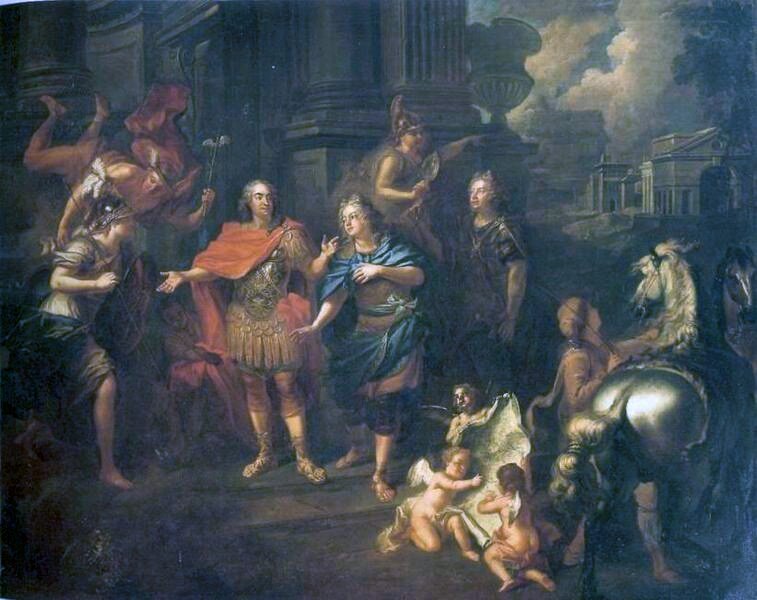
Obraz przedstawiający sylwetki Augusta II i Augusta III.
Augustus II and Augustus III
Source: Louis de Silvestre, August II i August III, 1715.
The effective loss of the state’s independence did not prevent the nobility from enjoying their internal liberty, especially that the “alliance” with Russia resulted in very effective border protection. The rule of Augustus II and III – especially that of the latter – marked an era of sometimes incredible weakening of the institution of monarchy, which, according to the nobility, lurked incessantly to grab its subjects’ liberty. Augustus II had been stopped in his tracks, while his son never aspired to encroach upon the freedom of his subjects. The magnates’ factions gained prominence; one of them collaborated with the royal court, while the other stood in opposition. It was evident especially in the times of Augustus III, who, at the beginning of his reign, based his rule on the reform‑oriented Czartoryski Familia. Efforts to modernize the state had been undertaken, especially by increasing the military numbers, as of 1717 sitting at a mere 24 thousand (effectively, even less). The patriots of the Potocki faction kept sabotaging those efforts, shamelessly vetoing the subsequent Sejm sessions. Thus, when the King started collaborting with the opposition, the Czartoryski faction turned its back on the court. It was now them who, notwithstanding their old reform plans, started vetoing the sessions – to prevent the Potocki faction from gaining the upper hand. In the end the Familia decided that Augustus III was useless, and started preparations to depose him. They failed to do it in time, though, as the King passed away in 1763.
As a result of the factions’ clashes, every single Sejm session except for the pacification sejm of 1736 has ben vetoed, and the country was left without the necessary reforms. The factions deemed it better to prevent any changes than to let the opposing party introduce them. It wouldn’t be far from truth to say that this way of thinking became the heritage of the Saxon era, and it seems to persist (to varying degrees) until today.
kon Source: Dariusz Milewski, The horse is as everyone sees it. The Saxon leftovers, „Mówią Wieki” 2016, nr 5, s. 2–4.
RqBAPhIKLDVvR
Exercise 1
Describe the aims of the Saxon-era political actors listed below. Use the given statements. Reflect upon which of them managed to see their objectives through. Russia Możliwe odpowiedzi: 1. take advantage of the weakness of the Polish-Saxon union, 2. maintain the status quo in Poland, 3. prevent the reforms, 4. regain political influence after the electional failure of Leszczyński, 5. place Stanisław Leszczyński, the father-in-law of King Louis XV, on the Polish throne, 6. defend the Golden Freedom and the republican values, elective monarchy, liberum veto and the liberties of nobility in particular France Możliwe odpowiedzi: 1. take advantage of the weakness of the Polish-Saxon union, 2. maintain the status quo in Poland, 3. prevent the reforms, 4. regain political influence after the electional failure of Leszczyński, 5. place Stanisław Leszczyński, the father-in-law of King Louis XV, on the Polish throne, 6. defend the Golden Freedom and the republican values, elective monarchy, liberum veto and the liberties of nobility in particular Prussia Możliwe odpowiedzi: 1. take advantage of the weakness of the Polish-Saxon union, 2. maintain the status quo in Poland, 3. prevent the reforms, 4. regain political influence after the electional failure of Leszczyński, 5. place Stanisław Leszczyński, the father-in-law of King Louis XV, on the Polish throne, 6. defend the Golden Freedom and the republican values, elective monarchy, liberum veto and the liberties of nobility in particular Familia or the Czartoryski faction Możliwe odpowiedzi: 1. take advantage of the weakness of the Polish-Saxon union, 2. maintain the status quo in Poland, 3. prevent the reforms, 4. regain political influence after the electional failure of Leszczyński, 5. place Stanisław Leszczyński, the father-in-law of King Louis XV, on the Polish throne, 6. defend the Golden Freedom and the republican values, elective monarchy, liberum veto and the liberties of nobility in particular “hetmans’ party” Możliwe odpowiedzi: 1. take advantage of the weakness of the Polish-Saxon union, 2. maintain the status quo in Poland, 3. prevent the reforms, 4. regain political influence after the electional failure of Leszczyński, 5. place Stanisław Leszczyński, the father-in-law of King Louis XV, on the Polish throne, 6. defend the Golden Freedom and the republican values, elective monarchy, liberum veto and the liberties of nobility in particular
Describe the aims of the Saxon-era political actors listed below. Use the given statements. Reflect upon which of them managed to see their objectives through. Russia Możliwe odpowiedzi: 1. take advantage of the weakness of the Polish-Saxon union, 2. maintain the status quo in Poland, 3. prevent the reforms, 4. regain political influence after the electional failure of Leszczyński, 5. place Stanisław Leszczyński, the father-in-law of King Louis XV, on the Polish throne, 6. defend the Golden Freedom and the republican values, elective monarchy, liberum veto and the liberties of nobility in particular France Możliwe odpowiedzi: 1. take advantage of the weakness of the Polish-Saxon union, 2. maintain the status quo in Poland, 3. prevent the reforms, 4. regain political influence after the electional failure of Leszczyński, 5. place Stanisław Leszczyński, the father-in-law of King Louis XV, on the Polish throne, 6. defend the Golden Freedom and the republican values, elective monarchy, liberum veto and the liberties of nobility in particular Prussia Możliwe odpowiedzi: 1. take advantage of the weakness of the Polish-Saxon union, 2. maintain the status quo in Poland, 3. prevent the reforms, 4. regain political influence after the electional failure of Leszczyński, 5. place Stanisław Leszczyński, the father-in-law of King Louis XV, on the Polish throne, 6. defend the Golden Freedom and the republican values, elective monarchy, liberum veto and the liberties of nobility in particular Familia or the Czartoryski faction Możliwe odpowiedzi: 1. take advantage of the weakness of the Polish-Saxon union, 2. maintain the status quo in Poland, 3. prevent the reforms, 4. regain political influence after the electional failure of Leszczyński, 5. place Stanisław Leszczyński, the father-in-law of King Louis XV, on the Polish throne, 6. defend the Golden Freedom and the republican values, elective monarchy, liberum veto and the liberties of nobility in particular “hetmans’ party” Możliwe odpowiedzi: 1. take advantage of the weakness of the Polish-Saxon union, 2. maintain the status quo in Poland, 3. prevent the reforms, 4. regain political influence after the electional failure of Leszczyński, 5. place Stanisław Leszczyński, the father-in-law of King Louis XV, on the Polish throne, 6. defend the Golden Freedom and the republican values, elective monarchy, liberum veto and the liberties of nobility in particular
Describe the aims of the Saxon-era political actors listed below. Use the given statements. Reflect upon which of them managed to see their objectives through.
regain political influence after the electional failure of Leszczyński, maintain the status quo in Poland, take advantage of the weakness of the Polish-Saxon union, prevent the reforms, place Stanisław Leszczyński, the father-in-law of King Louis XV, on the Polish throne, defend the Golden Freedom and the republican values, elective monarchy, liberum veto and the liberties of nobility in particular
Wolna elekcja – jedna z podstawowych zasad ustroju Rzeczypospolitej szlacheckiej, ułożona w czasie bezkrólewia 1573 r., przewidująca obiór króla przez szlachtę, bez stosowania zasady sukcesji dynastycznej, w trybie pospolitego ruszenia.
Liberum veto – łacińskie: wolne nie pozwalam; łac., w Polsce potoczna nazwa zasady umożliwiającej jednemu posłowi zerwanie sejmu (a w konsekwencji unieważnienie wszystkich jego uchwał).
Familia – określenie magnackiego stronnictwa politycznego Czartoryskich i spokrewnionych z nimi rodzin, które odegrało zasadniczą rolę w dziejach Polski XVIII w.
Miracle of the House of Brandenburg
Miracle of the House of Brandenburg
R1M0ZmPGm9WRZ
Nagranie słówka: Miracle of the House of Brandenburg
Nagranie słówka: Miracle of the House of Brandenburg
Nagranie słówka: Miracle of the House of Brandenburg
Cud domu brandenburskiego - określenie ukute przez Fryderyka II, najpierw po bitwie pod Kunowicami, kiedy koalicja antypruska nie wykorzystała wielkiego zwycięstwa, umożliwiając tym samym odtworzenie pruskiej armii i kontynuowanie wojny przez Fryderyka; następnie w związku z przejściem Rosji na stronę Prus.
Wojna o sukcesję polską – wojna w Europie w latach 1733–1735. Przyczyną była rywalizacja o koronę polską między Stanisławem Leszczyńskim, a Augustem II Sasem. Konflikt toczony między koalicjami Francji, Hiszpanii i Bawarii a Austrią, Rosją, Prusami i Danią.