Charlemagne’s Europe
how did the Carolingian dynasty come into power;
who was Charles Martel and what were his achievements;
when did the state of the Franks become an empire;
who was Charlemagne and why is he considered a model of a perfect ruler;
what was the significance of his reforms for the Carolingian Renaissance.
The Franks have been brought to the territories on the left bank of the Rhine by the Romans, valued for their bravery. For centuries, they were faithful and loyal subjects of the Emperors and their commanders. Only the collapse of the Western Roman Empire and its slow dissolution led to the Merovingians – first Childeric, then Clovis – taking the power. They did not sever their ties with the Roman elites, instead collaborating with them and creating a stable society, which, in turn, led to the Franks establishing a stable and cohesive state.
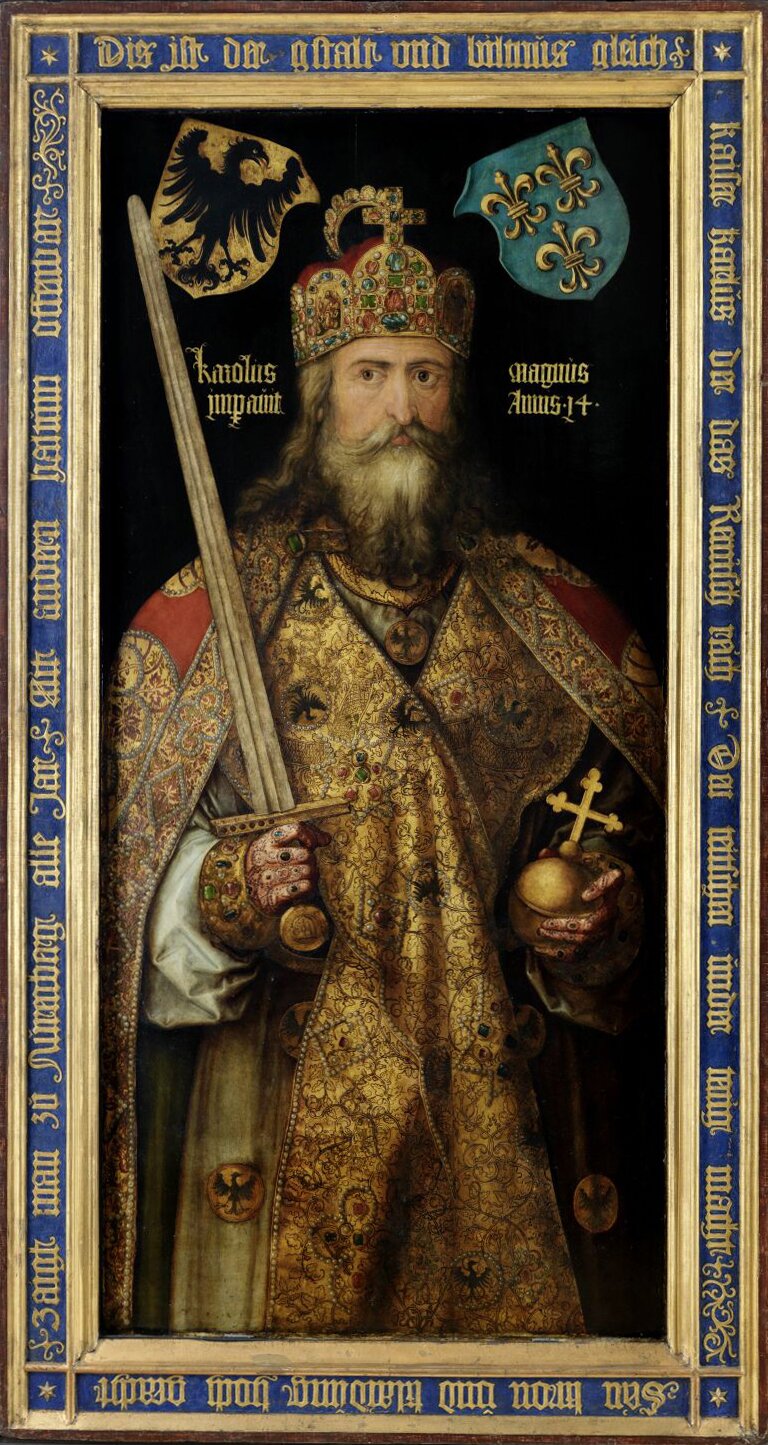
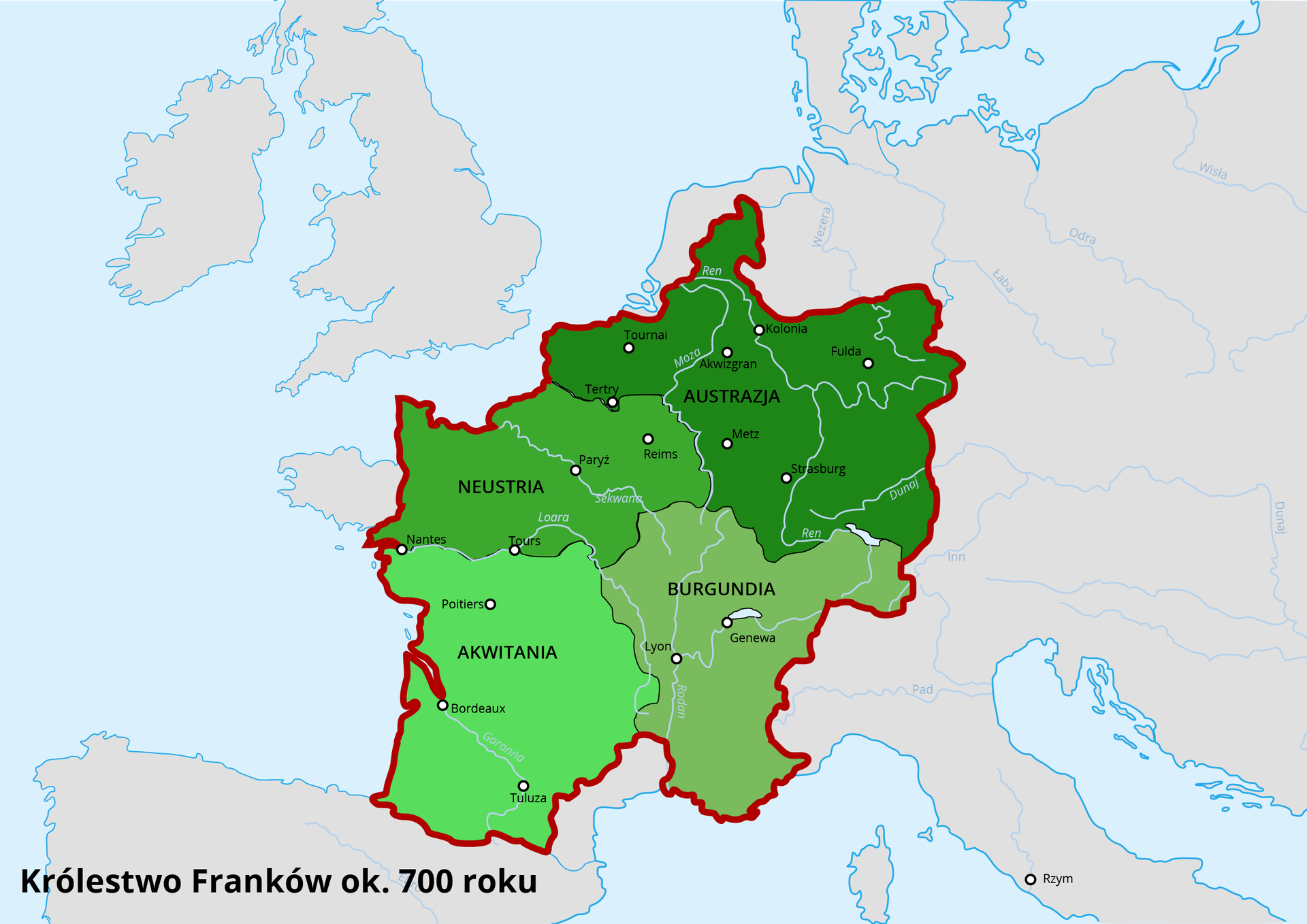
Unfortunately, the subsequent Merovingian rulers failed to maintain the state’s unity. Despite their position, they exercised no real authority in many areas of their country; it remained in the hands of the secular and clerical aristocracy. This reinforced the decentralizationdecentralization of the state, and the power in the provinces was seized by the Mayors of the PalaceMayors of the Palace – high‑ranking royal officials. The progressing dissolution of the monarchy was stopped by Mayor of the PalaceMayor of the Palace Pepin II. His work was continued by his son – Charles Martel, who not only managed to maintain the unity of the state, but also expanded it into new territories. His fame and authority grew even more after his victory in the Battle of Poitiers in 732, where he stopped a Muslim invasion. His reputation as the defender of Christianity strengthened the prestige of the Carolingian dynasty. Even though, nominally, he was not the King of Franks, he was considered their de facto ruler. After his death, his son, Pepin the Short, took over. He deposed the last Merovingian ruler – Childeric III – and, with the support of the Church and the magnates, gained authority over the Franks, bringing back the monarchy’s prestige. Thus, he ushered in the Carolingian Empire, which reached its peak under the rule of Charlemagne (768‑814), owing to his consistent actions, the unification of administration, centralization of authority, and, above all, creating a cultural community of the state’s elite. A shrewd ruler and politician, he started the construction of the state by creating pan‑national administration based on obedient and co‑dependent officials, at the expense of the power of the aristocrats in their respective counties. He was also aware that the stability of such a vast, culturally and ethnically diverse country could only be achieved by adopting shared models that would be understood and accepted by all of his subjects. He appealed, therefore, to the Christian religion and the traditions of Ancient Rome, culminating in Charlemagne’s crowning as Emperor in Saint Peter’s Basilica in 800, which emphasized the universal character of the Carolingian monarchy. The ruler did not forget about the development of culture and education either, bringing some of the greatest minds of the Western World at the time to his court. It is thanks to him that Latin became the universal language of the Church and science. The development of art and literature during his reign is known as the Carolingian Renaissance.
Study the painting and say more about the Battle of Poitiers.
Below, you will find an excerpt from the biography of Charlemagne, written over fifty years after his death. The author, an anonymous monk from the St. Gallen monastery, wrote it for Emperor Charles the Fat in 883‑884. Listen to the recording and complete the exercise.
Read the description of the circumstances surrounding the crowning of Charlemagne. Mark the name or the office of the person who, according to the author, decided his crowning. Whom did the monarch fear?
who decided his crowning whom he feared
When Charlemagne was staying for a few days in Rome, the bishop of the Holy See [ i.e. Pope Leo] called everybody from the neighboring communes who could arrive, and, while they and all of the undefeated Charlemagne’s knights were present, he named him Emperor and Defender of the Roman Church. Charles knew nothing of this in advance. And, though he could not refuse that which seemed to be planned by Providence, he accepted his new title without any sign of gratitude. First of all, he thought that the Greeks [ Byzantines ] would burn with an envy more ferocious than ever before, and could plot some misdeeds against the Kingdom of Franks. Or that they would, at the very least, be more careful in case of Charles’ sudden attack, should he wish to take over their kingdom and absorb it into his Empire.
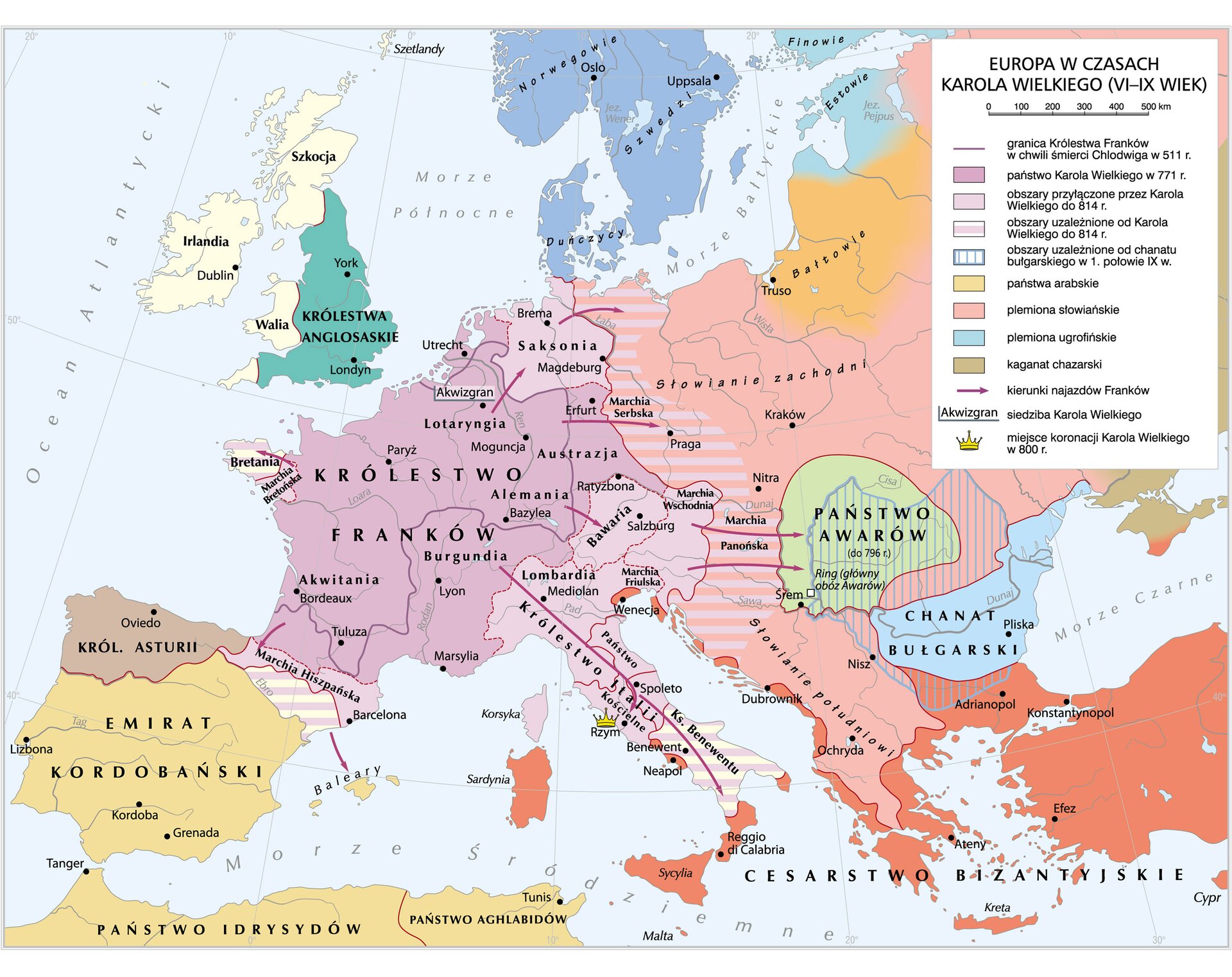
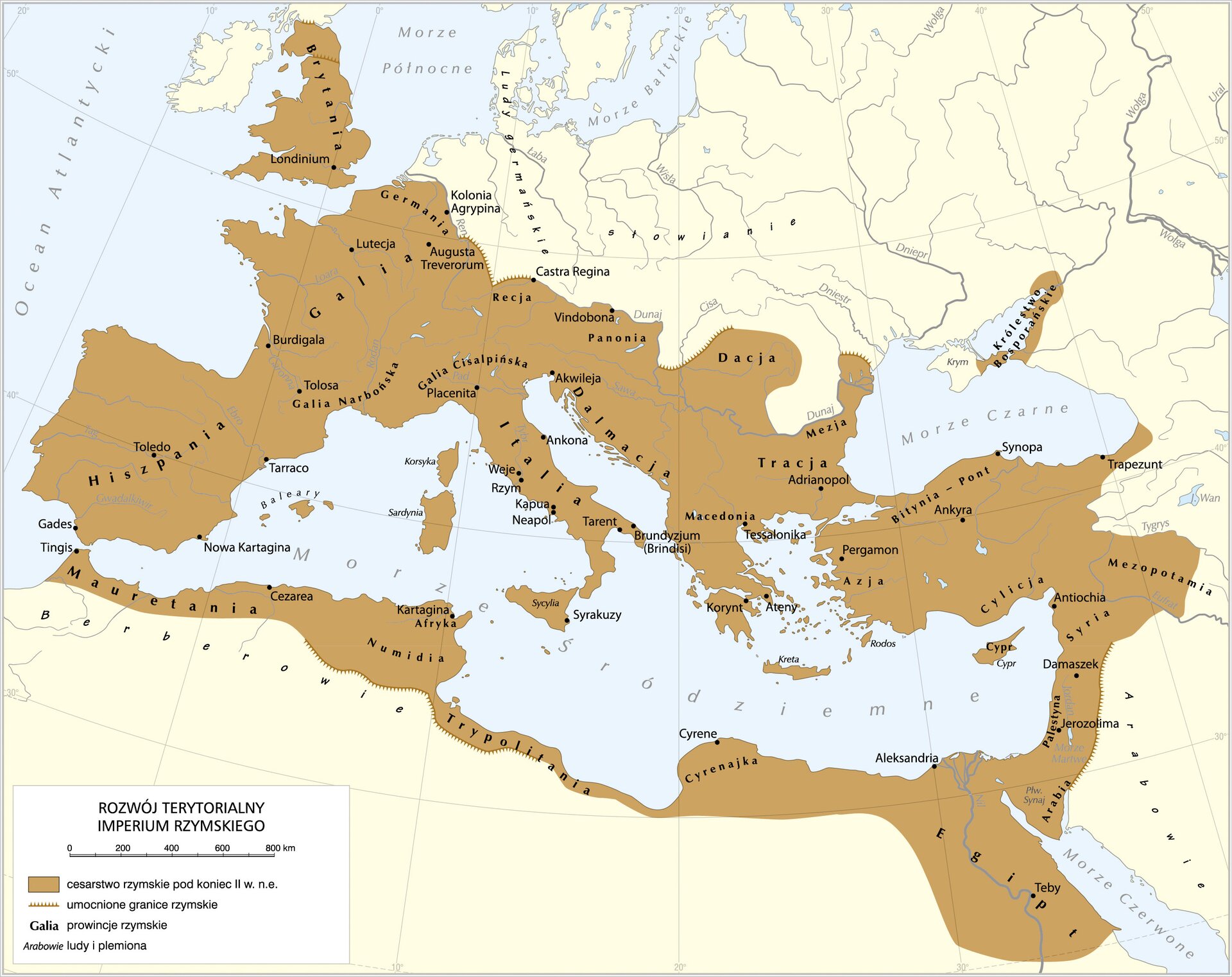
Divide the countries conquered by Charlemagne between those that used to be part of the Empire and those that did not.
Lombard Kingdom, Thuringia, Saxony, Avars, Czechs, Carinthia, Serbs, Obotrites, Veleti, Moravians, Sorbs, Marca Hispanica, Bavaria, Croats
| Former Roman Territories | |
|---|---|
| Territories that were not part of Roman Empire |
Fill the gaps with the correct answers.
Mediterranean, Ebro, Latin, Carolingian Renaissance, administration, Lombards, religious, Pepin the Short
Charlemagne was the eldest son of ............................................... He waged numerous wars on many fronts, defeating the .............................................. in Italy, as well as the Saxons, Bavarians, and Avars. As a result of his victorious wars, his state extended from the North Sea to the .............................................. and Adriatic Seas to the South, from the .............................................. river in the West to the Elbe and the Danube in the East. His reign saw the introduction of numerous internal reforms pertaining to the .............................................., military, law, and the monetary system. He was a great ruler and politician. He also took care of the development of culture and education, bringing the greatest Western intellectuals of the time to his court. It is thanks to him that .............................................. became the universal language of the Church and sciences. The developtment of arts and literature during his rule has been called the ............................................... Its characteristics became typical of the entire Medieval culture, dominated by .............................................. themes.
Keywords
Carolingians, Charlemagne, Poitiers, Carolingian Renaissance
Glossary
Decentralizacja – przeniesienie lub utrata znaczenia części uprawnień oraz odpowiedzialności instytucji władzy centralnej w państwie na rzecz tych znajdujących się niżej w hierarchii.
Majordom – wysoki urzędnik na dworze władcy, był odpowiedzialny za zarządzanie bieżącymi sprawami dworu i dowodzenie wojskiem królewskim.
Missus dominicus – wysoki urząd utworzony przez Karola Wielkiego kontrolujący wykonywanie zarządzeń władcy przez administrację na prowincjach. Urząd ten powierzano głównie duchownym.
Marchia – przygraniczna jednostka administracyjna w państwie Karola Wielkiego.
Margrabia – inaczej graf, stał na czele i zarządzał marchią.
{Minuskuła karolińska – rodzaj średniowiecznego pisma stworzony na przełomie VIII i IX wieku na dworze Karola Wielkiego.
Cesarz – najwyższy tytuł panującego władcy, którego ranga jest wyższa od króla.
Karolingowie – dynastia wywodząca się od władcy Franków Karola Młota. Panowała w latach 751- 987, do śmierci Ludwika V Gnuśnego.