Consequences of World War II
about the aftermath of World War II;
about inventions and discoveries made during World War II;
about the financial, material, social and cultural losses of the war;
how and where the Allies tried the German and Japanese war criminals;
why and to with what objective the United Nations was established.
World War II was the largest conflict in the history of the world. Sixty‑one countries from all continents were involved. Over the six years the war lasted, an estimated 110 million people took part in it, of which more than 60 million perished.
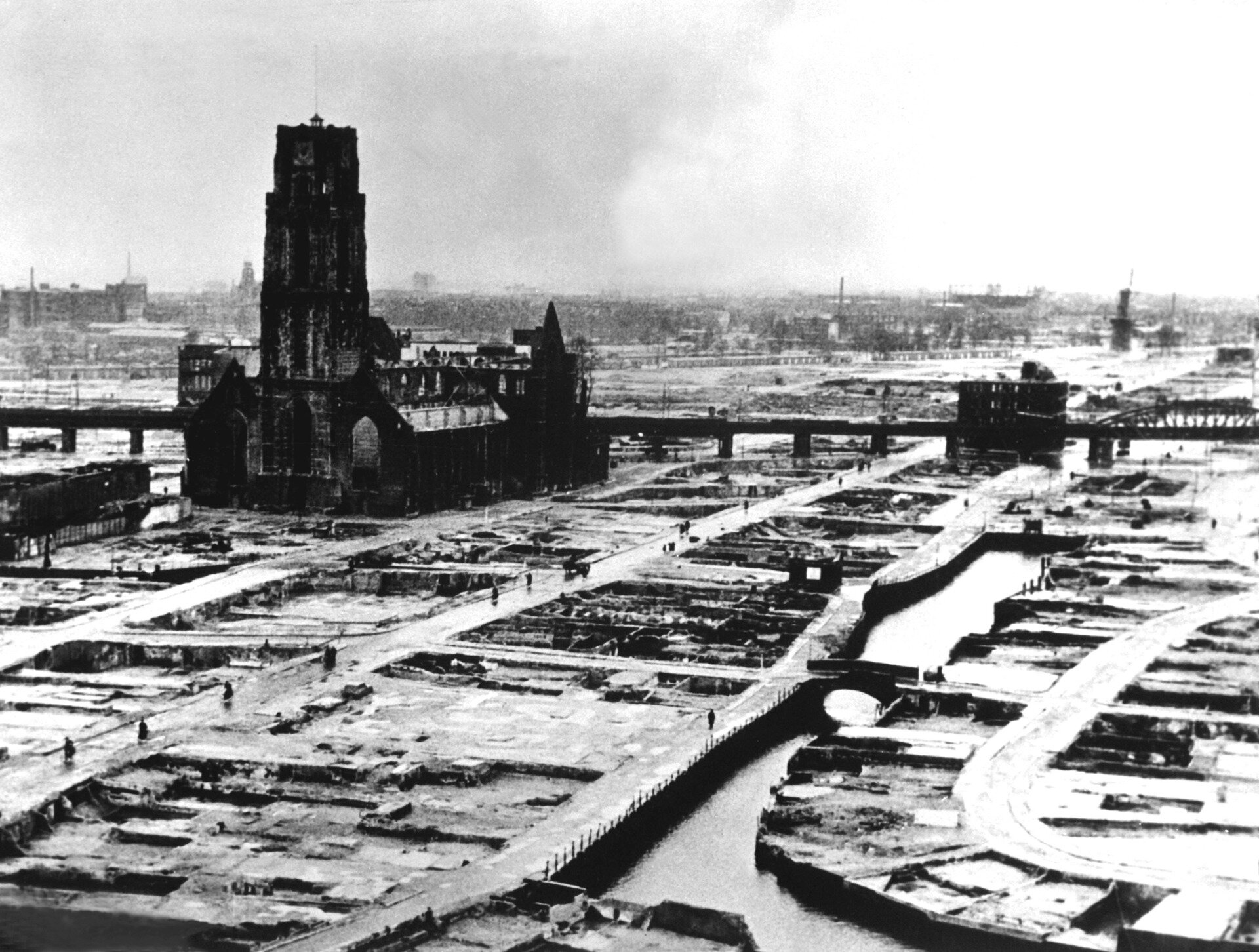
Material losses were also immense. Many European and Asian cities—Warsaw, Dresden, Stalingrad, Rotterdam or Tokyo—were utterly destroyed, not only during the fights, but also as a result of retaliation and carpet bombingscarpet bombings. All of this had a huge impact on the post‑war economic situation of numerous European countries, most of which were on the verge of an economic and financial crisis.
The war also revolutionised the military technology. New types of weapon were developed, the most impactful and most powerful of which was the atomic bomb, dropped by the USA on Hiroshima and Nagasaki.
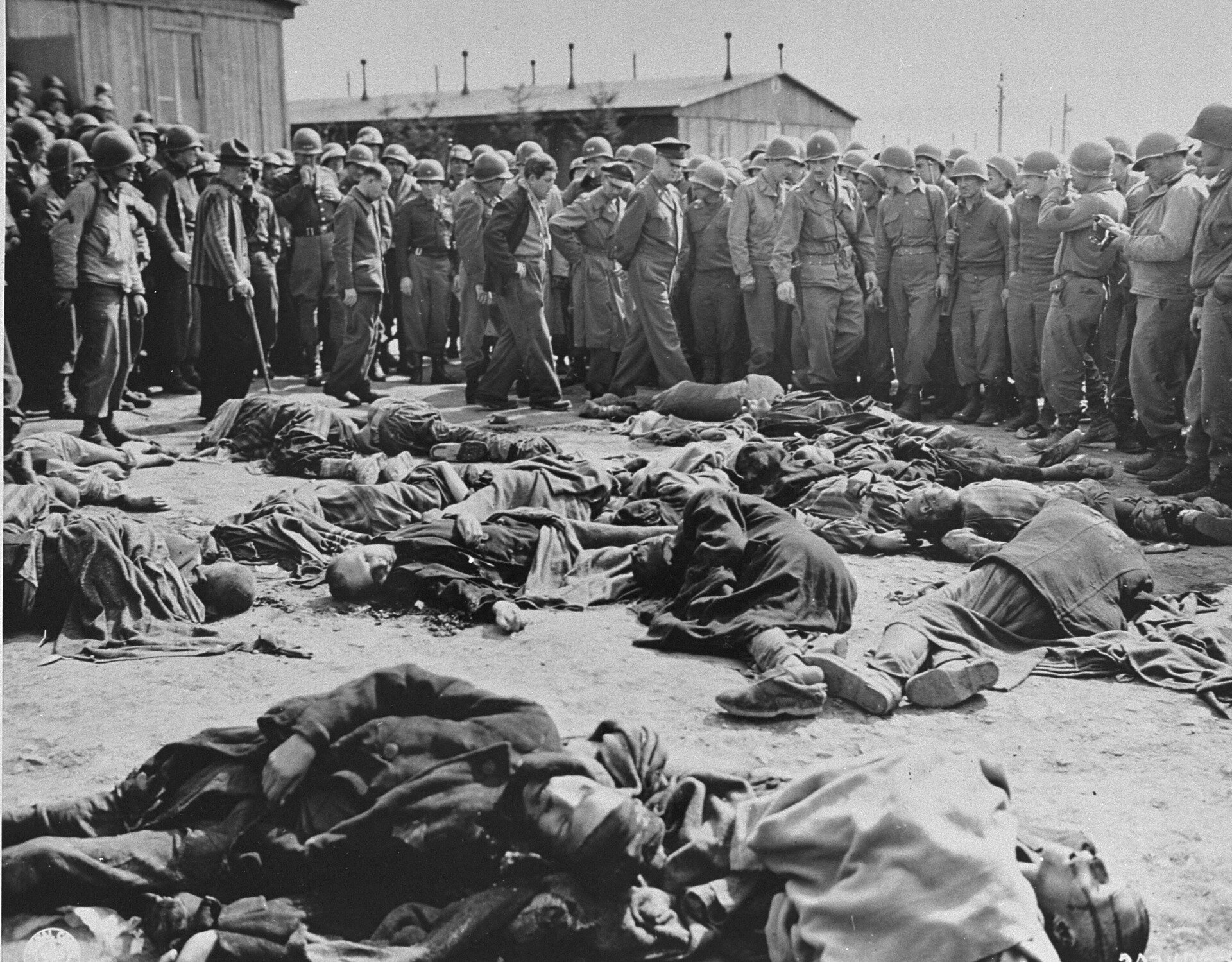
Damage to society and culture was heavy as well. The destruction of numerous historical monuments, works of art and culture, and ordinary towns and villages with no military significance left a tragic mark on the nations. The cruelty and crimes (HolocaustHolocaust) on an unimaginable scale scarred many people for life.
Justice for these atrocities was sought at the trials of the main war criminals in NurembergNuremberg and in TokyoTokyo, and then in the countries of the victorious coalition. As a result, the leaders of the Nazi Germany and Japan were sentenced to death or long‑term imprisonment.
The most lasting consequences of World War II was the new order and division of the world. The pre‑war superpowerssuperpowers—Great Britain, France, Germany, Italy, and Japan—lost their position to the new powers that were to shape the world, the United States of America and the Soviet Union. The borders of individual countries all over the world were also changed, and decolonisation processes commenced. A new institution was established at the time, the United NationsUnited Nations (1945), whose main objective was to ensure global peace and international security.
Look at the timeline presenting the most important events of history after World War II. Which of the events were the most important and why?
Which cities currently in the Polish borders suffered the most as a result of carpet bombing? Look for information in any source.
Find the information, for example in the previously cited „Historie XX wieku” (by A. Czubiński, J. Tyszkiewicz, E. Czapiewski) or on the Internet, how many people were killed in German camps.
Match the names of the organisations with their descriptions.
An institution established after the capitulation of Germany in May 1945, composed of the representatives of the victorious superpowers: Great Britain, USA, USSR and France. It was the supreme legislative and administrative body in occupied Germany. It was established after the Yalta Conference in February 1945., The international judiciary body established after the end of World War II in order to try and punish Japanese war criminals., The international judiciary body established after the end of World War II in order to try and punish German war criminals, held from November 1945 to October 1946., An international organisation, successor of the League of Nations, established in October 1945. Its main objectives include ensuring peace and international security, promoting international cooperation and the respect of human rights.
| The Allied Control Council | |
| International Military Tribunal in Nuremberg | |
| International Military Tribunal for the Far East in Tokyo | |
| UN |
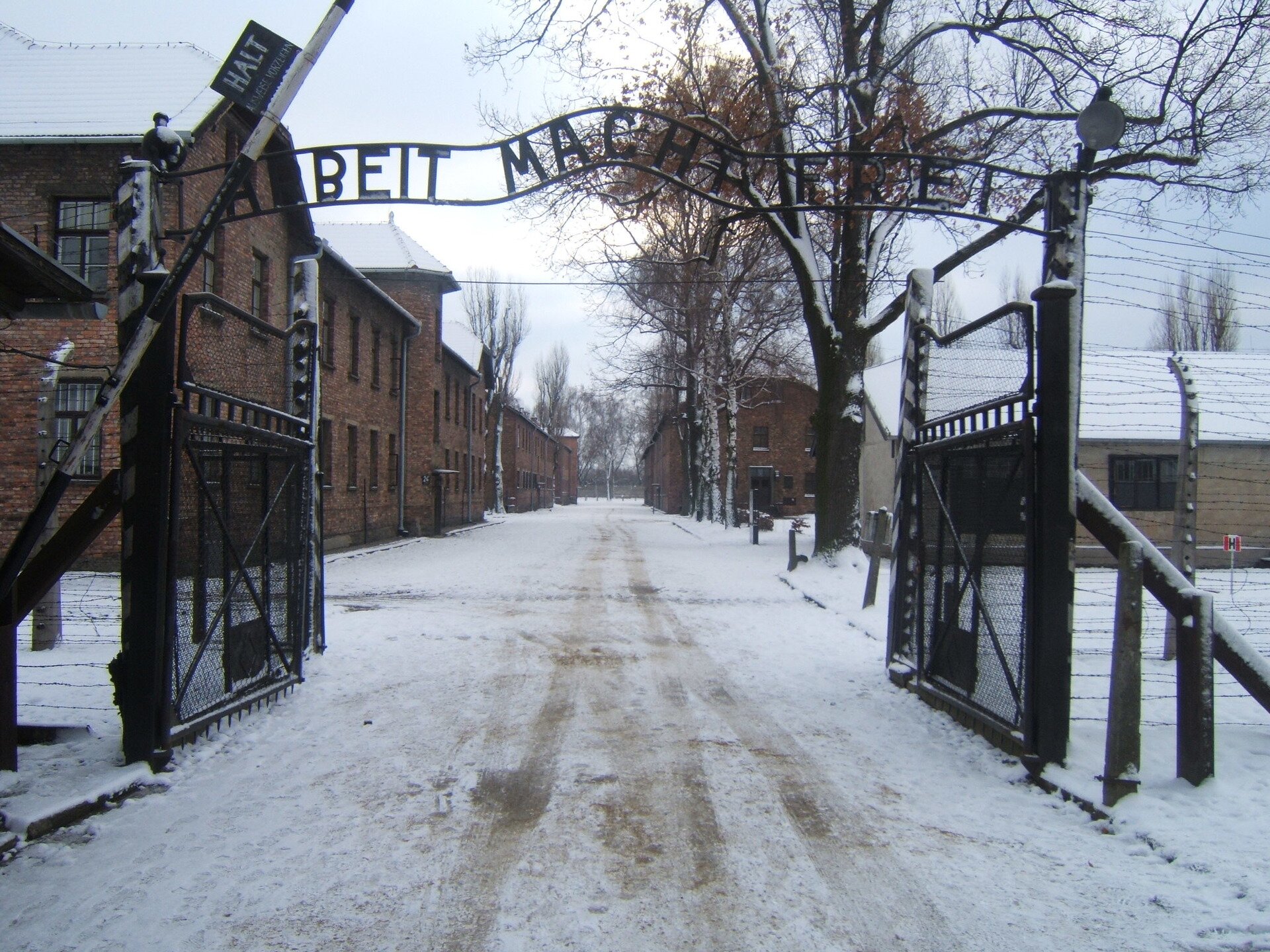
Think and say why the Germans placed such an inscription above the gate of the camp.
Keywords
international organisation, United Nations, Military Tribunal in Nuremberg, Big Three, Holocaust
Glossary
Ruch oporu – oddziały, których celem jest walka z okupantem kraju najczęściej sposobami partyzanckimi. Swoją działalność rozpoczynają najczęściej po zaprzestaniu regularnych działań wojennych.
Okupacja – czasowe zajęcie jakiegoś terenu (np. państwa) przez wrogie siły i wprowadzenie tam swojej władzy.
Front – terytorium, na którym walczą ze sobą wrogie armie.
Naloty dywanowe – zmasowany atak bombowy mający na celu całkowite zniszczenie danego obszaru lub celu, bez wybierania konkretnych obiektów. Taktyka ta była stosowana głównie podczas II wojny światowej.
Kontrybucja – danina nałożona na przegraną w wojnie stronę, np. państwo.
Holokaust – zaplanowany, instytucjonalnie zorganizowany i systematycznie przeprowadzony przez nazistowskich Niemców i ich pomocników mord na prawie 6 milionach europejskich Żydów w latach II wojny światowej.
Wielka Trójka – określenie przywódców mocarstw alianckich podczas II wojny światowej (Stanów Zjednoczonych – Roosevelt; Wielkiej Brytanii – Churchill; ZSRS - Stalin), którzy omawiali sprawy wojenne i kształt przyszłego świata na konferencjach międzynarodowych w Teheranie (1943), Jałcie i Poczdamie (obie 1945).
Sojusznicza Rada Kontroli – urząd powołany do życia po kapitulacji Niemiec w maju 1945 r., w skład którego wchodzili przedstawiciele zwycięskich mocarstw – Wielkiej Brytanii, USA, ZSRS oraz Francji. Był najwyższym organem prawodawczym i administracyjnym działającym na terenie okupowanych Niemiec. Jego powołanie przewidziano na konferencji w Jałcie w lutym 1945 r.
Migracja – proces przemieszczania się ludności związany ze zmianą ich zamieszkania lub czasowego pobytu. Możemy podzielić ją na wewnętrzną – w granicach państwa/obszaru lub zewnętrzną.
Deportacja – przymusowe przesiedlenie (wywózka), najczęściej do odległego miejsca, połączone z ograniczeniem wolności.
Mocarstwo – państwo posiadające silny potencjał gospodarczy i ekonomiczny, które pozwalają mu na pełnienie dominującej roli w swoim regionie lub na całym świecie (supermocarstwo).
Nagranie dostępne na portalu epodreczniki.pl
Nagranie słówka: International Military Tribunal in Nuremberg
Międzynarodowym Trybunałem Wojskowym w Norymberdze – międzynarodowy organ sądowniczy powołany po zakończeniu II wojny światowej w celu osądzenia i ukarania zbrodni wojennych dokonanych przez obywateli Rzeszy Niemieckiej. Działał od listopada 1945 do października 1946 r.
Nagranie dostępne na portalu epodreczniki.pl
Nagranie słówka: International Military Tribunal for the Far East in Tokyo
Międzynarodowy Trybunał Wojskowy dla Dalekiego Wschodu w Tokio – międzynarodowy organ sądowniczy powołany po zakończeniu II wojny światowej w celu osądzenia i ukarania zbrodni wojennych dokonanych przez obywateli Cesarstwa Japonii.
ONZ – Organizacja Narodów Zjednoczonych – organizacja międzynarodowa, następczyni Ligii Narodów, powstała w październiku 1945 r. Jej głównymi celami są zapewnienie pokoju i bezpieczeństwa międzynarodowego, rozwój współpracy między narodami oraz promocja przestrzegania praw człowieka.