Europe ancien régime
to explain the meaning of the phrase „ancient régimeancient régime”;
to list the Enlightenment reforms in Prussia, Russia and Austria;
to compare reforms in Prussia, Russia and Austria.
The absolutist socio‑political system existing in France from the 14th to the 18th century is called ancient régimeancient régime. During the French RevolutionFrench Revolution, the phrase became a synonym for the pre‑revolutionary authorities. What was Europe ancient régimeancient régime?
Between 1773‑1774 Russia was shocked with the greatest and the last so big national uprising. Catherine II won after long fights. The victory showed inefficiency of old internal structures of the state and the necessity of introducing reforms. The reformed administrative division, which survived until the 19th century, changes introduced in education and territorial expansion were the most durable element of the rule of Catherine II. Reforms consistent with the Enlightenment priorities were introduced also in Prussia. In 1763 a reorganization of education and general compulsory education was introduced. Intensive work on unification of law and jurisdiction in Hohenzollern monarchy was also started. Austria was ruled jointly by Maria Theresa, the heiress of the House of Habsburg, and her young son Joseph II, who became an emperor in 1765. They strengthened central power and limited privileges of estates and the Catholic Church.
Listen to the broadcast. Learn how Catherine II took over the despotic power in Russia and charmed Europe of the Enlightenment period
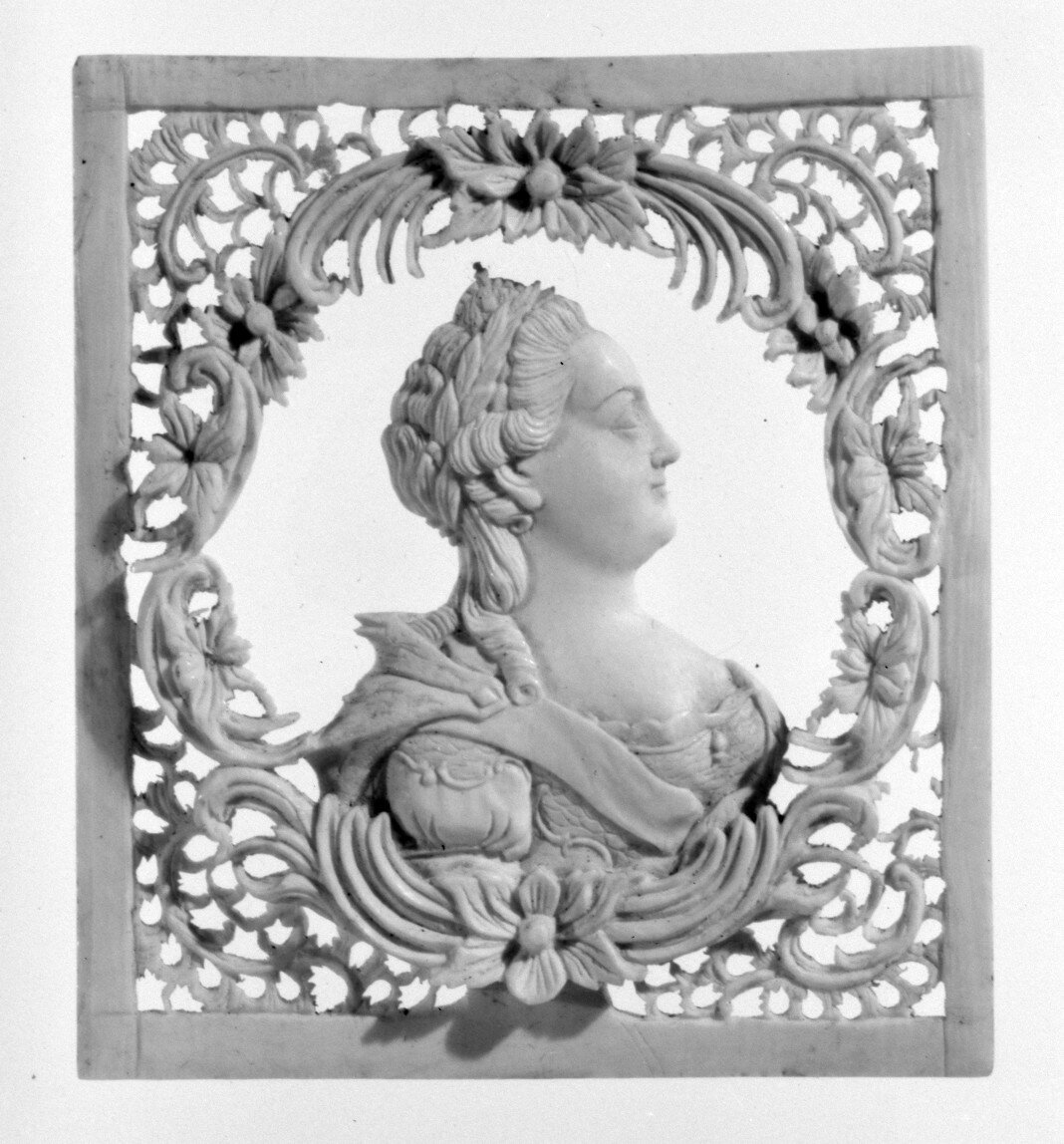
In Poland Catherine II is assessed really severely. She is claimed to be the main cause of the Polish state system collapse. She led Stanisław August Poniatowski to be enthroned and then she participated in all three partitions of Poland. She personally sent ambassadors who ruled as deputies in the conquered provinces to Warsaw. In Russia she is remembered as a great ruler who significantly widened the state territory (e.g. by the annexed territories of Poland and Turkish territories at the Black Sea).
The future emperor Catherine II was born in Szczecin as Sophie. She was a daughter of a general of Anhalt‑Zerbst family. When she was young she willingly read works of Voltaire and Montesquieu, she was passionate about the Enlightenment philosophy. She was chosen to be a spouse of Peter III, the heir to the Russian throne, by empress Elisabeth Petrovna. Actually, Elisabeth was the last of the Romanov dynasty and she did not have an heir. In Russia the throne was ceded according to the current monarch’s will.
Princess Sophie came to Russia as a 15‑year‑old girl. On the Russian court she had to learn the language, etiquette, other than in Western Europe, and change the confession from the Lutheran to the Orthodox. She took the name of Catherine at the baptism. She got married to Peter III in 1745. The marriage was not successful. The emperor, infantile and irresponsible, was not interested in his wife. He was only interested in the army. It was easy for 22‑year‑old Catherine to find lovers. Her numerous relationships with men were even legendary.
In 1754, nine years after getting married, the first Catherine’s son – Paul was born. The child was taken from Catherine directly after the birth. As a result, the boy was brought up without any contact with his mother. The next child, daughter Anna, was also taken from Catherine. Unfortunately, the girl died very fast. When in February 1762 Peter III took the throne after late Elisabeth, Catherine II became an empress. Almost a half year later she was the leader of a palace revolution thanks to which Peter was thrown out and murdered. From that time Catherine ruled on her own. Russia ruled by Catherine II recognised some ideas of the enlightened absolutism but the factual political changes were not as deep as in German countries.
In the West Catherine II was a living legend. She was gifted to run skilful propaganda politics outside her own empire. She gave rich presents to philosophers and poets such as Diderot, d’Alembert and Friedrich Grimm in exchange for their recognition. She corresponded with Voltaire. Thanks to this, against the facts, she was seen as a far‑sighted reformer and an ideal enlightened monarch. At the end of her life she was a passionate opponent of the French RevolutionFrench Revolution. She died on 17 November 1796. Allegedly, before the death she had prepared a document in which she had deprived her son Paul the right to the throne but he found it and burnt it.
Match the reforms with the country where they were introduced.
abolition of Jews discrimination, administrative division of the country, fixing stable salary of the Orthodox clergymen and institutions, educational reforms, dissolution of orders, reorganization of education, estate self-government, unification of law and jurisdiction, limitation of estate law, abolition of peasants’ personal serfdom, foundation of Educational Fund, civil marriages, general compulsory education, foundation of Codification Commission, reform of the army, ban of dismissing peasants, nationalisation of the Orthodox Church’s property, law codification
| Russia | |
|---|---|
| Prussia | |
| Austria |
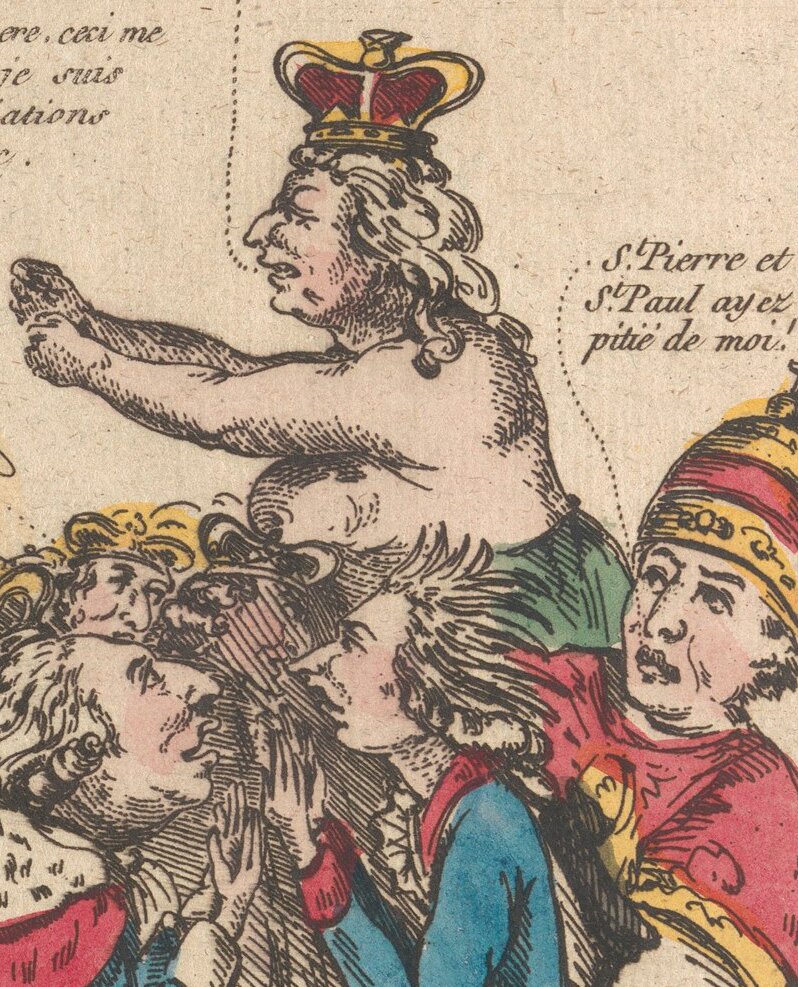
Have a look at the fragment of French satirical drawing of the period. It shows absolute monarchs terrified by political changes coming from France. Furious Catherine II – presented in the outfit of Marianne, the symbol of the revolution – is shaking her fits to the revolutionists. What do you think, why is the monarch of the Enlightenment protesting so lively against political changes of the period? Try to write her monologue.
Key words
Enlightened absolutism, personal serfdom, French revolution
Glossary
Absolutyzm oświecony – faza absolutyzmu w Europie w II połowie XVIII w.; rozwinął się w państwach, w których mieszczaństwo stanowiło znaczną siłę społeczną dążącą z poparciem tronu do zajęcia pozycji równej szlachcie; najpełniejszy kształt przybrał w Prusach, Austrii, w państwach skandynawskich; Rosja za panowania Katarzyny II przyjęła część idei absolutyzmu oświeconego, choć jej rzeczywiste zmiany ustrojowe nie były tak głębokie, jak w państwach niemieckich.
Ancien régime – (fr., ‘stary ustrój’, ‘dawny porządek’) nazwa absolutystycznego systemu społeczno‑politycznego, panującego w monarchicznych państwach Europy XVIII w., w szczególności we Francji; w czasie i po rewolucji francuskiej pojęcie to stało się synonimem rządów przedrewolucyjnych
Józefinizm – termin, określający politykę oświeconego absolutyzmu wobec Kościoła katolickiego w monarchii habsburskiej za panowania Marii Teresy i cesarza Józefa II
Poddaństwo osobiste – forma zależności społecznej, gospodarczej i prawnej ludności wiejskiej od właścicieli ziemskich (panów gruntowych)
Rewolucja francuska – rewolucja społeczna w latach 1789–99, w wyniku której zostały obalone monarchia absolutna i ustrój stanowy we Francji