Father explains
you will identify stylistic devices and poetic images in the poem
you will find on the map countries and capitals described in the poem
you will specify the character that speaks in the poem
Where, apart from school, do you gain your knowledgeknowledge from? Who explains the world to you? Think about from whom and from where we get information when we are young. Write down your observations here or in your notebook.
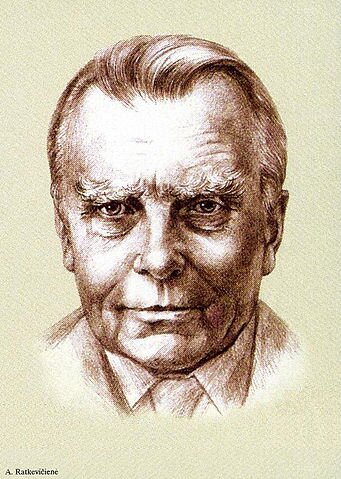
Czesław Miłosz
1911–2004
Polish poet, prose writer. In 1980, he received the Nobel Prize for Literature for Lifetime Achievement. In his collection of poems entitled The World: A Naïve Poem, he describes the beautiful land of childhood. This volume includes poems: „Droga” (The Path), „Ganek” (The Porch), „Ojciec objaśnia” (Father explains), „Przypowieść o maku” (A Parable of the Poppy), „Słońce” (The Sun).
Read the poem by Czesław Miłosz. Note the places mentioned in the work.
Ojciec objaśniaTam, gdzie ten promień równiny dotyka
I cień ucieka, jakby biegł naprawdę,
Warszawa stoi, ze wszech stron odkryta,
Miasto niestare, ale bardzo sławne.Dalej, gdzie z chmurki wiszą deszczu struny,
Pod pagórkami z akacjowym gajem,
To Praha. Nad nią zamek widać cudny,
Wsparty na górze starym obyczajem.To, co krainę białą pianą dzieli,
To Alpy. Czarność – to są lasy jodły.
Za nimi, w słońca żółtego kąpieli
Italia leży niby talerz modry.Z pięknych miast, których wznosi się tam wiele,
Rzym rozpoznacie, chrześcijaństwa stolicę,
Po tych okrągłych dachach na kościele,
Czyli świętego Piotra bazylice.A tam, na północ, za morską zatoką,
Gdzie mgły niebieskiej chwieje się równina,
Paryż chce wieży towarzyszyć krokom
I stado mostów ponad rzeką wspina.I inne miasta Paryżowi wtórzą
Szkłem ozdobione, okute żelazem.
Ale na dzisiaj byłoby za dużo.
Resztę opowiem kiedyś innym razem.Source: Czesław Miłosz, Ojciec objaśnia, [w:] tegoż, Poezje, 1982, s. 81–82.
Talk with each other and answer the following questions:
Who describes EuropeEurope in Czesław Miłosz's poem?
Where is the quotations mark in the poem? What does it mean?
Whom does the character that speaks in the poem address?
How does the character that speaks utter?
Give appropriate examples. You can use the following words in your answer: scientifically, colloquially, strictly, colorfully, artistically, officially, simply, picturesquely, interestingly.
The poet, while showing the world as seen through his eyes, describes various fragments of reality as if he was looking consecutively in different directions (sometimes closer, farther, left, right, etc.). It may be realistic or fantastic description of nature or event. Each of these descriptions is called a poetic image. While creating every poetic image, the poet uses variety of poetic devices, such as metaphors, similes, epithets.
What knowledge does the title father have about the world? Justify your answer.
Name the feelings that accompany the father when he describes Europe. Write them down below or in your notebook.
Prove that the language used by the person who speaks in the poem is unusual, poetic. Mark in the poem: with red color - epithets, green color - personifications, yellow - simile, blue - metaphors.
„Tam, gdzie ten {personifications}promień równiny dotyka{/personifications}
I {simile}cień ucieka, jakby biegł naprawdę{/simile},
Warszawa stoi, ze wszech stron {epithets}odkryta{/epithets},
Miasto {epithets}niestare{/epithets}, ale bardzo {epithets}sławne{/epithets}.
Dalej, gdzie {metaphors}z chmurki wiszą deszczu struny{/metaphors},
Pod pagórkami z {epithets}akacjowym{/epithets} gajem,
To Praha. Nad nią zamek widać {epithets}cudny{/epithets},
{metaphors}Wsparty na górze{/metaphors} {epithets}starym{/epithets} obyczajem.
To, co {metaphors}krainę białą pianą dzieli{/metaphors},
To Alpy. Czarność – to są lasy jodły.
Za nimi, w słońca {epithets}żółtego{/epithets} kąpieli
{simile}Italia leży niby talerz modry{/simile}.
Z pięknych miast, których wznosi się tam wiele,
Rzym rozpoznacie, chrześcijaństwa stolicę,
Po tych {epithets}okrągłych{/epithets} dachach na kościele,
Czyli świętego Piotra bazylice.
A tam, na północ, za {epithets}morską{/epithets} zatoką,
Gdzie mgły {epithets}niebieskiej{/epithets} chwieje się równina,
{personifications}Paryż chce wieży towarzyszyć krokom{/personifications}
I {metaphors}stado mostów ponad rzeką wspina{/metaphors}.
I {personifications}inne miasta Paryżowi wtórzą{/personifications}
Szkłem ozdobione, okute żelazem.
Ale na dzisiaj byłoby za dużo.
Resztę opowiem kiedyś innym razem”.
Think about your impressions of the lesson. Did you like it? Finish the sentences.
Match the pairs: English words with Polish definition.
podróż, jodła, zamek, wiedza, kontynent, chrześcijaństwo, zabytek, Europa, akacje, modry (kolor), kopuła, gaj, bazylika, pagórek
| journey | |
| groove | |
| acacia | |
| hill | |
| castle | |
| fir | |
| deep blue (color) | |
| Christianity | |
| basilica | |
| dome | |
| Europe | |
| continent | |
| monument | |
| knowledge |
Keywords
journeyjourney, knowledge, Europe
Glossary
podróż
gaj
akacje
pagórek
zamek
jodła
modry (kolor)
chrześcijaństwo
bazylika
kopuła
Europa
kontynent
zabytek
wiedza