Film
Smallpox is considered to be the disease which has killed the biggest number of people in the history of humankind. Although it has a fatality rate of 30%, its most severe forms were almost always fatal. It is also a proof that through unified effort, mankind is capable of amazing feats as smallpox is the only disease which we have managed to eradicate. Work with the TED film and find out more about this success story.
Ospa prawdziwa jest uznawana za chorobę, która pozbawiła życia najwięcej ludzi w historii świata. Mimo że umieralność na tę chorobę wynosi 30%, jej najbardziej zjadliwe postacie okazywały się śmiertelne w niemal wszystkich przypadkach. Historia tej choroby jest również dowodem na to, że wspólnym wysiłkiem ludzkość jest w stanie dokonać niesamowitych czynów. Ospa prawdziwa jest jedyną chorobą, którą udało nam się całkowicie wyeliminować. Popracuj teraz z filmem i dowiedz się, jak przebiegał ten proces.
Drag and drop the words or phrases into the correct group.
Antibiotics are one of the greatest inventions of medicine. However, we must remember that they are only effective with bacterial infections. Do you know which of the diseases below are caused by bacteria? Mark them in yellow. Mark the ones caused by viruses in blue.
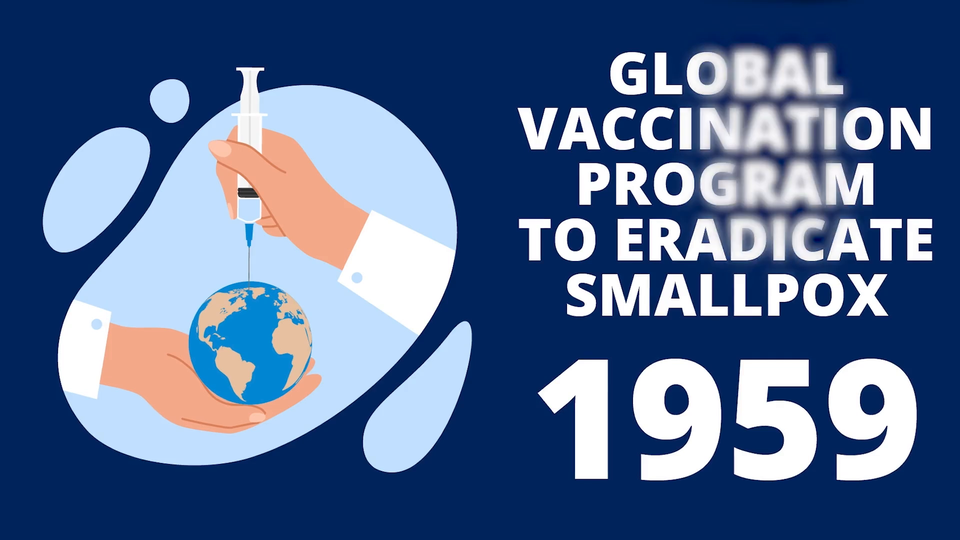
Film dostępny pod adresem /preview/resource/R1WytKPGOfSBz
Film nawiązujący do treści materiału
Work with the film and decide if the following sentences are true or false.
- The speaker took part in the eradication of many diseases.
TRUEFALSE - Smallpox has a death rate of about 30%.
TRUEFALSE - Smallpox was eradicated thanks to the cooperation of many people and organisations.
TRUEFALSE - Smallpox can be mistaken for another disease in its first phase.
TRUEFALSE - Pustules appear only inside the patient’s body.
TRUEFALSE - People didn’t try to halt the spread of smallpox until the 20th century.
TRUEFALSE - Patients who underwent the process of variolation had to consume powdered scabs.
TRUEFALSE - The Smallpox Eradication Program almost failed because there were not enough people to work in it.
TRUEFALSE - The world has been free of smallpox for over 40 years.
TRUEFALSE - Samples of smallpox are studied to create a harmless version of the virus.
TRUEFALSE
Match the definitions below with the correct words from the film.
Drag the words to complete the sentences related to fighting diseases. There are two words you do not need to use.
Summarise the process of smallpox eradication in 5–6 sentences.