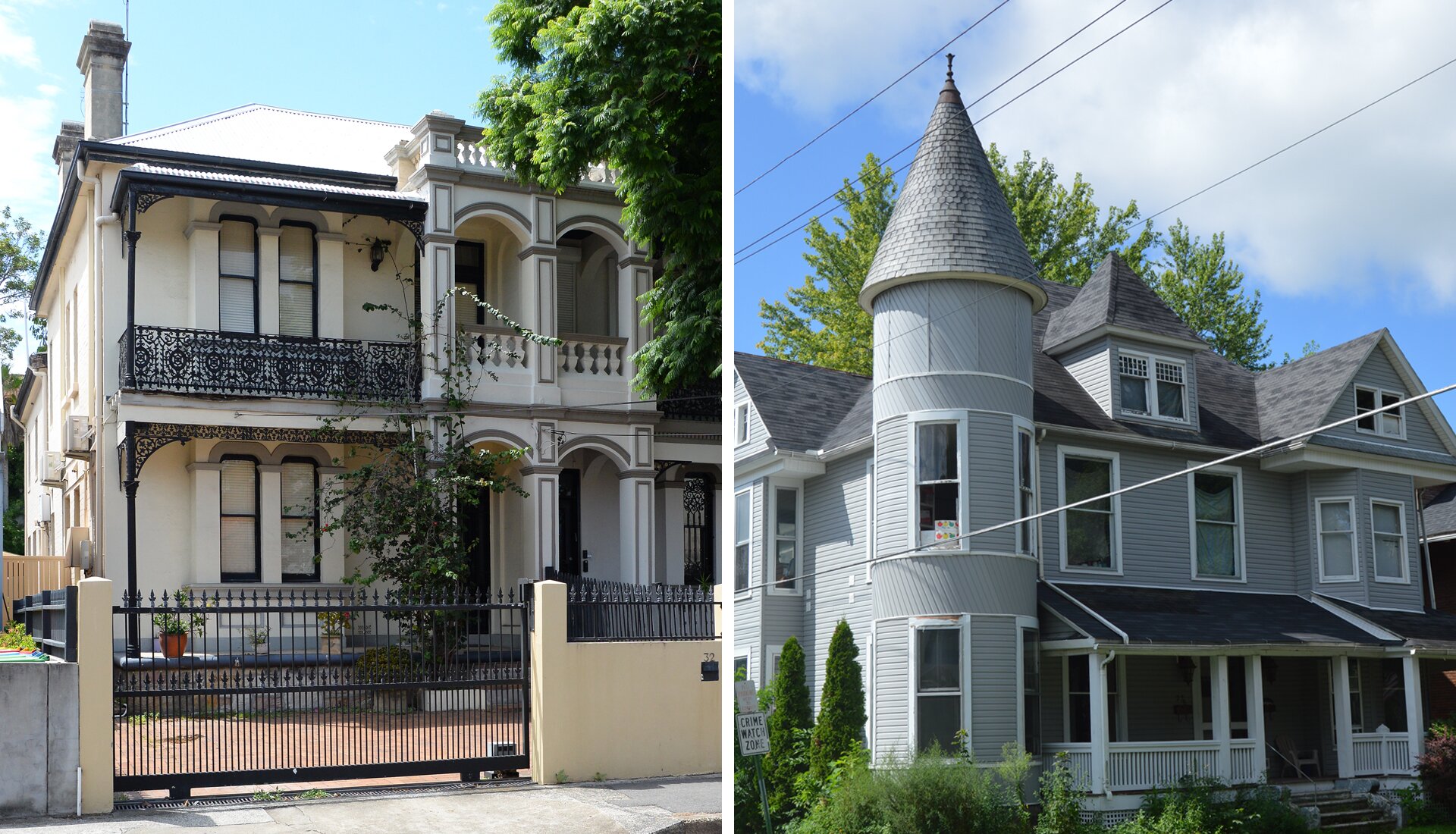
Hanna: Paul, I wonder if you have ever paid attention to two very popular house styles from the Victorian era; the Queen Anne and the Italianate?
Paul: I don’t know… It’s pretty hard for me to think of them right now.
Hanna: I’m sure you have seen the two styles in some movies but you don’t realise that they were the Queen Anne and the Italianate ones.
Paul: It’s probable. How can I recognise them?
Hanna: There are plenty of them still remaining in our neighbourhoods! Look,
San Francisco, Okland, Savannah, Hampstead.
Paul: You’re right, I know them! I didn’t know they’re from the Victorian era, wow. Some of them look like doll houses.
Hanna: They are amazing! You can see them in the United Kingdom. The Queen Anne houses are easily seen in the U.S.A, Canada and Australia.
Paul: That’s because these are the countries where the British colonies were set. Their origins date back to the Victorian era, the reign of Queen Victoria. This is what she looked like as a teenager. Pretty, wasn’t she? And this is how you are more likely to remember her.
Hanna: She looks so serious as an adult!
Paul: She ruled for 63 years, seven months and two days. That was also the period in history when the Industrial Revolution took place.
Hanna: I’m impressed! And what about the Industrial Revolution, Paul?
Paul: That was a time when the transition to new manufacturing processes in Great Britain, continental Europe, and the United States was under way. That was the process of change from the handicraft economy to industry and machine manufacturing. It was a turning point which fundamentally transformed society. This style of home design gained popularity in the United States from the mid 19th to late 19th century.
Hanna: Your knowledge in history is spectacular Paul. Machine manufacturing was about using more and more machines in industry, which was developing, so more specialists were employed who knew how to operate the machines.
Paul: That’s right. Now let’s come back to the Victorian houses. There are two different styles, but is there anything that they have in common?
Hanna: They do. It is the emphasis on vertical elements. These late 19th century houses frequently stand at two or three storeys with tall windows. They also have detailed ornamentation.
Paul: Can we talk about the Queen Anne house style first? I love these houses! They look so rich, like doll‑houses from another world.
Hanna: Charming, aren’t they? There is one word to describe them; detailed. Have a look at some examples. There are so many details.
Paul: They all have towers, balconies and porches.
Hanna: Those little towers are called turrets and they make the house look pretty. Please notice that there are wrap‑around porches which are sometimes pretty huge. Can you imagine sitting there on a rainy day? The rain wouldn’t bother me at all!
Paul: What is this ornament?
Hanna: It’s called gingerbread trim. Look, trims are magic! I love them!
Paul: O, wow! The houses are really detailed. There are various sizes, shapes, and decorative styles. And…they look rather asymmetrical.
Hanna: The houses are made from different materials like stone or wood. Look at the roofs. They are different in each picture. There are multi‑angled roofs and steeply pitched roofs.
Paul: That makes them look like castles.
Hanna: Oh yes. In the last picture you can see the tall windows that are also typical of the style. The Queen Anne style encouraged freedom of creativity and that is why there are hardly any identical houses.
Paul: That is what we can see outside. Is there anything they have in common inside?
Hanna: Queen Anne style houses include windows in various sizes and patterns with stained glass. What might be interesting is that there is a fireplace, usually in the centre of the house.
Paul: Get it. That’s about the Queen Anne style. And what about the Italianate style?
Hanna: This style has its origins in mediaeval Italian farmhouses. That is why many of them have a belvedere, which was a building or part of it, with a view on the beautiful and peaceful countryside. These houses first gained popularity in the 1840s. I’ve got some pictures of these.
Paul: Wow, they DO look a bit different. Italianate style houses look much simpler when compared to the Queen Anne ones.
Hanna: They have a simpler structure, indeed. They are rectangular‑shaped with flat roofs. The windows are tall and skinny, often rounded at the top.
Paul: The thing that is common for both styles is the trim. You can see there’s never enough of it.
Hanna: It’s often attached to the front of a roof, sometimes painted with colours that contrast with background walls or sometimes painted the same colour to blend into the roof line. One of the most distinctive features of the Italianate style are eaves. They are parts that protrude from the building, farther than in any other style of this period.
Paul: That’s so fascinating. It is incredible that different styles are spread all over the world and we can enjoy houses from the Victorian era even in San Francisco. There is so much to know about house styles! Thank you Hanna, that was fun!
Autor: Anna Faszcza