First royal elections in Poland
what royal elections in Polandroyal elections in Poland were and how they looked like;
who the first Polish kings‑elects were – Henry III of France and Stephen Báthory;
what the Henrician Articles and pacta conventa were;
the influence of Henry III of France and Stephen Báthory over the Polish nobility;
the elements of noble clothing from the 16th century.
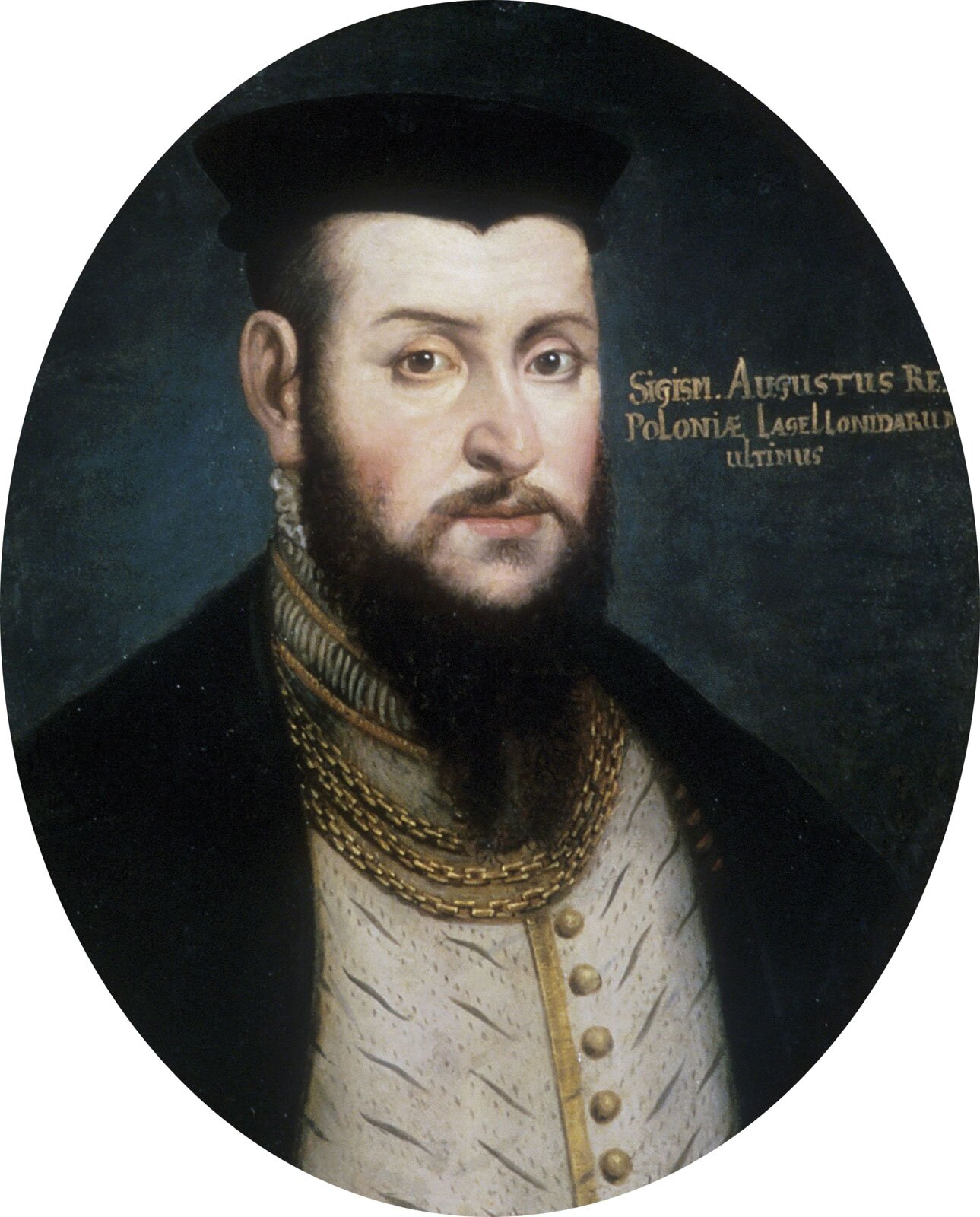
In 1572 King Sigismund Augustus died without male issue, failing to appoint his successor. Under the Piast Dynasty the throne was hereditary (the right of succession belonged to the eldest son of the reigning sovereign). Under the Jagiellons, the throne was elected, but only within the dynasty. The candidate was chosen from the sons of the deceased monarch. The monarch was elected by the mighty and the choice was confirmed by the nobility. During the interregnum, the Polish nobility announced that it would elect a new ruler by voting at the election sejm. However, a set of rules was developed that the king‑elect had to swear to respect (the so‑called Henrician Articles). They included, among others, a commitment that the king‑elect will not seek to introduce a hereditary monarchy in Poland. The nobility were guaranteed all rights and privileges. If the king violated them, the nobility had the right to terminate their obedience, i.e. to invoke rebellion, called rokoszrokosz. The king‑elect also had to swear to respect the so‑called pacta conventa, i.e. the promises pledged by the the king. The Henrician Articles and pacta conventa became a condition for the throne to be taken over by the king‑elect and the basis for the functioning of the election monarchy in the Commonwealth. The Polish‑Lithuanian Commonwealth thus gained a republican character with the king being the lifetime president elected by the nobility. After the death of the king, an interregnum was proclaimed. An interrex was formally the head of the state (it was always the primate of Poland), but in fact the full power in the state was taken over by the nobility. Henry, the son of the French king (of the House of Valois), was the first ruler of Poland to be elected on the basis of the royal elections in Poland. He soon abandoned Poland upon inheriting the French throne when his brother died, and Stephen Báthory, Prince of Transylvania (formerly part of Hungary, currently part of Romania) was elected. Then there were three kings from the Swedish Vasa dynasty (related to the Jagiellons on the distaff side): Sigismund III Vasa and his two sons: Władysław IV Vasa and John II Casimir Vasa.
Sort the names of dynasties ruling in Poland in chronological order.
- House of Anjou
- Piast dynasty
- Jagiellonian dynasty
Assign kings to the respective dynasties.
Jadwiga, Sigismund I the Old, Sigismund Augustus, Władysław Jagiełło, Casimir III the Great, Louis I of Hungary, Bolesław I the Brave
| House of Anjou | |
|---|---|
| Jagiellonian dynasty | |
| Piast dynasty |
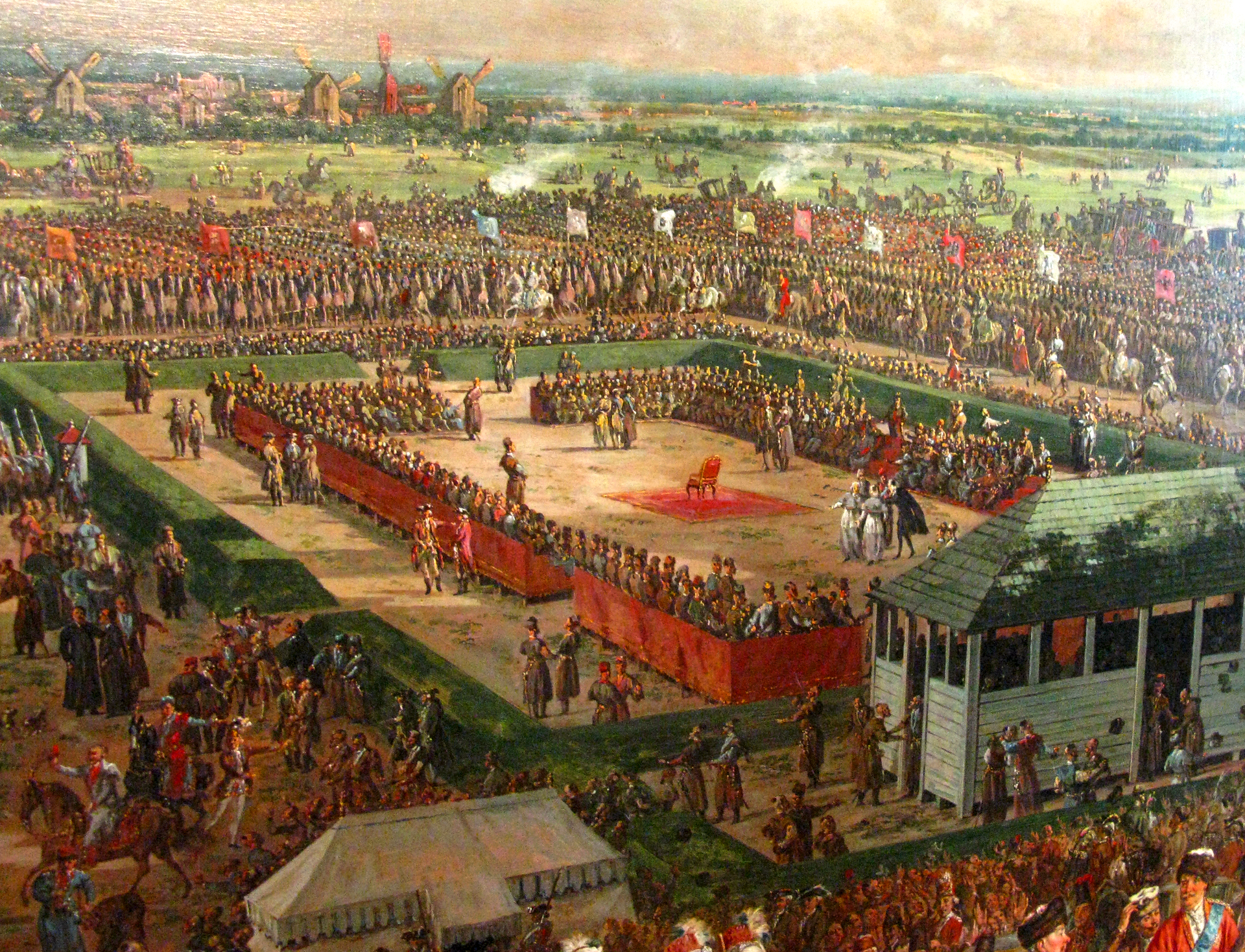
earth embankment,
senators’ shed,
space for deputies,
entrances to the election camp.
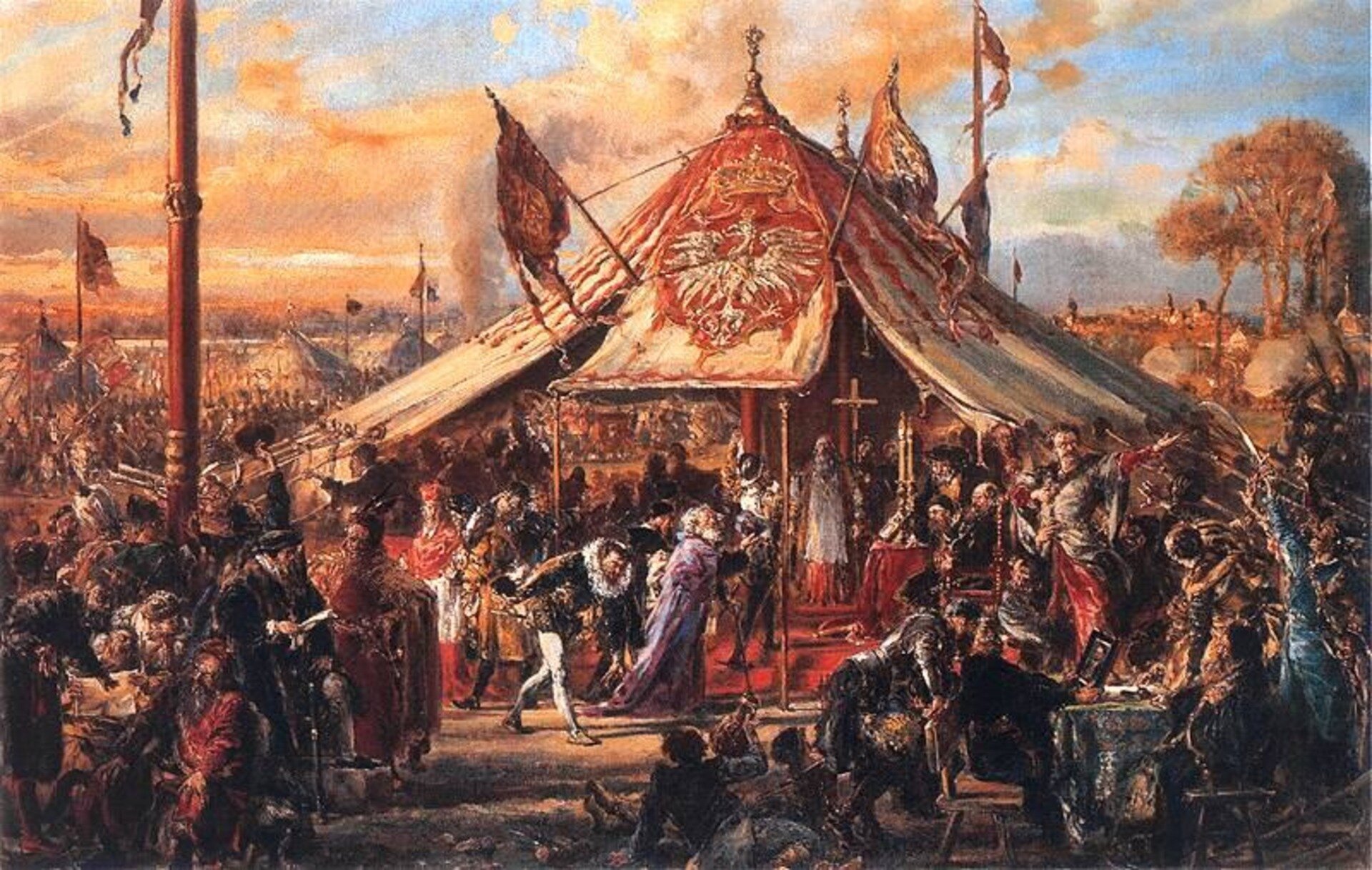
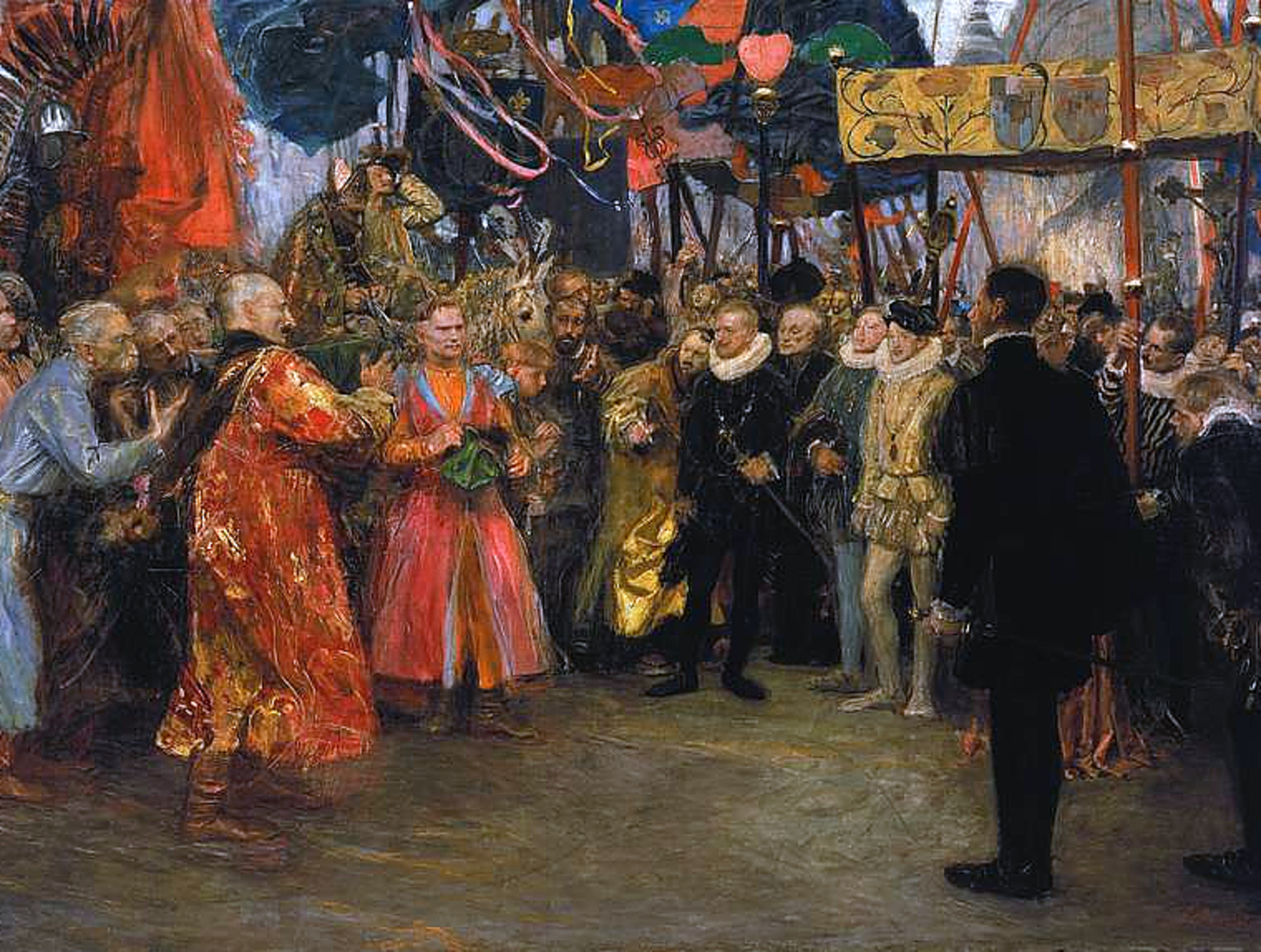
Read the text or listen to the recording and answer the questions.
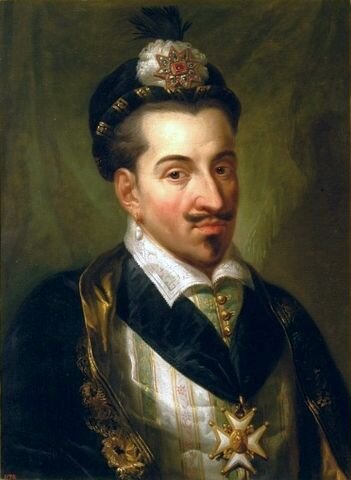
Henry of the French House of Valois ruled Poland – although this statement is a great exaggeration – for only a few months, and become a permanent part of our history. He marked the beginning of the era of elected kings, which lasted until the fall of the Republic of Poland in 1795. At the time of his election as a Polish king, Henry was only 21 years old and was not prepared to take the throne at all. Raised at the French court, surrounded by splendor and wealth, in the shadow of his mother – Catherine de' Medici, one of the most powerful women in the world at that time, he had been spending his time at banquets and court balls rather than educating to be the future ruler. When he started his reign in Poland encountering a completely new culture and customs, he had to get to know not only new subjects and laws, but also the harsh winter and Polish cuisine. It was also in Poland that he had his first contact with the sewerage system and toilets with which Wawel Castle had been equipped many years earlier, or with a fork on a table. How was he remembered by his subordinates? Well, he was not interested in Polish politics or state affairs, he preferred to focus on boisterous balls and social life. He rarely wore Polish clothes, preferring French fashion. Always impeccably dressed, with perfect hair, powdered. Wearing earrings made of pearls and precious stones, smelling with perfumes straight from France, he was both exotic and funny for the Polish nobility, who even spoke about him – „A laughing stock of such a short cloth”. Soon after Henry appeared in Poland, he escaped under cover of the night in June 1574 to take over the French crown of his deceased brother. However, he did not return Polish crown saying that he would return to Poland one day. He did not keep his promise. „Król Henricus zrobił Polsce psikus” (Henry the King played Poland a trick).
Complete the sentences.
France, 1551, first, toilets, crown, pacta conventa, Valois, earrings, escape
King-elect Henry was born in ............................. He was from the House of ............................. He was the ............................ elected king. In Poland he saw for the first time ............................ and a fork. The nobility found his ............................, perfumes and clothes ridiculous. Henry sworn to respect the Henrician Articles and the ............................. The reign of Henry III of France ended with an ............................ from the country and the abandonment of the Polish ............................. After his escape from Poland, Henryk became the ruler of .............................
Familiarize yourself with the typical noble clothing from the time of the first free elections.
Stephen Báthory came from an old and distinguished Báthory family. During his reign, Hungarian customs and clothes became popular in Poland, modeled largely on Oriental (Turkish) clothes, which were later adopted by the Polish nobility. It was Báthory who introduced the “magierka” hat to the noble fashion, or promoted the custom of drinking wine (Tokaji), which over time replaced beer.
Identify the good and bad sides of royal elections in Poland and hereditary power.
An inadequate person can become a king simply because he is the eldest son., Threat of double election and civil war., Threat to the country during the interregnum., Clear rules for the inheritance of the throne., No interregnum., No influence of citizens on the choice of a monarch, Selection of the best candidate., Greater influence of society on the authorities.
| royal elections in Poland – bad sides | |
|---|---|
| royal elections in Poland – good sides | |
| the hereditary power of the king – bad sides | |
| the hereditary power of the king – good sides |
Keywords
royal elections in Poland, Henry III of France, Stephen Báthory, nobility, pacta conventa, Henrician Articles
Glossary
artykuły henrykowskie – akt prawny w Rzeczypospolitej Obojga Narodów utworzony po śmierci Zygmunta II Augusta, regulował kwestie związane ze sprawowaniem władzy przez monarchę i jego stosunki z sejmem walnym. Przepisów tych musiał przestrzegać każdy król Polski wybrany w drodze wolnej elekcji.
umowa, osobiste zobowiązania króla‑elekta wobec „wyborców”. Przeważnie miały charakter zobowiązań gospodarczych, politycznych i kulturalnych.
najwyższy dostojnik w państwie sprawujący część funkcji monarchy w okresie bezkrólewia. W Rzeczypospolitej Obojga Narodów funkcję tę każdorazowo pełnił prymas Polski. Reprezentował on kraj w sprawach międzynarodowych i kierował państwową administracją.
wolna elekcja – w Rzeczypospolitej Obojga Narodów był to wybór monarchy przez szlachtę, nieprzestrzegający zasad sukcesji dynastycznej. Pierwsza wolna elekcja miała miejsce w 1573 roku i wybrano na króla Polski Henryka Walezego. W trakcie drugiej wolnej elekcji w 1575 roku na króla wybrano Annę Jagiellonkę przydając jej za męża Stefana Batorego.
poselstwo – przedstawicielstwo dyplomatyczne w obcym państwie lub na dworze obcego monarchy, jak również każda osoba wysłana z misją do obcego państwa lub dowódcy.
rokosz – bunt szlachty, jej zbrojne powstanie przeciwko królowi‑elektowi.