From Westerplatte to Hiroshima. World War Two Across the World
about when and where did World War II erupt;
to list the most important, breakthrough war operations in 1939‑1945;
to describe where were the battles of World War II fought;
to explain what was the significance of World War II for the modern world.
World War II was the largest conflict in the history of humanity. It took place between 1939‑1945. The conventional date of its beginning is that of the German attack on Westerplatte – the Polish military unit in the Free City of Danzig. The fighting took place in Europe, Africa and Asia, on land, on the seas, and in the air. Until 1941, the Germans and their allies (mainly the Italians and the Japanese) achieved victories. The Germans defeated France (1940) and conquered almost all of Europe (except for Great Britain), and the Japanese conquered vast territories in the Far East and Oceania (until 1942).
In June 1941, Germany attacked the USSR. After initial success, the clashes on the Eastern Front quickly took an unfavorable turn for Hitler (the defeats in the Battles of Stalingrad and Kursk in 1943). The United States joined the war on the side of Great Britain and her allies (Poland, Free France and others) after being attacked by the Japanese in December 1941. The Germans were pushed back from Northern Africa. In 1943, after the government of Mussolini was abolished, Italy left the Axis. In June 1944, the Western Allies landed in Normandy (France), creating a second frontfront. France was recaptured, and the Allied airforce started destructive carpet bombingscarpet bombings of the German cities.
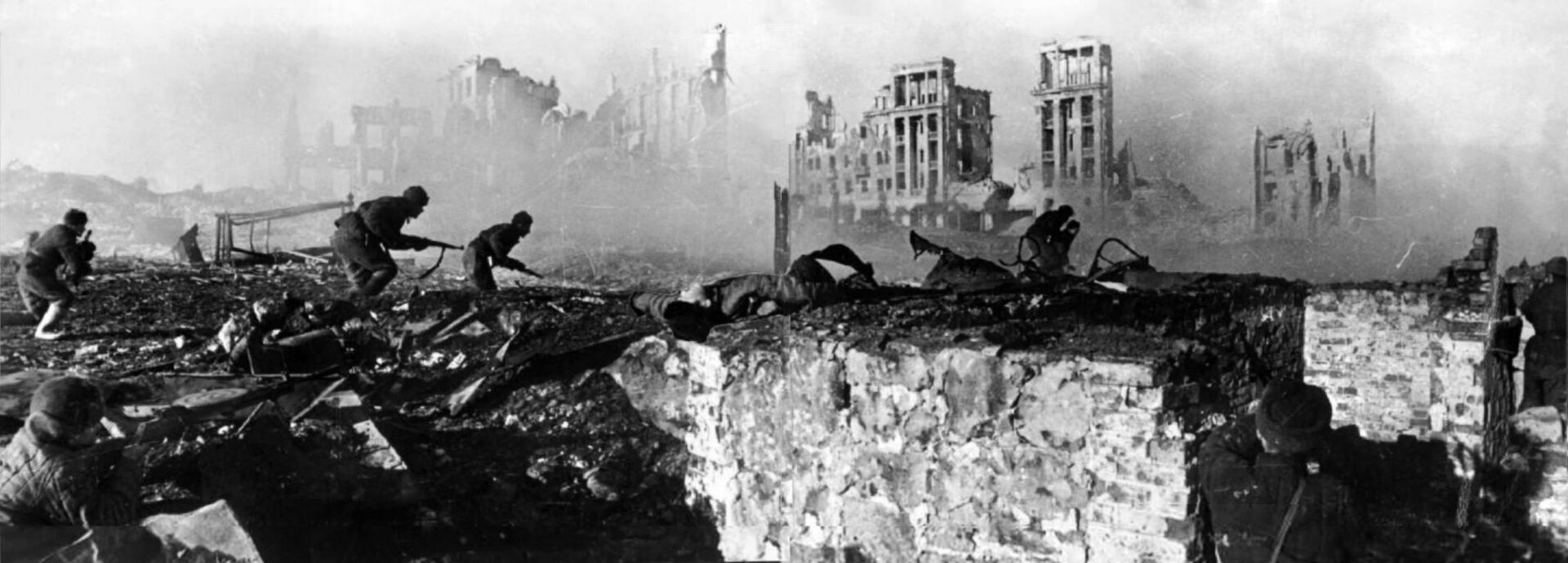
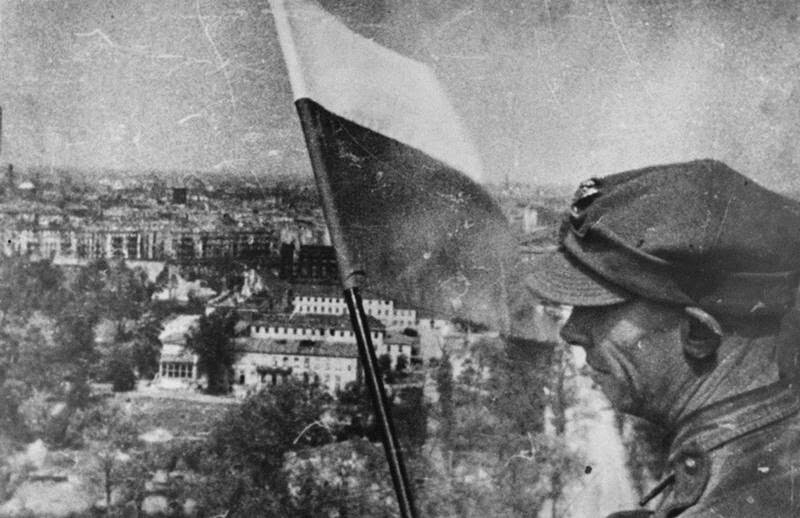
Germany had the most powerful army in the world, but they were unable to hold their own against the alliance of other great powers on multiple fronts. In the end, the German army fell in 1945. The Polish and Soviet armies entered the German territory and captured Berlin. Hitler committed suicide. In May 1945, the war in Europe ended. Germany found itself under American, Soviet, British and French occupation.
In the Far East, the Americans were still fighting the Japanese. Met with the fanatical resistance of the Japanese soldiers who defended every island until the last man, the US authorities decided to use a new weapon of mass destruction – the nuclear bomb – on the cities of Hiroshima and Nagasaki in August 1945. They ceased to exist in mere minutes. The hopeless situation and the extent of destruction influenced the Japanese surrendersurrender. It was signed on 2 September 1945 aboard the American battleship, “Missouri”. World War II officially ended.

Mark the states whose forces fought in the September Campaign.
- France
- Great Britain
- Germany
- Soviet Union
- Poland
Mark the sites of the September Campaign battles:
- Breslau
- Bzura
- Riga
- Dubienka
- Grunwald
- Westerplatte
- Wizna
- Hel
Study the maps and complete the exercise.


Match the states with their fronts.
France, The Netherlands, Bulgaria, Belgium, Finland, Greece, Yugoslavia, China, USSR, USSR, Italy, Japan
| The Western Front in Europe | |
|---|---|
| The Eastern Front in Europe | |
| The Italian front | |
| The Far East | |
| The Winter War in Finland | |
| The Balkans |
Study the timeline of World War II below.
2. As stipulated by the 1. landing of the Allies in Normandy, 2. 2 September 1945, 3. June 1940, 4. Ribbentrop-Molotov pact, 5. Battle of England, 6. unconditional surrender of Germany, 7. Kursk, 8. Germany on Poland, 9. Pearl Harbor, 10. the whole continental Europe, the USSR joined the war on 17 September 1939, attacking the Polish forces fighting against the Germans.
3. After over one month of fighting, the German forces entered Paris in 1. landing of the Allies in Normandy, 2. 2 September 1945, 3. June 1940, 4. Ribbentrop-Molotov pact, 5. Battle of England, 6. unconditional surrender of Germany, 7. Kursk, 8. Germany on Poland, 9. Pearl Harbor, 10. the whole continental Europe.
4. By 1941, the Third Reich and her allies conquered almost 1. landing of the Allies in Normandy, 2. 2 September 1945, 3. June 1940, 4. Ribbentrop-Molotov pact, 5. Battle of England, 6. unconditional surrender of Germany, 7. Kursk, 8. Germany on Poland, 9. Pearl Harbor, 10. the whole continental Europe.
5. The 1. landing of the Allies in Normandy, 2. 2 September 1945, 3. June 1940, 4. Ribbentrop-Molotov pact, 5. Battle of England, 6. unconditional surrender of Germany, 7. Kursk, 8. Germany on Poland, 9. Pearl Harbor, 10. the whole continental Europe, or the airborne defense of Great Britain against the German airforce, ended with a great victory of the Allied forces.
6. The United States joined the war after the Japanese attack on their naval base of 1. landing of the Allies in Normandy, 2. 2 September 1945, 3. June 1940, 4. Ribbentrop-Molotov pact, 5. Battle of England, 6. unconditional surrender of Germany, 7. Kursk, 8. Germany on Poland, 9. Pearl Harbor, 10. the whole continental Europe in December 1941.
7. The breakthrough moments of the war were the Battles of Stalingrad and 1. landing of the Allies in Normandy, 2. 2 September 1945, 3. June 1940, 4. Ribbentrop-Molotov pact, 5. Battle of England, 6. unconditional surrender of Germany, 7. Kursk, 8. Germany on Poland, 9. Pearl Harbor, 10. the whole continental Europe, lost by Hitler’s forces.
8. A second front was opened on 6 June 1944 after the 1. landing of the Allies in Normandy, 2. 2 September 1945, 3. June 1940, 4. Ribbentrop-Molotov pact, 5. Battle of England, 6. unconditional surrender of Germany, 7. Kursk, 8. Germany on Poland, 9. Pearl Harbor, 10. the whole continental Europe.
9. The 1. landing of the Allies in Normandy, 2. 2 September 1945, 3. June 1940, 4. Ribbentrop-Molotov pact, 5. Battle of England, 6. unconditional surrender of Germany, 7. Kursk, 8. Germany on Poland, 9. Pearl Harbor, 10. the whole continental Europe in May 1945 ended the war in Europe.
10. World War II Ended on 1. landing of the Allies in Normandy, 2. 2 September 1945, 3. June 1940, 4. Ribbentrop-Molotov pact, 5. Battle of England, 6. unconditional surrender of Germany, 7. Kursk, 8. Germany on Poland, 9. Pearl Harbor, 10. the whole continental Europe with the signing of the Japanese surrender on the American battleship, “Missouri”.
Insert the missing words.
Battle of England, Germany on Poland, Ribbentrop-Molotov pact, Kursk, unconditional surrender of Germany, landing of the Allies in Normandy, June 1940, 2 September 1945, Pearl Harbor, the whole continental Europe
1. World War II began with the attack of .................................................................... on 1 September 1939.
2. As stipulated by the ...................................................................., the USSR joined the war on 17 September 1939, attacking the Polish forces fighting against the Germans.
3. After over one month of fighting, the German forces entered Paris in .....................................................................
4. By 1941, the Third Reich and her allies conquered almost .....................................................................
5. The ...................................................................., or the airborne defense of Great Britain against the German airforce, ended with a great victory of the Allied forces.
6. The United States joined the war after the Japanese attack on their naval base of .................................................................... in December 1941.
7. The breakthrough moments of the war were the Battles of Stalingrad and ...................................................................., lost by Hitler’s forces.
8. A second front was opened on 6 June 1944 after the .....................................................................
9. The .................................................................... in May 1945 ended the war in Europe.
10. World War II Ended on .................................................................... with the signing of the Japanese surrender on the American battleship, “Missouri”.
Keywords
World War II, Hiroshima
Glossary
Kapitulacja – poddanie się części lub całości wojska przeciwnikowi. Może być bezwarunkowa lub pod pewnymi wcześniej ustalonymi warunkami. Najczęściej kończy konflikt zbrojny.
Front – terytorium, na którym walczą ze sobą wrogie armie.
Desant – działania taktyczne wojsk polegające na przeniesieniu własnych oddziałów na teren wroga, w celu opanowania strategicznego terenu.
Propaganda – celowe działania, które mają doprowadzić do określonych zachować i poglądów. Służy ona do upowszechnienia dogodnych informacji dla nadawcy. W języku potocznym synonim kłamstwa i manipulacji.
Blitzkrieg – inaczej wojna błyskawiczna, termin oznaczający szybki i zmasowany atak siłami zbrojnymi, najczęściej wszystkich typów (lotnictwo, marynarka, wojska lądowe), w celu zajęcia kraju.
Ofensywa – gwałtowne uderzenie w przeciwnika, mające na celu przełamanie jego obrony i wdarcie się w głąb jego wojska lub terenu.
Naloty dywanowe – zmasowany atak bombowy mający na celu całkowite zniszczenie danego obszaru lub celu, bez wybierania konkretnych obiektów. Taktyka ta była stosowana głównie podczas II wojny światowej.
Kamikadze – formacje japońskich jednostek lotniczych z okresu II wojny światowej, pilotujące specjalnie przygotowane samoloty, których celem był samobójczy atak na przeciwnika.