Genetic counselling
that some mutations increase the risk of cancer in human;
that genetic tests allow for establishing the probability of occurrence of a genetic disease.
to give examples of hereditary diseases;
to assess the usability of using genetic counselling by couples trying to make a baby;
to describe basic prenatal testing.
Hereditary diseases
Hereditary diseases are the result of mutations which cause abnormalities in the structure or functioning of an organism. Such disorders can be caused by different types of damage to genetic material, among which one can differentiate:
chromosome abnormalities consisting in changes in the number or structure of chromosomes; diseases caused by them are described as syndromes and they are usually named after the surnames of scientists who were the first ones to describe them; they include, among others: Down syndrome, Patau syndrome, Edwards syndrome, Turner syndrome, Klinefelter syndrome;
substitutions (transitions or transversions) which means mutations consisting in a change of one nucleotide into another, which results in diseases such as cystic fibrosis, haemophilia, sickle cell anaemia;
deletions consisting in losing one, few or thousands nucleotides; examples of diseases caused by deletions include cri du chat syndrome (deletion of part of the short arm of chromosome 5), and Angelman syndrome;
dynamic mutations consisting in multiplication of a fragment of one gene from generation to generation (from several dozen to several hundred), which leads to creation of, for example, toxic protein; depending on how long the section of a gene containing repetitive nucleotides is, congenital defects occur in different intensity; this is the case in Huntington’s disease or fragile X syndrome.
Single‑gene mutations are inherited according to the rules of Mendelian inheritance.
Polygenic disorders, such as schizophrenia, are the result of concurrence of numerous abnormal genes and environment.
Genetic counselling
Genetic counsellingGenetic counselling aims at providing special help for people with neoplasms, genetic disease or congenital disorder (defect in anatomy of an organism), and for their families. The tasks of the centre for genetic counselling include, among others, investigating family history, estimating the risk of a disease, and performing the tests of genetic predisposition for specific disorders. Also couples trying to have a baby may benefit from genetic counselling, especially if there were genetic diseases in their families or the age of woman is over 35 years old. The main duty of experts from the centre is:
establishing whether a baby, which is going to be born, may have a hereditary disease, what are the chances for giving birth to a healthy child in the case when parents already have one ill child, estimating the risk of reoccurrence of genetic disease in next children;
diagnosing whether there is a genetic disease in the case of a child showing disorders in functioning of an organism or abnormal body structure;
formulating recommendations related to preventive healthcare for a mother and child which will be born or an ill child, and especially indicating risk factors and methods of minimising their impact on the organism;
providing psychological support for people with genetic disease and their families.
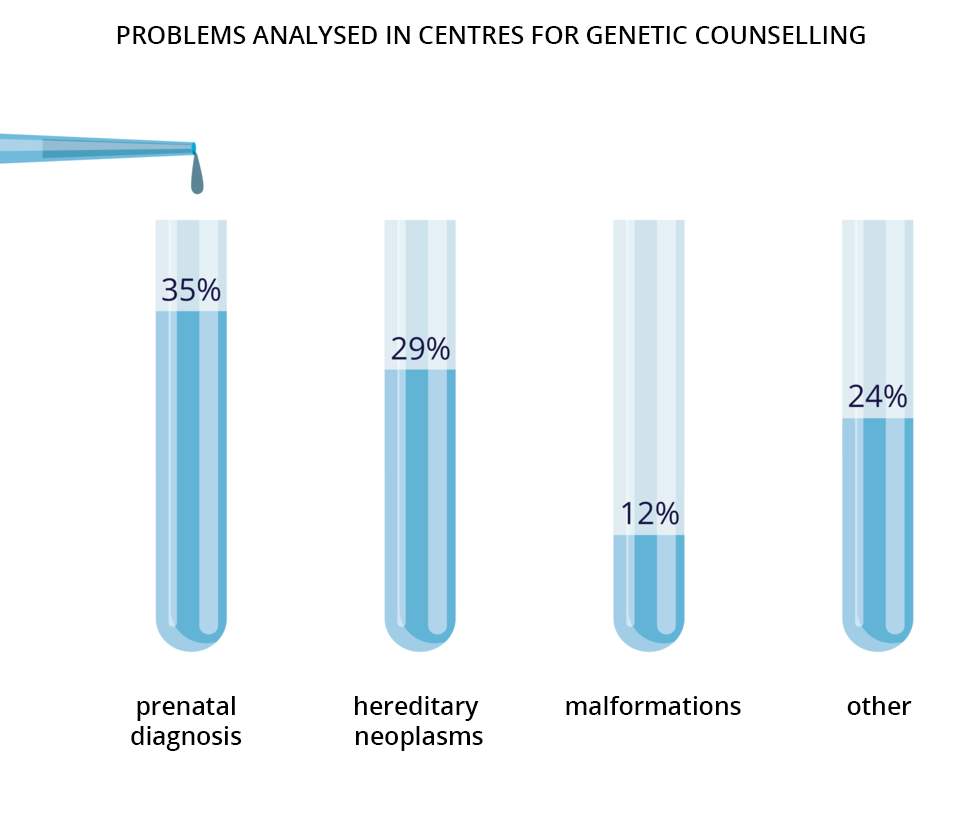
There are over 20 centres for genetic counselling in Poland. For example, tests specifying predispositions to most common neoplasms (e.g. breast cancer, colorectal cancer) can be conducted there.
Prevention of genetic diseases and congenital disorders
The most common cause of contacting the centre for genetic counselling are miscarriages or giving birth to a child with a congenital disorder. In majority of these cases both parents and a child should be covered by the genetic counselling. It is estimated that approx. 35% of congenital disorderscongenital disorders are caused only by genetic factors.
Prevention of genetic diseases may be divided into primary and secondary. Primary prevention covers the activities aiming at eliminating the possibility of occurring of abnormal genotype and malformations. For example, it is recommended to women in reproductive age to take vitamin B9 (folic acid), to prevent abnormal development of nervous system in a child. Secondary prevention covers the entirety of genetic counselling and prenatal diagnosis in order to detect genetic diseases of foetus. Prenatal testing should be performed in a pregnant woman if:
she is over 35 years old;
in previous pregnancies chromosome abnormalities were found in her case;
the occurrence of chromosome abnormalities was found in hero or in child’s father;
it was stated on the basis of the family history that there is an elevated risk of giving birth to a child with genetic disease;
abnormalities in the anatomy or development of foetus were found during the medical ultrasound testing.
The early detection of a defect, even at the stage of foetal development, allows for initiating a therapy even before child’s birth. It provides the possibility to improve the condition of foetus and increases the chances of a child to be born in better general condition. In the cases of severe defects parents may consider the possibility to terminate the pregnancy.
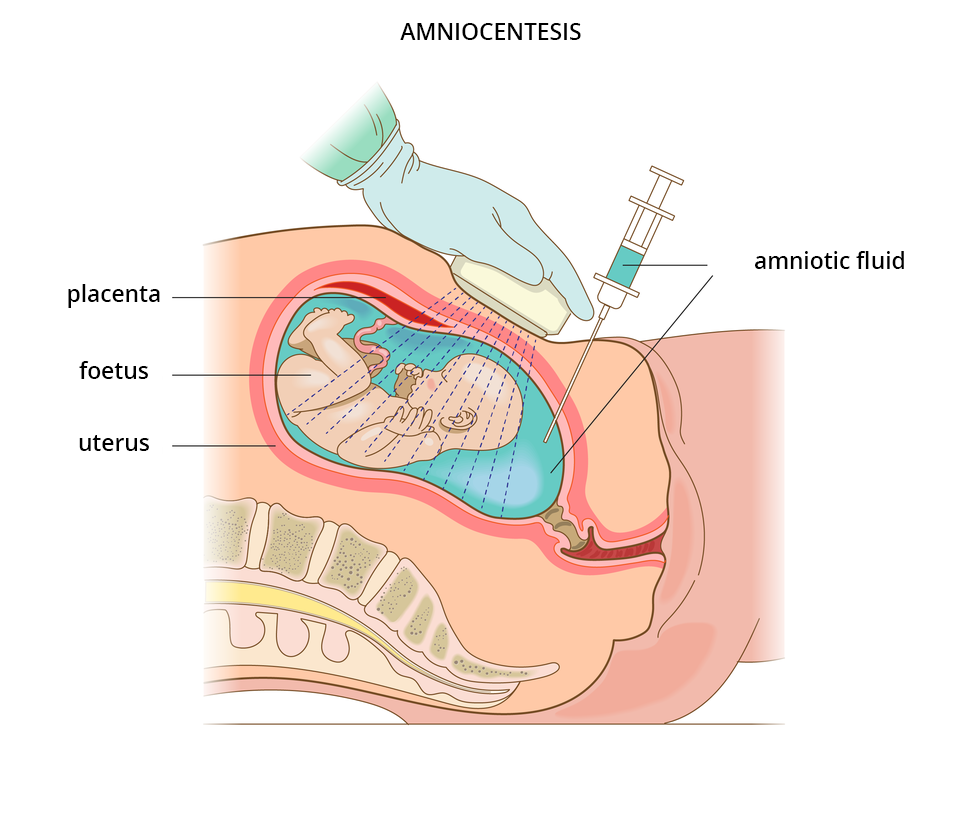
Prenatal testing may be invasive, they consist in breaking the continuity of tissues, for example during amniocentesisamniocentesis, which means sampling amniotic fluid, cord blood or tissues of foetus, which can be risky for a pregnant woman. However, non‑invasive testing, for example medical ultrasound testing of foetus, do not harm mother and child.
Match a genetic disease with the type of mutation which causes this disease.
Down syndrome, cri du chat syndrome, fragile X syndrome, sickle cell anaemia
| change in the number of chromosomes | |
| change of one nucleotide into another | |
| deletion | |
| multiplying of a fragment of one gene from generation to generation |
What are the characteristics of genetic diseases caused by single-gene mutations? Tick all correct answers.
- They are inherited according to the rules of Mendelian inheritance.
- In some cases they are inherited dominantly.
- In some cases they are inherited recessively.
- They are the result of concurrence of a defective gene and environment.
What is the aim of performing prenatal tests in pregnant women? Indicate correct answer.
- The assessment of mother’s health condition and early detection of possible ailments related to pregnancy.
- The assessment of the health condition of foetus and early detection of its possible congenital disorders.
- The assessment of mother’s health condition in terms of the ability to get pregnant again.
- The assessment of foetus’ health condition in terms of its future intellectual potential.
Summary
Hereditary diseases are the result of mutations.
People with genetic disease or congenital disorder, as well as their families, may profit from genetic counselling refunded by the state.
Find out where is a centre for genetic counselling which is the nearest to your place of residence, and what tests it has in its offer.
Keywords
Genetic counselling, mutations, genetic diseases
Glossary
amniopunkcja – metoda diagnostyczna polegająca na pobraniu płynu owodniowego kobiety w ciąży w celu przeprowadzenia badań genetycznych
poradnictwo genetyczne – udzielenie porady oraz objęcie pomocą całej rodziny osoby cierpiącej na chorobę genetyczną lub wrodzoną wadę rozwojową
wrodzona wada rozwojowa – nieprawidłowość w budowie zewnętrznej lub wewnętrznej powstająca w czasie rozwoju wewnątrzmacicznego, będąca zwykle przyczyną niepełnosprawności dziecka; może być uwarunkowana przez czynniki genetyczne albo zewnętrzne: wirusy, promieniowanie jonizujące, niektóre leki