How do inventions come about?
to explain the history of selected 19th century inventionsinventions and their significance;
to indicate, using examples, positive and negative effects of the dissemination of inventionsinventions;
to realize the conditions connected with the creation and dissemination of inventionsinventions.
The nineteenth century brought many revolutionary inventionsinventions that changed human life once and for all. Thanks to the railways and steam vessels it was possible to move faster, more conveniently and safely. The invention of the telegraphtelegraph made it possible to transfer information over large distances relatively quickly. The nineteenth century is also the age of great minds and ingenious inventors – Thomas Edison, Alexander Bell and Samuel Morse. They have contributed to the development of science and thus made life easier for millions of people around the world.
Familiarize yourself with the most important inventors of the age of steam and electricity.
Match the invention to its inventor.
cinematograph, railway, radio, bulb, phone, telegraph, daguerreotype
| Thomas Alva Edison | |
| Louis Jacques Daguerre | |
| George Stephenson | |
| Guglielmo Marconi | |
| Alexander Graham Bell | |
| Smuel Finley Morse | |
| Bracia Lumière |
Match the invention to their functions and dates of invention.
telegraph, bulb, cinematograph, phone, daguerreotype, radio, gramophone, steam machine, steam locomotive
| Invention | Function | Invention date |
|---|---|---|
| telegraph | ||
| bulb | ||
| cinematograph | ||
| phone | ||
| daguerreotype | ||
| radio | ||
| gramophone | ||
| steam machine | ||
| steam locomotive |
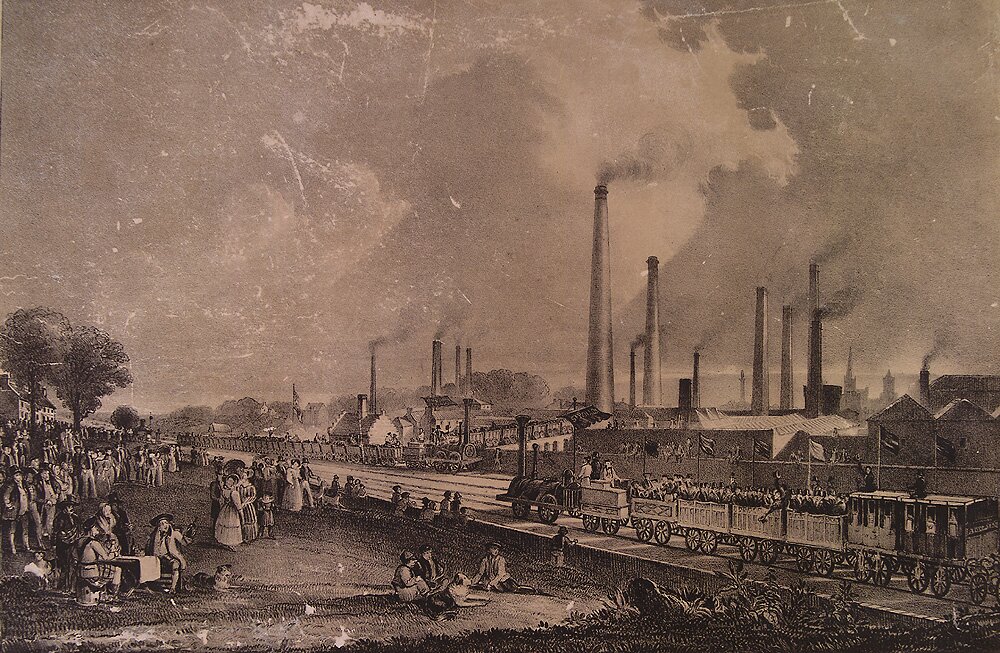
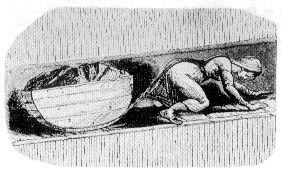
Mark the correct fragments with color.
{red} "People do not have a free moment for themselves. {/red} They work like they would be rich in the evening and die the next day. [...] From everywhere, only the rumbling of hammers, clouds of smoke fly out of great blacksmiths with a hiss. You can say the interior of a modern mine, everything black, dirty, even though money and gold are mined there."
"Thirty or forty manufactories rise to the top of the hill. [...] Around them there are scattered plebs' houses. {red} Between them they spread out the terrain {/red} {red} contaminated, which for a long time do not resemble {/red} {red} carefree parks, {/red} just like the outskirts of cities. {red} Earth has been prepared there for new homes, {/red}{red} mixed with waste,{/red} {red}repels with black, smolistic appearance."{/red}
"It was established in factory districts that {red}parents send their seven or eight-year-old sons and daughters - {/red}{red}in winter and summer, {/red} {red} at six in the morning, {/red}{red}sometimes in the dark, {/red}{red}sometimes in frost and snow - to factories, {/red} where there is often high temperature, harmful to human health. Where employment often works until twelve noon, after which they have an hour for dinner and return to work again, which in most cases lasts until eight o'clock. {red} Entrepreneur considers {/red} {red} workers only for the profit tool."{/red}
Language practice. Match pairs: English and Polish.
wynalazek, dagerotyp, żarówka, telefon, maszyna parowa, telegraf, kino, radio
| electrical telegraph | |
| daguerreotype | |
| cinema | |
| radio | |
| telephone | |
| light bulb | |
| steam engine | |
| invention |
Keywords
electrical telegraph, daguerreotype, cinema, radio, telephone, light bulb, steam engine, invention
Glossary
telegraf – urządzenie do przekazywania wiadomości tekstowych na odległość
dagerotyp – pierwsze fotografie wykonane na metalowej płytce; również urządzenie służące do wykonywania pierwszych fotografii
maszyna parowa – urządzenie, które zmienia wodę w parę wodną, napędzającą tłoki maszyny
silnik elektryczny – maszyna elektryczna, która zmienia prąd w energię mechaniczną
wynalazek