In European salons. Great Emigration
to describe the main trends and figures of the Great Emigration;
to characterize the achievements of Poles in exile after the fall of the January Uprising;
to analyze and evaluate the influence of the Great Emigration on the european political movement and internal cospiratory sociaty.
The emigration movement of the Polish population in the first half of the 19th century is called the Great Emigration, and its immediate cause was the fall of the November Uprising. It was a unique phenomenon on a European scale. This was determined by its social and professional composition as well as worldviews. Former activists of the Patriotic Society established the Polish National Committee in exile. It was led by Joachim Lelewel. A significant role in the history of Polish emigration was played by the Polish Democratic SocietyPolish Democratic Society (TDP), founded in 1832 by several activists, led by Wiktor Heltman. Polish emigrants residing in England, who became famous for the creation of an organization called Gromady Ludu Polskiego were characterised by extreme left political agenda. There was also a conservative group of immigrants, led by Prince Adam Jerzy Czartoryski. Part of the environment considered him as a future king of reborn Poland. The group of his supporters took the name of Lambert HotelLambert Hotel.
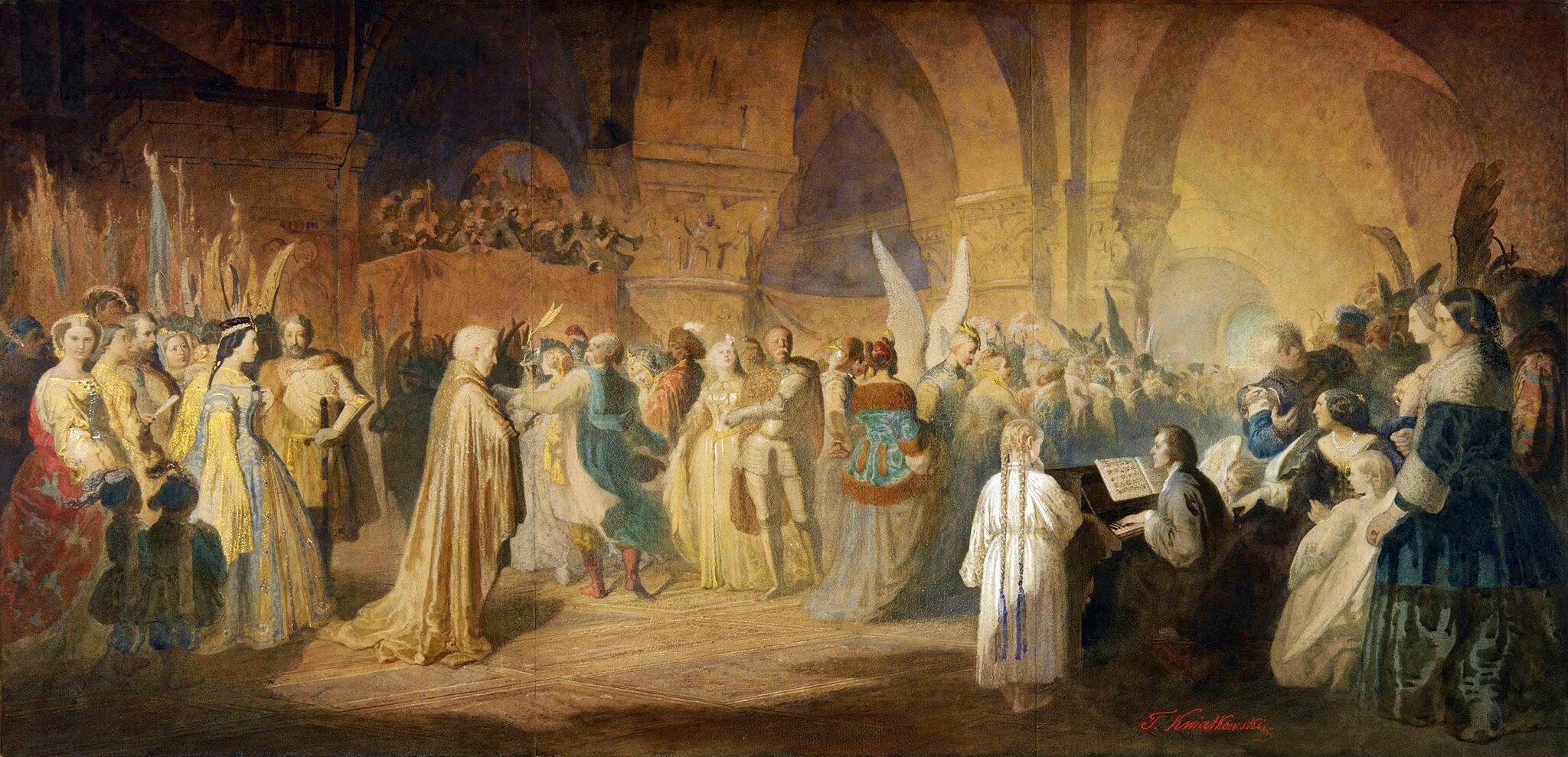
Teofil Antoni Jaxa Kwiatkowski (1809‑1891) was an outstanding painter of the Romanticism. He took part in the November Uprising, and after its fall - like many of its participants - he settled in France, where he stayed for the rest of his life. „Chopin's Polonaise” is one of his most important works, and at the same time a tribute to the entrepreneurial spirit of his compatriots. He has immortalized on the canvas the politicians and female activists of the time of the Great Emigration. For a reason. Polish emigrants led a diversified public life, they caused the creation of extensive political organizations, often operating for decades, published their own press, organized mutual assistance. At the same time, they did not lack passionate disputes caused by a different vision of future Poland and a different approach to important social issues.
Kwiatkowski’s work leaves no doubt as to his political sympathies. In the painting we can see the Czartoryski family. The grey, old man, Prince Adam Jerzy Czartoryski, the leader of a political camp called the Lambert Hotel, carries a royal coat. In this way, the artist reminds us that part of the Polish community considered Czartoryski as the future king of reborn Poland. The name of the party, the Lambert Hotel, was derived from the name of the Prince's seat in Paris. It assumed that the way to regain independence was an extensive diplomatic campaign and the necessary circumstance – the outbreak of the European war. The participants of the ball move in the rhythm of Fryderyk Chopin's music in front of his piano creating a colourful group. Military banners and flags in the background symbolize a nation ready to fight, as does the Polish nobility portrayed on the right side of the painting in traditional kontusz costumes. Above their heads one can see the wings of the Polish Hussars. Among the portrayed figures living at that time, the painter also added a hero of Polish history, Zawisza Czarny, a symbol of knightly virtues, in order to emphasize his patriotic readiness. He placed him in the central part of the painting – thus emphasizing that its main theme is not a ball, but the fight for independence. A barefoot girl with braids – a symbol of the people, looks at the Chopin who plays the piano.
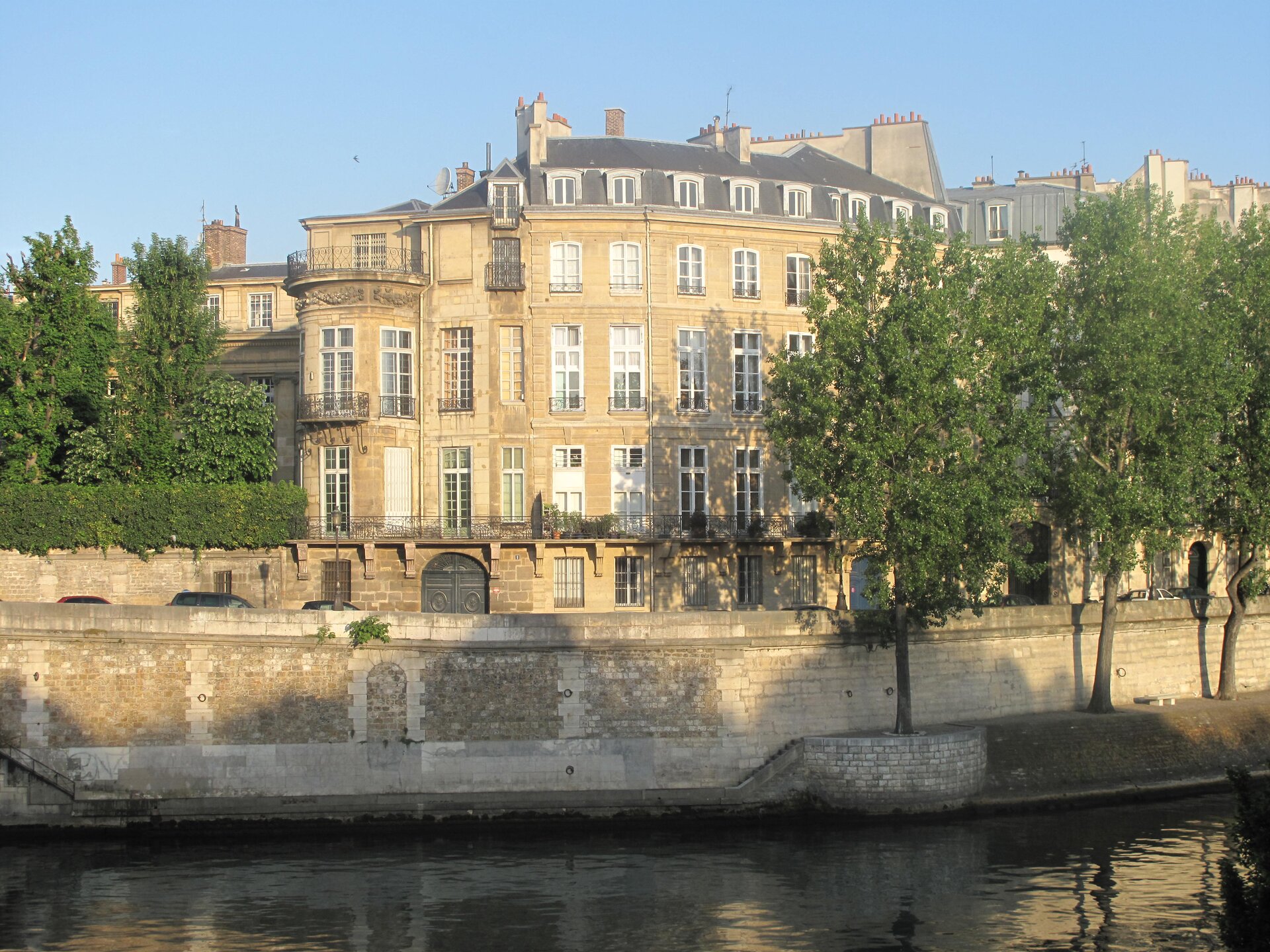
The Lambert Hotel was not only a centre of Polish foreign policy, but also an important centre of education and national culture. It had its own scientific institutions: The Historical and Literary Society and the Polish Library, as well as Polish schools: a high school in Batignolles district and a school for teachers and educators, called the Institute for Ladies Education. Anna Czartoryska from Sapieha family, Prince Adam's wife, had a great merit in their establishment. Thanks to the efforts of the Duchess, the Charitable Society of Polish Ladies in Paris was established, which provided material and medical assistance to the poorest emigrants, in particular widows and orphans. Every year, it organized charity balls aimed at raising funds for philanthropic assistance. The similar task had the St. Casimir Institute, created later, for old‑age insurgent veterans. In Kwiatkowski's painting, Duchess Anna wears a costume modelled on that of Barbara Radziwiłł. In the background, one can see the children of Adam and Anna, wearing national costumes, who will continue the political task of leading the emigration. Those are Władysław Czartoryski and Izabella Czartoryska, his daughter. The artists in exile are symbolised by Fryderyk Chopin, located in the lower right corner of the painting. He plays the piano, and his friend and great love, George Sand, stands next to him. In the painting, the artist also immortalized a national bard, Adam Mickiewicz, who is gesticulating lively almost above the Chopin's head.
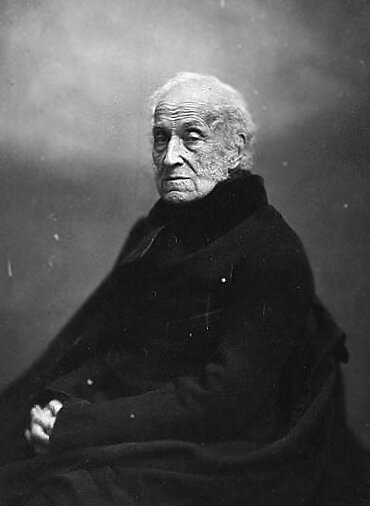
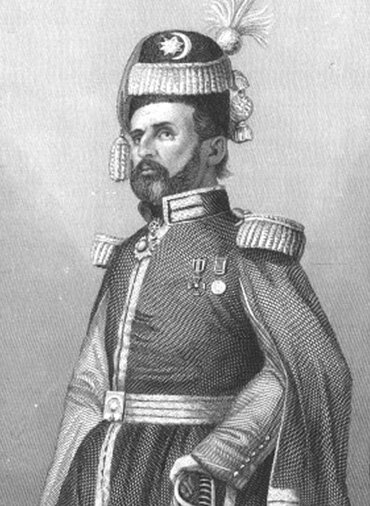
The actions of diplomatic envoys of Prince Adam Czartoryski were aimed at creating in Europe an atmosphere favourable to the Polish cause and at using every conflict that arose to transform it into a crusade of liberal Western states against the Tsarist autocracy in Russia. The prince himself placed great political expectations in the conflicting interests of great powers in the Near and Middle East. With the help of Sadyk Pasha (Michał Czajkowski), he started cooperation with Turkey and activists of national movements in the Balkans. Czartoryski's political agents „resided” not only in Belgrade, Bucharest, Jassy and Istanbul, but in their search for allies against Russia they also reached the Don Cossacks and Caucasian Cherkess, who were reluctant to the tsarist movement. In the Vatican, they tried to change the stance of Pope Gregory XVI, who was unfavourable to the Polish independence aspirations.
Match the political and social slogans presented in the table with the organizations representing the camps of the Great Emigration.
Lambert Hotel, Polish Democratic Society, Gromady Ludu Polskiego
| Name of the organization | Party platform | Social program | System of the independent Poland |
|---|---|---|---|
| Lambert Hotel | |||
| Polish Democratic Society | |||
| Gromady Ludu Polskiego |
Complete the text below with the missing terms.
1/4, 3/4, 8 thousand, woman soldiers, 200, cooks, 200, 5/6
Emigration after the fall of the November Uprising was an unique phenomenon on a European scale, which is why we still call it the Great. This was determined by its social composition and worldviews. At the end of the 30s. of the 19th century, its number was estimated at over ............................ people. The majority of them were military workers, mainly officers. Moreover, for fear of the repression of Nicholas I, politicians and members of state authorities, as well as professors of universities and secondary schools, students, journalists and writers - most of the intelligentsia of the then Poland under Russian partition - left the country. As many as ............................ of emigrants were of noble origin, and only ............................ of plebeian origin (peasant-soldiers, non-commissioned officers and craftsmen). The owners of large fortune confiscated during the uprising constituted a small group. The Great Emigration consisted mainly of men, mostly young ones. Only about ............................ women, wives or relatives fighting in the uprising, as well as a small group of ............................ left Poland.
Match the pairs: English words with Polish definition.
nazwa powstałego na emigracji ugrupowania konserwatywnego pod kierunkiem księcia Adama Czartoryskiego., demokratyczna organizacja emigracyjna, utworzona 1832 w Paryżu przez radykalnych działaczy, zwolenników ustroju republikańskiego., pensja wypłacana żołnierzom odbywającym zasadniczą służbę wojskową; także zasiłek wypłacany byłym powstańcom listopadowym przez rząd francuski.
| Lambert Hotel | |
| Polish Democratic Society | |
| Soldier’s pay |
Keywords
Lambert Hotel, Polish Democratic Society, Soldier’s paySoldier’s pay
Glossary
Lambert Hotel – nazwa powstałego na emigracji ugrupowania konserwatywnego pod kierunkiem księcia Adama Czartoryskiego.
Polish Democratic Society – demokratyczna organizacja emigracyjna, utworzona 1832 w Paryżu przez radykalnych działaczy, zwolenników ustroju republikańskiego.
Soldier’s pay – pensja wypłacana żołnierzom odbywającym zasadniczą służbę wojskową; także zasiłek wypłacany byłym powstańcom listopadowym przez rząd francuski.