In the shadow of the Big Three. Polish interests during World War II
about the major events of World War II;
to characterize the evens had direct impact on the Polish land and Poles during World War II;
about the territorial changes between 1939 and 1945;
to explain why Poland fell in the Soviet sphere of influence;
to explain why many Poles did not come back to the country after the war.
Theoretically, Poland was among the winners of World War II. However, not Poles but the leaders of superpowers (United States, Soviet Unit and United Kingdom) decided about the post‑war shape of the country. At the conferences in Tehran (1943), Yalta and Potsdam, it was agreed that Poland will be in the Soviet sphere of influence.
The land lost to the USSR in 1939 has never come back to Poland. In return, Poland received – at the expense of Germany – Lower Silesia, Western Pomerania, Warmia and Masuria.
Arrange the following WWII events chronologically (according to years).
- German invasion of Soviet Union
- Japanese attack on Pearl Harbor
- the Battle of Britain
- D-Day and opening of the Western Front in Europe
- the Invasion of Poland
- Surrender of Germany
- Battle of Kursk
- Atomic bombings of Hiroshima and Nagasaki. Surrender of Japan.
Match event to each year, highlighting it with appropriate colour.
{1945}The USSR acknowledges its conquest, and places obedient to it Polish authorities in Warsaw.{/1945}
{1943–1945}The Polish government-in-exile learns about the decisions of the Big Three as the last one.{/1943–1945}
{1939}Germany invades Poland.{/1939}
{1943}The USSR accuses Germany of the Katyn massacre. It breaks the diplomatic relations with the Polish government.{/1943}
{1939}The Polish government-in-exile is established in France.{/1939}
{1939}Under the Molotov–Ribbentrop Pact, USSR takes part in the aggression on Poland.{/1939}
{1943–1945}Soviet dictator Joseph Stalin plays the first role among the Big Three leaders. He dictates his own conditions for Poland: territorial changes and dependency on the USSR.{/1943–1945}
{1941}The Polish government-in-exile signs a treaty with the USSR.{/1941}
{1943}The Polish government-in-exile requests the International Red Cross (IRC) to investigate the massacre.{/1943}
{1945}Germany no longer exists as a state, loosing Silesia and Pomerania in favour of Poland.{/1945}
{1945}The Western States cease to recognise the Polish government in London. They recognise the dependency of Poland on the USSR.{/1945}
{1943}Germans announce the finding of mass graves of Polish officers in a forest near Katyn. They request investigation by the IRC.{/1943}
{1940}The government-in-exile evacuates from France and moves to London.{/1940}
{1945}The government in London looses the international recognition.{/1945}
{1940}The Soviet Union carries out the Katyn massacre on Polish officers.{/1940}
{1945}The Polish government finds out about the the Yalta Conference decisions.{/1945}
Read the following text and choose the correct answers.
The Soviet Union started the war as the ally of {#Germany}/{the United Kingdom}/{France}. It attacked Poland on {1}/{#17}/{30} September {#1939}/{1940}/{1941}. It occupied the {#eastern}/{western} part of Poland. Many of the inhabitants of these areas were relocated to the east - to Siberia and Central Asia - to hard labour camps. On 22 June 1941, Germany attacked the Soviet Union. Consequently, the USSR joined the Anti-Nazi Coalition formed by such states as: {#the United States}/{Japan}/{#the United Kingdom}. Poland was represented in the coalition by the government seated in {Warsaw}/{#London}/{Bucharest}. This government entered into an agreement with the authorities in Moscow. Under the agreement, thousands of Poles were released from Soviet prisons and labour camps (referred to as {ghettos}/{#gulags}/{exterminaton camps}) to form the Polish army. Over the time, differences between the standpoints of the Polish and the Soviet authorities emerged, and the commander of the Polish forces decided to withdraw the army from the USSR.
Read the following text and complete it with the correct names.
Meanwhile, the Soviet Union broke diplomatic relations with the Polish government in 1943. The pretext was the discovery of mass graves of Polish officers murdered by orders of the Soviet authorities in {#Katyn} / {Auschwitz} / {Moscow}. The Soviet authorities did not admit to the crime and started to openly seek the placement of persons obedient to Moscow it the future Polish government. Such a government would not oppose to the loss by Poland of its eastern territory. It would allow the implementation of the communist ideology in Poland and making it a country dependent on the USSR. Joseph Stalin persuaded the leaders of the other coalition states to such a solution during the conferences in {#Tehran}/{Washington}/{#Yalta}/{Cairo}/{#Potsdam}/{Moscow}.
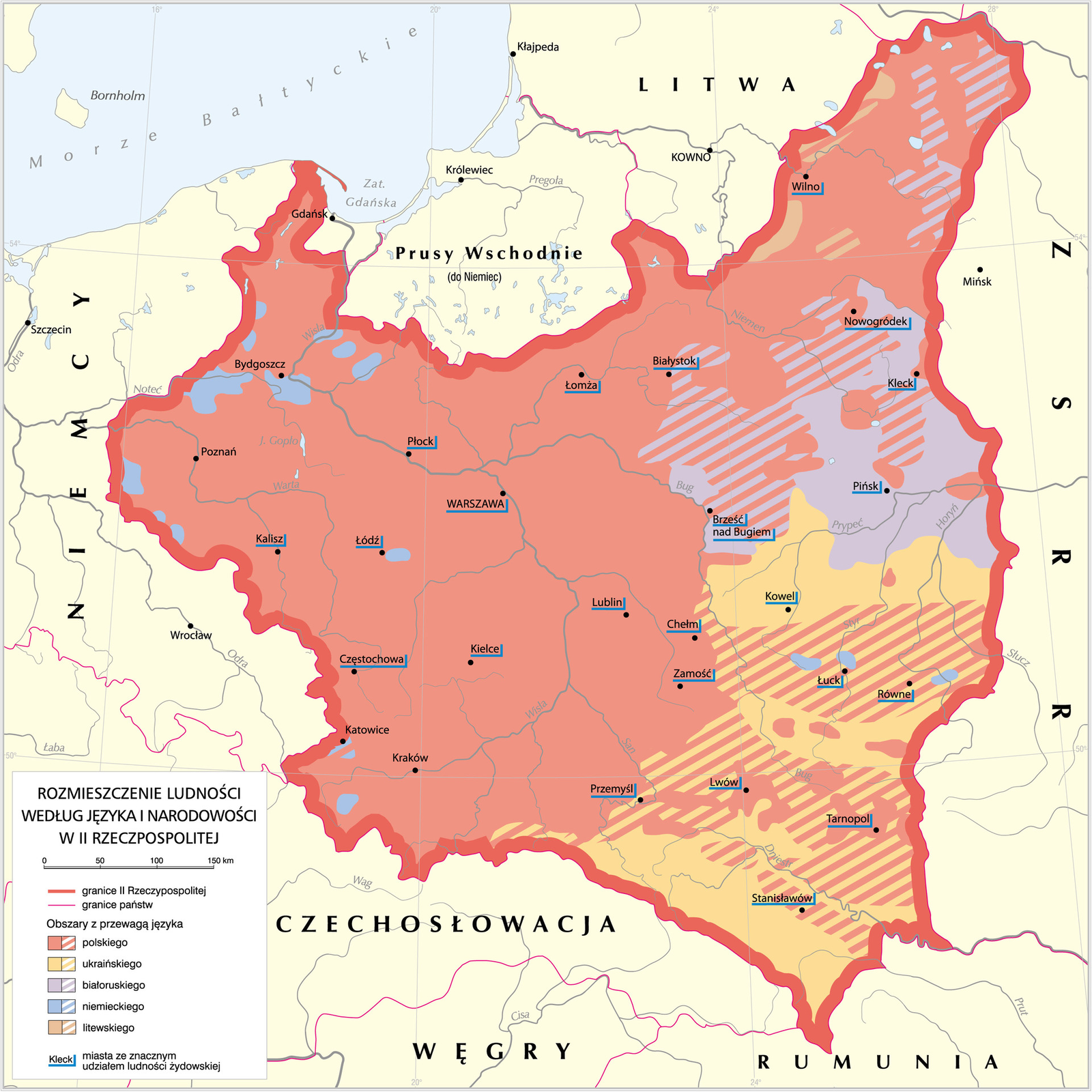
Imagine that you live in Lviv and you are organising Christmas Eve supper. In what state are you going to celebrate Christmas Eve in the following years?
Poland, USSR, Germany
| 1938 | |
| 1941 | |
| 1939 |
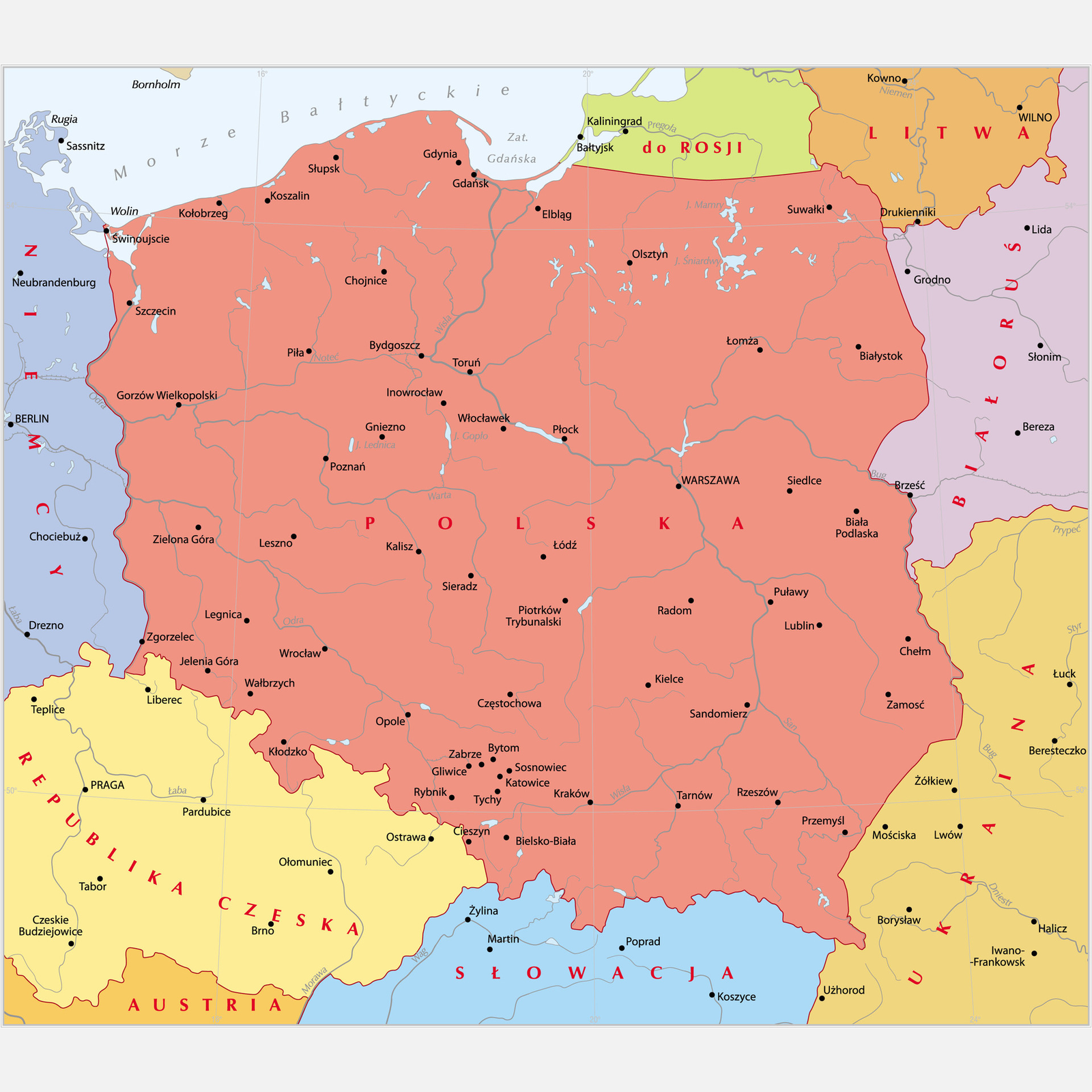
Compare the maps of 1939 and 1945. Assign individual cities to the correct fields.
Opole, Navahrudak, Warsaw, Gdańsk, Wrocław, Poznań, Krakow, Vilnius, Szczecin, Lviv, Katowice
| Cities that belonged to Poland before World War II and are in Poland now | |
|---|---|
| Cities lost by Poland after World War II | |
| Cities incorporated into Poland after World War II |
Keywords
the Big Three, Yalta, Churchill, Roosevelt, Stalin
Glossary
III Rzesza – nazwa państwa niemieckiego pod rządami Adolfa Hitlera w latach 1933‑1945.
Związek Sowiecki – Związek Socjalistycznych Republik Sowieckich, komunistyczne państwo istniejące w latach 1922‑1991 na terenie Europy i Azji.
Alianci – państwa walczące przeciwko Niemcom i ich sojusznikom podczas II wojny światowej.
Kapitulacja – poddanie się części lub całości wojska przeciwnikowi. Może być bezwarunkowa lub pod pewnymi wcześniej ustalonymi warunkami. Najczęściej kończy konflikt zbrojny.
Łagry – obozy pracy przymusowej w Związku Sowieckim, w których więźniowie wykonywali ciężką i często niebezpieczną pracę, prowadzącą do ich fizycznego i psychicznego wyniszczenia, a w konsekwencji śmierci.
Zbrodnia katyńska -- zbrodnia popełniona przez policję polityczną Związku Radzieckiego na Polakach wiosną 1940 roku. Wzięci do niewoli Polacy (ponad 21 tys. ludzi) uznani za „wrogów władzy sowieckiej” zostali zamordowani strzałem w tył głowy. Przez 50 lat (1940‑1990) władze ZSRS zaprzeczały swojej odpowiedzialności za ten czyn.
Wielka Trójka – określenie przywódców mocarstw alianckich podczas II wojny światowej (Stanów Zjednoczonych – Roosevelt; Wielkiej Brytanii – Churchill; ZSRR - Stalin), którzy omawiali sprawy wojenne i kształt przyszłego świata na konferencjach międzynarodowych w Teheranie (1943), Jałcie i Poczdamie (obie 1945).