how to describe in English the transformation of internal energy in the processes of heating, cooling, meltingmeltingmelting and freezingfreezingfreezing, evaporation and condensation, or prepare,
how to analyze graphs illustrating the changes in body temperature in the process of heating, melting and evaporating.
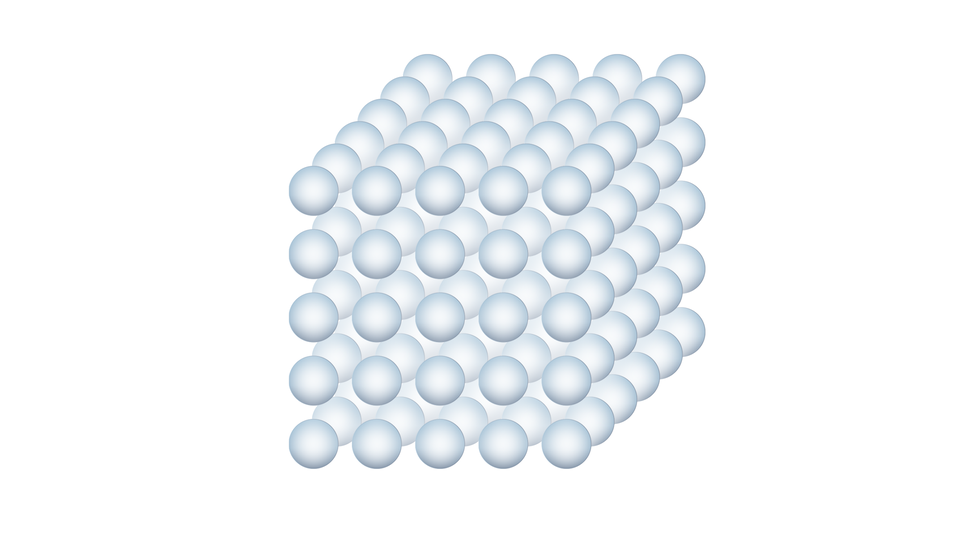
The following slideshow will help us to understand the microscopic model of the body structure of solids, liquids and gases.
R2JfxuuRLH9Zm1
Prezentacja slajdów przedstawia mikroskopowy model budowy ciała stałych cieczy i gazów. Instrukcja obsługi z poziomu klawiatury: 1. Uruchomienie aplikacji - ENTER, 2. Na każdym ze slajdów czytany jest automatycznie tekst alternatywny po polsku, 3. Przy pierwszym uruchomieniu na pierwszym slajdzie, czytanie tekstu po angielsku - TAB, 4. Przejście między slajdami: do następnego slajdu - TAB, do poprzedniego slajdu - TAB + SHIFT, 5. Przejście do czytania napisu po angielsku - strzałka w górę + strzałka w dół (czyta tekst po angielsku widoczny na slajdzie).
Prezentacja slajdów przedstawia mikroskopowy model budowy ciała stałych cieczy i gazów. Instrukcja obsługi z poziomu klawiatury: 1. Uruchomienie aplikacji - ENTER, 2. Na każdym ze slajdów czytany jest automatycznie tekst alternatywny po polsku, 3. Przy pierwszym uruchomieniu na pierwszym slajdzie, czytanie tekstu po angielsku - TAB, 4. Przejście między slajdami: do następnego slajdu - TAB, do poprzedniego slajdu - TAB + SHIFT, 5. Przejście do czytania napisu po angielsku - strzałka w górę + strzałka w dół (czyta tekst po angielsku widoczny na slajdzie).
Let us consider, for example, how the temperature of ice with the initial temperature of -30°C changes.
R1PNJUvBp9C4r
Ilustracja interaktywna przedstawia wykres zależności temperatury od dostarczonej energii w procesie podgrzewania wody. Narysowana jest oś pozioma opisana delivered energy i oś pionowa opisana temperature. Od punktu styku osi narysowany trójkąt opisany ice at the temperature of -30 stopni C. Od niego strzałka skierowana do góry w prawo oznaczona numerem 3, wskazująca na trójkąt opisany ice at the temperature of 0 stopni C. Od niego pozioma strzałka skierowana w prawo opisana ice heating - melting, wskazująca na naczynie wypełnione wodą opisane water at the temperature of 0 stopni C. Od niego strzałka skierowana do góry w prawo oznaczona numerem 2, wskazująca na naczynie wypełnione wodą opisane water at the temperature of 100 stopni C. Od niego pozioma strzałka skierowana w prawo opisana water heating - boiling, wskazująca na koło z małymi kółkami wewnątrz opisane steam at 100 stopni C. Od niego strzałka skierowana do góry w prawo oznaczona numerem 1. Na ilustracji widoczne są numery, a na nich podpisy. 1. steam heating {audio}, 2. water heating {audio}, 3. ice heating {audio}. Początkowo jest bryła lodu o temperaturze minus 30 stopni Celsjusza, ogrzewanie tej bryły będzie zwiększać temperaturę aż do 0 stopni Celsjusza. Przy 0 stopni Celsjusza dostarczanie ciepła nie spowoduje zmiany temperatury lodu, tylko lód zacznie topnieć. Dopiero po stopieniu całego lodu, podgrzanie wody będzie powodować zwiększenie temperatury do 100 stopni Celsjusza. Powyżej tej temperatury nastąpi kolejne przejście fazowe wody w parę wodną.
Ilustracja interaktywna przedstawia wykres zależności temperatury od dostarczonej energii w procesie podgrzewania wody. Narysowana jest oś pozioma opisana delivered energy i oś pionowa opisana temperature. Od punktu styku osi narysowany trójkąt opisany ice at the temperature of -30 stopni C. Od niego strzałka skierowana do góry w prawo oznaczona numerem 3, wskazująca na trójkąt opisany ice at the temperature of 0 stopni C. Od niego pozioma strzałka skierowana w prawo opisana ice heating - melting, wskazująca na naczynie wypełnione wodą opisane water at the temperature of 0 stopni C. Od niego strzałka skierowana do góry w prawo oznaczona numerem 2, wskazująca na naczynie wypełnione wodą opisane water at the temperature of 100 stopni C. Od niego pozioma strzałka skierowana w prawo opisana water heating - boiling, wskazująca na koło z małymi kółkami wewnątrz opisane steam at 100 stopni C. Od niego strzałka skierowana do góry w prawo oznaczona numerem 1. Na ilustracji widoczne są numery, a na nich podpisy. 1. steam heating {audio}, 2. water heating {audio}, 3. ice heating {audio}. Początkowo jest bryła lodu o temperaturze minus 30 stopni Celsjusza, ogrzewanie tej bryły będzie zwiększać temperaturę aż do 0 stopni Celsjusza. Przy 0 stopni Celsjusza dostarczanie ciepła nie spowoduje zmiany temperatury lodu, tylko lód zacznie topnieć. Dopiero po stopieniu całego lodu, podgrzanie wody będzie powodować zwiększenie temperatury do 100 stopni Celsjusza. Powyżej tej temperatury nastąpi kolejne przejście fazowe wody w parę wodną.
Scheme of the effects of the internal energy increase for water which is first in the form of a block of ice with the initial temperature of -30°C
At the beginning, we have a block of ice at the temperature of -30°C. Heating will cause a gradual increase of the temperature: -25°C, -20°C, -15°C, -10°C, -5°C till to 0°C. At this point, however, this simple the process will stop at 0°C (at normal pressure). The supply of heat will not cause the change the temperature of ice for some time. Instead, the ice will start to melt.
Water, which has been formed after whole ice has melted, will start reacting in the standard way, i.e. further heating will cause the increase of its temperature. However, it will behave in this way only to a certain point, which is 100°C. Instead of the increase in the temperature of water, further supply of heat will result in its subsequent phase transition in steam. We are dealing with evaporationevaporationevaporation in whole volume, i.e. evaporation. Only after changing the whole water into steam, heating the water in the volatile state will already take place naturally until quite high (but not very high!) temperatures have been obtained. For example, at temperatures of many thousand degrees, pairs of water molecules disintegrate into individual atoms: oxygen and hydrogen).
Obviously, the scheme described above applies not only to ice, but to most substances.
Summary
Melting, evaporation and sublimation are processes of change of state of matter which require the supply of energy to a substance in the form of heat.
The supplied energy in the form of heat causes the internal energy of the body to increase. The energy resulting from the mutual interactions of atoms and molecules grows.
Coagulation, liquefaction and resublimation are processes of change of state of matter, which require giving energy in the form of heat through a substance.
Cast heat reduces the internal energy of the body. The potential energy resulting from mutual interactions of atoms and molecules decreases.
Exercises
Exercise 1
R1UpquwBOdIdk1
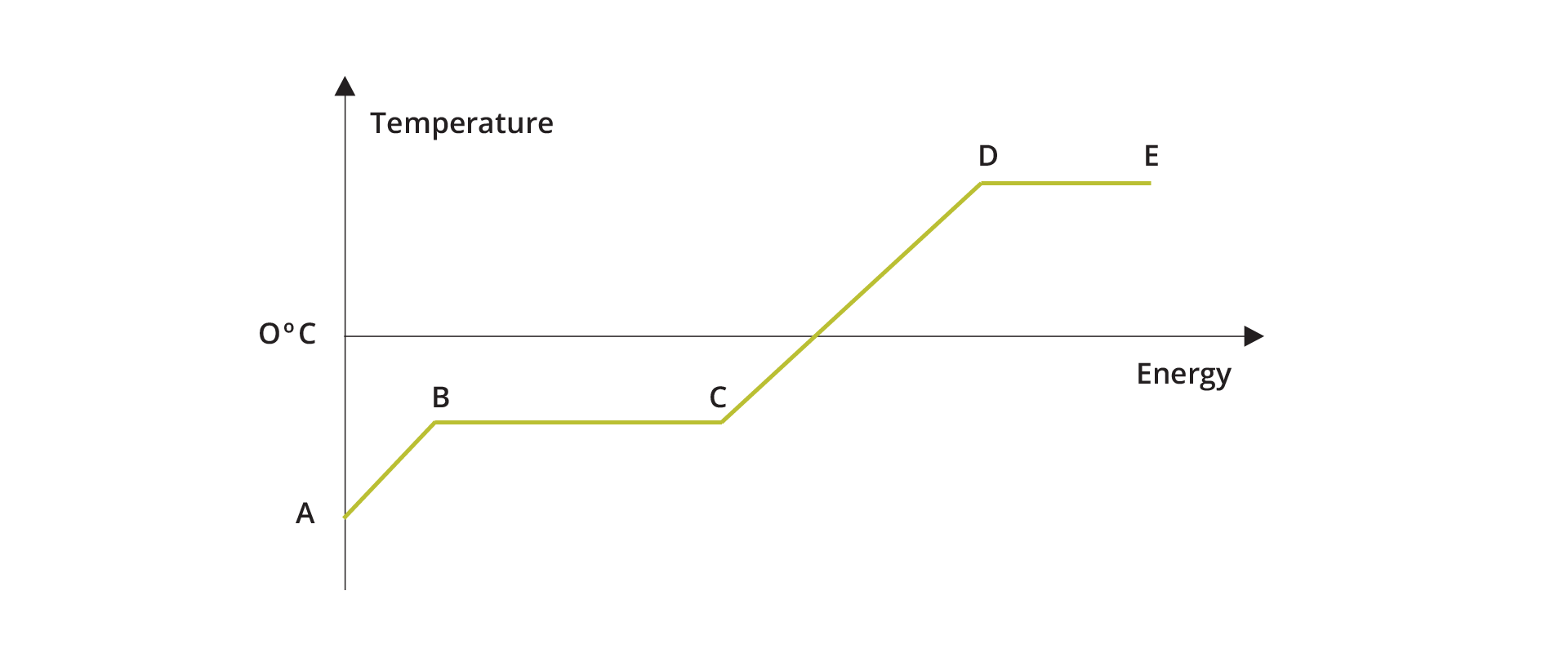
Ilustracja przedstawia wykres złożony z czterech połączonych odcinków. Oś pozioma opisana energy i oś pionowa opisana temperature. Zaznaczony jest punkt na przecięciu osi 0 stopni Celsjusza. Ukośny odcinek AB skierowany w prawo do góry zaczyna się na osi pionowej poniżej osi poziomej i kończy się poniżej osi poziomej. Poziomy odcinek BC skierowany w prawo. Ukośny odcinek CD skierowany w prawo do góry zaczyna się pod osią poziomą, kończy powyżej osi poziomej. Poziomy odcinek DE skierowany w prawo.
Source: GroMar, licencja: CC BY 3.0.
R16PDxx9qqNe9
Wersja alternatywna ćwiczenia: The plot shows the temperature changes of a certain body depending on the energy delivered to it. Determine which sentences are true. Możliwe odpowiedzi: 1. CD segment represents the heating of a solid body., 2. The process of melting is shown in the DE section., 3. The AB section shows the evaporation process., 4. The BC section shows the heating of liquid., 5. The melting temperature of the body is below zero., 6. The boiling point of the body is greater than zero.
Wersja alternatywna ćwiczenia: The plot shows the temperature changes of a certain body depending on the energy delivered to it. Determine which sentences are true. Możliwe odpowiedzi: 1. CD segment represents the heating of a solid body., 2. The process of melting is shown in the DE section., 3. The AB section shows the evaporation process., 4. The BC section shows the heating of liquid., 5. The melting temperature of the body is below zero., 6. The boiling point of the body is greater than zero.
The plot shows the temperature changes of a certain body depending on the energy delivered to it. Determine which sentences are true.
CD segment represents the heating of a solid body.
The process of melting is shown in the DE section.
The AB section shows the evaporation process.
The BC section shows the heating of liquid.
The melting temperature of the body is below zero.
The boiling point of the body is greater than zero.
zadanie
Source: GroMar, licencja: CC BY 3.0.
Exercise 2
We need 20 MJ of energy to melt a certain amount of ice. Let us assume that the heat of ice melting is 7 times smaller than the heat of water evaporation.
1. How much energy is required to evaporate the same amount of water at the boiling point?
2. The melting process of ice lasted 20 minutes. How many minutes will the process of boiling the same amount of water last?
1. 140 MJ.
2. 140 minutes.
Exercise 3
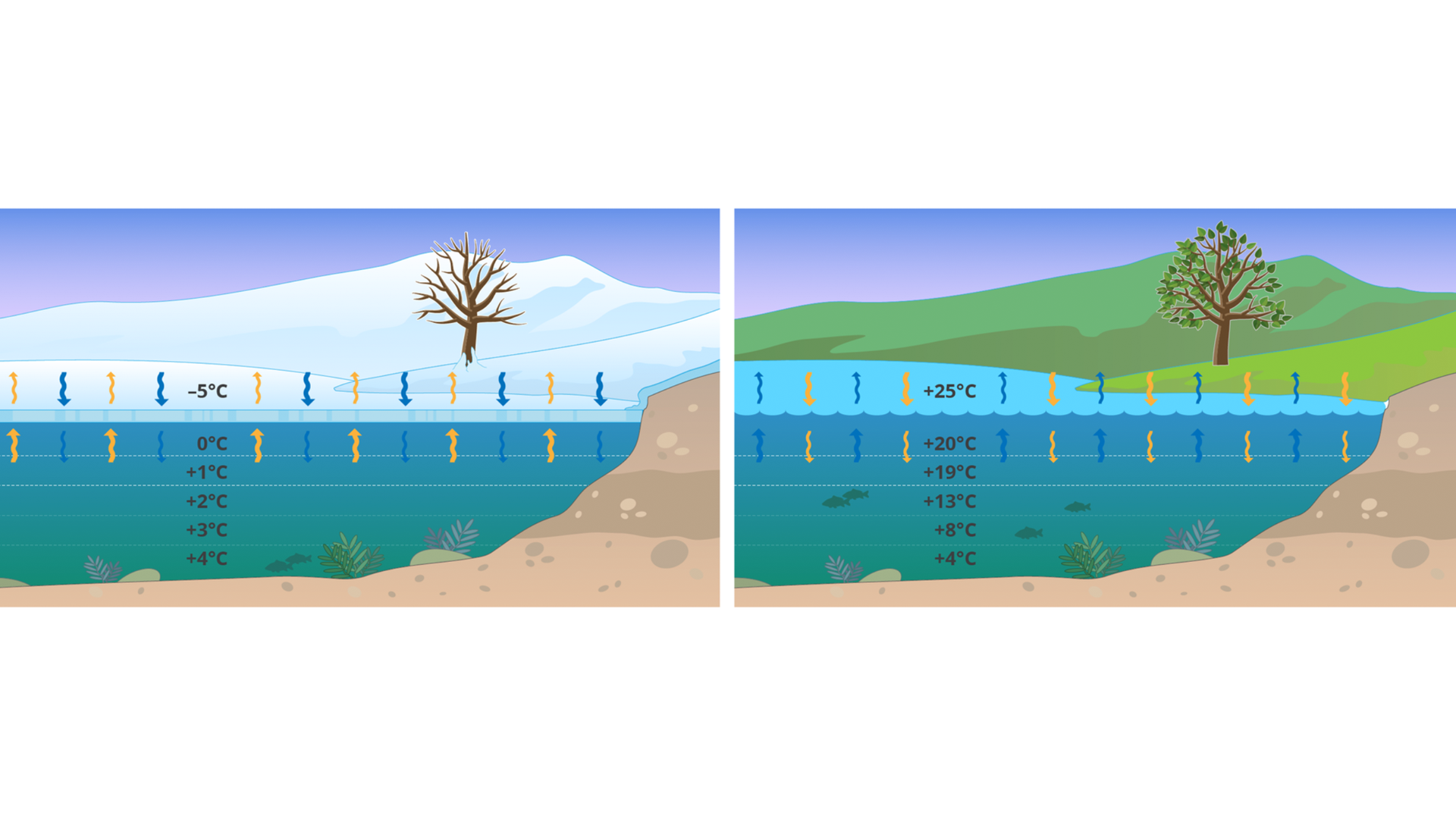
The following figure shows the temperature distribution in a lake in winter and summer.
R1221Nc1RiciO1
Ilustracja po lewej stronie przedstawia przekrój krajobrazu zimą, od dna jeziora, jezioro, lód na powierzchni wody, pole z drzewem, góry i niebo. Pole i góry przykryte śniegiem. Od dna jeziora w górę zapisano temperatury: +4 stopnie C, +3 stopnie C, +2 stopnie C, +1 stopień C, 0 stopni C, powyżej powierzchni lodu -5 stopni C. Strzałki żółte skierowane do góry narysowane nad i pod lodem. Naprzemiennie strzałki niebieskie skierowane do dołu narysowane nad i pod lodem. Ilustracja po prawej stronie przedstawia przekrój krajobrazu latem, od dna jeziora, jezioro, pole z drzewem, góry i niebo. Od dna jeziora w górę zapisano temperatury: +4 stopnie C, +8 stopni C, +13 stopni C, +19 stopni C, +20 stopni C, powyżej powierzchni wody +25 stopni C. Strzałki żółte skierowane do do dołu narysowane nad i pod powierzchnią wody. Naprzemiennie strzałki niebieskie skierowane do góry narysowane nad i pod powierzchnią wody.
Source: GroMar, licencja: CC BY 3.0.
Look closely at the picture and describe in English why there is a difference in the distribution of temperature in winter and in summer?
R3nlCn9f6Gf1h
Exercise 4
Wersja alternatywna ćwiczenia: Indicate which pairs of expressions or words are translated correctly. Możliwe odpowiedzi: 1. wrzenie - boiling, 2. parowanie - evaporation, 3. resublimacja - resublimation, 4. ciepło właściwe - specific heat, 5. energia wewnętrzna - heat supply, 6. dostarczanie ciepła - internal energy
Wersja alternatywna ćwiczenia: Indicate which pairs of expressions or words are translated correctly. Możliwe odpowiedzi: 1. wrzenie - boiling, 2. parowanie - evaporation, 3. resublimacja - resublimation, 4. ciepło właściwe - specific heat, 5. energia wewnętrzna - heat supply, 6. dostarczanie ciepła - internal energy
Indicate which pairs of expressions or words are translated correctly.
wrzenie - boiling
parowanie - evaporation
resublimacja - resublimation
ciepło właściwe - specific heat
energia wewnętrzna - heat supply
dostarczanie ciepła - internal energy
zadanie
Source: GroMar, licencja: CC BY 3.0.
R1QUlbZnCKPOL1
Interaktywna gra, polegająca na łączeniu wyrazów w pary w ciągu jednej minuty. Czas zaczyna upływać wraz z rozpoczęciem gry. Jeden ruch to odkrywanie najpierw jednej potem drugiej karty z wyrazem. Każdy wyraz jest odczytywany. Kolejny ruch to odkrywanie trzeciej i czwartej karty. W ten sposób odsłuchasz wszystkie wyrazy. Nawigacja z poziomu klawiatury za pomocą strzałek, odsłuchiwanie wyrazów enterem lub spacją. Znajdź wszystkie pary wyrazów.
Interaktywna gra, polegająca na łączeniu wyrazów w pary w ciągu jednej minuty. Czas zaczyna upływać wraz z rozpoczęciem gry. Jeden ruch to odkrywanie najpierw jednej potem drugiej karty z wyrazem. Każdy wyraz jest odczytywany. Kolejny ruch to odkrywanie trzeciej i czwartej karty. W ten sposób odsłuchasz wszystkie wyrazy. Nawigacja z poziomu klawiatury za pomocą strzałek, odsłuchiwanie wyrazów enterem lub spacją. Znajdź wszystkie pary wyrazów.
Match Polish terms with their English equivalents.
specific heat
parowanie
internal energy
stan skupienia
melting
energia wewnętrzna
ciepło właściwe
evaporation
state of matter
topnienie
Source: Zespół autorski Politechniki Łódzkiej, licencja: CC BY 3.0.