Longing for freedom. Poles and the January Uprising
direct and indirect causes of the January Uprising;
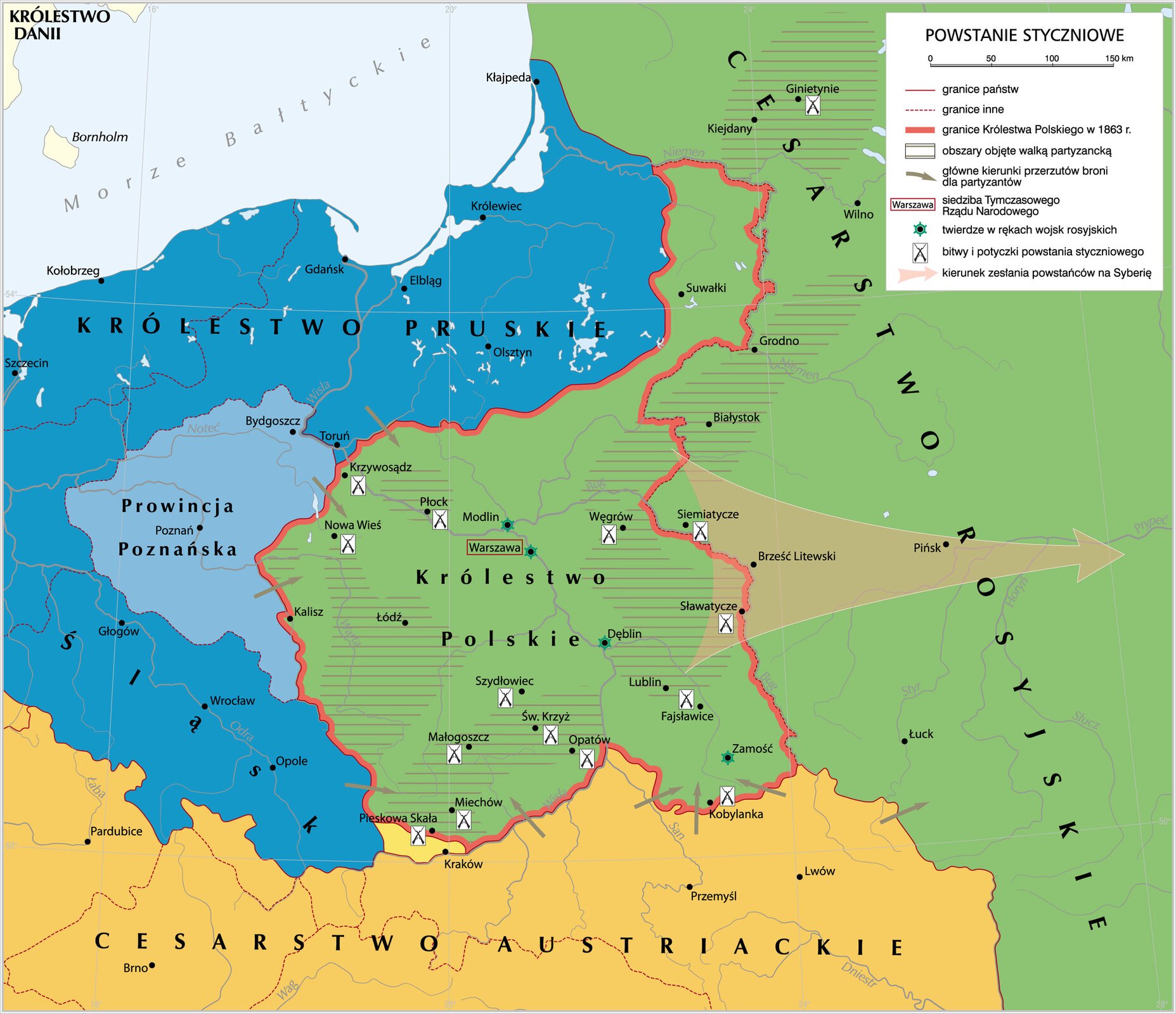
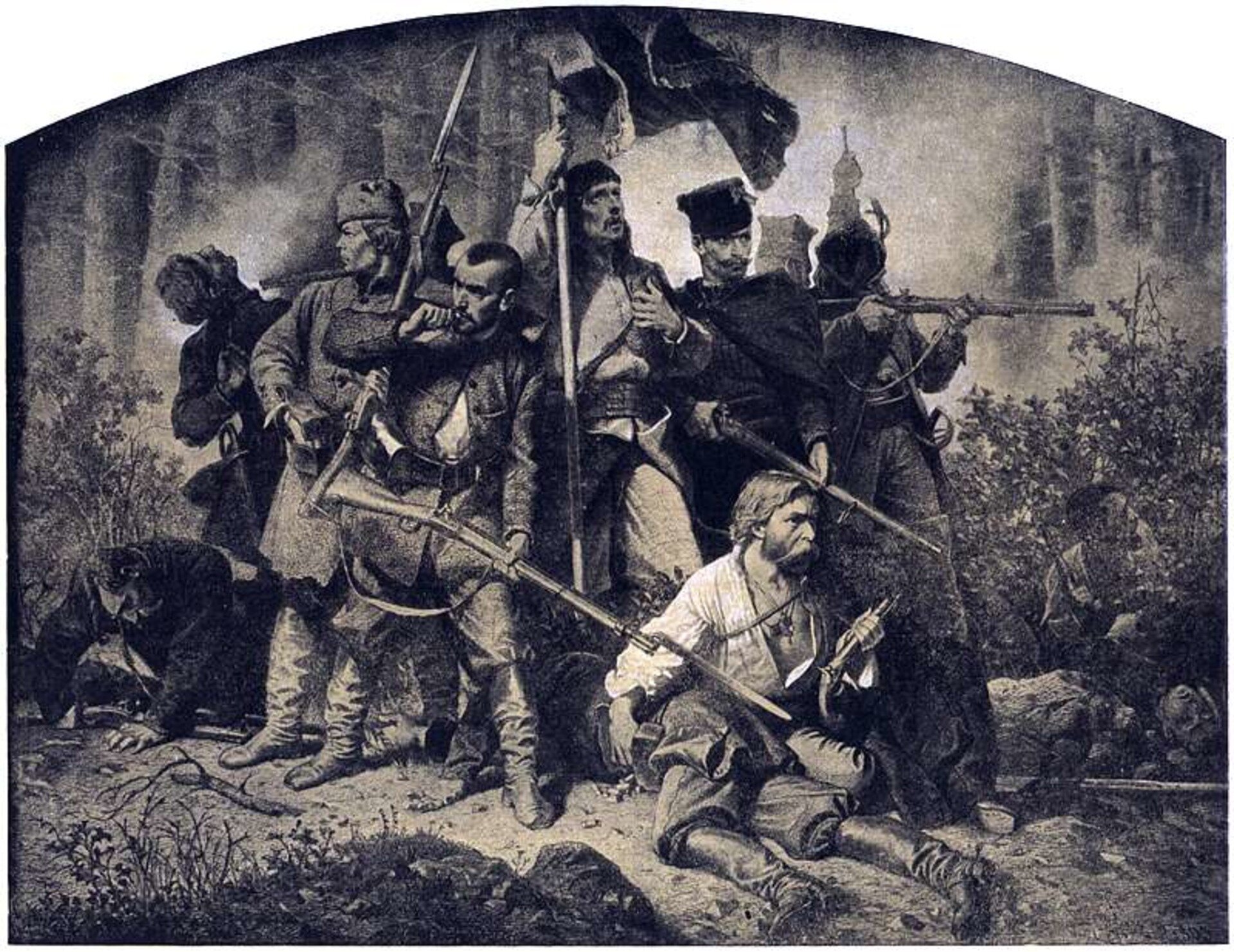
course of insurgent activities and the figures of merit for the armed fight and the organization of the uprising;
places of the most important battles and skirmishes.
After the defeat of Russia in the Crimean War, Tsar Alexander II was forced to mitigate his internal policy in the state. This period is called the post‑Sovastopol's thaw. Since the 60s of nineteenth century in the Kingdom of Poland the patriotic moods increased. The party of the so‑called The WhitesThe Whites counted on Russia's conflict with Western countries, thanks to which Poland would be reborn. The so‑called The RedsThe Reds were seeking to the outbreak of a national uprising. The extraordinary conscription to the Russian army (Polish name: „branka”) accelerated the decisions of the Reds about the beginning of the uprising, which took place on January 22, 1863. The battles during the uprising was a kind of guerrilla war. After the execution of the last dictatordictator of the uprising - Romuald Traugutt (by the hands of the Russians), the uprising fell. Soon after, Tsar Alexander II abolished the political separateness of the Kingdom of Poland. During his reign, a full Russification of Polish education and administration began. In 1874, the Kingdom of Poland, divided into 10 gubernia, was incorporated into Russia with the imposed authorities of the general‑governor. Since 1888 it appeared in official documents as the Vistula LandVistula Land. It meant, it disappeared from the map of Europe for nearly half a century.
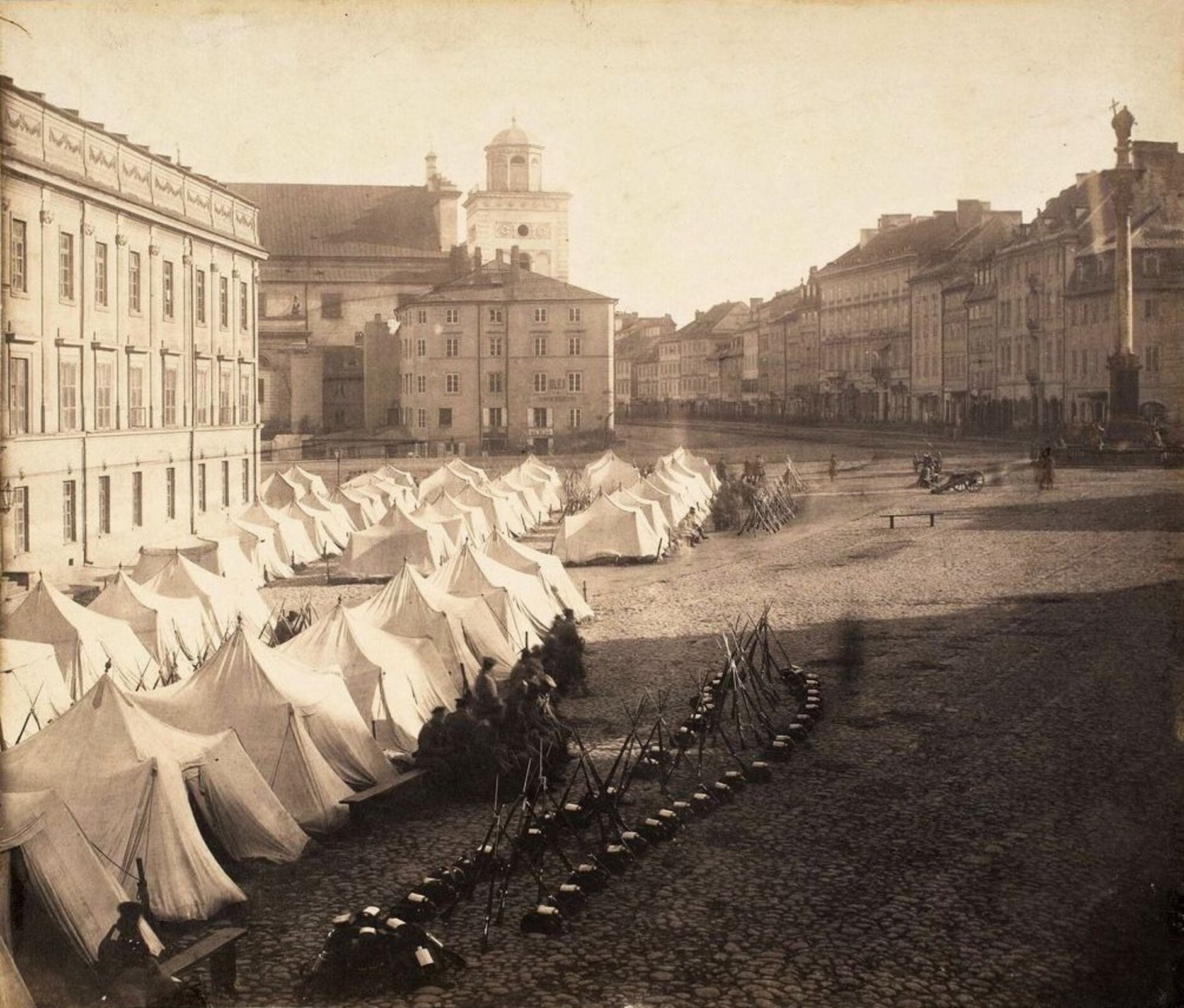
Tell where the Russian army was stationed. Why were they grouped there?
- in Wilanów
- at the Castle Square
- at Powazki
- at the Saxon square
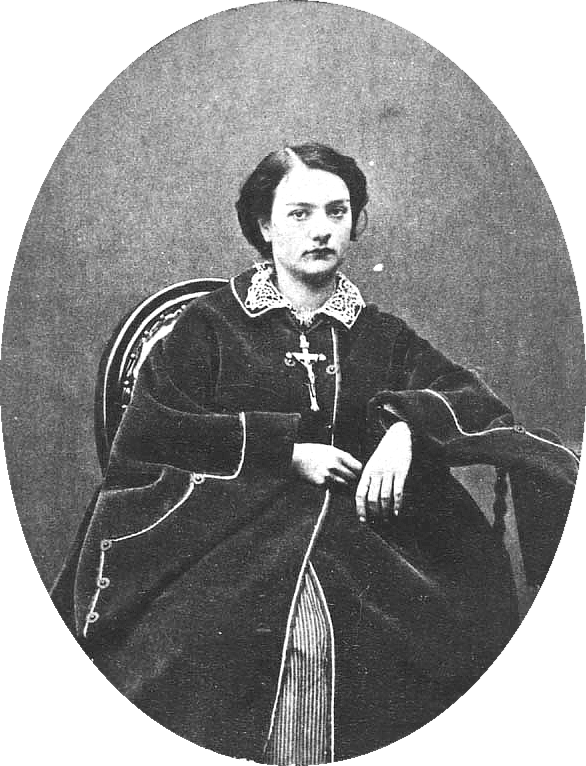
Anna Henryka Pustowójtówna was born in 1838 (or 1843 according to other sources). She was a daughter of Marianna from the Kossak family and a Russian officer of Hungarian origin - Teofil Pustaya. Her patriotic views were most influenced by her grandmother, Brygida Kossakowska. In 1861, Pustowójtówna joined the patriotic demonstrations in Lublin, because of which she sentenced to closure in a Russian Orthodox monastery. In order to delay her exile, the girl simulated a disease, and her grandmother delayed her granddaughter's departure. When she was kept under house arrest in Zhytomyr, she managed to escape with the help of her friends. Dressed up as a boy, with short hair and wearing a junior high school uniform, she took shelter in Michalen, Romanian Moldavia. She was hosted by Zygmunt Miłkowski, who supported Polish refugees and conspirators.
After the outbreak of the January Uprising, Pustowojtówna, together with other volunteers, moved to the Russian Partition. On February 14, 1863, wearing a male costume and under the pseudonym of Michał Smok, she volunteered to join the unit of General Marian Langiewicz in Staszów. She took part in the battles near Małogoszcz, Pieskowa Skała, Chroberz and Grochowiska. The accounts of people living in her times show that she proved great courage. She was the adjutant of Langiewicz, she also often took care of the supply of the unit and was a Russian translator. On March 19, 183, she was arrested together with Langiewicz, while crossing the border. They were recognized despite the use of false documents. Soon, after she made a promise that she would not return to armed struggle, Henryka Pustowójtówna regained her freedom. She went to Prague and then to Paris. She was already a legendary figure. Today, she becomes almost completely forgotten and overlooked in most textbooks.
Henryka Pustowójtówna, however, was one of the most popular among the participants of the uprising. Only a 30‑day episode in the unit was enough for the press to fell in love with the young soldier. Newspapers in Europe and North America willingly wrote about a brave Polish woman who was fighting in the uprising. Photographs and graphics with her image attracted readers and people kept their reproductions at home. Foreign correspondents interviewed her. Henryka Pustowójtówna worked in a florist's shop in Paris, and during the Franco‑Prussian war she was a volunteer nurse. She passed away (in her sleep) in 1881. She had been then a wife, for several years, of an old friend from the unit of Langiewicz, Stanisław Lewenhard, a doctor, who she met again during the war with Prussia in France. She left four children orphans.
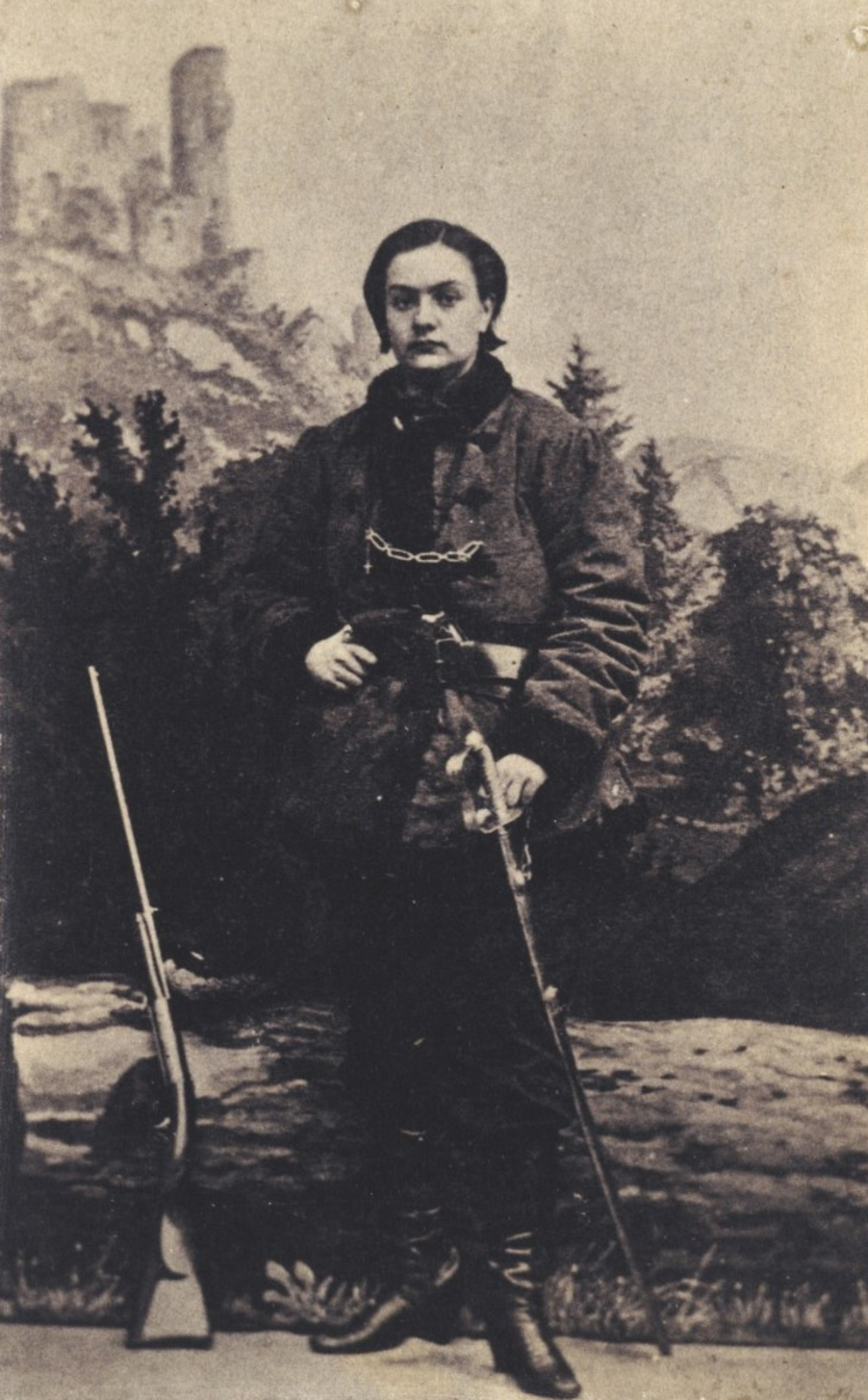
The most popular photos of Pustowójtówna show her in insurgent clothes and with weapons. They were circulating all over Europe in different prints. They look like they were made in a forest camp. In fact, they were taken in Prague, in the photographic studio of Moritz Ludwig Winter. Pustowójtówna arrived in Prague on April 3rd or 4th in a black dress (worn in a sign of mourning). But the photographic studio had the appropriate props at their disposal. This enabled the arrangement of a very realistic scene. They were made soon after the women soldier left the unit, as she still has short hair there.
The photography is a quite unique example. Usually, during the uprising, women were portrayed as sensitive ladies in black dresses, worn as a sign of national mourning, accompanying the brave and handsome insurgents. In fact, dozens of women worked as nurses, helping prisoners, hiding illegal documents, transporting weapons and helping to implement the orders of the Polish Underground State. They were fighting with weapons, as did Henryka Pustowójtówna, peasants, townswomen, as well as poorer noblewomen. They were fighting despite the prohibition of the Polish National Government. Few commanders allowed them to participate in military operations, but usually, their gender was revealed only at the battlefields.
Choose two groups most affected by persecution from the ones listed below.
- peasants
- middle class (Christian)
- nobility
- Christian clergy
Verify your knowledge of the consequences of the January uprising. Connect the matching parts of the sentences.
a new wave of emigrants., has come to an end., socialists and anarchists., it was ruled by the General-Governor., the rights of veterans., nearly 4 thousand of property in the Kingdom and Lithuania., the National Government., from all partitions and from emigration., the Vistula Country., of the peasants., collective consciousness., their political methods and goals.
| The participants of the fight were subject to a planned action of destruction: starting with mass executions and deportation to Siberia ending with confiscation of | |
| In 1874, the Kingdom of Poland, divided into 10 Governorates, was incorporated into Russia, and | |
| Since 1888 it has been included in official documents as | |
| The Tsar's enfranchisement ukase of March 2, 1864 contained the same conditions as the ones established a year earlier by | |
| Thus, the tsarist guarantees of village reform threw the arms out of the hands of the Polish government, and the Russian authorities gained a gratitude | |
| The January Uprising was the longest lasting Polish uprising and involved Poles | |
| The uprising of 1863 enjoyed the sympathy and support of many nations and democratic public opinion of Europe, including | |
| The experience gained during the January Uprising and the defeat of the Polish independence hopes were to affect the next generations of Poles, shaping their | |
| The defeat of the uprising forced Poles to change | |
| The era of noble insurrection | |
| The west of Europe was flooded with | |
| By decision of Józef Piłsudski, a special commission in December 1919 granted 3644 participants of the January Uprising |
Keywords
January Uprising, fight for independence, insurgents
Glossary
Kraj Nadwiślański – nazwa Królestwa Polskiego, nadana mu po wcieleniu do Rosji wskutek represji po powstaniu styczniowym.
Biali – potoczna nazwa liberalno‑konserwatywnego obozu politycznego, działającego w latach 1861–1864 na ziemiach polskich i na emigracji, współtworzącego władze powstańcze.
Czerwoni – radykalny obóz polityczny w latach 1861‑1864; zwolennicy zbrojnej walki o niepodległość i uwłaszczenia chłopów.
uwłaszczenie chłopów – nadanie chłopom prawa własności do całości lub części użytkowanej przez nich ziemi, w zamian za płacone bezpośrednio lub pośrednio (w podatkach) odszkodowanie.
Rząd Narodowy – organ władzy działający na dawnych ziemiach Polski podczas powstania styczniowego.
dyktator – podczas powstania styczniowego jego przywódca. Łączył pełnię władzy wojskowej ze znacznymi uprawnieniami politycznymi.