Did you know that a few decades ago, diseased hearts had to be imported from other countries to Japan for medical students to be able to study the anatomy of the victims of heart attacks? Why? Simply because there were no heart attacks at all in the whole country. Due to Asian nations undergoing rapid westernisation, this has been changing rapidly. The introduction of fast food diets and greater exposure to stress have unfortunately broadened the repertoire of medical conditions which citizens of these nations suffer from.
Czy wiedziałeś/wiedziałaś, że kilka dekad temu serca zmarłych na zawał pacjentów musiały być importowane do Japonii z innych krajów, aby studenci medycyny mogli poznać anatomię tego organu? Działo się tak, ponieważ w całej Japonii nie było ani jednej osoby, u której wystąpił atak serca. Niestety, ze względu na przyjmowanie kultury zachodu przez azjatyckie społeczeństwa, szybko się to zmienia. Zwiększone spożycie śmieciowego jedzenia oraz większa ekspozycja na stres poszerzają repertuar chorób, na które cierpią mieszkańcy tej części świata.
RKDfPH7mDiSO4
Zdjęcie przedstawia sześć drewnianych kostek ułożonych w rzędzie na niebieskim tle. Na każdej widoczna jest inna litera. Na pierwszej kostce, która jest lekko przekręcona przez dotykający ją palec, widoczne są dwie litery: W i H. Jeśli wybierzemy literę W na pierwszej kostce, to z pozostałymi literami stworzą słowo: WEALTH. Jeśli wybierzemy literę H na pierwszej kostce, to z pozostałymi literami stworzą słowo: HEALTH.
Is wealth synonymous with health?
Czy dobrobyt idzie w parze z dobrym zdrowiem?
Źródło: dostępny w internecie: www.unsplash.com [dostęp 14.04.2022], domena publiczna.
Exercise1
R4bb9E9AGJpTp
Źródło: GroMar Sp. z o.o., licencja: CC BY-SA 3.0.
1
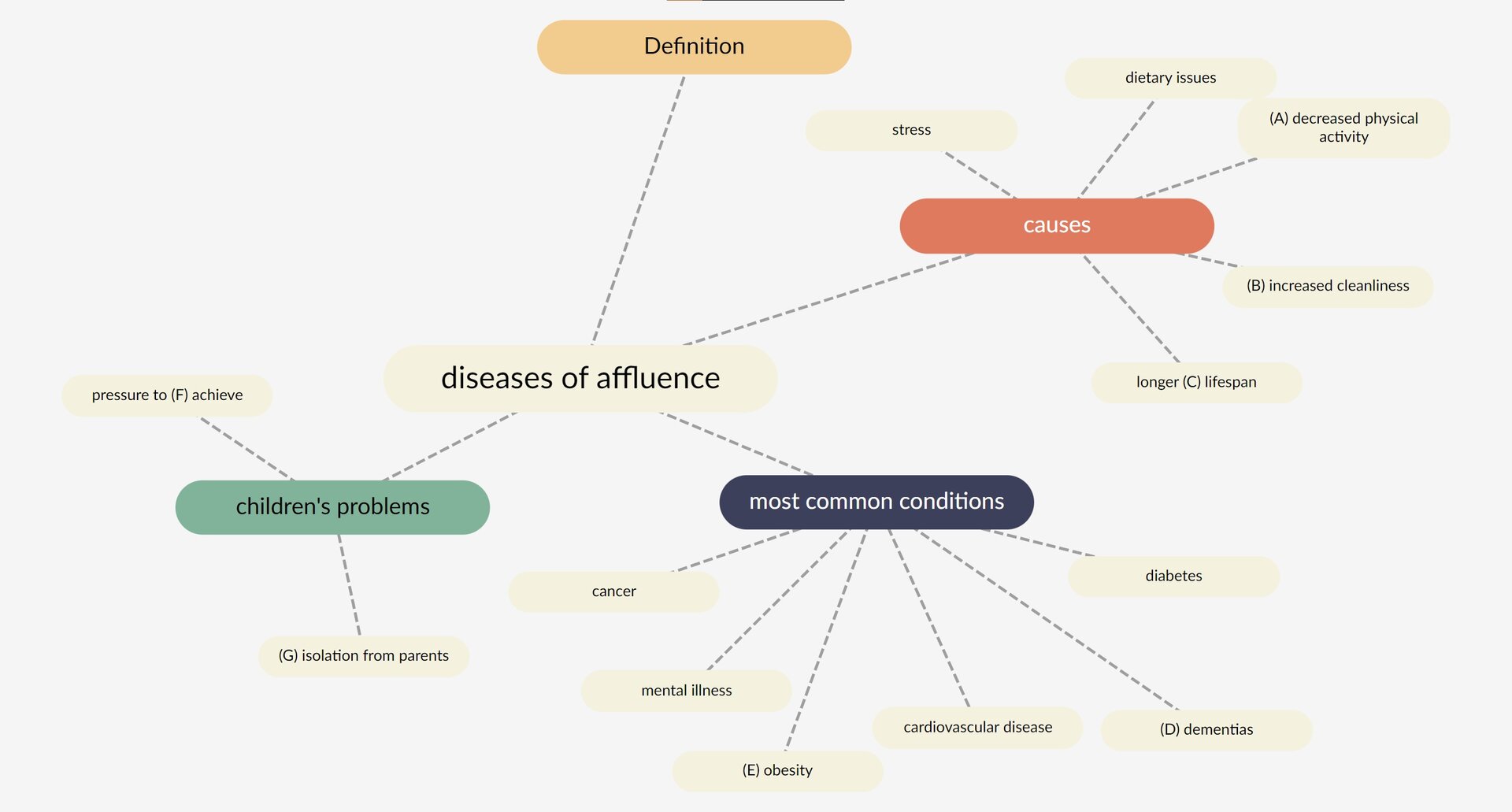
Put the expressions in the spots marked “...” by double‑clicking on the dots and typing in the correct word from the list below.
ACHIEVE
DECREASED
DEMENTIAS
ISOLATION
INCREASED
LIFESPANS
OBESITY
INSTRUKCJA DO MAPY POJĘĆazurewhite
R6aK1r78v5fuE
Grafika przedstawia rysunkową instrukcję do mapy pojęć. Po lewej stronie pośrodku znajduje się jedenaście ikon, w pięciu kolumnach, do których prowadzą czarne strzałki od przypisanych do nich opisów. W pierwszej kolumnie od lewej u góry widoczna jest ikona dymka z plusem w środku z podpisem: dodawanie kolejnego pola. Poniżej widoczna jest ikona hiperłącza internetowego z podpisem: konwertowanie w link. W kolumnie na prawo od góry widoczna jest ikona skośnej przerywanej szarej linii z podpisem: łączenie lub rozłączanie kafelków kliknij przycisk dla danego pola, a następnie pole, które chcesz połączyć lub rozłączyć. Poniżej znajdują się dwie ikony (jedna ze skośną zieloną, a druga czerwoną linią) z podpisem: zmiana koloru linii, łączącej pola kliknij przycisk dla danego pola, a następnie drugie pole, połączone z pierwszym. W trzeciej kolumnie widoczna jest od góry ikona z literką A, po której prawej stronie widoczna jest strzałka w górę, z podpisem: zwiększanie pól oraz tekstu. Poniżej widoczna jest ikona z literką A, po której prawej stronie widoczna jest strzałka w dół, z podpisem: zmniejszanie pól oraz tekstu. W czwartej kolumnie od góry widoczna jest ikona z dwoma strzałkami biegnącymi po łuku w przeciwnych kierunkach z podpisem: zmiana koloru pola. Poniżej widoczna jest ikona z koszem na śmieci z podpisem: usunięcie danego pola. W piątej kolumnie od góry widoczna jest ikona z szarym kwadratem z małym plusikiem z podpisem: dodawanie załączników, a poniżej ikona z liniami tekstu z podpisem: dodawanie opisu pola. Natomiast po prawej stronie znajduje się sześć ikon w rzędzie kolumnach, do których prowadzą czarne strzałki od przypisanych do nich opisów. Od lewej widoczna jest ikona dymka z plusem w środku z podpisem: dodawanie kolejnego pola; ikona z kwadratem, w który wpisane są dwa nakładające się kwadraty z podpisem: grupowanie elementów zaznacz dany obszar lewym przyciskiem myszy, a następnie nadaj mu nazwę klikając ołówek i wpisując tekst w pojawiające się białe okno; ikona z lupą z podpisem: ustawianie domyślnego widoku; ikona ze strzałką w dół, poniżej której pozioma kreska z podpisem: pobieranie i drukowanie mapy pojęć; ikona z gumką z podpisem: wyczyść mapę i ikona trybu pełnoekranowego z podpisem: tryb pełnoekranowy. Po prawej stronie u dołu widoczny jest również biały prostokąt z napisem [wpisz tekst], który nachodzi na pole z dwoma żółtymi elementami z napisem Element 1 i Element 2. Poniżej podpis: aby usunąć grupowanie, kliknij przycisk „Rozgrupuj”.
Źródło: GroMar Sp. z o.o., licencja: CC BY-SA 3.0.
R14DdqmTcI9XP1
Źródło: GroMar Sp. z o.o., licencja: CC BY-SA 3.0.
Check if you’ve fille the mind map correctly.
CHECK YOUR ANSWERazurewhite
Roaanv4K5UqPH
Ilustracja
Źródło: GroMar Sp. z o.o., licencja: CC BY-SA 3.0.
Drag the following words connected with diseases of affluence and drop them in the correct category. Two words are additional, you don't need them.
RfnOiUctumD27
Exercise2
Źródło: GroMar Sp. z o.o., licencja: CC BY-SA 3.0.
1
Exercise2
Click the numbers referring to different aspects of the diseases of affluence, play the recordings and learn more about them. Then do the exercises below.
R12wHCy0coU3T
Źródło: GroMar Sp. z o.o., licencja: CC BY-SA 3.0.
TRANSCRIPTazurewhite
Diseases of affluence used to be called diseases of rich people. After some years of research and observations, scientists have come up with a list of medical conditions which they associated with the kinds of lifestyles commonly linked with well‑off people living in highly developed Western countries. The increasing wealth in those societies and the alternations in the aspects of life, such as quality and quantity of calorie intake, physical activity patterns and amount and type of leisure, are linked with the growing prevalence of the ailments in this group. This trend has been on the rise since World War II. Most of the conditions grouped under the label of diseases of affluence are so called non‑communicable diseases, which means that one cannot get infected with them through contact with a patient. It does not mean, however, that they are any less dangerous.
Studies show that the supply of food in affluent countries exceeds the demand. It can be tracked down to individual households, where plenty of food is wasted every day. That’s one negative aspect of the changes that the growth of wealth in society has caused. The other one is the fact that people in industrialised nations reach for ultra‑processed foods much more than the inhabitants of less developed regions of the world. The effects of such nutrition has been looked into by scientists for some time now, and the conclusions they have drawn so far clearly show the link with a certain group of diseases. What’s more, the quality of unprocessed produce has changed too. Studies show that, nowadays, fruit and vegetables are not as nutritious as those 60 to 70 years ago. They often lack the vitamins and microelements we need to live healthy lives. They might be bigger and more resistant to pests, but we cannot get as many nutrients from them as our grandparents did. Vitamin and microelements deficiencies, unfortunately, often lead to diseases.
Wealthy people in highly developed countries have become obsessed with cleanliness. They clean, wash and tidy their living spaces passionately. An impeccable household is often considered to be a sign of high standards. The whole industry producing a huge array of products dedicated to cleaning various surfaces has grown around our exorbitant focus on keeping our living spaces free of germs of all sorts. Advertising has convinced us that we also need a diversity of products to make ourselves clean, fresh and nicely smelling. Hence soaps, mouthwashes, hygiene sprays and deodorants found their way into our bathrooms. The bad news is that by wiping out all microorganisms around us, we also annihilate those which we need to function normally. We’ve been observing an increase in allergies and autoimmune diseases, which scientists have started to connect with excessive sterility of the environment we live in.
People’s longevity has been increasing exponentially for the last several decades. From an average lifespan of 35 at the beginning of the 1900s, we have already reached more than 70 in developed countries. We must remember, though, that it varies across different countries. According to statistics published by the Our World in Data website, in 2019, the country with the lowest life expectancy was the Central African Republic with 53 years. By comparison, people in Japan could expect to live 30 years longer than that. The problem is, however, that the longer we live the more likely we are to develop degenerative conditions which used to be scarce or even non‑existent in the past. We still have to figure out how to deal with old age ailments and how to tackle taking care of the elderly in ageing societies.
The increase of material wealth seems to have a high psychological cost. Obviously, stress is something that afflicts everybody, no matter what their place of domicile or standard of living is. However, individuals living in the fast‑paced environments of contemporary highly developed societies turn out to be especially exposed to high levels of prolonged stress. This, in turn, causes outbreaks of cancer, diseases of the respiratory and cardiovascular systems, diabetes and mental disorders. Too much stress stops having a motivating effect on people. It is debilitating and causes high levels of inflammation in the body.
Recent studies show that children of affluent backgrounds also pay a price for their seemingly comfortable and stressless upbringing. They seem to be more prone to conditions, such as substance use, anxiety and depression. The sources of these problems were tracked to pressures to achieve and isolation from parents. First of all, children in wealthy families are often supposed to be high‑achievers, no matter what their actual cognitive abilities are. Large sums of money are invested in their education and the return on investment is expected almost immediately. This is connected with the second factor, as kids are frequently isolated from their parents either as a result of being placed in boarding schools far away from home or through the fact that the adults work so much that they hardly ever have time to spend it with kids.
Exercise3
R1CoX0BJcY7Rm
Study six recordings describing various aspects of the diseases of affluence. Complete the sentences below with a word or short phrase. 1. The conditions which we nowadays refer to as diseases of affluence used to be called diseases of Tu uzupełnij. 2. Because most of the diseases of affluence cannot be spread from one person to another, they are classified as Tu uzupełnij. 3. In rich countries, people are much more likely to consume larger amounts of Tu uzupełnij than in developing areas. 4. Fruit and vegetables grown nowadays are less Tu uzupełnij than those the previous generations ate. 5. Many well-off people strive to have Tu uzupełnij as they believe that they are the manifestations of their high standards. 6. Scientists have discovered that Tu uzupełnij may lead to the development of allergies and autoimmune diseases. 7. Since we live longer, we also suffer from Tu uzupełnij more. 8. Caring for the elderly is one of the greatest challenges of Tu uzupełnij nowadays. 9. Too much stress has a Tu uzupełnij effect on people. 10. In rich families, parents often expect their children to be Tu uzupełnij. 11. Affluent parents pour a lot of financial means into the education of their children and want to get the Tu uzupełnij as soon as possible.
Study six recordings describing various aspects of the diseases of affluence. Complete the sentences below with a word or short phrase. 1. The conditions which we nowadays refer to as diseases of affluence used to be called diseases of Tu uzupełnij. 2. Because most of the diseases of affluence cannot be spread from one person to another, they are classified as Tu uzupełnij. 3. In rich countries, people are much more likely to consume larger amounts of Tu uzupełnij than in developing areas. 4. Fruit and vegetables grown nowadays are less Tu uzupełnij than those the previous generations ate. 5. Many well-off people strive to have Tu uzupełnij as they believe that they are the manifestations of their high standards. 6. Scientists have discovered that Tu uzupełnij may lead to the development of allergies and autoimmune diseases. 7. Since we live longer, we also suffer from Tu uzupełnij more. 8. Caring for the elderly is one of the greatest challenges of Tu uzupełnij nowadays. 9. Too much stress has a Tu uzupełnij effect on people. 10. In rich families, parents often expect their children to be Tu uzupełnij. 11. Affluent parents pour a lot of financial means into the education of their children and want to get the Tu uzupełnij as soon as possible.
Źródło: GroMar Sp. z o.o., licencja: CC BY-SA 3.0.
Exercise4
R4UGpFJBC49VE
Play the recordings again. Match the definitions below with the words or short phrases from the recordings. a synonym for the word illness, a minor medical condition Możliwe odpowiedzi: 1. excessive sterility, 2. boarding school, 3. longevity, 4. upbringing, 5. high-achievers, 6. ailment, 7. get infected, 8. degenerative conditions, 9. prolonged stress, 10. mouthwashes, 11. debilitating, 12. nutrients to become ill because one had a contact with an ill person and caught the disease from them Możliwe odpowiedzi: 1. excessive sterility, 2. boarding school, 3. longevity, 4. upbringing, 5. high-achievers, 6. ailment, 7. get infected, 8. degenerative conditions, 9. prolonged stress, 10. mouthwashes, 11. debilitating, 12. nutrients all elements we find in food which our body needs to stay healthy and function well Możliwe odpowiedzi: 1. excessive sterility, 2. boarding school, 3. longevity, 4. upbringing, 5. high-achievers, 6. ailment, 7. get infected, 8. degenerative conditions, 9. prolonged stress, 10. mouthwashes, 11. debilitating, 12. nutrients liquids used for rinsing oral cavity in order to kill germs and maintain fresh breath Możliwe odpowiedzi: 1. excessive sterility, 2. boarding school, 3. longevity, 4. upbringing, 5. high-achievers, 6. ailment, 7. get infected, 8. degenerative conditions, 9. prolonged stress, 10. mouthwashes, 11. debilitating, 12. nutrients a state of being too clean Możliwe odpowiedzi: 1. excessive sterility, 2. boarding school, 3. longevity, 4. upbringing, 5. high-achievers, 6. ailment, 7. get infected, 8. degenerative conditions, 9. prolonged stress, 10. mouthwashes, 11. debilitating, 12. nutrients long life Możliwe odpowiedzi: 1. excessive sterility, 2. boarding school, 3. longevity, 4. upbringing, 5. high-achievers, 6. ailment, 7. get infected, 8. degenerative conditions, 9. prolonged stress, 10. mouthwashes, 11. debilitating, 12. nutrients diseases which result in gradual loss of faculties and deterioration of bodily functions Możliwe odpowiedzi: 1. excessive sterility, 2. boarding school, 3. longevity, 4. upbringing, 5. high-achievers, 6. ailment, 7. get infected, 8. degenerative conditions, 9. prolonged stress, 10. mouthwashes, 11. debilitating, 12. nutrients pressure which continues for a long time Możliwe odpowiedzi: 1. excessive sterility, 2. boarding school, 3. longevity, 4. upbringing, 5. high-achievers, 6. ailment, 7. get infected, 8. degenerative conditions, 9. prolonged stress, 10. mouthwashes, 11. debilitating, 12. nutrients weakening Możliwe odpowiedzi: 1. excessive sterility, 2. boarding school, 3. longevity, 4. upbringing, 5. high-achievers, 6. ailment, 7. get infected, 8. degenerative conditions, 9. prolonged stress, 10. mouthwashes, 11. debilitating, 12. nutrients hard-working and very successful people Możliwe odpowiedzi: 1. excessive sterility, 2. boarding school, 3. longevity, 4. upbringing, 5. high-achievers, 6. ailment, 7. get infected, 8. degenerative conditions, 9. prolonged stress, 10. mouthwashes, 11. debilitating, 12. nutrients the process of taking care of and educating children Możliwe odpowiedzi: 1. excessive sterility, 2. boarding school, 3. longevity, 4. upbringing, 5. high-achievers, 6. ailment, 7. get infected, 8. degenerative conditions, 9. prolonged stress, 10. mouthwashes, 11. debilitating, 12. nutrients a kind of educational institution which provides accommodation for its students Możliwe odpowiedzi: 1. excessive sterility, 2. boarding school, 3. longevity, 4. upbringing, 5. high-achievers, 6. ailment, 7. get infected, 8. degenerative conditions, 9. prolonged stress, 10. mouthwashes, 11. debilitating, 12. nutrients
Play the recordings again. Match the definitions below with the words or short phrases from the recordings. a synonym for the word illness, a minor medical condition Możliwe odpowiedzi: 1. excessive sterility, 2. boarding school, 3. longevity, 4. upbringing, 5. high-achievers, 6. ailment, 7. get infected, 8. degenerative conditions, 9. prolonged stress, 10. mouthwashes, 11. debilitating, 12. nutrients to become ill because one had a contact with an ill person and caught the disease from them Możliwe odpowiedzi: 1. excessive sterility, 2. boarding school, 3. longevity, 4. upbringing, 5. high-achievers, 6. ailment, 7. get infected, 8. degenerative conditions, 9. prolonged stress, 10. mouthwashes, 11. debilitating, 12. nutrients all elements we find in food which our body needs to stay healthy and function well Możliwe odpowiedzi: 1. excessive sterility, 2. boarding school, 3. longevity, 4. upbringing, 5. high-achievers, 6. ailment, 7. get infected, 8. degenerative conditions, 9. prolonged stress, 10. mouthwashes, 11. debilitating, 12. nutrients liquids used for rinsing oral cavity in order to kill germs and maintain fresh breath Możliwe odpowiedzi: 1. excessive sterility, 2. boarding school, 3. longevity, 4. upbringing, 5. high-achievers, 6. ailment, 7. get infected, 8. degenerative conditions, 9. prolonged stress, 10. mouthwashes, 11. debilitating, 12. nutrients a state of being too clean Możliwe odpowiedzi: 1. excessive sterility, 2. boarding school, 3. longevity, 4. upbringing, 5. high-achievers, 6. ailment, 7. get infected, 8. degenerative conditions, 9. prolonged stress, 10. mouthwashes, 11. debilitating, 12. nutrients long life Możliwe odpowiedzi: 1. excessive sterility, 2. boarding school, 3. longevity, 4. upbringing, 5. high-achievers, 6. ailment, 7. get infected, 8. degenerative conditions, 9. prolonged stress, 10. mouthwashes, 11. debilitating, 12. nutrients diseases which result in gradual loss of faculties and deterioration of bodily functions Możliwe odpowiedzi: 1. excessive sterility, 2. boarding school, 3. longevity, 4. upbringing, 5. high-achievers, 6. ailment, 7. get infected, 8. degenerative conditions, 9. prolonged stress, 10. mouthwashes, 11. debilitating, 12. nutrients pressure which continues for a long time Możliwe odpowiedzi: 1. excessive sterility, 2. boarding school, 3. longevity, 4. upbringing, 5. high-achievers, 6. ailment, 7. get infected, 8. degenerative conditions, 9. prolonged stress, 10. mouthwashes, 11. debilitating, 12. nutrients weakening Możliwe odpowiedzi: 1. excessive sterility, 2. boarding school, 3. longevity, 4. upbringing, 5. high-achievers, 6. ailment, 7. get infected, 8. degenerative conditions, 9. prolonged stress, 10. mouthwashes, 11. debilitating, 12. nutrients hard-working and very successful people Możliwe odpowiedzi: 1. excessive sterility, 2. boarding school, 3. longevity, 4. upbringing, 5. high-achievers, 6. ailment, 7. get infected, 8. degenerative conditions, 9. prolonged stress, 10. mouthwashes, 11. debilitating, 12. nutrients the process of taking care of and educating children Możliwe odpowiedzi: 1. excessive sterility, 2. boarding school, 3. longevity, 4. upbringing, 5. high-achievers, 6. ailment, 7. get infected, 8. degenerative conditions, 9. prolonged stress, 10. mouthwashes, 11. debilitating, 12. nutrients a kind of educational institution which provides accommodation for its students Możliwe odpowiedzi: 1. excessive sterility, 2. boarding school, 3. longevity, 4. upbringing, 5. high-achievers, 6. ailment, 7. get infected, 8. degenerative conditions, 9. prolonged stress, 10. mouthwashes, 11. debilitating, 12. nutrients
Źródło: GroMar Sp. z o.o., licencja: CC BY-SA 3.0.
Exercise5
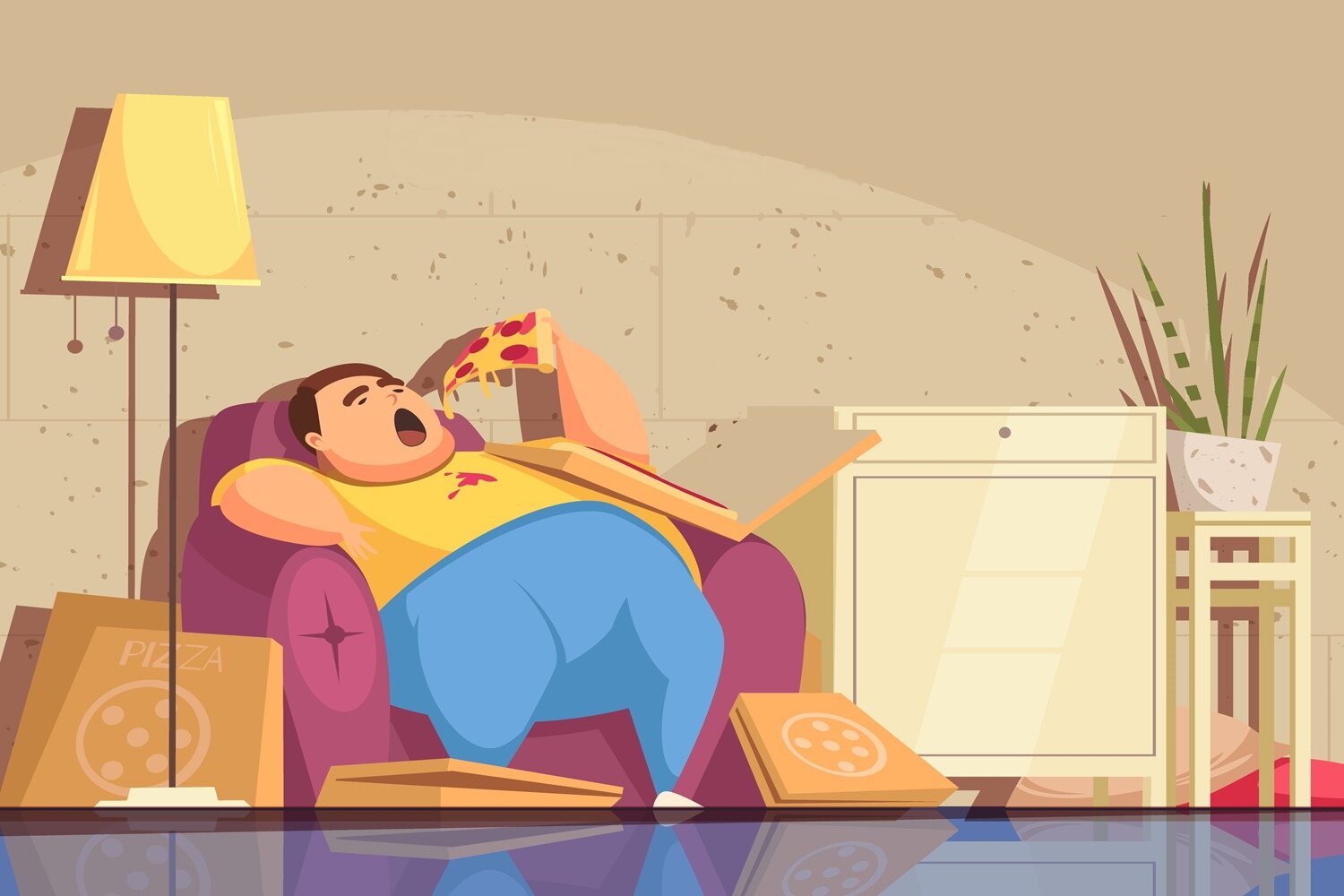
The picture above shows one of the aspects of the modern urban lifestyle connected with affluent highly developed societies. Describe it. What’s wrong with it and what can be its results? Write 6–7 sentences.
RFrN5uHkf2MDk
Grafika przedstawia otyłego mężczyznę siedzącego w pozycji półleżącej na fotelu i jedzącego pizzę. Mężczyzna ma krótkie, ciemne włosy, jest ubrany w żółtą koszulkę z krótkim rękawem, z czerwoną plamą pośrodku, oraz niebieskie spodnie dresowe. Ma otwarte szeroko usta, do których wkłada kawałek pizzy, który trzyma w lewym ręku nad głową. Na lewym boku i oparciu fioletowego fotela leży otwarte pudełko z pizzą. Przed mężczyzną na podłodze leżą dwa puste pudełka po pizzy. W pomieszczeniu na lewo od fotela stoi lampa, za którą leżą kolejne dwa pudełka po pizzy. Na prawo widoczna jest szafka oraz mały stolik z kwiatkiem, pod którymi widoczne jest kolejne pudełko.
Źródło: dostępny w internecie: www.freepik.com [dostęp 14.04.2022], domena publiczna.
RH3k2ZXfkkSjH
(Uzupełnij).
Źródło: GroMar Sp. z o.o., licencja: CC BY-SA 3.0.
Since people in highly developed societies do not… They usually have… It’s not uncommon for them to… That means… Some of them… to go to…, however, many will just… If such a lifestyle…, it inevitably leads to… If combined with…, conditions such… are quite likely to occur.
Since people in highly developed societies do not have to work physically so much these days, they often end up having very sedentary lifestyles. They usually have an office job in which they spend many hours sitting in front of their computers. It’s not uncommon for them to work overtime as that’s what might be expected of them. That means 8 to 10 hours a day in a sitting position. Some of them are strong‑willed enough to go to the gym or organise another kind of physical activity for themselves, however, many will just go home and spend the rest of the day sitting on a sofa watching TV or just staring at their phones. If such a lifestyle lasts for years, it inevitably leads to the development of serious diseases. If combined with an unhealthy diet and prolonged exposure to stress, conditions, such as diabetes, cancer, or some autoimmune diseases, are quite likely to occur.

![Grafika przedstawia rysunkową instrukcję do mapy pojęć. Po lewej stronie pośrodku znajduje się jedenaście ikon, w pięciu kolumnach, do których prowadzą czarne strzałki od przypisanych do nich opisów. W pierwszej kolumnie od lewej u góry widoczna jest ikona dymka z plusem w środku z podpisem: dodawanie kolejnego pola. Poniżej widoczna jest ikona hiperłącza internetowego z podpisem: konwertowanie w link. W kolumnie na prawo od góry widoczna jest ikona skośnej przerywanej szarej linii z podpisem: łączenie lub rozłączanie kafelków kliknij przycisk dla danego pola, a następnie pole, które chcesz połączyć lub rozłączyć. Poniżej znajdują się dwie ikony (jedna ze skośną zieloną, a druga czerwoną linią) z podpisem: zmiana koloru linii, łączącej pola kliknij przycisk dla danego pola, a następnie drugie pole, połączone z pierwszym. W trzeciej kolumnie widoczna jest od góry ikona z literką A, po której prawej stronie widoczna jest strzałka w górę, z podpisem: zwiększanie pól oraz tekstu. Poniżej widoczna jest ikona z literką A, po której prawej stronie widoczna jest strzałka w dół, z podpisem: zmniejszanie pól oraz tekstu. W czwartej kolumnie od góry widoczna jest ikona z dwoma strzałkami biegnącymi po łuku w przeciwnych kierunkach z podpisem: zmiana koloru pola. Poniżej widoczna jest ikona z koszem na śmieci z podpisem: usunięcie danego pola. W piątej kolumnie od góry widoczna jest ikona z szarym kwadratem z małym plusikiem z podpisem: dodawanie załączników, a poniżej ikona z liniami tekstu z podpisem: dodawanie opisu pola. Natomiast po prawej stronie znajduje się sześć ikon w rzędzie kolumnach, do których prowadzą czarne strzałki od przypisanych do nich opisów. Od lewej widoczna jest ikona dymka z plusem w środku z podpisem: dodawanie kolejnego pola; ikona z kwadratem, w który wpisane są dwa nakładające się kwadraty z podpisem: grupowanie elementów zaznacz dany obszar lewym przyciskiem myszy, a następnie nadaj mu nazwę klikając ołówek i wpisując tekst w pojawiające się białe okno; ikona z lupą z podpisem: ustawianie domyślnego widoku; ikona ze strzałką w dół, poniżej której pozioma kreska z podpisem: pobieranie i drukowanie mapy pojęć; ikona z gumką z podpisem: wyczyść mapę i ikona trybu pełnoekranowego z podpisem: tryb pełnoekranowy. Po prawej stronie u dołu widoczny jest również biały prostokąt z napisem [wpisz tekst], który nachodzi na pole z dwoma żółtymi elementami z napisem Element 1 i Element 2. Poniżej podpis: aby usunąć grupowanie, kliknij przycisk „Rozgrupuj”.](https://static.zpe.gov.pl/portal/f/res-minimized/R6aK1r78v5fuE/1712569627/13kCV8xWulYSHikEso7Ew49o0HlACeCN.png)