Mapa pojęć
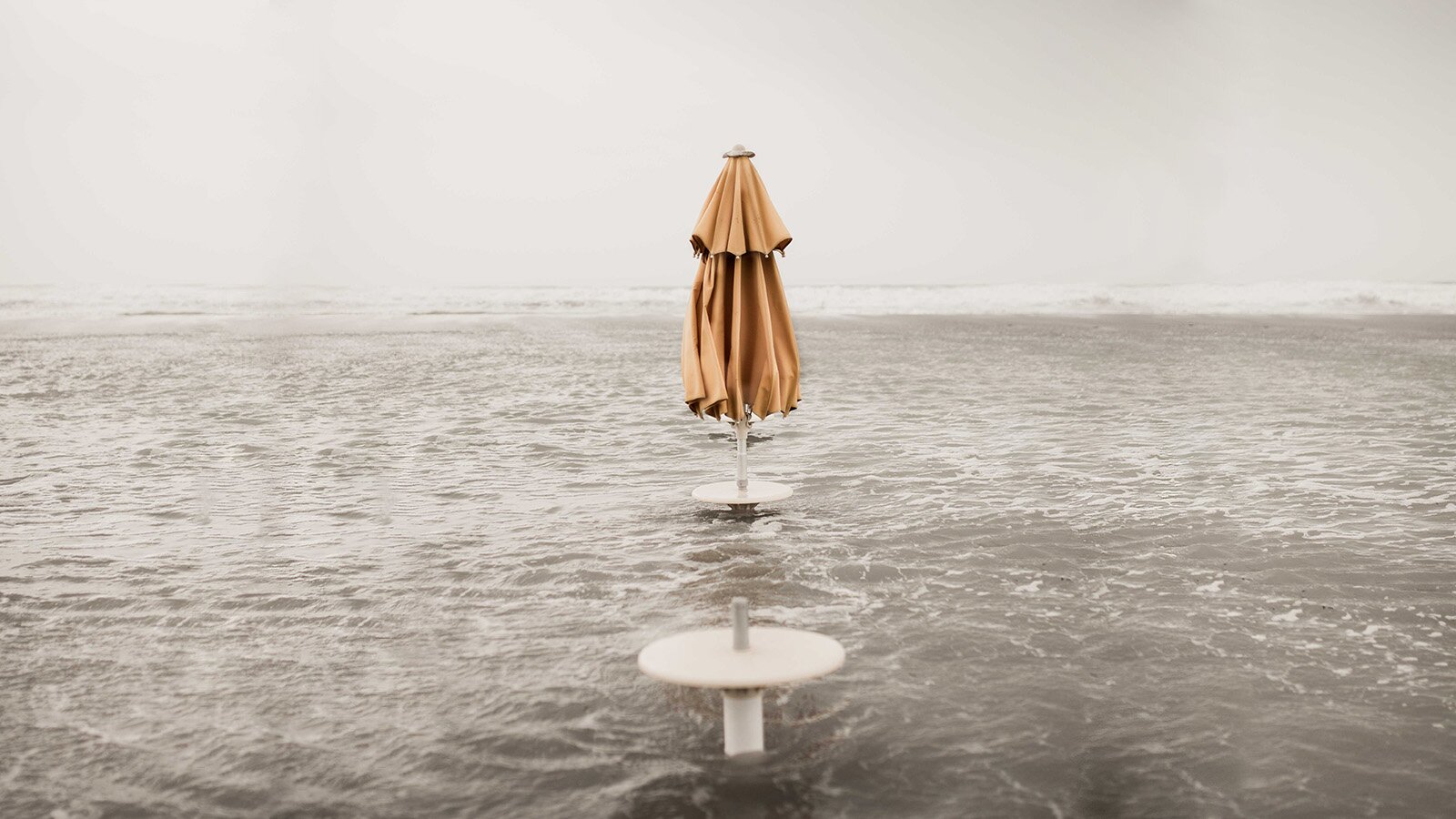
There is no bigger force than Mother Nature. It does not matter whether it is a hurricane, drought or heat wave, people seem to be helpless over it. A narrow stream becomes a wild river that carries everything it meets on the way: houses, vehicles or trees. You have surely seen TV coverage of floods. Do you happen to know how it happens that water bursts its banks and a little stream turns into a wild river? In this part of the material, you will learn about floods.
Nie ma większej siły niż ta, którą obdarzona jest matka natura. Nie ma znaczenia, czy jest to tajfun, susza czy fala upałów, ludzie pozostają wobec niej bezradni. Mały strumyk staje się rwącą rzeką, która porywa wszystko, co spotka na drodze: domy, pojazdy, drzewa z korzeniami. Z pewnością niejednokrotnie widziałeś/widziałaś w telewizji relacje z miejsca dotkniętego powodzią. Czy wiesz, jak to się dzieje, że woda występuje z koryta rzeki i mały potok staje się śmiertelnym zagrożeniem dla zwierząt i ludzi? W tej części materiału uzyskasz odpowiedzi na te i inne pytania na temat powodzi.
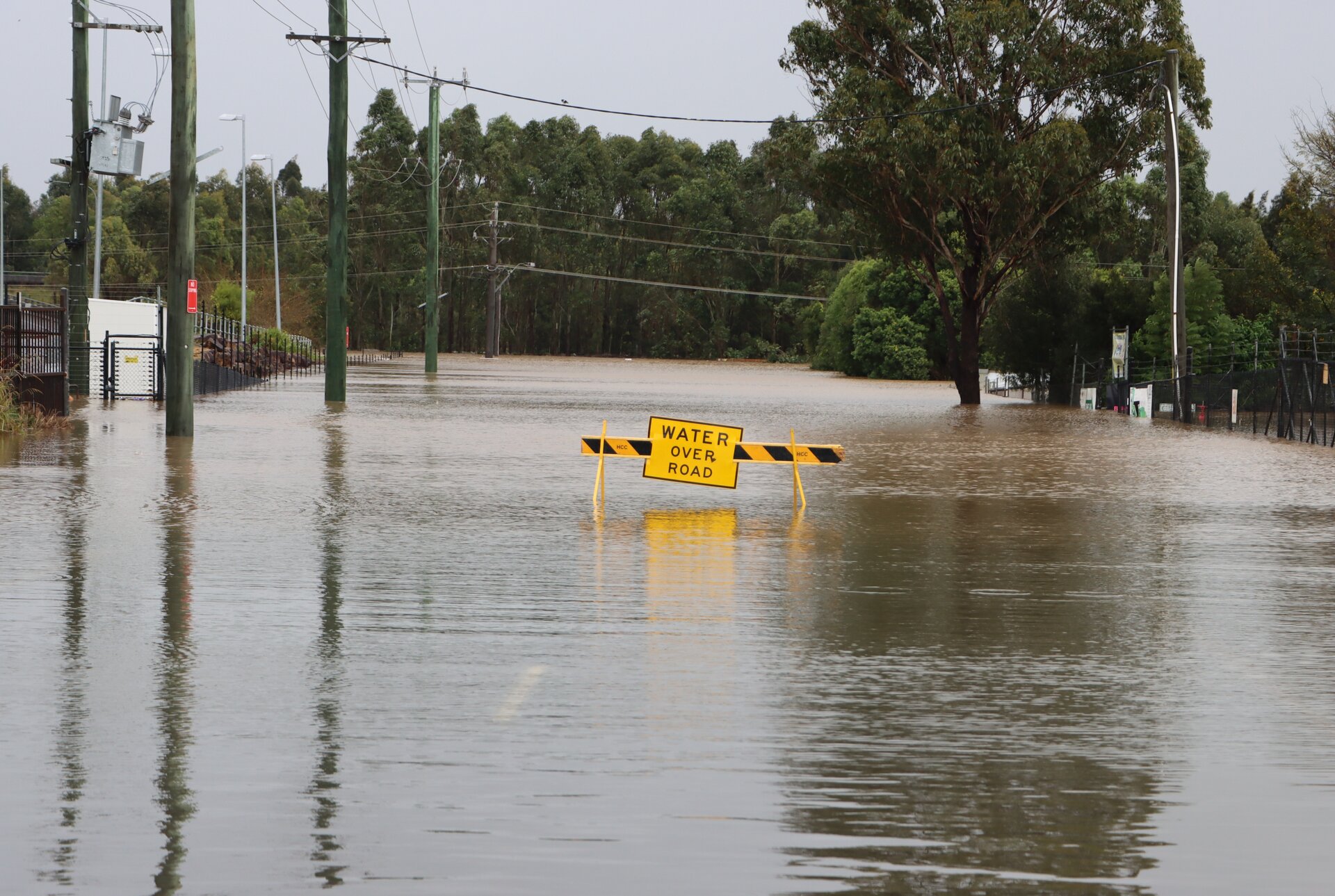
Drag the words to put them in the correct order to create a sentence that people in Australia say when it rains heavily. Read the explanation of this saying which you can find below.
Study the following words and expressions connected with flood. Then put them in the correct places.
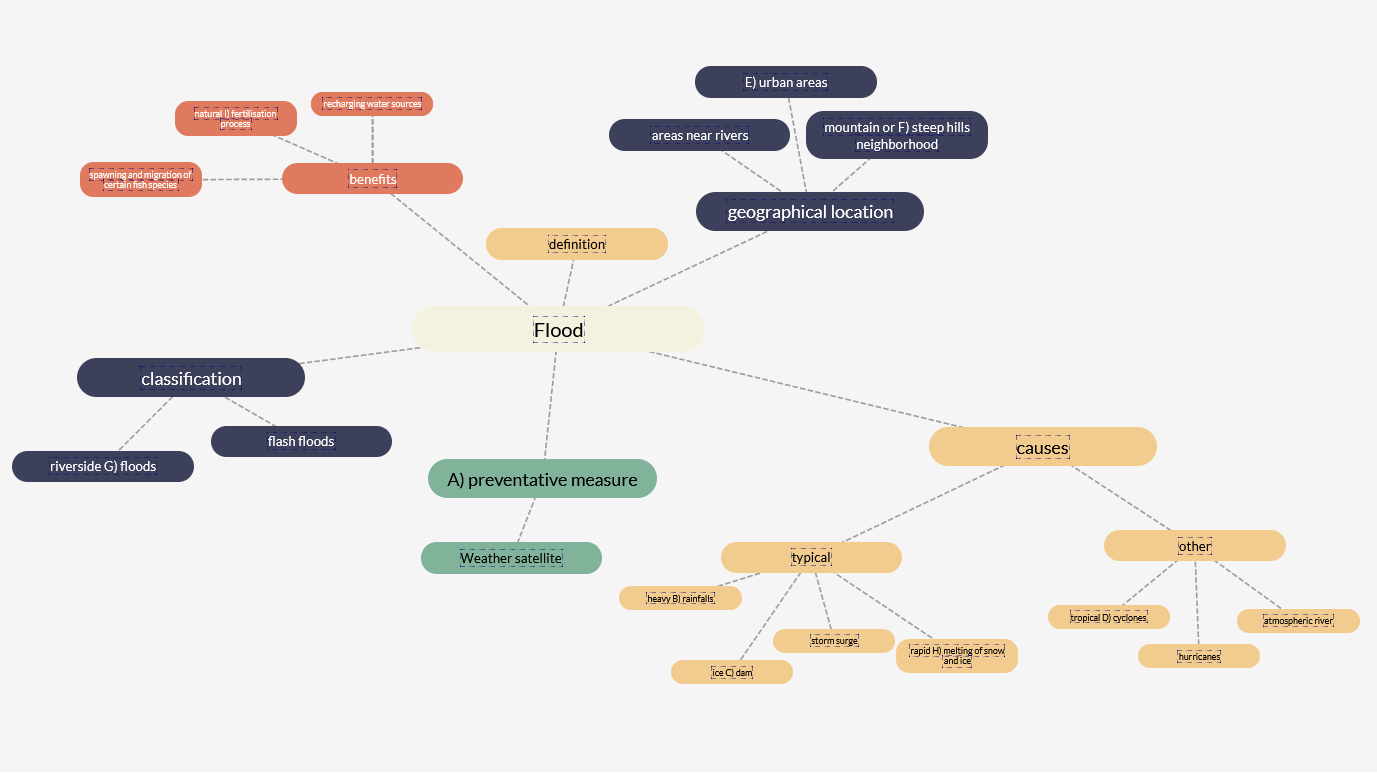
The mind map below presents information about floods and how disastrous they might be. Study the mind map and complete the empty spaces marked A‑I by double‑clicking on the gap and typing in the correct word from the list below.
A. PREVENTATIVE
B. RAINFALLS
C. DAM
D. CYCLONES
E. URBAN
F. STEEP
G. FLOODS
H. MELTING
I. FERTILISATION
Play the recordings of five people speaking and decide which aspect of floods they talk about. Drag and drop them next to the speakers' names at the bottom.
Speaker 1
Nagranie dostępne pod adresem https://zpe.gov.pl/a/D6aa14Xg4
Nagranie dźwiękowe
Speaker 2
Nagranie dostępne pod adresem https://zpe.gov.pl/a/D6aa14Xg4
Nagranie dźwiękowe
Speaker 3
Nagranie dostępne pod adresem https://zpe.gov.pl/a/D6aa14Xg4
Nagranie dźwiękowe
Speaker 4
Nagranie dostępne pod adresem https://zpe.gov.pl/a/D6aa14Xg4
Nagranie dźwiękowe
Speaker 5
Nagranie dostępne pod adresem https://zpe.gov.pl/a/D6aa14Xg4
Nagranie dźwiękowe
What are the most common causes of flooding? What are the positive effects of floods? (Write 5–6 sentences.)