bg‑azure

In this section, you are going to learn how to use the words connected to conflicts in a variety of situations. Properly identifying stressful situations and naming emotions can help us deal with conflicts. If you want to be a better conflict‑solver, the exercises below will certainly help you.

W tej sekcji dowiesz się, jak używać wyrażeń związanych z różnymi sytuacjami spornymi. Właściwe rozpoznawanie stresogennych momentów i nazywanie emocji może nam pomóc w radzeniu sobie z potencjalnym konfliktem. Ćwiczenia poniżej na pewno ci pomogą zostać lepszym rozjemcą / lepszą rozjemczynią. 

RWJiO8L9wTiDG
Did you know that there are as many as 27 different emotions?
Czy wiesz, że istnieje aż 27 różnych rodzajów emocji?
Źródło: dostępny w internecie: https://www.pexels.com/ [dostęp 23.12.2021], domena publiczna.
1
Exercise 1

Complete the crossword.

R11UQUubQAXd5
Źródło: GroMar Sp. z o.o., licencja: CC BY-SA 3.0.
Exercise 1
RDDTRxv19NCIC
Complete the crossword using the icons that symbolise 5 basic emotions. You will find out one thing that differs between the people who engage in a conflict.
Źródło: dostępny w internecie: https://pixabay.com/ [dostęp 23.12.2021], domena publiczna.
1
1
Exercise 2

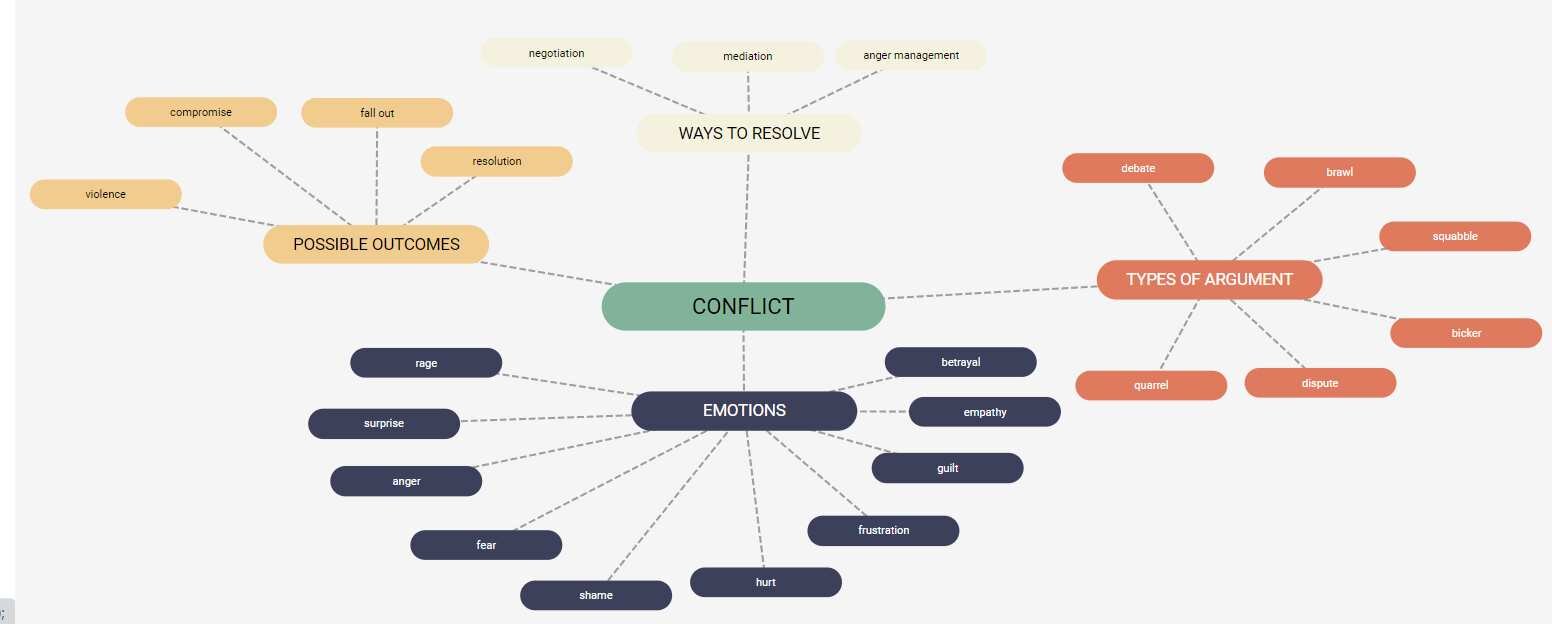
Study the following words and expressions connected with conflicts. Then put the words in the correct categories.

R1STMlQubudiP
Źródło: GroMar Sp. z o.o., licencja: CC BY-SA 3.0.
1
Exercise 2

Look at the mind map above and insert the following words into the gaps:

anger,

fall out,

compromise,

rage,

violence,

shame,

bicker,

hurt,

frustration,

resolution,

guilt,

quarrel,

dispute,

brawl,

debate,

mediation,

surprise,

betrayal,

anger management,

fear,

squabble,

empathy
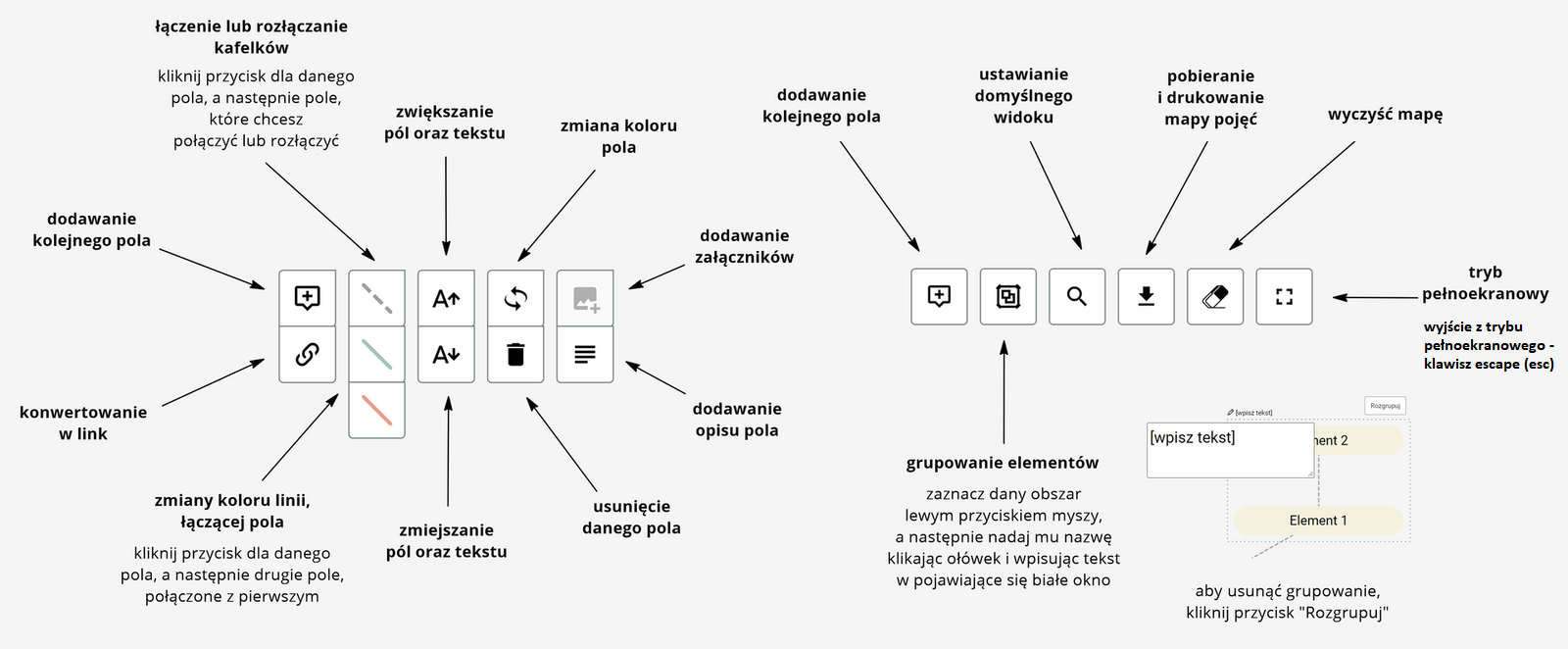
INSTRUKCJA DO MAPY POJĘĆ1azurewhite
RnwmEpLVEexZX
Źródło: GroMar Sp. z o.o., licencja: CC BY-SA 3.0.
Show answer1azurewhite
Exercise 3
RERnkgjVQb7x3
Have a look at the mind map above in the ‘emotions’ section. Then write the emotions in the correct place using the correct form. Use suffixes where necessary. 1. The feeling of being     bTu uzupełnij     is when somebody who was close did something against you, without you knowing. 2. When somebody has done or said something     sTu uzupełnij    , we are embarrassed by it. 3. When we can’t solve a situation, no matter how much we try, we tend to get     fTu uzupełnij    . This, in turn, can lead to becoming     aTu uzupełnij. 4. Extreme anger is something that should be avoided during conflict. When we feel     fTu uzupełnij, we are one step from becoming aggressive. 5. Sometimes, when another person says something painful, our feelings can get     hTu uzupełnij    . 6. When someone says something we don’t expect, we feel     sTu uzupełnij    . 7. When we start understanding another person’s emotions, we     eTu uzupełnij    . 8. We sometimes feel     gTu uzupełnij     about something we’ve done and we feel like we need to apologise. 9. A person who gets scared easily is     fTu uzupełnij    .
Źródło: GroMar Sp. z o.o., licencja: CC BY-SA 3.0.
Exercise 4

You witnessed a conflict at your school. Advise your peers how to deal with the conflict when negative emotions occur.

R10TX5myoQVfK
(Uzupełnij).
Źródło: GroMar Sp. z o.o., licencja: CC BY-SA 3.0.