Men of sword – knights
what principles and values did in the code of knights include, you will reflect on the validity of these values in the modern world;
what the characteristic elements of the knight's clothing and the basic weapons used by the knight were; what the characteristic features of the fortified castle buildings were;
what the model of emotional relations between men and women in the knightly world was, you will be able to compare it with contemporary models;
recognize that living in a particular culture shapes very strongly the way people experience and express their feelings, needs and values.
The social estate of knightsknights was established in the Middle Ages. KnightsKnights were first of all warriors. They pledged allegiance to a king or a duke, and were obliged to help their feudal superior in armed combat. In return, they received land. A knightknight fought on horseback. His equipment included body armour, a helmet, a shield, a sword and a lance. A knightknight lived in a castle, for example a tower encircled by defensive walls and a moat. Castles were built in places difficult to access. A special knightly or chivalric cultureknightly or chivalric culture emerged over time. Its key element was a code of conduct (ethos), which obliged a knightknight not only to faithfully serve his lord, but also to help the weak and the needy, and to fight for Christianity against unbelievers. To become a knightknight, one had to undergo long training as a squiresquire. Only then was it possible to be knighted. Knightly tournamentsKnightly tournaments became popular in the late Middle Ages. At the tournaments, knightsknights showed off their skills and tried to win favour with women. The most famous knightknight of the Polish Middle Ages was Zawisza the Black.
Szlachta formed from the knightly caste. For centuries, it was a privileged layer that considered itself more important than the rest of society. At the same time, however, it believed that nobility obligated. In the code of conduct of knights and nobles, such qualities as {green} nobility, aid to the poorer, {/green} {green} defense of the weaker, love of honor, {/green} {green} truthfulness, contempt for lies, {/green} {green} courtesy of women {/green}. In contrast to the old knights, {red}szlachta bound their everyday life{/red}{red} with the cultivation {/red}{red}of land on folwarks{/red} (with the help of subordinate peasants) and the extension of the country estate. Szlachta {red} inhabited manor houses {/green} {green}but knights lived in castles {/red}. Knights and Szlachta {green} were not much interested {/green} {green}in science or economics {/green}.
Read the text below. Explain why women rarely became knightsknights.
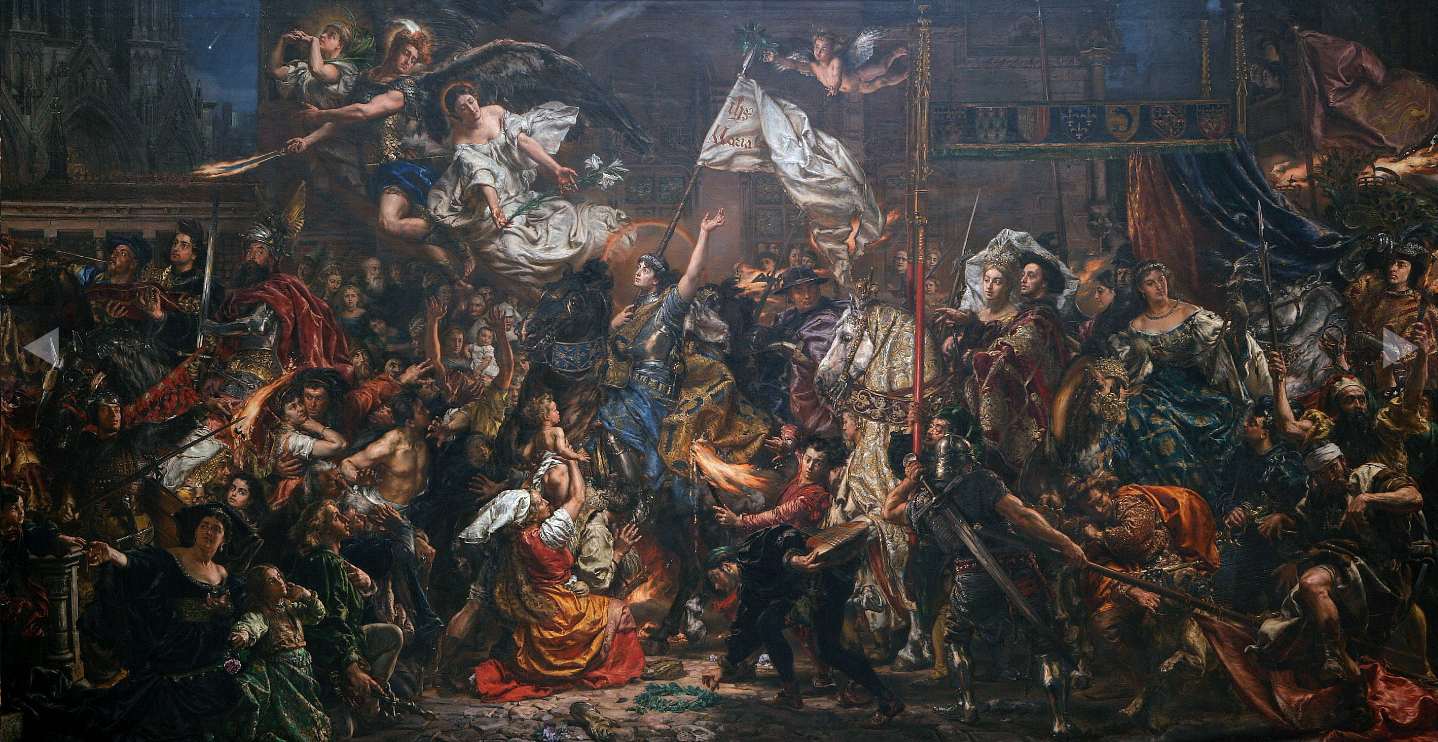
Almost all medieval knightsknights were men. Old customs did not allow women to perform knightly service. There were, however, some exceptions. An example of a female knight is Joan of Arc, who lived in the first half of the 15th century. She led the French army and fought bravely against the English. Usually, however, in the world of medieval knighthood, women remained lady‑loves of knights, and the knights always tried to take care of the good name of their chosen ones. The artefacts they received from their ladies encouraged the knights to fight. They wore them on their chests, near the heart, and took care not to lose or damage them.
Listen to the recording and find out how the medieval knights fought.
Nagranie dostępne na portalu epodreczniki.pl
Nagranie dźwiękowe.
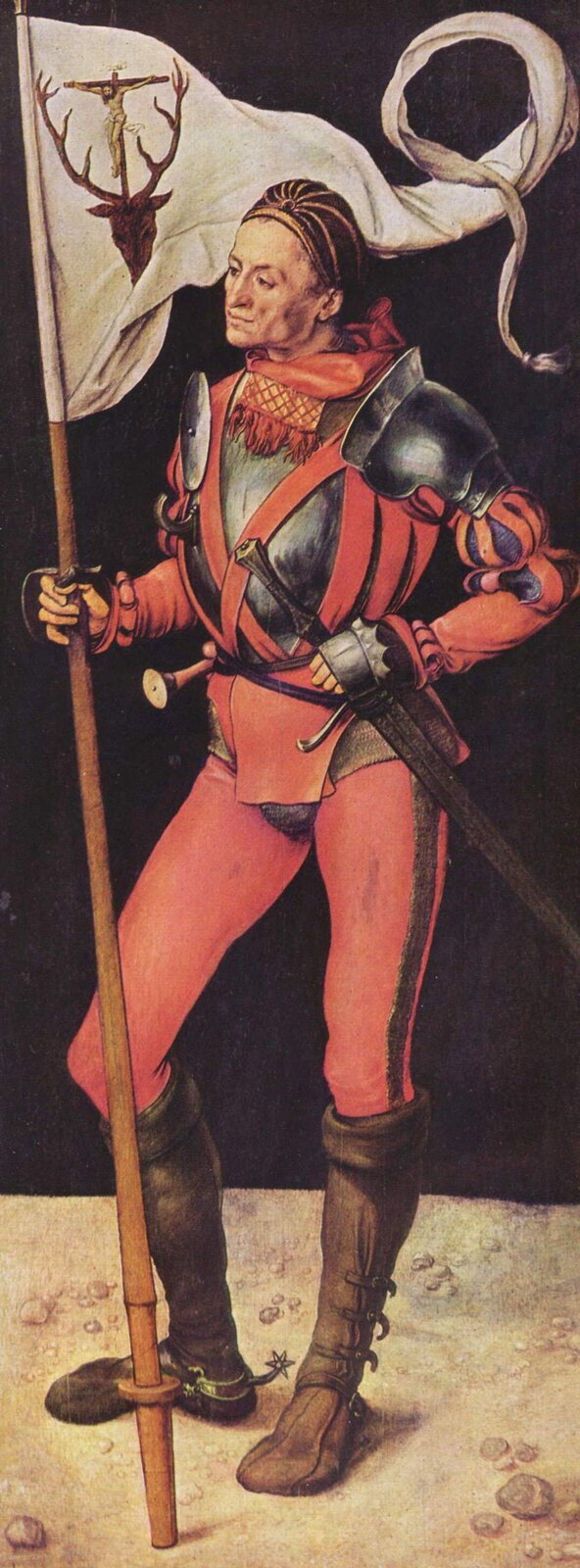
The knightknight's craft was not easy and required a lot of strength and efficiency. Medieval knights fought on horseback, mostly as heavy cavalry. However, if necessary, the knights took up to fight as light cavalry, and even infantry. Protection during battle was provided by a shield, armor and helmet. The offensive weapon was a sword, a lance, a spear, and an ax.
The knightsknights mobilized if necessary, at the call of the master. When a call to arms reached the castles, informing about the date and place of the meeting, the knightknight arrived along with the post counting several riders - squires and bollards. This was the lowest organizational unit in the medieval army. The superior unit was a chorągiew - ‘banner’, covering the knightsknights of a specific territory. The combined banners were a larger unit, or a knightly detachment.
During the battle, the knightsknights were usually placed one by one in a stretched row, and behind them were squires and bollards. If both sides decided to fight in the same order, then the clash turned into a series of duels of opposing knightsknights facing each other, in which the leaders also took part. With the typical knightknight's armor, the only possible method of fighting was charging and causing the impact. After breaking the lance and taking up a sword fight, knighted armor was a real killing machine, almost completely insensitive to the opponent's blows.
Initially, in the knightknight's tactics, there were almost no branches of archers or crossbowmen, that is, types of troops that made it possible to strike from a distance. However, once the dynamic development of these weapons began, especially the longbow, they started to say that „when the third arrow hangs in the air - the battle is over.” This was the effect of using them in the Battle of Crecy in 1346 between the English and the French. The French knightsknights were slaughtered there, practically totally beaten by archers and crossbowmen. This tactic was also readily used by Muslims, or Saracens, fighting with Christian knightsknights. A well‑trained archer could make even 12 shots in a minute. However, the crossbow was something like a machine gun at the time and for a long time it was banned as an „unworthy weapon”.
Read the text below. In which part of Poland „The Eagles' Nests Trail” is situated?
The last monarch of the Piast dynasty on the Polish throne, Casimir the Great, was a great builder. It was said that he found Poland wooden and left it the brick. During his reign 57 castles were or were modernized. One of them is Będzin. This is a fortress located in the whole system of castles, which we call „eagle stars”. The Eagles' Nests Trail is nowadays a popular tourist attraction in the south of Poland. It runs in the direction from Krakow to Częstochowa and includes castles and ruins of castles. Formerly, these were royal or private castles.
Match the pairs: English and Polish.
kultura rycerska, obrzęd pasowania, turnieje rycerskie, paź, rycerz, przysięga wierności, zamek, giermek
| squire | |
| knightly or chivalric culture | |
| knighting rite | |
| page | |
| oath of allegiance | |
| knight | |
| knightly tournaments | |
| castle |
Keywords
knight, castle, knighting rite, oath, squire, allegiance
Glossary
giermek – młodzieniec pełniący służbę przy rycerzu, przygotowujący się do stanu rycerskiego.
kultura rycerska
obrzęd pasowania (akolada) – nadanie giermkowi godności rycerza; pasowanie na rycerza
przysięga wierności
rycerz
turnieje rycerskie – spotkania na dworach królewskich lub książęcych, w trakcie których rycerze pojedynkowali się o nagrody i dla sławy