Military technology. Modernisation transformations.
about the most important combat assets at a time of World War I;
to point negative and positive effects of technology modernisation developed for the purposes of war;
about differences in the economic level and the industrial production level of the countries involved in the war.

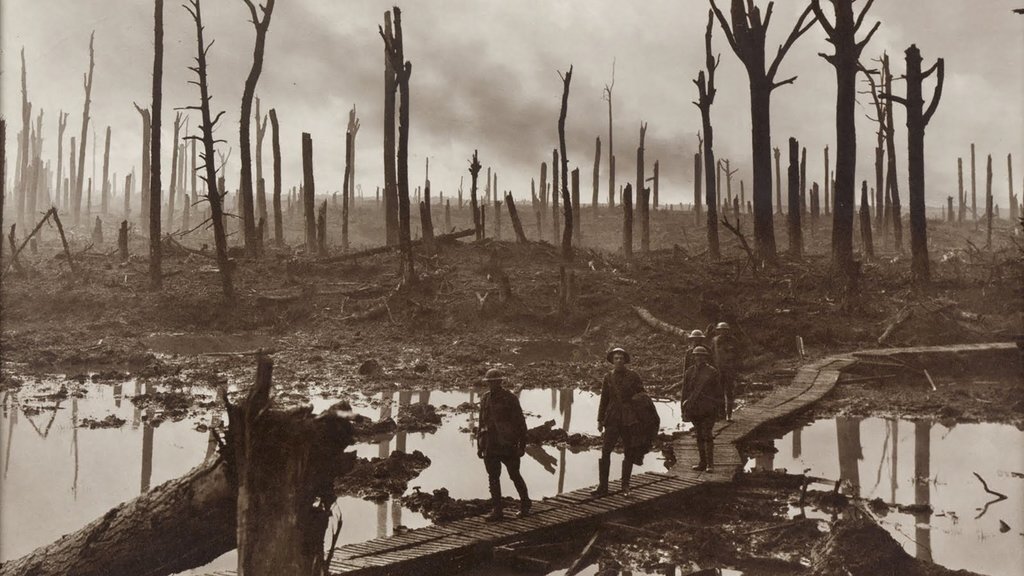
The war staff of European countries had developed plans of military actions. However, they did not predict that by equipping their armies with modern cannons and machine guns of different types, they would “push” them into the trenchestrenches for years, from which it will be impossible to get away under artillery fire of the enemy. Old‑style fighting, in tight formation of the soldiers became impossible. Difficulties in breaking the deadlock of trench and determination in striving to win, resulted in looking for new, more effective than the artillery, means of mass killing of the enemies. It led to the introduction of deadly nerve gasesnerve gases. Mobilization of a total character (without looking back at the well‑being of their own societies) was a result of an exponentially growing number of victims. That is why, the end of the war depended not on the old‑style diplomacy anymore, yet total defeat of the enemy. Eventually, it was the industrial potential, as well as social resources and mental strength of the fighting parties, that turned out to be more important than technological inventions. Only the fighting party which had the biggest military forces and equally strong industrial and technical background could win.
On the basis of the film that you have watched at home, list and characterize new combat assets that were used during World War I. Explain the phenomenon of chemical weapons. What were the consequences of using it?
Below you will find statistical data reflecting military expenditure in the period from 1914 to 1919, in billions of dollars and prices of 1913. Analyse it and list the countries which had incurred relatively largest war expenditures.
The Allies
Country | Expenditure |
The British Empire | 23 |
France | 9.3 |
Russia | 5.4 |
Italy | 3.2 |
The United States | 17.1 |
Belgium, Romania, Portugal, Greece, Serbia | - 0.3 |
The Allies in total | 57.7 |
The Central Powers
Country | Expenditure |
Germany | 19.9 |
Austria‑Hungary | 4.7 |
Bulgaria and Turkey | 0.1 |
The Central Powers in total | 24.7 |
What does the data included in the table above tell us? Select the correct answer.
- those numbers show that the economic potential and the level of industrial production of the countries involved in the war turned out to be one of the factors that determined the victory of the Central Powers
- those numbers demonstrate that the economic potential and the level of industrial production, enabling to finance the military expenditure of the countries involved the war turned out to be one of the most important factors that determined the victory of the Allies
- those numbers demonstrate that the number of troops in the war turned out to be one of the factors that determined the victory of the Allies
Listen to the broadcast and note down the medical discoveries from the times of World War I which influenced the reduction of mortality of soldiers.
Probably, if it was not for war, we would not have modern surgery at all. Due to a large number of the wounded, it is a perfect, yet unfortunate, opportunity to experiment and implement new solutions. Over time they become widely used in civil health service.

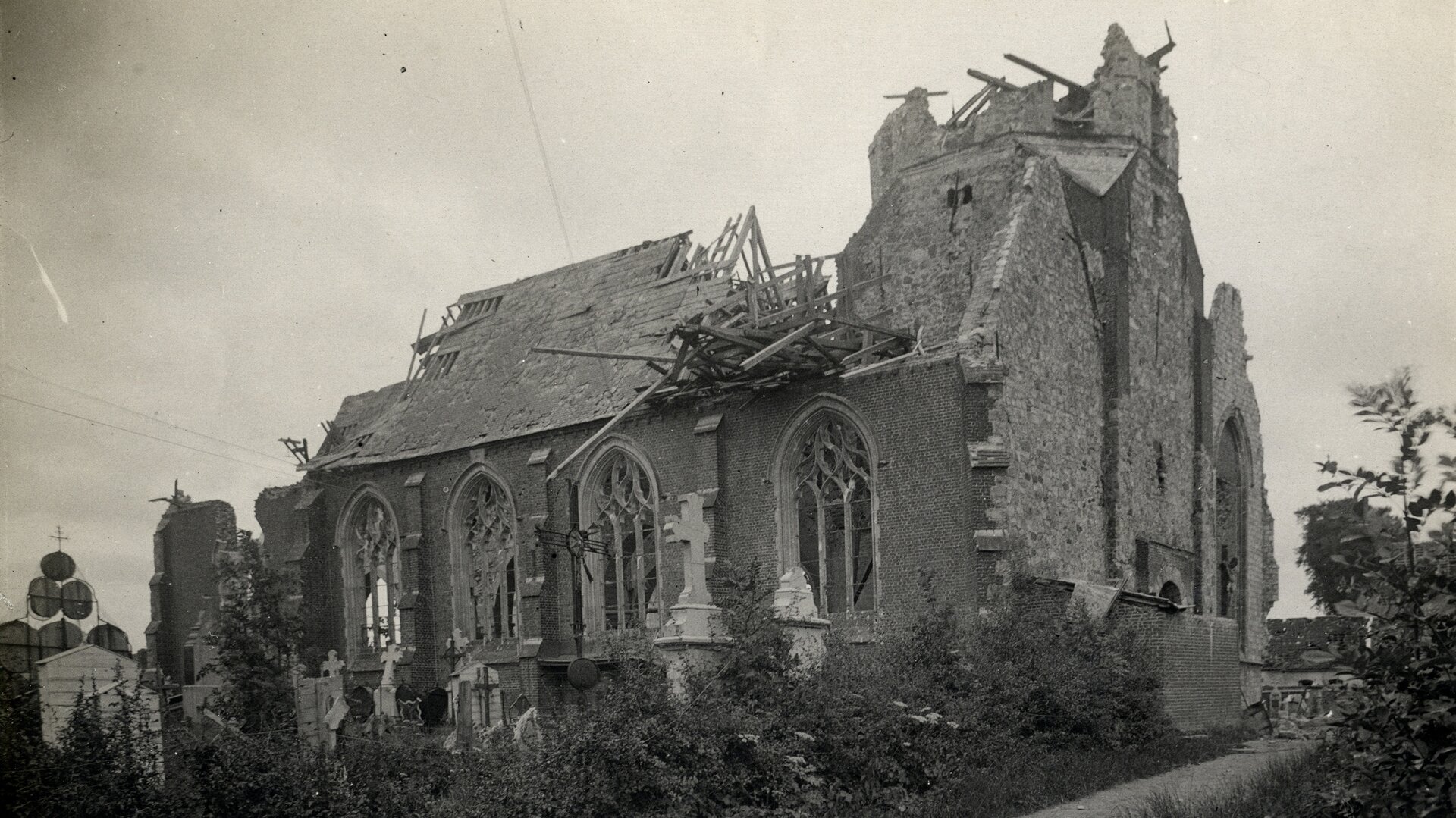
Coming back to the surgery itself, there were more tasks, due to the fact, that along with the civilization progress, some more and more lethal types of weapon started to emerge on the battle fields. Having invented and used the gunpowder and firearms on a mass scale caused that the doctors were required to treat massive wounds. Earlier, it had been believed that it was the gunpowder itself that contained poisonous substances which were the cause of infections and the best solution for infected wounds was to treat them with boiling oil, red‑hot iron or the amputation of the whole limb. It is not surprising that the infirmariesinfirmaries were considered to be horrible places, similar to slaughter houses. It was not until the 16th century that an understanding that such drastic methods were not at all necessary was spread. Cleaning the wounds with clear water with suds was more effective. Obviously, at that moment they did not know the reason. It was not until the 19th century when the concept of antisepticsantiseptics was born and became widespread.
Another problem that the doctors had to face in the past was the issue of the evacuation of the wounded. Until the 19th century, the dying soldiers were left at the battle field. The medics usually appeared there the next day and it was usually too late for the rescue. The death toll caused that this practice could no longer be accepted. The commanders wanted the wounded to go back fighting as soon as possible after the recovery. It is the Napoleonic era that the mankind owes the solution to this problem. At that time, light vehicles with shock‑absorbing suspension harnessed with a pair of horses started to be used to transport the sick, which were the first ambulanceambulance in the history.
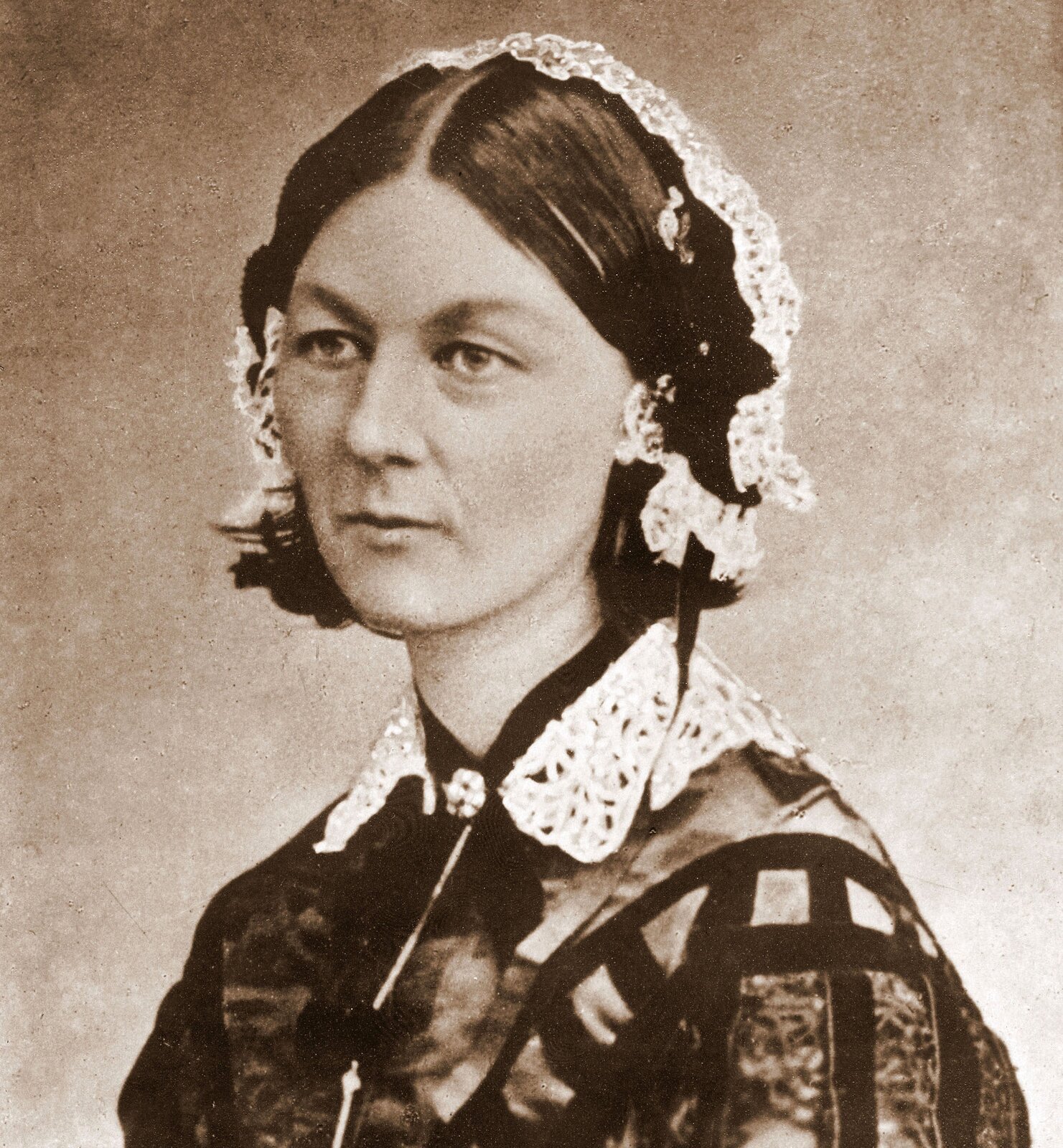
During the Crimean War (1853–1856) women joined the process of taking care of the wounded. Florence Nightingale, British nurse and social activist, became famous after organizing medical service on an unparalleled scale, providing treatment to every wounded and sick soldier during the military actions in Crimea. After her return to the country, she was hailed as a national heroine, and in the British army she was appointed the expert on military nursing service. Soon afterwards, she founded the first school for nurses in London, establishing the foundations for modern nursing.
The real breakthrough did not come until the 20th century though, until World War I. Effective methods of treating traumatic shock became its positive output (despite millions of victims and the horror that it had brought along). A large number of slightly wounded soldiers, yet being in a very bad overall condition - with the symptoms that were the combination of dehydration, cold and extreme exhaustion was a real mystery for the doctors at that time. Treating these symptoms turned out to be possible by administering the morphine, medicines raising blood pressure, drips with electrolytes and using warming blankets. These really helped to save many human beings. The mortality in the army was also successfully diminished thanks to the invention of stiffening splints. It became a real breakthrough, as at the beginning of World War I as much as 80% of soldiers with complicated limb fractures died as a result of bleeding. With introduction of splints, this percentage dropped to 20% in 1918. There is no doubt another revolutionary invention was the first successful blood transfusionstransfusions (or preparations replacing blood), innovative plastic surgery or the development of the neurosurgery.
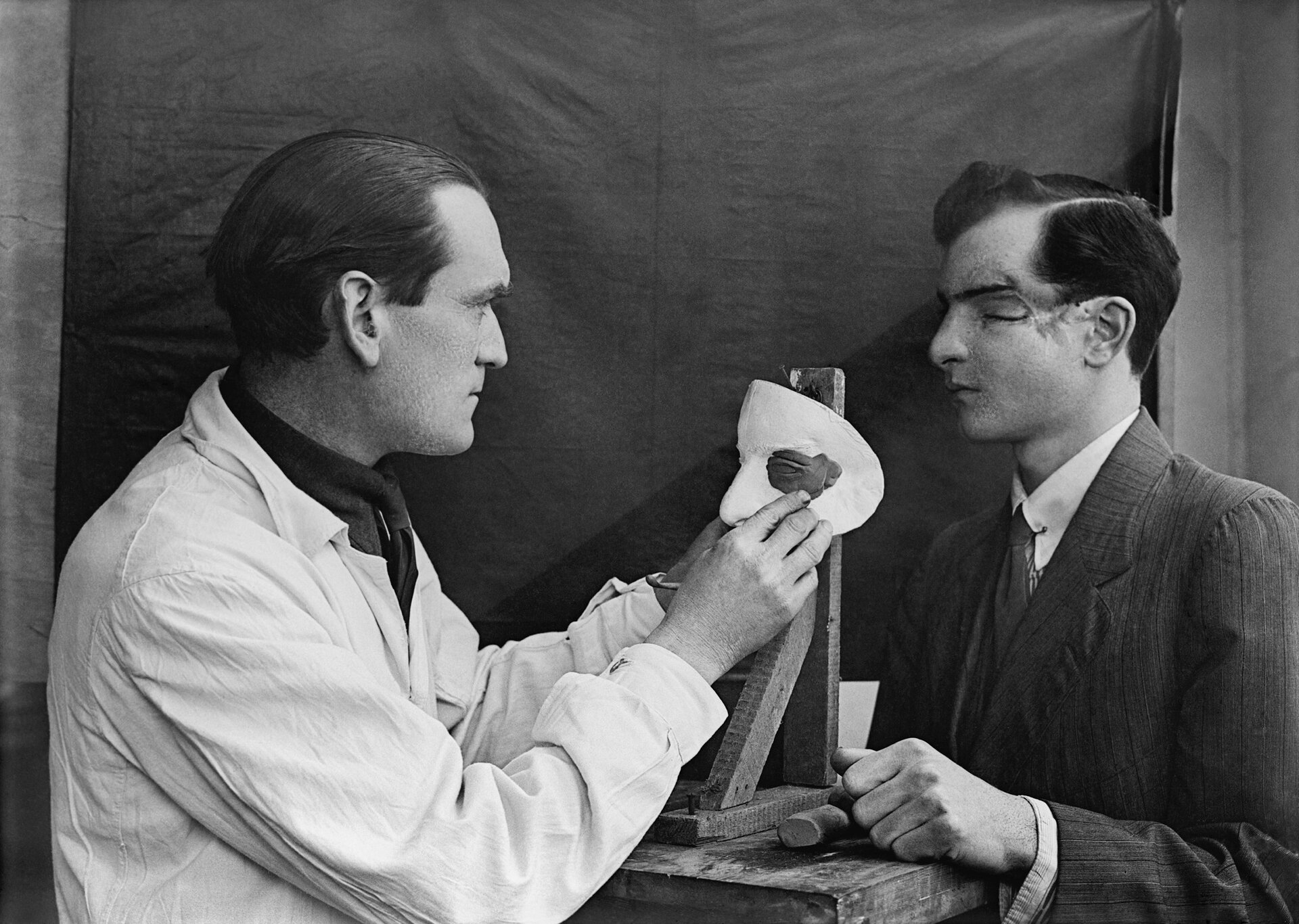
World War I was the first and luckily the last one during which chemical warfare agents were used on a large scale. The reaction was not only the use of gas masks but also the advancement of toxicologytoxicology, developing more and more effective antidotes and the progress in treating chemical burns. A special plastic surgery clinic for soldiers with head injuries caused by the use of gasesgases was established outside London. The ways of reconstructing the skin loss, replacing the damaged flats of skin with the transplantation from the wounded were discovered. Yet, that is not all. As the tankstanks and machine guns were also used for fighting at that time, the number of the wounded in one day reached 100,000. Electromagnets and suction devices started to be used for removing the splinters from bodies. On the other hand, the fact that the troops were stuck in filthy, cold trenches that were full of mud caused that gangrene had to be treated (the so called trench foot syndrome) and a technique based on broad removal of dead tissues was invented.
The number of people maimed during World War I was shocking. The ratio of the people killed and all those who were wounded was “only” 9.5%. Most of the wounded, which is as many as 66% suffered from the so called penetrating trauma, where some important organs inside the body were damaged. The average time between the injury and the transport of the wounded person to the hospital was about 20 hours at that time. Rapid development of military radiologyradiology meant a huge help for the wounded soldiers. It was possible thanks to Polish Nobel Prize winner, Maria Skłodowska‑Curie who collected all X‑ray machines in the whole Paris and organized special cars in which the devices were installed. They were called the “petites Curies” Thanks to her work, the x‑ray images could have been taken under field conditions. The scientist, with her daughter Irene, has trained almost 200 radiology technicians.
Keywords
pragmatismpragmatism, transfusion, infirmaries
Glossary
Lazarety – szpital urządzony w warunkach polowych, czyli na obszarach objętych działaniami wojennymi
Okopy – fortyfikacje militarne; głębokie rowy, często wzmocnione drewnianymi konstrukcjami, wraz z sąsiadującym nasypami
Pragmatyzm– realistyczna ocena rzeczywistości, podłoże skutecznych działań
Antyseptyka – postępowanie mające na celu zniszczenie drobnoustrojów w celu uniknięcia zakażeń, w ranach, na narzędziach chirurgicznych, w salach operacyjnych.
Aseptyka – jałowość bakteriologiczna
Radiologia – naświetlenia pacjentów promieniami rentgenowskimi w celach diagnostycznych; ich użycie pozwala zobrazować ciało człowieka
Transfuzja – przetaczanie pacjentowi krwi lub preparatów krwiopochodnych
Toksykologia – nauka badająca właściwości środków trujących
Ambulans – lekki, amortyzowany pojazd słuzacy do przxewozu rannych żołnierzy, z czasem zaczęto go używać również do przewożenia chorych cywolów, dziś: karetka pogotowia
Gazy bojowe - substancje zastosowane po raz pierwszy w I w. św. w walce zbrojnej do rażenia ludzi, niszczenia obiektów obronnych i sprzętu;
Czołgi – uzbrojone i opancerzone wozy bojowe, zdolne do manewrowania i pokonywania przeszkód oraz atakowania wroga; po raz pierwszy czołg wprowadzono je do walki w 1916, podczas I wojny światowej.
Samoloty bombowe – używane w czasie I wojny światowej samoloty myśliwskie, zaopatrzone w bomby do ręcznego wyrzucania
Łodzie podwodne – okręty wojenne przeznaczone do pływania i walki w całkowitym zanurzeniu;.wyposażone w torpedy, miny, rakiety; o ile z powodzeniem używano ich w czasie I wojny światowej, w II odegrały już ogromną rolę.