The smallest natural, indivisible components of the Earth's crust have been called minerals. They were created as a result of natural geological processes. Each of them has characteristic physical and chemical properties. Most minerals also have a specific crystal structure. There are over 3 thousand known minerals. The most numerous in the lithosphere are: plagioclases, orthoclases, pyroxenes and amphiboles, quartz, magnetite, mica and calcite.
Natural clusters of one or many minerals, created as a result of specific geological processes (magmatism, metamorphism, sedimentation and others) form rocksrockrocks, which are the basic components of the Earth's crust. Natural accumulations of crumbs of other rocks or debris of organic origin are also called rocks. Some of them were used in energy production or in other industries, such as construction, thanks to which they were named mineral resourcesmineral resourcesmineral resources.
In addition to rock raw materials, mineral resources also include energy, metal and chemical raw materials.
R1d3xO3YT4t6X
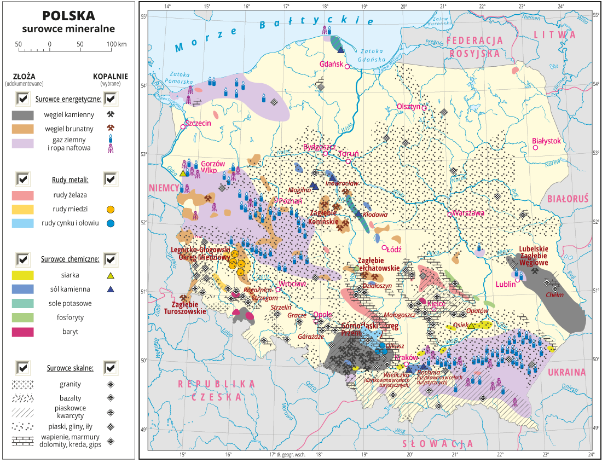
Ilustracja przedstawia mapę Polski. Jest ona podzielona na dwie części. Na prawej zaznaczone jest występowanie i wydobycie zasobów mineralnych w Polsce , natomiast lewa strona zawiera legendę opisującą złoża oraz kopalnie.
Occurrence and extraction of mineral resources in Poland
Source: Wydawnictwo Edukacyjne Wiking, licencja: CC BY 3.0.
Rocks are formed as a result of various processes, as presented in the table below (division by reason of genesis).
RB6BzyEqRypa8
Igneous rocks (created by the crystallization of magma or lava): igneous underground magma rocks, e.g. granite, syenite, effusive magma rocks, e.g. basalt, andesite.
Sedimentary rocks (caused by deposition of remains of organisms, or other crushed or dissolved rocks on land or on the bottom of water): clastic sedimentary rocks, e.g. sand, conglomerate, sedimentary rocks of organic origin, e.g. limestone, black coal, sedimentary rocks of chemical origin, e.g. rock salt, gypsum.
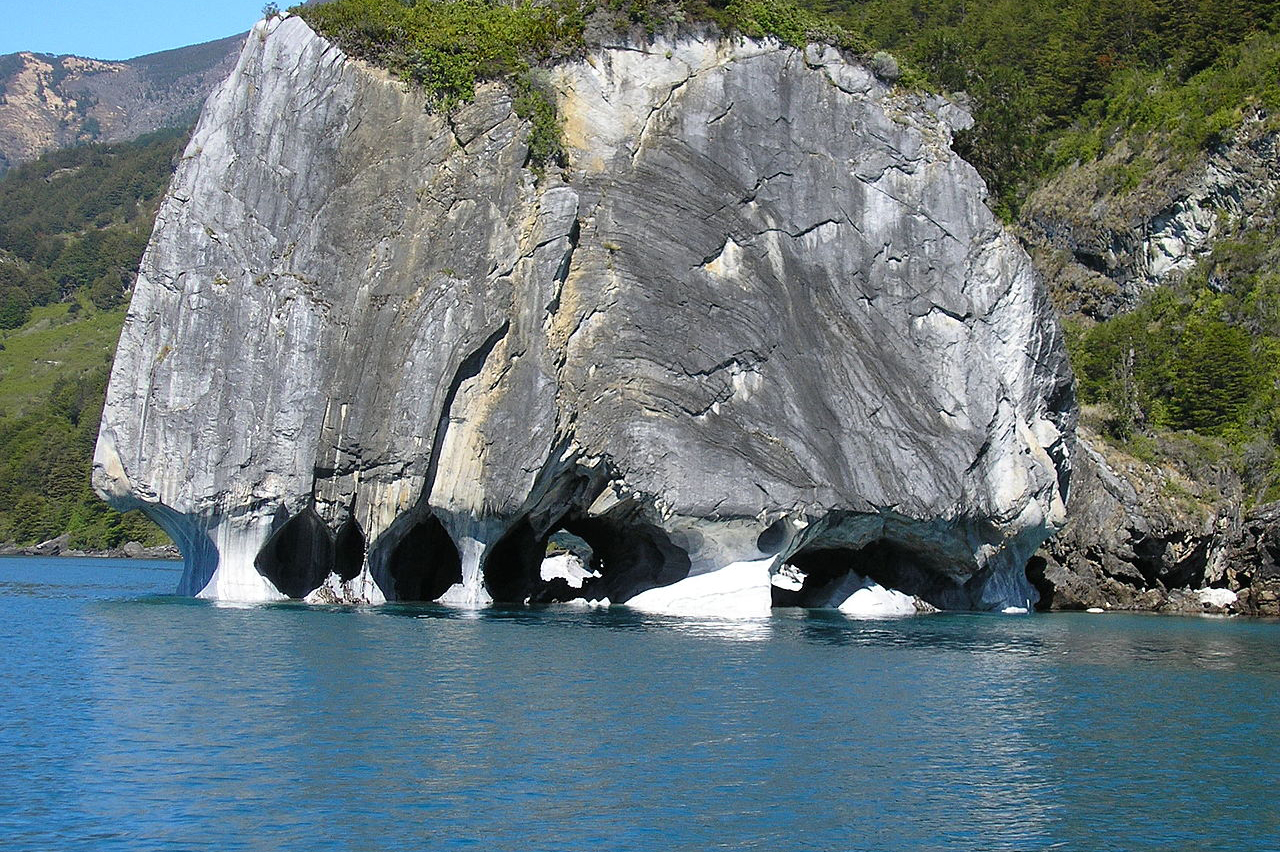
Metamorphic rocks (created by transforming previously existing rocks in the depths of Earth under the influence of high pressure and temperature): regional metamorphic rocks – occur in large areas (even thousands of square kilometers), formed from the largest number of types of initial rocks, e.g. gneiss, slate, contact metamorphic rocks – formed at the junction of magma breaking into the rocks formed earlier, e.g. marble, quartzite.
Igneous rocks (created by the crystallization of magma or lava): igneous underground magma rocks, e.g. granite, syenite, effusive magma rocks, e.g. basalt, andesite.
Sedimentary rocks (caused by deposition of remains of organisms, or other crushed or dissolved rocks on land or on the bottom of water): clastic sedimentary rocks, e.g. sand, conglomerate, sedimentary rocks of organic origin, e.g. limestone, black coal, sedimentary rocks of chemical origin, e.g. rock salt, gypsum.
Metamorphic rocks (created by transforming previously existing rocks in the depths of Earth under the influence of high pressure and temperature): regional metamorphic rocks – occur in large areas (even thousands of square kilometers), formed from the largest number of types of initial rocks, e.g. gneiss, slate, contact metamorphic rocks – formed at the junction of magma breaking into the rocks formed earlier, e.g. marble, quartzite.
Granite
64871
Basalt
64870
Conglomerate
64872
Bituminous coal
64873
Rock salt
64874
Gneiss
64875
Marble
64878
Rocks that form the Earth's crust can also be categorized by their cohesion, i.e. the degree of connection between its mineral components. We distinguish three groups:
hard rocks – their grains are strongly bonded (e.g. granite, sandstone, marble);
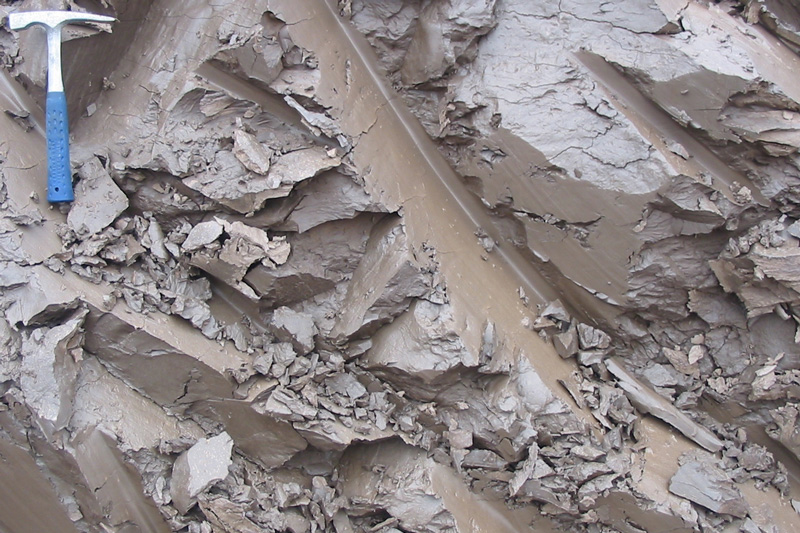
soft rocks – formed from rock crumbs and minerals with an average diameter smaller than one tenth of a millimeter. They are poorly connected with each other. Because of that, they can be crushed in the hand or – if they are moist – knead like plasticine.
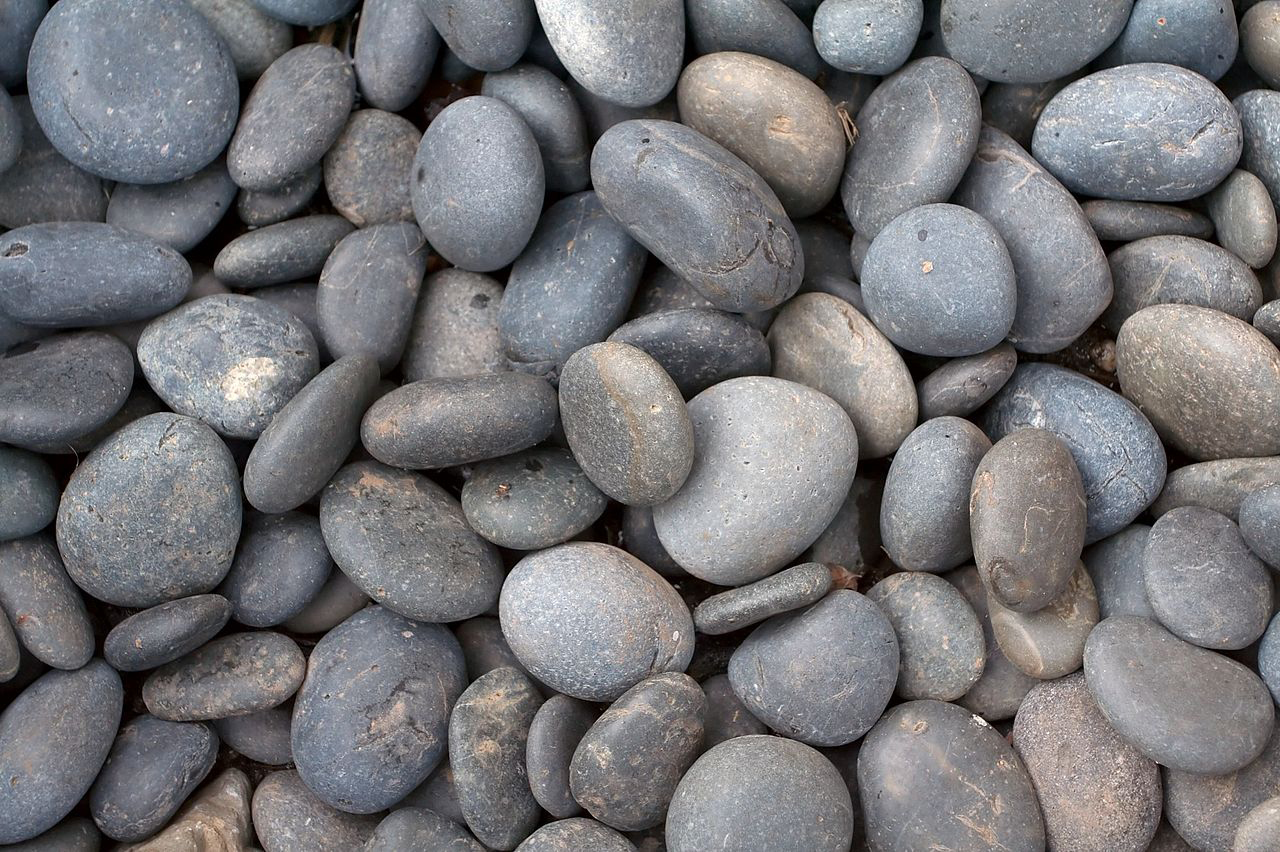
loose rocks – their grains are not connected with each other (e.g. sand, gravel).
RyDoAdwVriaky
Exercise 1
Wybierz jedno nowe słowo poznane podczas dzisiejszej lekcji i ułóż z nim zdanie.
Wybierz jedno nowe słowo poznane podczas dzisiejszej lekcji i ułóż z nim zdanie.
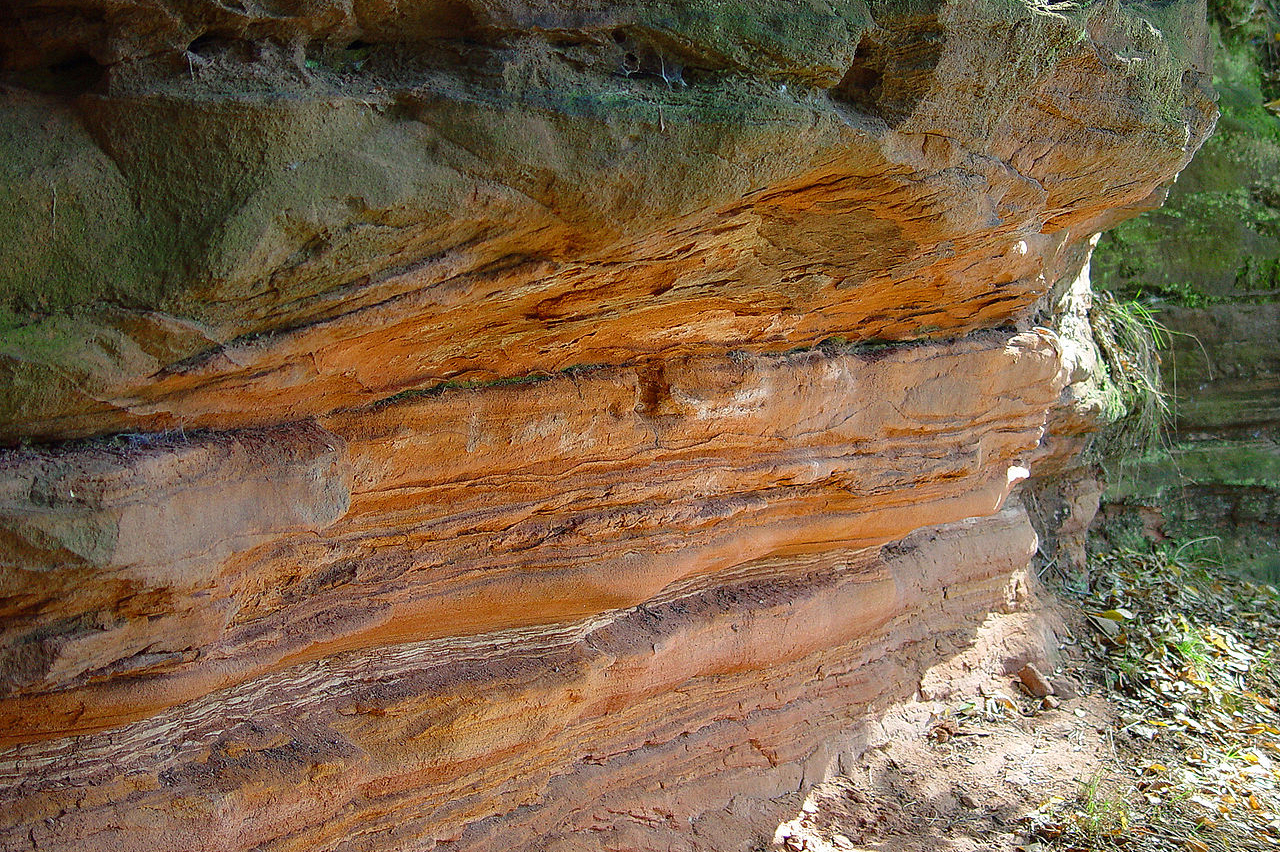
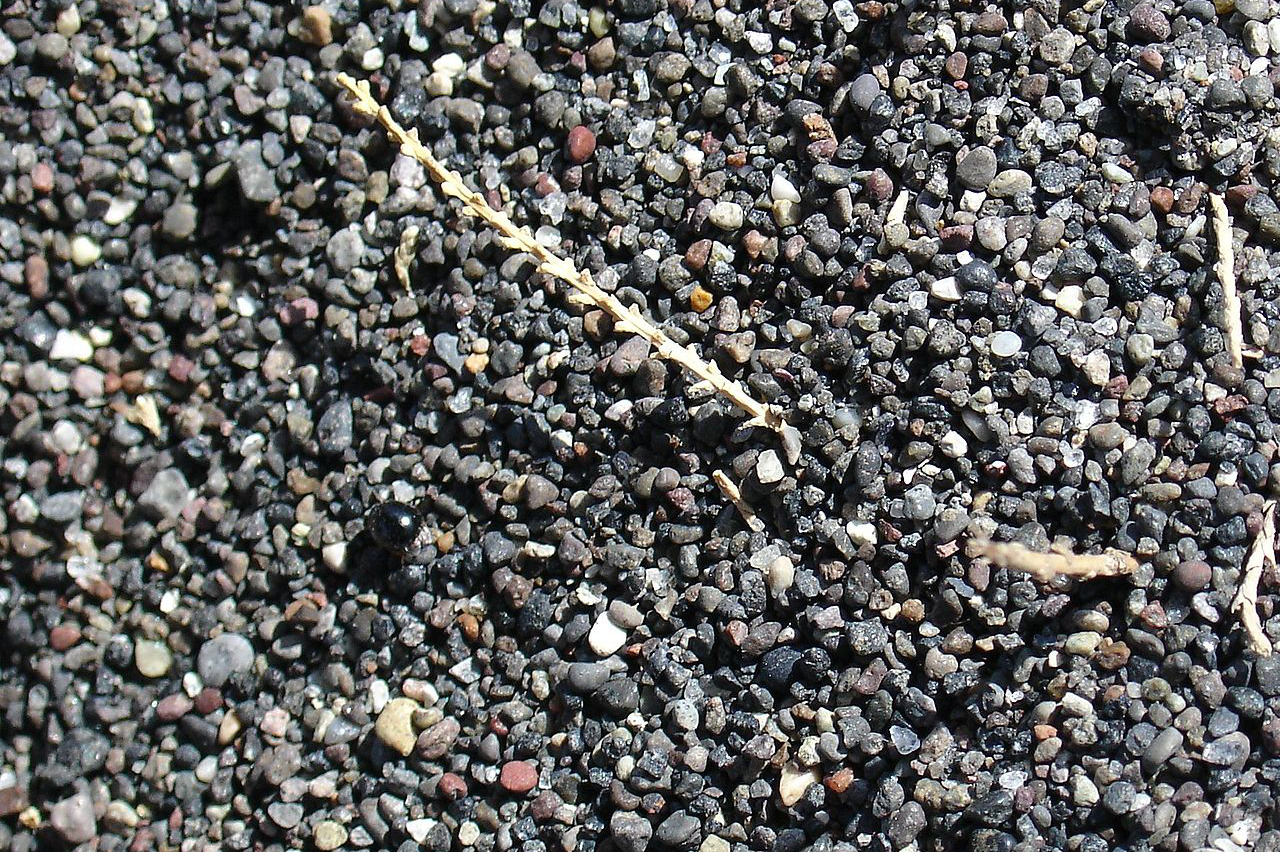
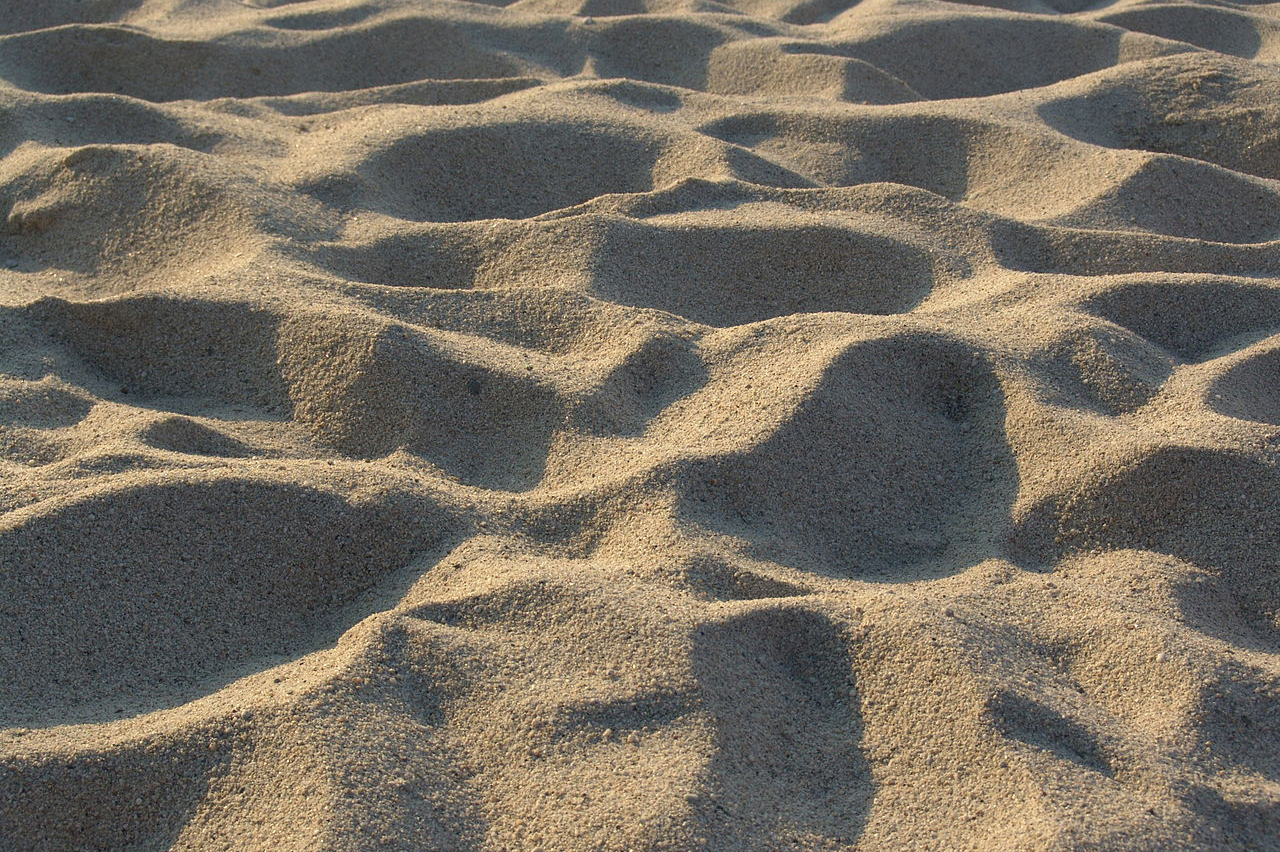
Which illustrations present loose rocks?
1
2
3
4
5
6
Task 1
Wybierz jedno zagadnienie opisane w abstrakcie. Poszerz swoją wiedzę na jego temat, szukając dodatkowych informacji w dostępnych ci źródłach (np. w internecie, encyklopedii lub specjalistycznych publikacjach).
Wybierz jedno zagadnienie opisane w abstrakcie. Poszerz swoją wiedzę na jego temat, szukając dodatkowych informacji w dostępnych ci źródłach (np. w internecie, encyklopedii lub specjalistycznych publikacjach).
Carefully examine your surroundings (your flat, house, other buildings, pavement, monuments, tombstones, etc.). Sometimes natural rocks are used to build or finish various constructions. Make a list of encountered rocks with their applications and useful properties.
RTYpI8TDZXGBL
Wysłuchaj nagrania abstraktu, ułóż do niego pytania i zadaj je koledze.
Wysłuchaj nagrania abstraktu, ułóż do niego pytania i zadaj je koledze.
Task 2
Wymień najbardziej znane budowle z marmuru.
Wymień najbardziej znane budowle z marmuru.
Look at the gallery below and describe it according to the teacher's requirements.
RVBgKdkOVp5wW
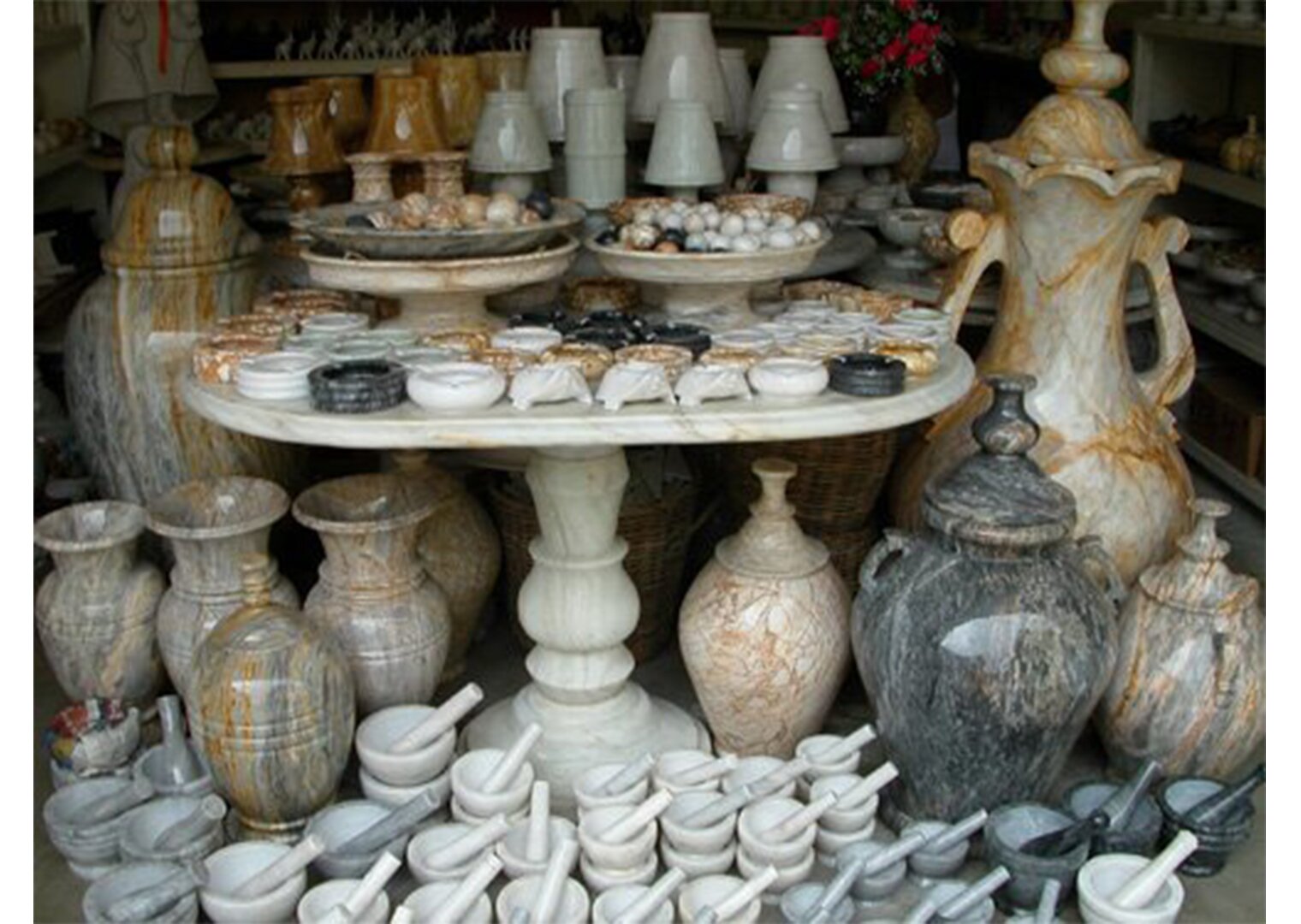
NA zdjęciu figurki wykonane z marmuru: wazy, moździerze, popielniczki, miseczki, małe lampy.
Utensils made of marble.
Source: licencja: CC 0, [online], dostępny w internecie: commons.wikimedia.org.
R15TTAuuQGqvs
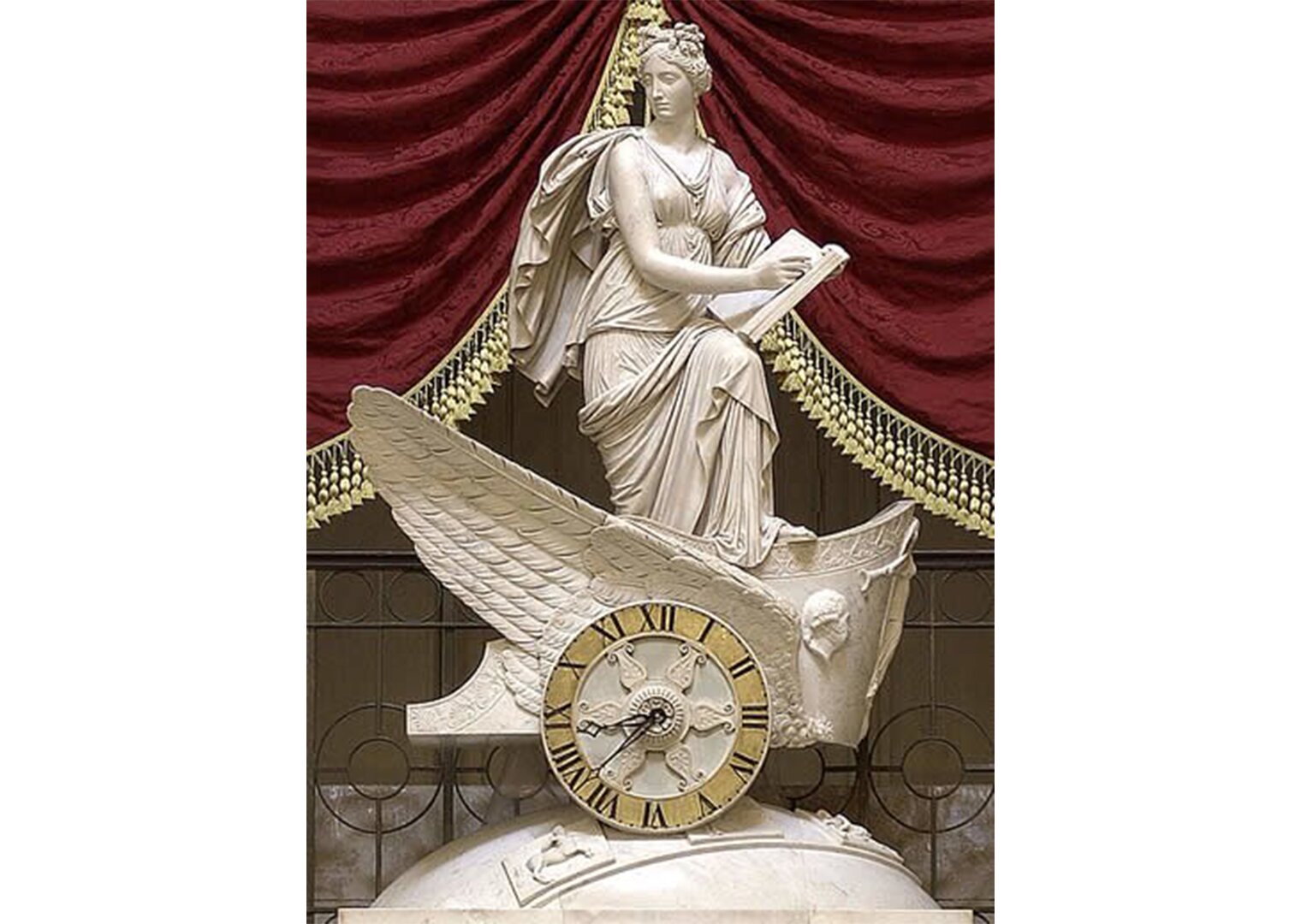
Na zdjęciu wykonany z marmuru posąg kobiety. Kobieta stoi, w dłoniach trzyma otwartą książkę. Stoi na skrzydłach, przed skrzydłami tarcza zegara.
Sculpture made of marble.
Source: licencja: CC 0, [online], dostępny w internecie: https://commons.wikimedia.org.
R1AHsizt3mG4Q
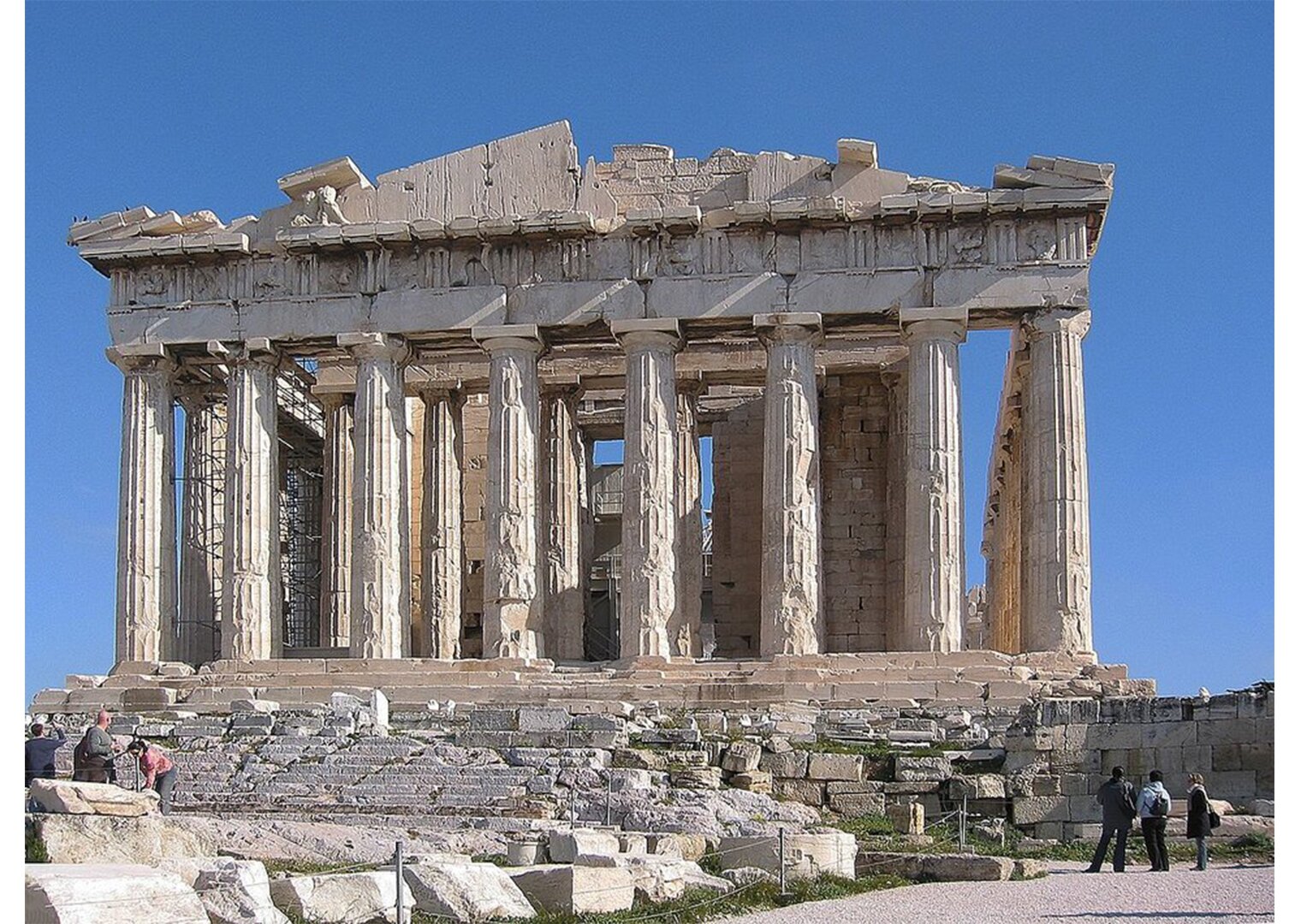
NA zdjęciu pozostałości ateńskiego Partenonu, wykonanego z marmuru. Budowla otoczona kolumnami.
The Parthenon in Athens was made of marble.
Source: Harrieta171, licencja: CC BY-SA 3.0, [online], dostępny w internecie: commons.wikimedia.org.
R1SKkmsxrjH6I
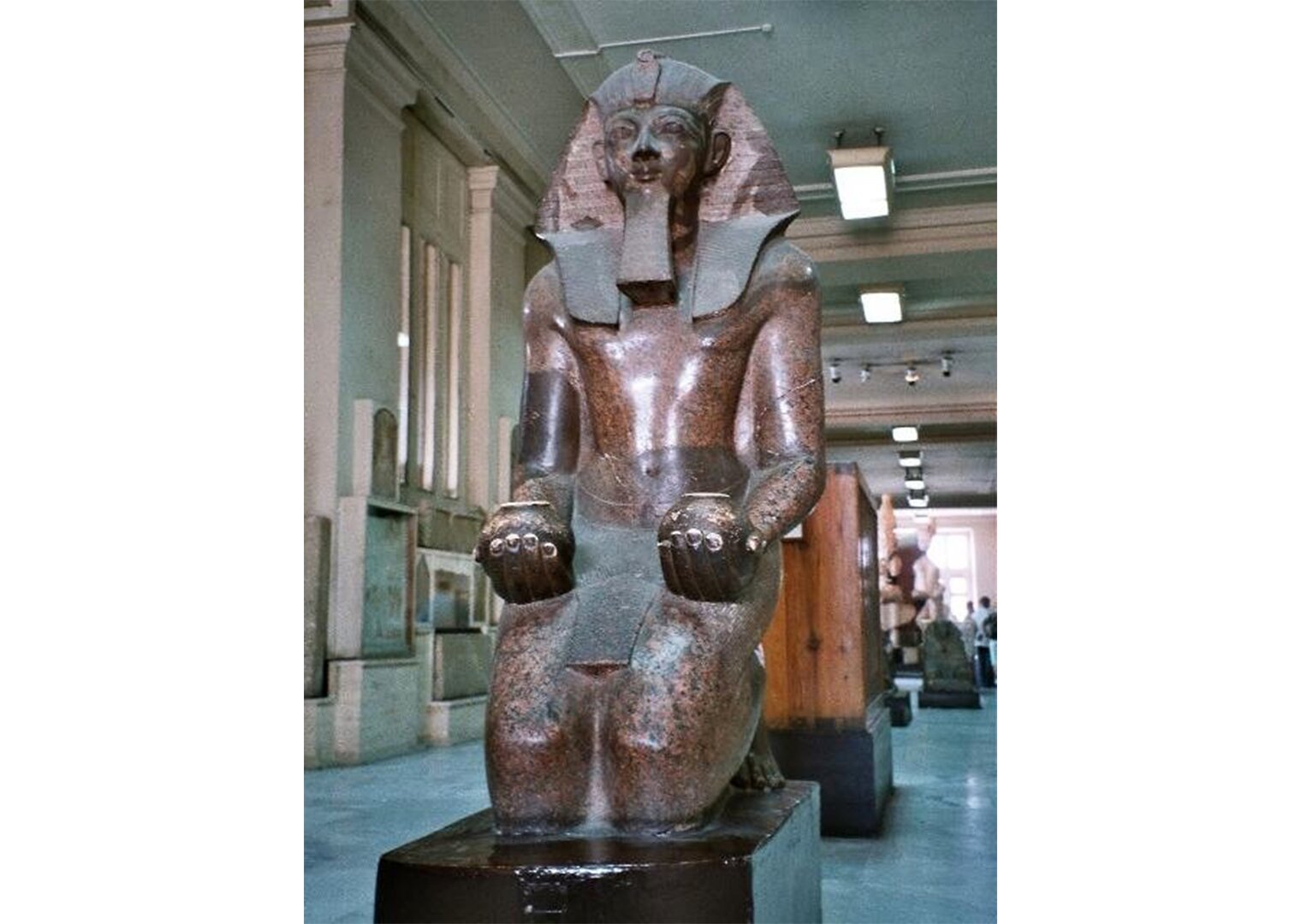
Na zdjęciu statua Faraona z granitu w muzeum. Mężczyzna siedzi. Dłonie ma oparte na udach. W każdej dłoni trzyma małe, okrągłe naczynie..
Pharaoh's statue made of granite.
Source: Hajor, licencja: CC BY-SA 3.0, [online], dostępny w internecie: commons.wikimedia.org.
RbUKeUXc8chId
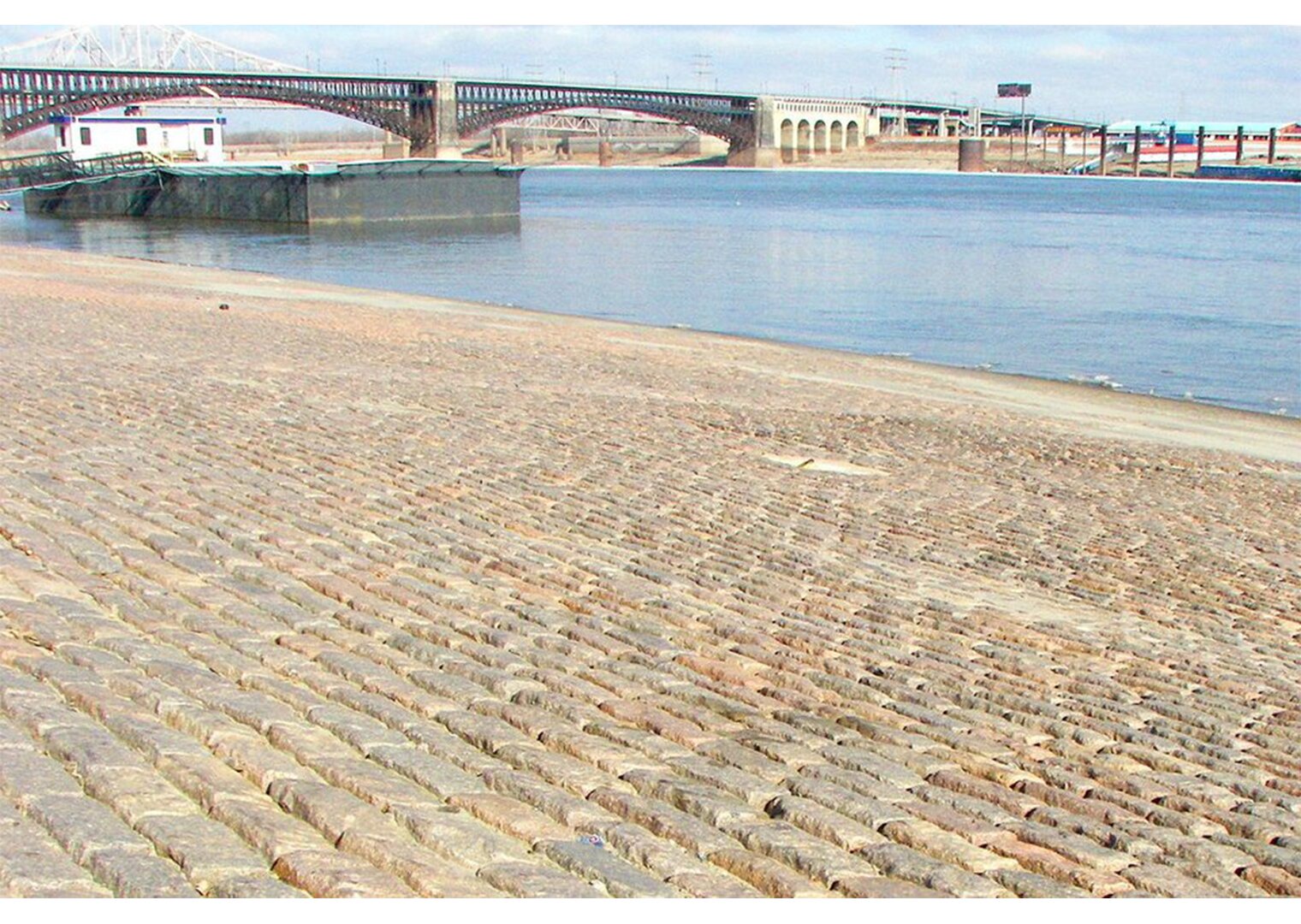
Zdjęcie przedstawia szeroki fragment brzegu wykonany z kostki granitowej tuż nad rzeką. W oddali most oraz zabudowania.
Granite is used to secure river banks.
Source: Kbh3rd, licencja: CC BY-SA 3.0, [online], dostępny w internecie: commons.wikimedia.org.
Ryr2cCkbGfqh2
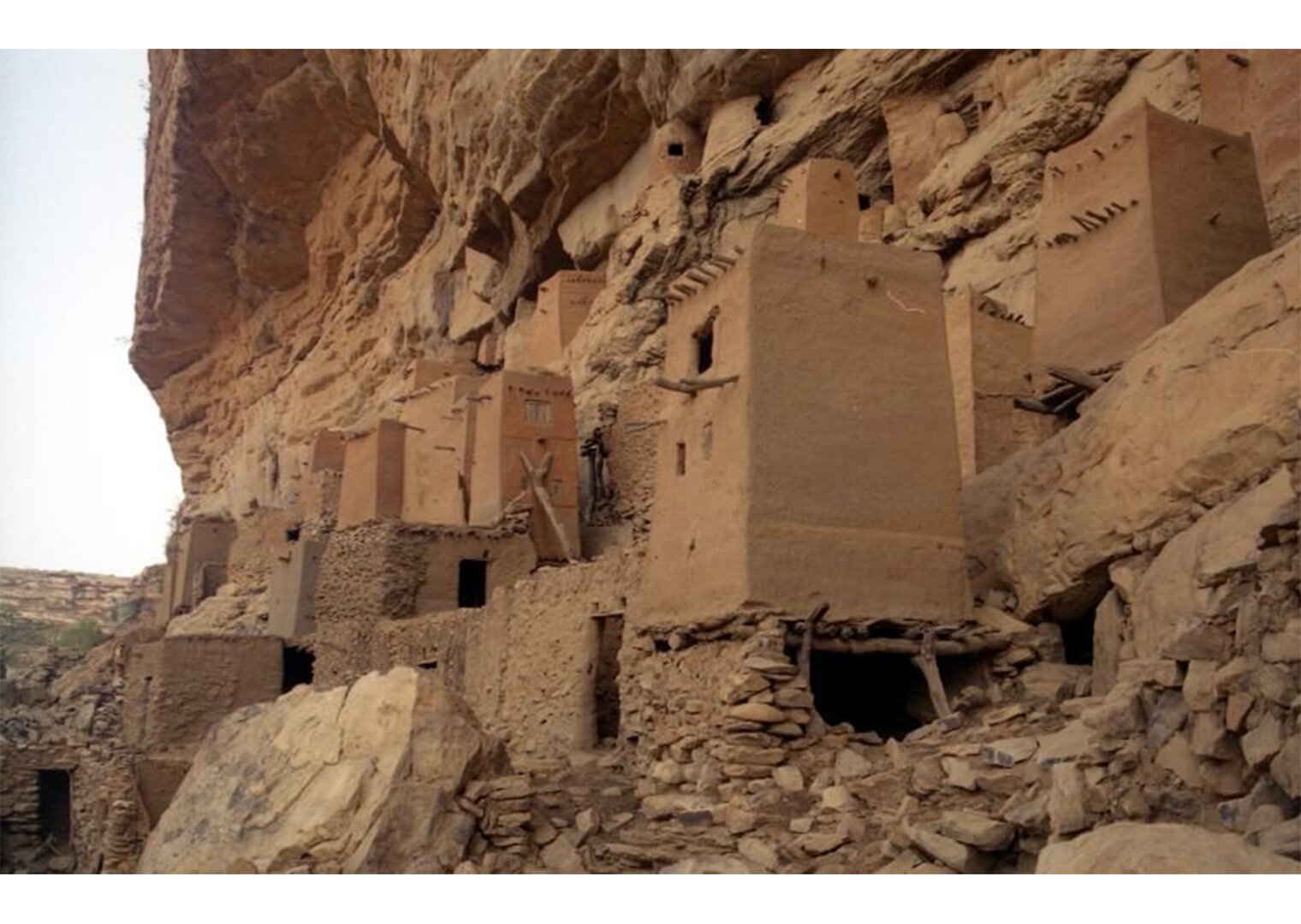
Na zdjęciu spichlerze wkomponowane w skalną ścianę. Wykonane z gliny.
Granaries made of clay in the Republic of Mali.
Source: Robin Elaine, licencja: CC BY 2.0, [online], dostępny w internecie: commons.wikimedia.org.
R11cT2FARYwyo
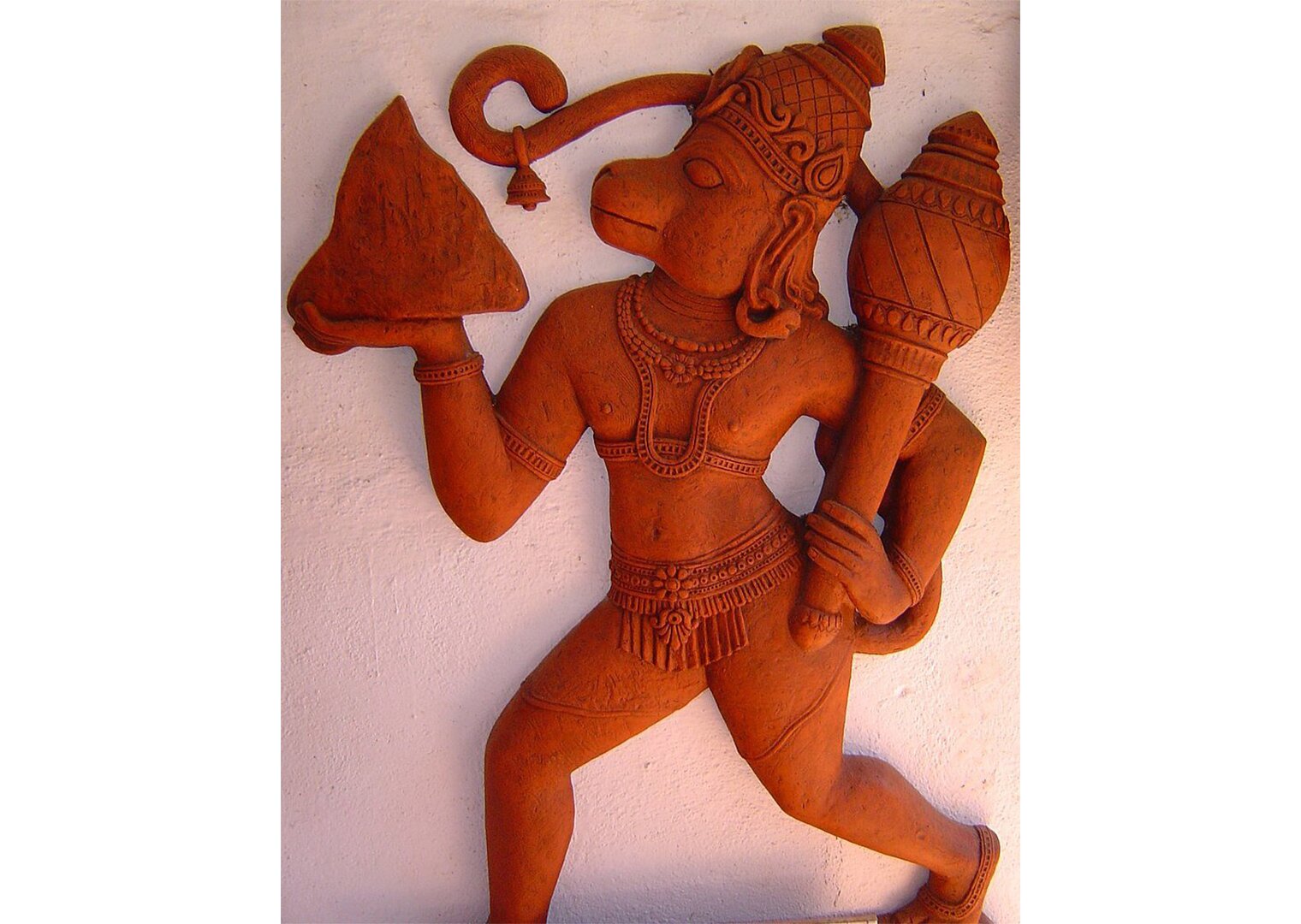
Na zdjęciu wykonane z gliny bóstwo hinduskie. Przypomina człowieka z głową i z ogonem małpy.
Figure of a Hindu deity, made of clay.
Source: licencja: CC 0, [online], dostępny w internecie: commons.wikimedia.org.
R1KsGKEjrc3xO
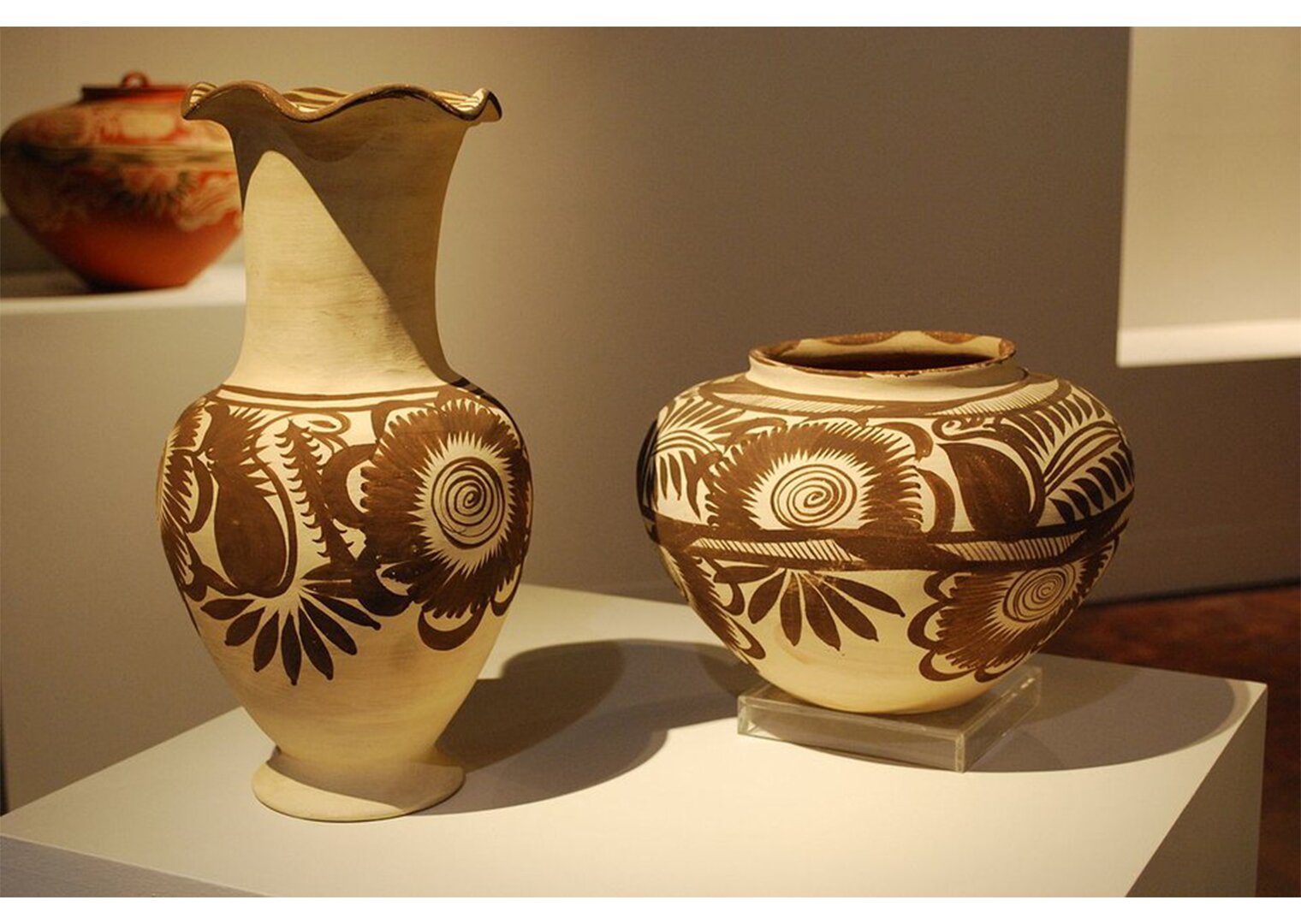
Na zdjęciu dwa jasnobrązowe wazony - różnej wielkości - wykonane z gliny. Na wazonach ciemnobrązowe zdobienia - kwiaty.
Utensils made of clay.
Source: Thelmadatter, licencja: CC BY-SA 3.0, [online], dostępny w internecie: commons.wikimedia.org.
Rq6LVetoGnWe2
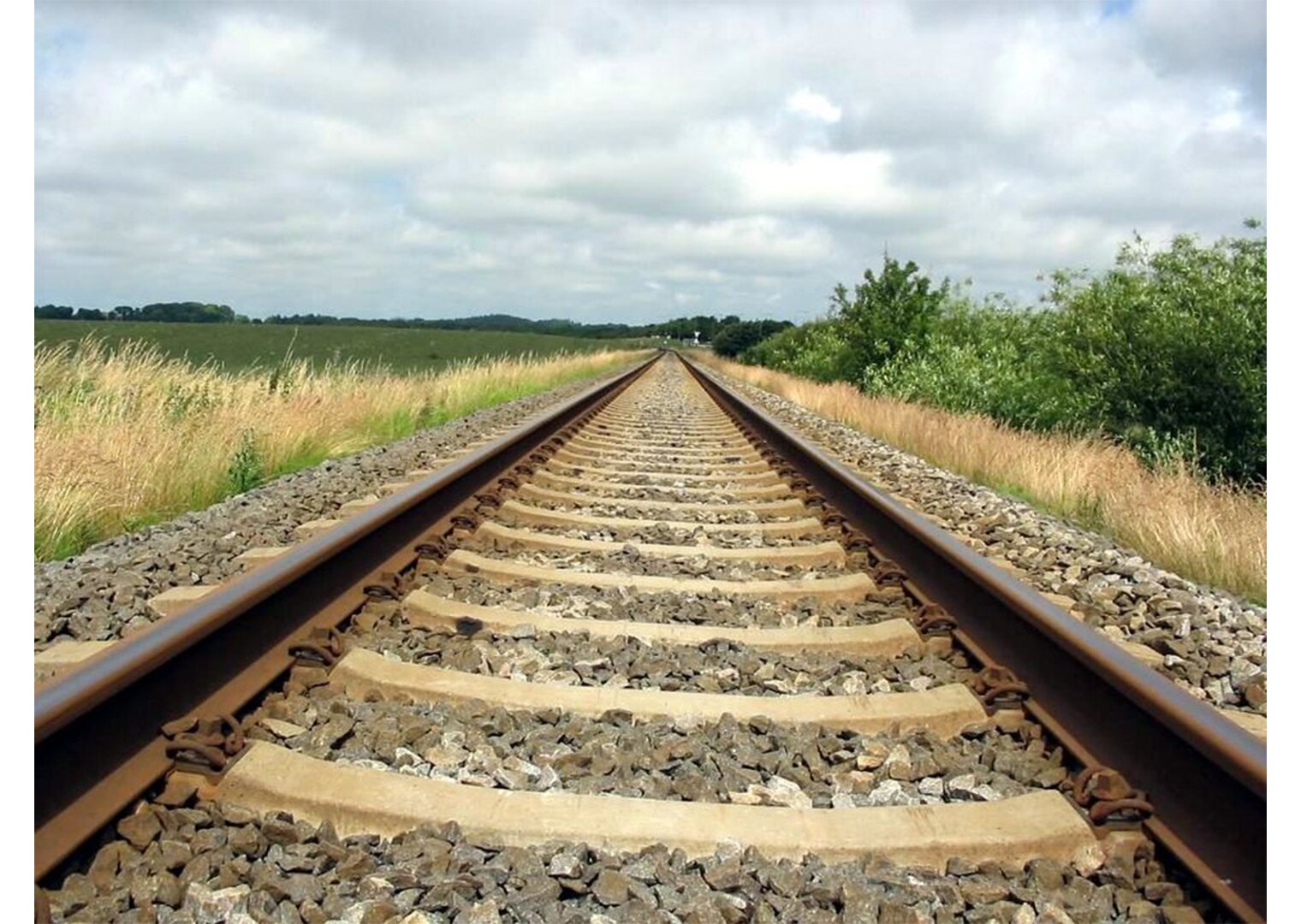
Zdjęcie przedstawia teren pozamiejski gdzie przebiega trasa kolejowa. Tory ułożone są na betonowych podporach oraz obsypane drobnymi kamieniami które, pochłaniają wibracje podczas przejazdu pociągu.
The gravel spilled on the tracks is designed to absorb vibrations during the passage of a train
Source: Tomasz Sienicki, licencja: CC BY-SA 3.0, [online], dostępny w internecie: commons.wikimedia.org.
R1KacV0Atkkdn
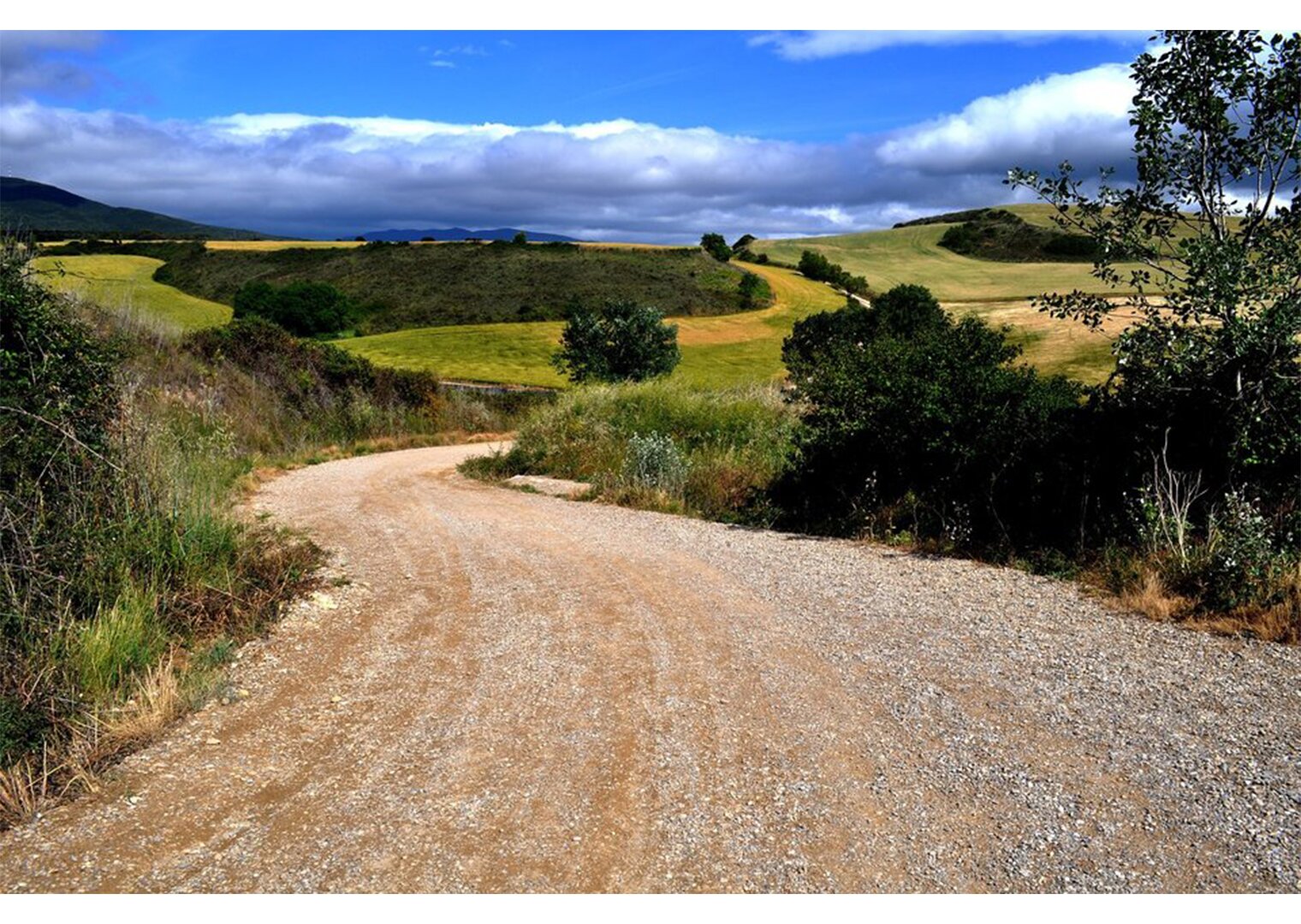
Zdjęcie przedstawia malowniczą dolinę do której prowadzi szeroka szutrowa droga biegnąca pomiędzy polami.
Gravel is used to reinforce dirt roads.
Source: licencja: CC 0, [online], dostępny w internecie: pixabay.com.
R17guWib9gSRc
Give examples of the use of marble, granite and clay.
Give examples of the use of marble, granite and clay.
R16SPqB7j8aGR
Exercise 2
Assign mineral raw materials to appropriate categories. Energy raw material Możliwe odpowiedzi: 1. limestones, 2. phosphates, 3. sand, 4. hard coal, 5. crude oil, 6. rock salt, 7. gold, 8. natural gas, 9. dolomites, 10. copper ore, 11. sulfur, 12. tin ore Metallic raw materials Możliwe odpowiedzi: 1. limestones, 2. phosphates, 3. sand, 4. hard coal, 5. crude oil, 6. rock salt, 7. gold, 8. natural gas, 9. dolomites, 10. copper ore, 11. sulfur, 12. tin ore Chemical raw materials Możliwe odpowiedzi: 1. limestones, 2. phosphates, 3. sand, 4. hard coal, 5. crude oil, 6. rock salt, 7. gold, 8. natural gas, 9. dolomites, 10. copper ore, 11. sulfur, 12. tin ore Rock raw materials Możliwe odpowiedzi: 1. limestones, 2. phosphates, 3. sand, 4. hard coal, 5. crude oil, 6. rock salt, 7. gold, 8. natural gas, 9. dolomites, 10. copper ore, 11. sulfur, 12. tin ore
Assign mineral raw materials to appropriate categories. Energy raw material Możliwe odpowiedzi: 1. limestones, 2. phosphates, 3. sand, 4. hard coal, 5. crude oil, 6. rock salt, 7. gold, 8. natural gas, 9. dolomites, 10. copper ore, 11. sulfur, 12. tin ore Metallic raw materials Możliwe odpowiedzi: 1. limestones, 2. phosphates, 3. sand, 4. hard coal, 5. crude oil, 6. rock salt, 7. gold, 8. natural gas, 9. dolomites, 10. copper ore, 11. sulfur, 12. tin ore Chemical raw materials Możliwe odpowiedzi: 1. limestones, 2. phosphates, 3. sand, 4. hard coal, 5. crude oil, 6. rock salt, 7. gold, 8. natural gas, 9. dolomites, 10. copper ore, 11. sulfur, 12. tin ore Rock raw materials Możliwe odpowiedzi: 1. limestones, 2. phosphates, 3. sand, 4. hard coal, 5. crude oil, 6. rock salt, 7. gold, 8. natural gas, 9. dolomites, 10. copper ore, 11. sulfur, 12. tin ore
Assign mineral raw materials to appropriate categories.
dolomites, rock salt, copper ore, tin ore, natural gas, sand, limestones, phosphates, hard coal, crude oil, gold, sulfur
Energy raw material
Metallic raw materials
Chemical raw materials
Rock raw materials
Task 3
Explain why and how some minerals have been used in the economy. Name some of them.
R1RI6ejrNKxke
A mineral raw material that is used in the economy? (Uzupełnij). How was it used? (Uzupełnij).
A mineral raw material that is used in the economy? (Uzupełnij). How was it used? (Uzupełnij).
1
Keywords
rocks, minerals, hard rocks, soft rocks, loose rocks