Oxoacids – their properties and application
how acids are obtained and what is their structure;
what are the indicators and what colour they turn into in water, acids and bases.
to examine properties of selected acids;
to apply the rules for handling concentrated solutions of acids;
to name examples of application of acids.
What are the properties of oxoacids?
Sulphuric acid
Anhydrous sulphuric acid is a thick, colourless, oily liquid. The concentrated acid of the formula is its 98% aqueous solution and is commonly used in laboratories. How can we dilute some of the concentrated acid solutions, e.g. sulphuric acid?
During dilution, take special care and follow popular saying: „Remember young chemist, always pour acid to water!” or „If you do not want to lose your beauty, always pour acid into the water!”.
Watch the teacher demonstration „Mixing sulphuric acid with water”. Look at why acid should always be poured into water rather than water to acid. Write down your observations and conclusions.
Concentrated solutions of many acids are caustic substances, therefore be careful when working with them. Recall the importance of warning pictograms.
Before you watch the movie „Testing the effect of sulfuric acid on sugar”, write down the research question and the hypothesis. During the screening, pay attention to what happens to the substances used to perform the experiment. What does this mean? Write down the observations and conclusions.
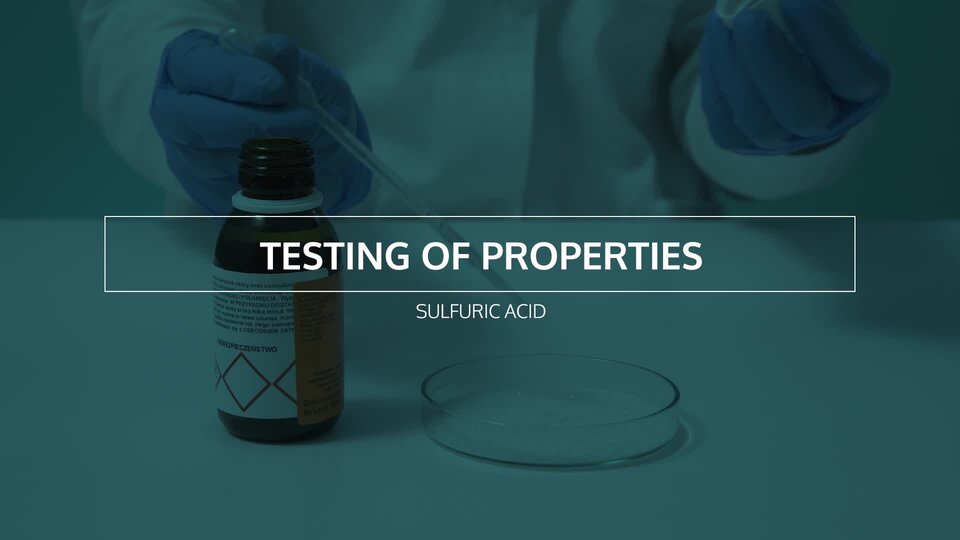
Film dostępny na portalu epodreczniki.pl
Nagranie wideo przedstawiające proces badania właściwości kwasu siarkowego sześć. Na szklanym spodku znajduje się cukier, laborant polewa cukier kilkoma kroplami stężonego kwasu siarkowego sześć. Na cukrze widać wyraźnie brązowe plamki w miejscach polania kwasem, plamki te stają się następnie ciemnobrązowe, aż do czarnych.
What are the properties of concentrated sulphuric acid?
Concentrated sulphuric acid does not change the appearance of fabric, paper and wood. Concentrated sulphuric acid changes the appearance of fabric, paper and wood.
3 Petri dishes,
a piece of fabric,
paper and a piece of wood,
concentrated sulphuric acid,
pipette.
Apply a few drops of concentrated sulphuric acid onto pieces of fabric, paper and wood.
Observe the changes.
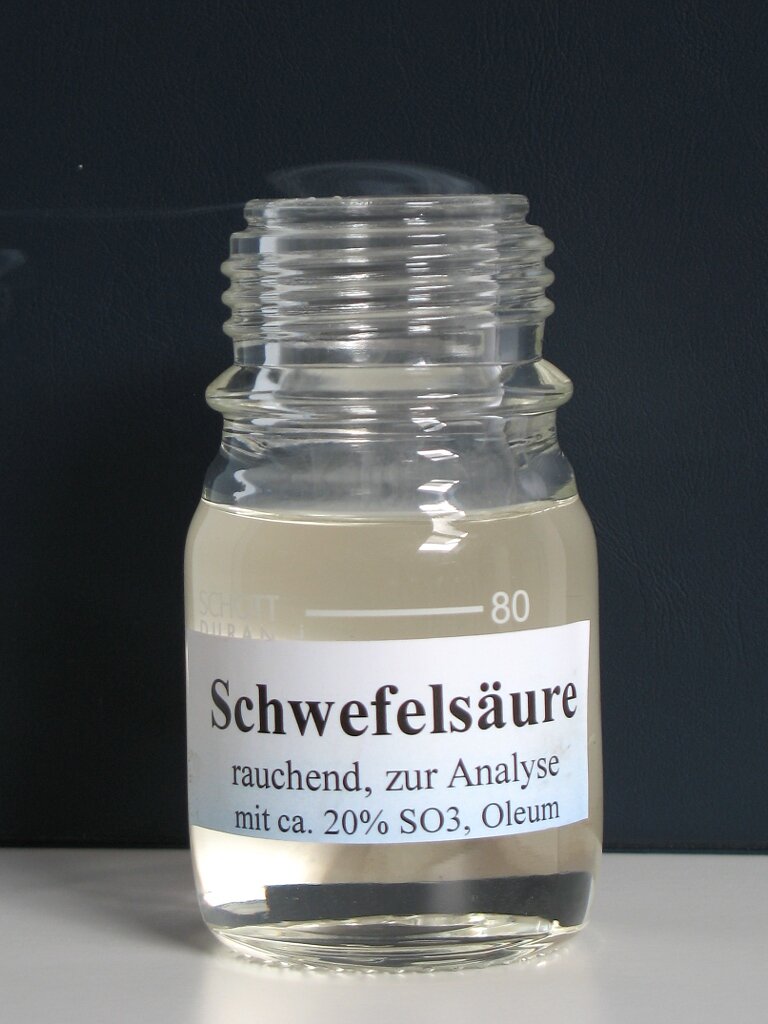
As a result of dissolution of sulphur trioxide in concentrated sulphuric acid, so‑called oleum, i.e. fuming sulphuric acid is formed.
It is a colourless or brown oily liquid, emitting white fumes. It is used for the production of dyes and explosives.
Nitric acid
Concentrated nitric acid is an aqueous solution of the acid with the following formula with a concentration of approx. 68%. It has sharp and unpleasant odour and caustic properties. It was famous polish chemist Ignacy Mościcki, who developed a method of obtaining nitric acid from air and water.
Watch the teacher demonstration or conduct the experiment „Chemical properties of nitric acid” yourself. Pay attention to the characteristic reaction in this experiment. Write down your observations and conclusions.
What are the properties of concentrated nitric acid?
Concentrated nitric acid does not change the appearance of cottage cheese, bird feather and sheep's wool.
3 Petri dishes,
a piece of cheese,
bird feather,
a piece of sheep's wool,
concentrated nitric acid,
pipette.
Apply a few drops of concentrated nitric acid onto pieces of cheese, bird feather and sheep's wool.
Observe the changes taking place.
Concentrated nitric acid causes protein‑containing products to turn yellow. This reaction, called XanthoproteicXanthoproteic, is characteristic of proteins.
Nitric acid is a colourless liquid well soluble in water. Reacts with most metals, including copper and argentum. Gold and platinum are not affected by the reaction.
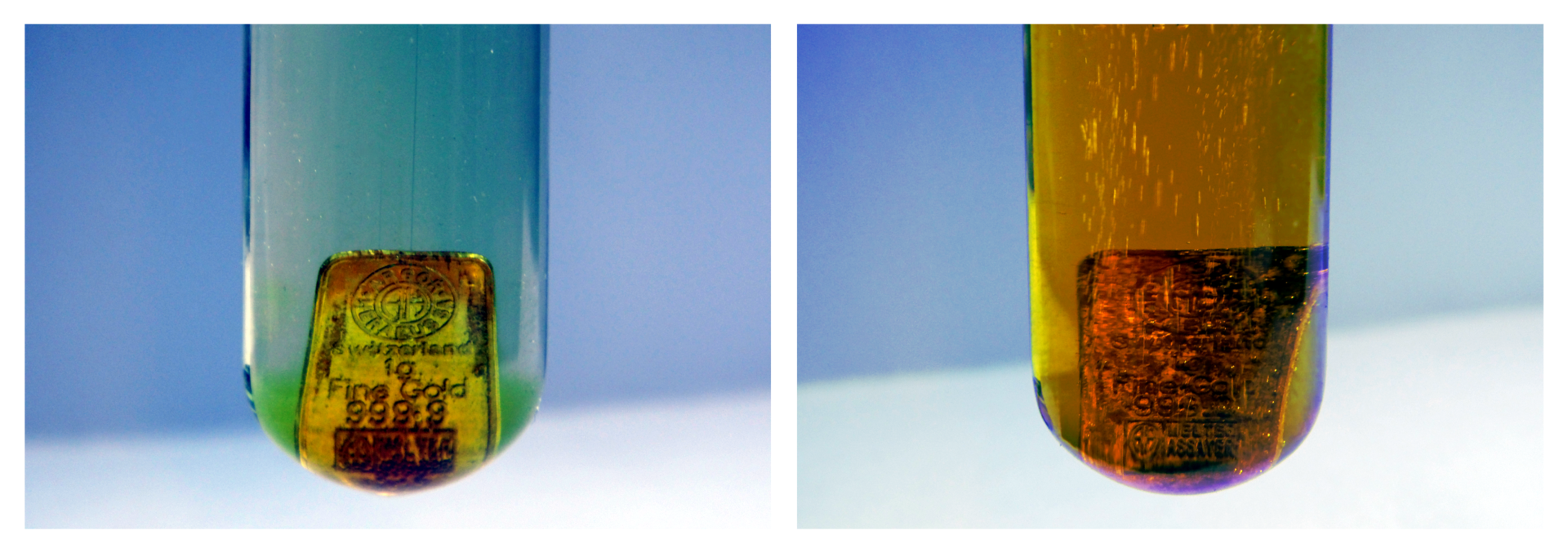
A mixture of three volumes of concentrated hydrochloric acid and one volume of concentrated nitric acid is called aqua regia.
It dissolves even noble metals, including gold (associated with the royal power – hence the name of this mixture – royal water).
When in 1935 Carl von Ossietzky, known for his dislike of the Nazis, was awarded the Nobel Peace Prize, the Third Reich Government forbade all Germans to accept this award. For this reason, two German physicists Max von Laue and James Franck gave their medals to Niels Bohr.
When in April 1940 German troops occupied Copenhagen, the Hungarian chemist George de Hevesy dissolved his gold medals in the aqua regia. After the war, he regained the gold hidden in the aqua regia and gave it to the Royal Swedish Academy of Sciences, which produced new medals and handed them over to the owners.
Phosphoric acid
Pure phosphoric acid is solid at room temperature (in the form of crystals). It dissolves very well in water, has highly hygroscopic properties. Commercial, concentrated solution contains approx. 85 – 90% of .
Watch the teacher demonstration „Testing the properties of phosphoric acid”. Pay attention to what happens to the substances used in the experiment. What does this mean? Write down your observations and conclusions.
What are the properties of concentrated phosphoric acid?
Concentrated phosphoric acid does not change the appearance of paper, fabric and rusty nail. Concentrated phosphoric acid changes the appearance of paper, fabric and rusty nail.
2 Petri dishes,
test tube,
rusty nail,
a piece of fabric and paper,
phosphoric acid,
pipette.
Apply a few drops of phosphoric acid solution onto the piece of fabric and sheet of paper placed in Petri dishes. Leave it for a few minutes. Observe the changes.
Place a rusty nail in a test tube with phosphoric acid and let it rest for a few days. Observe the changes.
Phosphoric acid destroys paper to a great extent but does not change the fabric. The amount of rust on the surface of the nail left for a few days in the acid solution is reduced. Phosphoric acid dissolves rust.
Do the properties of oxoacids affect their application?
Sulphuric acid, due to its hygroscopic properties, is used, for example, in the laboratory to dry test substances. Its 33% solution is used in batteries as an electrolyte that allows the conversion of chemical energy into electricity.
Nitric acid is an important raw material used in the chemical industry, including for the production of fertilizers, explosives and cardiac medicines.
Oxoacids are not only the inorganic acids discussed, but also organic acids found in everyday life: oxalic, citric, lactic, acetic acids. These are ingredients of many food products.
Create a multiple-choice test based on today's lesson. Then exchange your questions with a friend or classmate.
Question: ...
- ...
- ...
- ...
- ...
Summary
Concentrated acids – sulphuric acid and nitric acid – are highly corrosive substances. When diluting them, add acid to water.
Concentrated sulphuric acid has hygroscopic properties.
Concentrated nitric acid is used to detect substances containing protein (xanthoproteic reaction).
Key words
oxoacids, nitric acid, phosphoric acid, sulphurous acid, sulphuric acid, xanthoproteic reaction
Glossary
reakcja ksantoproteinowa – charakterystyczna reakcja niektórych białek ze stężonym kwasem azotowym(V), w wyniku której powstaje żółte zabarwienie