The terms „concentrated solution”, „diluted solution” or „saturated solution” only indicate the amount of the given solute is in solution. Sometimes it is necessary to provide its exact content. There are several ways to present the composition of the solution, i.e. its concentration.
One of them is percent concentrationpercent concentration of the solutionpercent concentration. It determines how many parts of the mass (in weight) of dissolved substance is found in 100 parts of the mass (in weight) of solution. A 5% means that there are 5 grams of solute in 100 grams of solution.
R12a6MbawCdeu
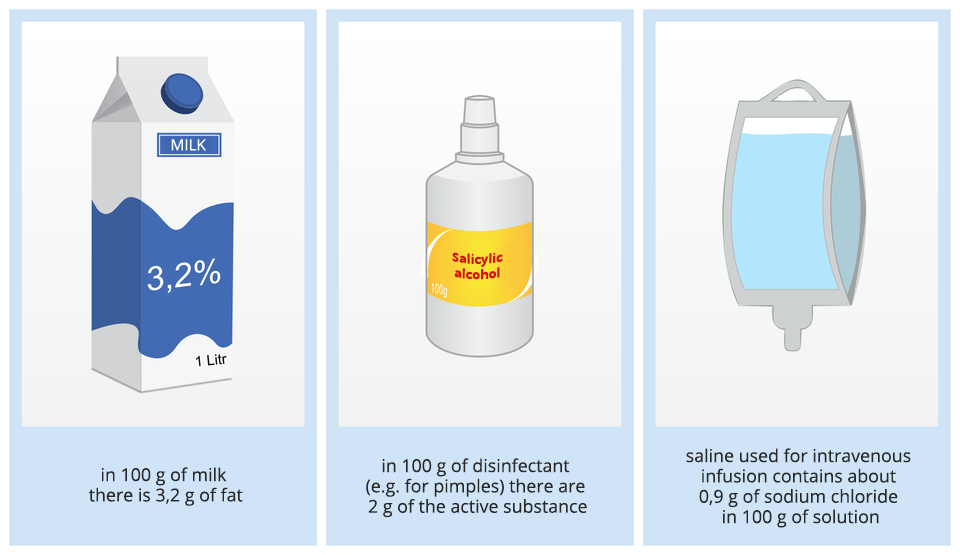
Pierwsza ilustracja przedstawia litrowy biało-niebieski karton mleka, zawierającego 3,2% tłuszczu. Druga ilustracja przestawia spirytus salicylowy w biało-żółtej plastikowej buteleczce o pojemności 100 gramów. W 100 gramach środka dezynfekującego np. na pryszcze znajdują się 2 gramy substancji aktywnej. Trzecia ilustracja przedstawia pojemnik z solą fizjologiczną stosowaną do infuzji dożylnej zawierającą około 0,9 chlorku sodu w 100 g roztworu. Ilustracja zawiera anglojęzyczne napisy: 1. in 100g of milk there is 3,2 g of fat. 2. in 100g of disinfectant there are 2 g of the active substance. 3. saline used for intravenous infusion contains about 0,9 of sodium chloride in 100g of solution.
Every day we encounter articles on which packages the contents of their ingredients are given
Task 1
Watch the presentation „How to understand the percentage concentration of a solution?” and note which formula can be used to calculate the percent concentration.
R1F2dLuG9KEMc
Ilustracja przedstawia pomocniczą grafikę, pomagającą odpowiedzieć na pytanie: jakie jest stężenie cukru w słodzonej wodzie, jeśli pięć gramów cukru dodano do dwudziestu gramów wody? Niebieskie bloki symbolizują rozpuszczalnik - w naszym przykładzie woda i białe bloki: substancja rozpuszczona - cukier. What is the concentration of sweetened water if five grams of sugar were added to twenty grams of water? Before we start calculating, let us present the situation with the help of blocks. The blue blocks symbolize the solvent - in our example, water, and the white blocks: solute - sugar.
Source: GroMar Sp. z o.o., licencja: CC BY-SA 3.0.
RUC0smCGNqgaE
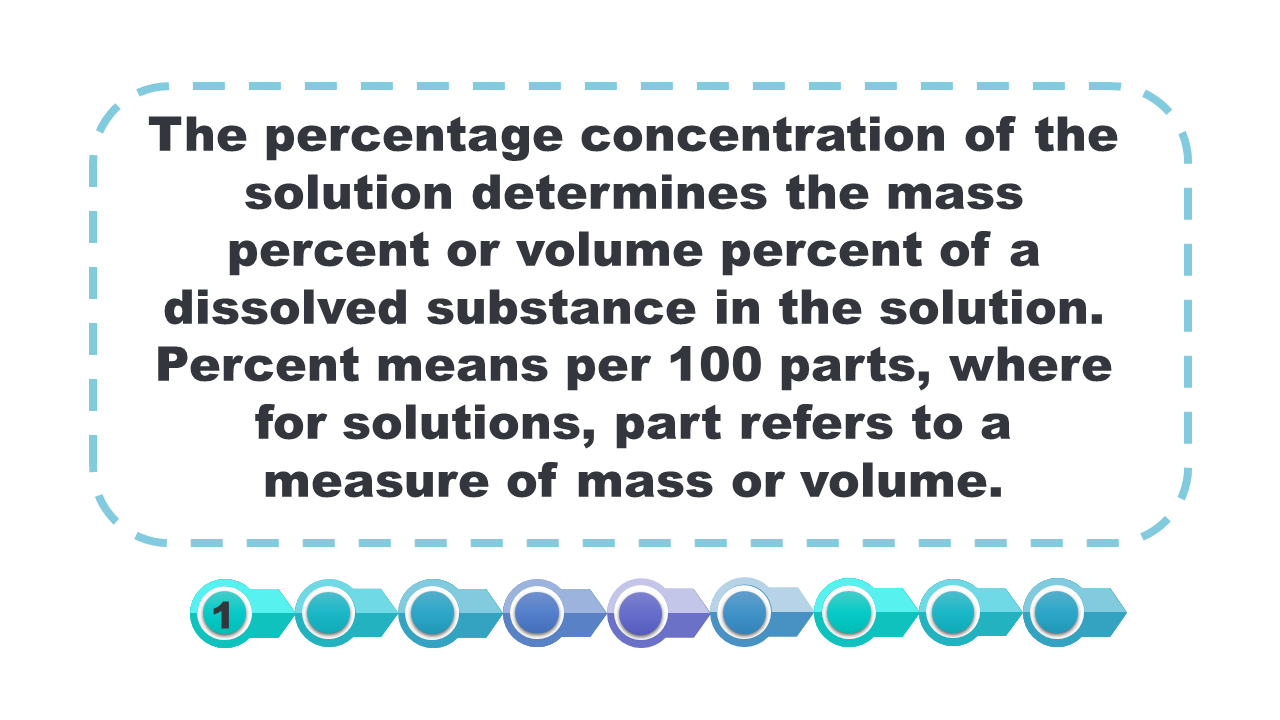
Grafika przedstawia tekst, znajdujący się w przerywanej ramce: The percentage concentration of the solution determines the mass percent or volume percent of a dissolved substance in the solution. Percent means per 100 parts, where for solutions, part refers to a measure of mass or volume.
The percentage concentration of the solution determines the mass percent or volume percent of a dissolved substance in the solution. Percent means per 100 parts, where for solutions, part refers to a measure of mass or volume.
Source: GroMar Sp. z o.o., licencja: CC BY-SA 3.0.
Rhzj8nb1NRXCa
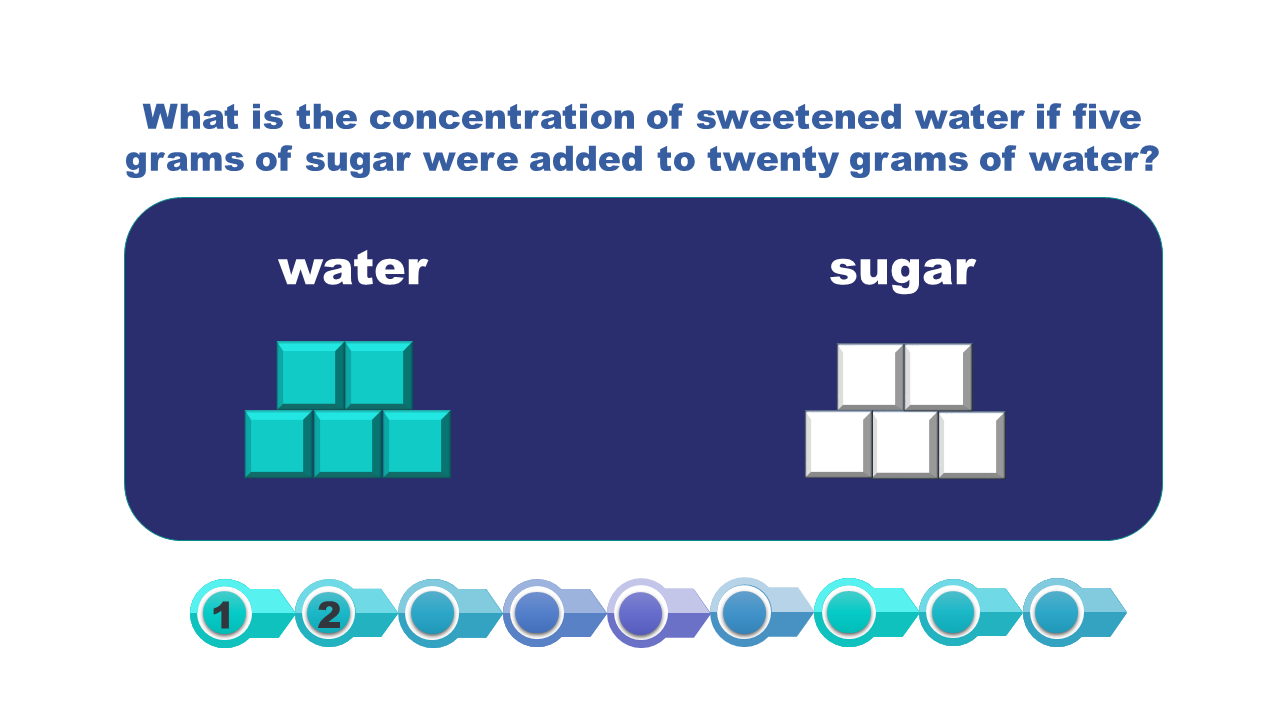
Ilustracja przedstawia pomocnicza grafikę,, pomagającą odpowiedzieć na pytanie: jaka jest koncentracja słodzonej wody, jeśli pięć gramów cukru dodano do dwudziestu gramów wody? Niebieskie bloki (5 sztuk) symbolizują rozpuszczalnik - w naszym przykładzie woda i białe bloki: substancja rozpuszczona - cukier (5 sztuk).What is the concentration of sweetened water if five grams of sugar were added to twenty grams of water? Before we start calculating, let us present the situation with the help of blocks. The blue blocks symbolize the solvent - in our example, water, and the white blocks: solute - sugar.
What is the concentration of sweetened water if five grams of sugar were added to twenty grams of water? Before we start calculating, let us present the situation with the help of blocks. The blue blocks symbolize the solvent - in our example, water, and the white blocks: solute - sugar.
Source: GroMar Sp. z o.o., licencja: CC BY-SA 3.0.
RAK5ylfpxzFzo
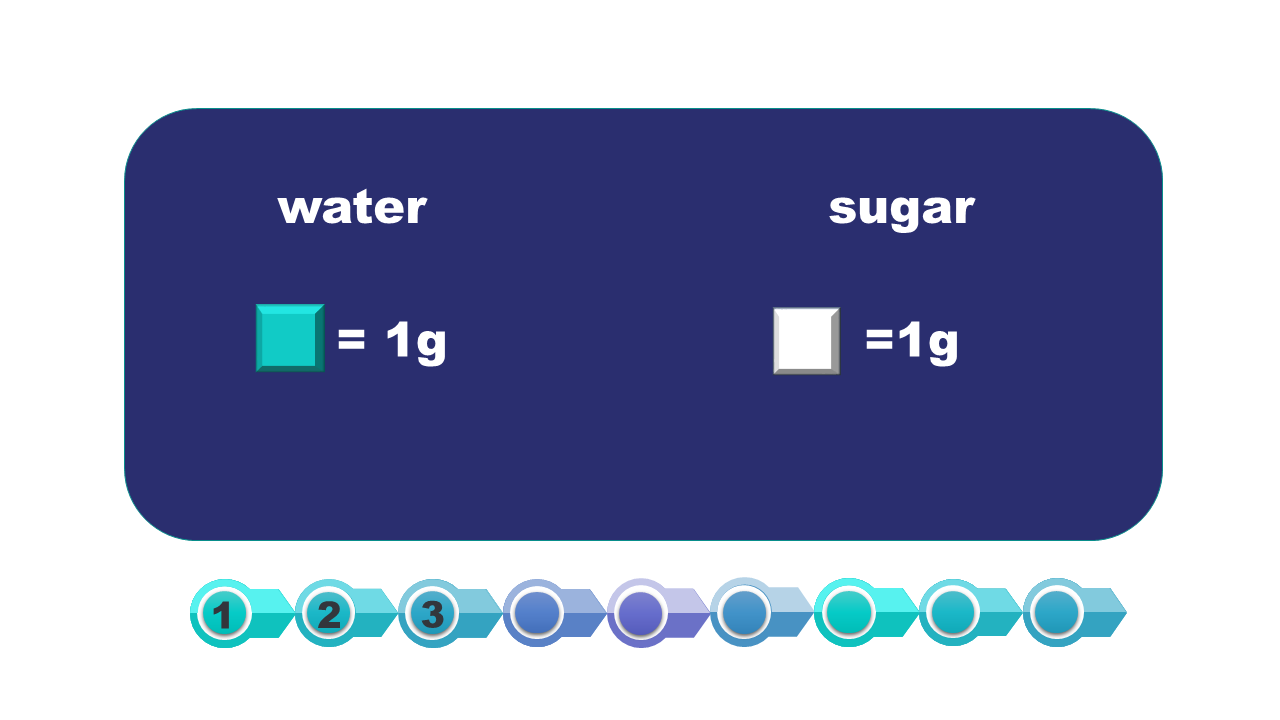
Ilustracja obrazuje założenie, że 1 gram wody oznacza jeden niebieski blok, a 1 gram cukru oznacza jeden biały blok. Water, sugar.
Let’s assume that one gram of substance and solvent corresponds to one block.
Source: GroMar Sp. z o.o., licencja: CC BY-SA 3.0.
RwwF9ebWSBkUc
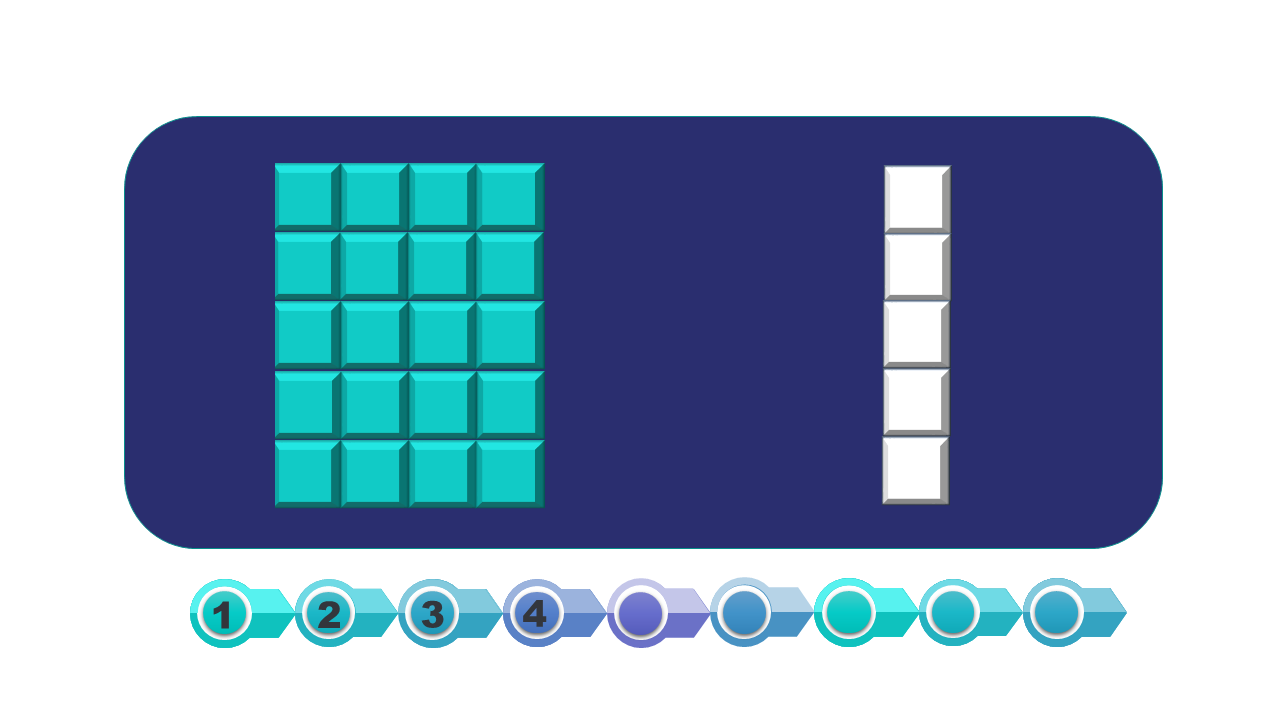
Ilustracja obrazuje fakt, że do tego zadania wykorzystamy 20 niebieskich bloków i 5 białych bloków.
For this task we will use twenty blue blocks and five white blocks.
Source: GroMar Sp. z o.o., licencja: CC BY-SA 3.0.
RV7LI180fd5Ee
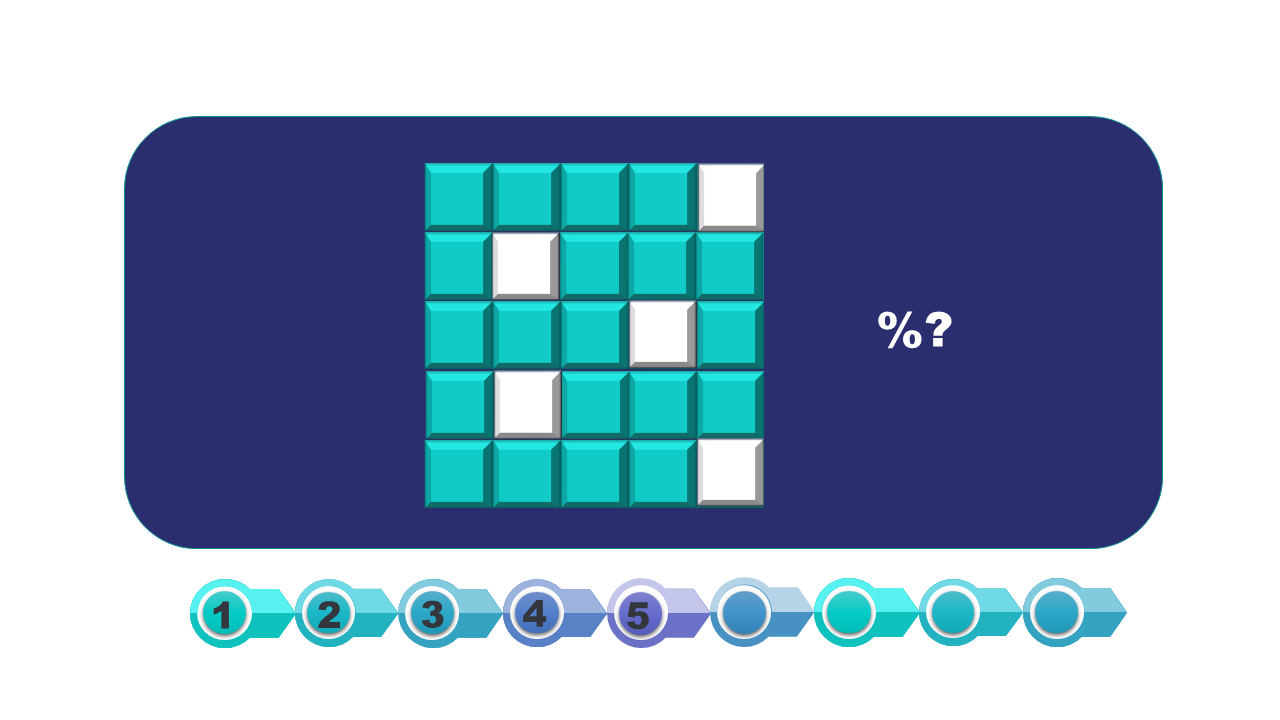
Grafika pokazuje połączenie nierównomiernie pomieszanych niebieskich bloków z białymi. Tworzą one kwadrat. Po prawej znajduje się symbol procentów oraz znak zapytania.
We build a tower of blocks that will symbolize the solution.
Source: GroMar Sp. z o.o., licencja: CC BY-SA 3.0.
RIblXYcliivTJ
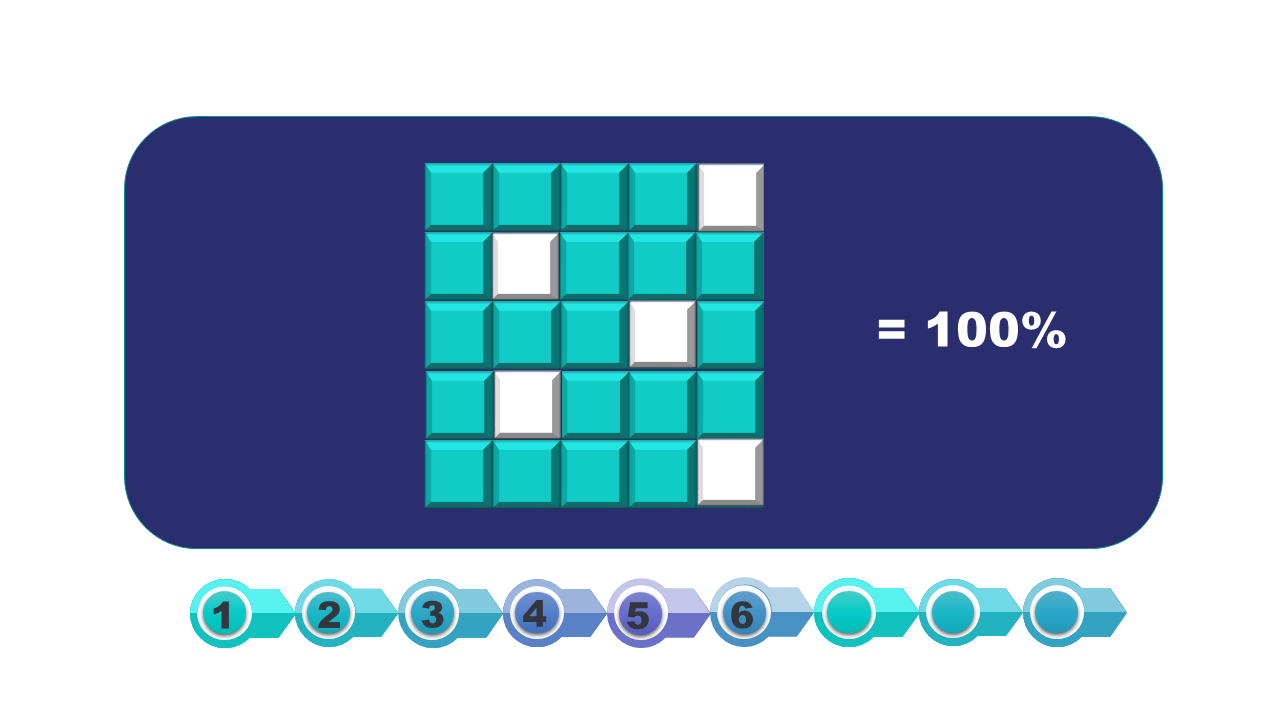
Grafika pokazuje połączenie nierównomiernie pomieszanych niebieskich bloków z białymi. Tworzą one kwadrat. Po prawej znajduje się znak znak równości oraz wartość 100%. Obliczamy stężenie roztworu wody słodzonej- procent białych bloków. Całość stanowi 25 bloków.
We calculate the concentration of sweetened water solution, i.e. the percentage of the white blocks. The whole is 25 blocks.
Source: GroMar Sp. z o.o., licencja: CC BY-SA 3.0.
R14hbI3ZoC3aJ
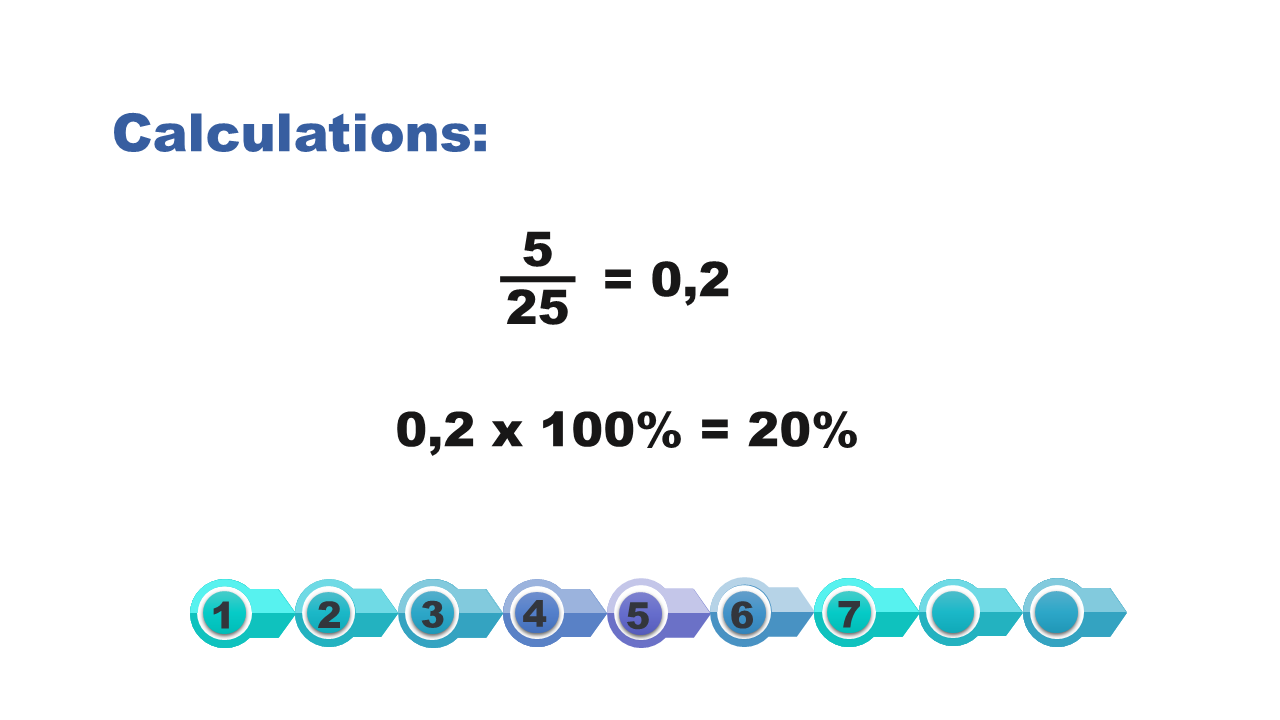
Ilustracja przedstawia kalkulacje- działanie - dzielenie ilości cukru przez roztwór słodzonej wody, czyli 5 dzielone przez 25. Wynikiem tego działania jest 0,2. Aby obliczyć wartość procentową wynik zostaje pomnożony przez 100%, dając wynik 20%.
We divide the amount of sugar by a solution of sweetened water. We multiply the resulting number by 100% and we have the result of the task.
Source: GroMar Sp. z o.o., licencja: CC BY-SA 3.0.
RTNZWosscOyCr
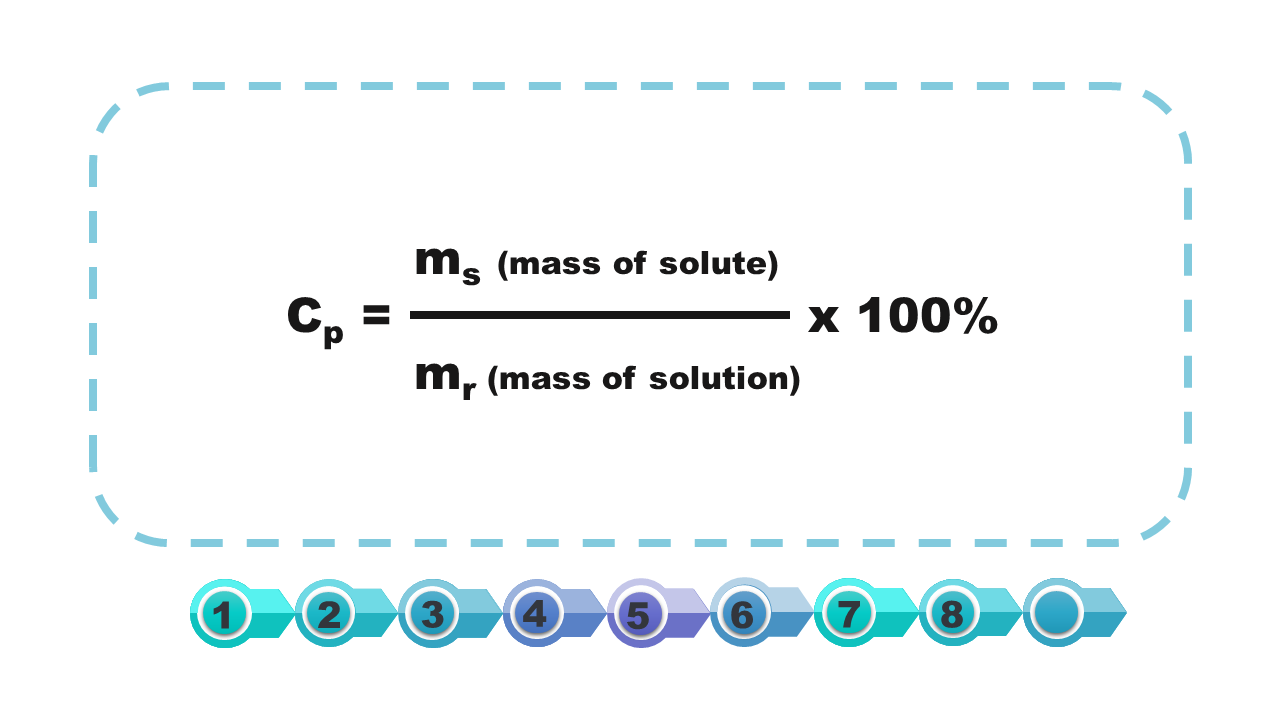
Grafika ilustruje równanie, pozwalające obliczyć stężenie roztworu. Cp oznaczające stężenie jest równe stosunkowi- Ms- masy substancji rozpuszczonej do Mr- masy całego roztworu. Aby uzyskać wynik procentowy wartość mnożymy przez 100%.
Let's recall how the formula for the solution concentration looks like.
Source: GroMar Sp. z o.o., licencja: CC BY-SA 3.0.
RBxcuNeugbLL0
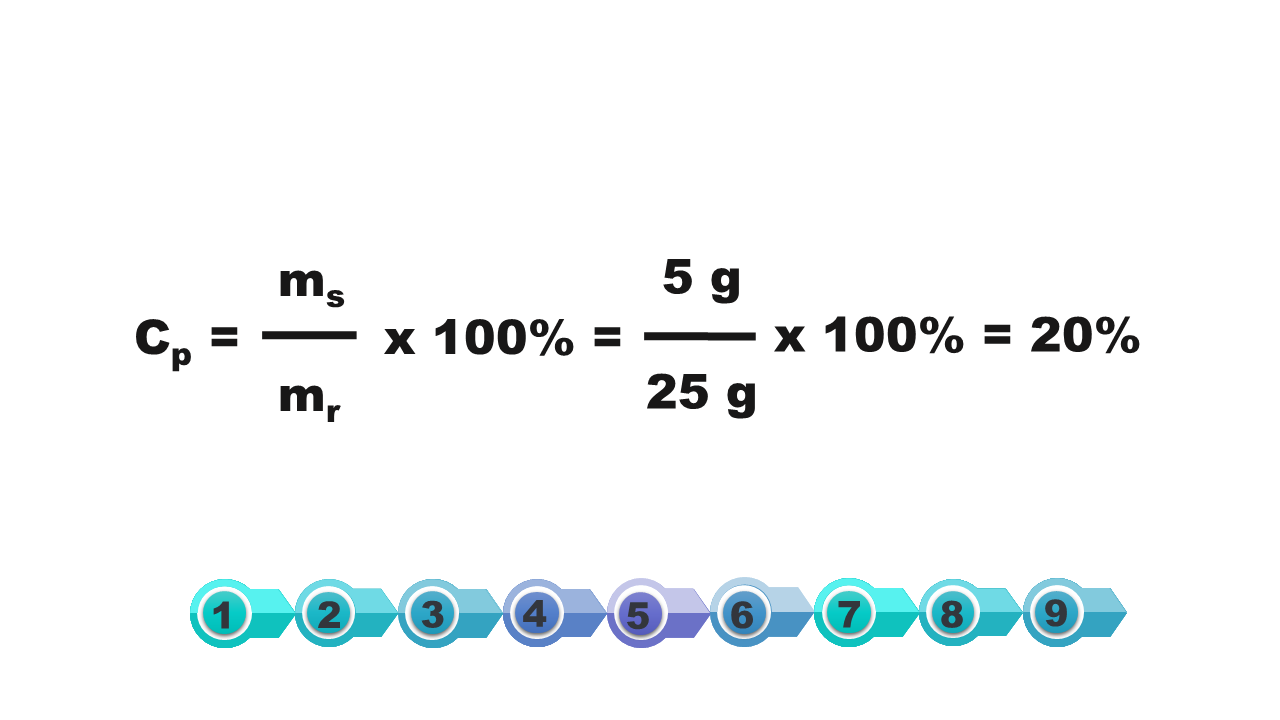
Ilustracja pokazuje jak rozwiązać równanie podstawiając konkretne wartości do wzoru. Cp oznaczające stężenie roztworu wynosi stosunek Ms- masy substancji rozpuszczonej do Mr- masy całego roztworu. Wynik zostaje pomnożony przez 100%. Na wskazanych wcześniej wartościach postępujemy w następujący sposób: 5 gramów dzielimy przez 25 gramów. Wynik mnożymy przez 100%. Otrzymujemy wartość 20%.
Let's substitute the data from this task into a formula for the concentration of the solution. Concentration of the sweetened water solution is 20%.
Source: GroMar Sp. z o.o., licencja: CC BY-SA 3.0.
RPUwlocM9Zccd
Nagranie audio prezentuje how to undertand the percent concentration of a solution.
Nagranie audio prezentuje how to undertand the percent concentration of a solution.
Nagranie audio prezentuje how to undertand the percent concentration of a solution.
The percent concentration can be calculated using the formula:
Where following symbols mean: – percent concentration, – mass of the substance, – mass of the solution.
Recall that the mass of the aqueous solution () is the sum of the mass of the solvent (), usually water and mass of the solute ():
Size
Percent concentration
Mass of the substance
Mass of the solution
Mass of the solvent
size designation
value
4%
4 g
100 g
100 g – 4 g = 96 g
Calculation of the percent concentration of a solution of a substance
If we know the mass of the solvent or the mass of the solution and the mass of the dissolved substance, we can determine the percent concentration of the solution. In all calculations we must remember about the mass units that we always insert into the formula.
Task 2
Calculate the percent concentration of sugar solution if 250 g of the solution contains 100 g of this substance.
Task 3
Calculate the percentage concentration of the sodium chloride solution that was created after dissolving 10 g of this substance in 250 g of water. Write down the result to the second decimal place.
Hint
1. We calculate the mass of the solution, which is the sum of the mass of water and mass of sodium chloride (solute):
2. The next part of the task can be solved in two ways – using the formula for the percent concentration or using the proportion.
3. Answer: After dissolving 10 g of sodium chloride in 250 g of water, a solution of this substance with a concentration of 3.85% was obtained.
Calculating the mass of individual components of the solution
Knowing the percent concentration of the solution and its mass, the mass of solute can be calculated. Similarly, we can determine the mass of the solution based on the information on the percent concentration of the solution and the mass of the dissolved substance contained in it. Both right proportion and appropriately converted formula for the percent concentration can be used in the calculations.
Percent concentration formula
The formula for the mass of substance
The formula for the mass of solution
cIndeks dolny pp – percent concentration mIndeks dolny ss – mass of substance mIndeks dolny rr – mass of solution
Exercise 1
Calculate how many grams of water should be added to 120 g of sugar to get a 30% solution
Task 4
Calculate the amount of copper(II) sulphate contained in 250 g of 2% aqueous solution of this substance.
Hint
Result: We know that: = 2% = 250 g
This task can be solved in two ways – using the formula for the percent concentration (after its conversion) or using the proportion.
Answer:
The mass of copper(II) sulphate in 250 g of the 2% solution is 5 g.
Task 5
Calculate the mass of 1% potassium chloride aqueous solution containing 1.5 g of this substance. Write down the mass of water that is contained in the solution.
Hint
Result: We know that: = 1% = 1.5 g
This task can be solved using the converted formula for percent concentration or using the proportion.
RDiLqxk5Ugqj1
Exercise 2
Select the correct definition of percent concentration. Możliwe odpowiedzi: 1. Number of grams of solute in 100 g of solution, 2. Maximum number of grams of substance that can be dissolved in 100 g of solvent at a given temperature to obtain a saturated solution, 3. Maximum number of grams of substance that can be dissolved in 100 g of solution at a given temperature to obtain a saturated solution, 4. Number of grams of solute in 100 g of solvent
Select the correct definition of percent concentration. Możliwe odpowiedzi: 1. Number of grams of solute in 100 g of solution, 2. Maximum number of grams of substance that can be dissolved in 100 g of solvent at a given temperature to obtain a saturated solution, 3. Maximum number of grams of substance that can be dissolved in 100 g of solution at a given temperature to obtain a saturated solution, 4. Number of grams of solute in 100 g of solvent
Select the correct definition of percent concentration.
Number of grams of solute in 100 g of solution
Maximum number of grams of substance that can be dissolved in 100 g of solvent at a given temperature to obtain a saturated solution
Maximum number of grams of substance that can be dissolved in 100 g of solution at a given temperature to obtain a saturated solution
Number of grams of solute in 100 g of solvent
RGFuG0ye5VE5E
Prepare the task for calculating the percent concentration of the solution for a friend. Provide four possible answers, including one that is correct.
Prepare the task for calculating the percent concentration of the solution for a friend. Provide four possible answers, including one that is correct.
Prepare the task for calculating the percent concentration of the solution for a friend. Provide four possible answers, including one that is correct.
Question: ...
...
...
...
...
Summary
Percent concentration is the information about how many parts of the mass (in weight) of the dissolved substance are found in 100 parts of the mass (in weight) of the solution.
The percent concentration of a solution can be calculated based on the weight of the solution and the weight of the solute, using the formula: .
The mass of solute can be calculated based on the percent concentration and mass of the solution: .
The percent concentration of the solution can be calculated based on the weight of the solvent and the weight of the solute, using the formula: .
If the density of the solution is known, it is possible to determine the mass of given volume.
RDXXPBbG2Lyiy1
Tablica interaktywna. How was this lesson? Did you like it? Finish selected sentences. Propozycje 1. It was easy for me..(uzupełnij)., 2.It was difficult for me..(uzupełnij)., 3.Today I learned..(uzupełnij)., 4.I understood that.(uzupełnij).., 5.It surprised me.(uzupełnij)..
Tablica interaktywna. How was this lesson? Did you like it? Finish selected sentences. Propozycje 1. It was easy for me..(uzupełnij)., 2.It was difficult for me..(uzupełnij)., 3.Today I learned..(uzupełnij)., 4.I understood that.(uzupełnij).., 5.It surprised me.(uzupełnij)..
Source: GroMar Sp. z o.o., licencja: CC BY-SA 3.0.
Keywords
percent concentration of the solution, solution, solvent, mass of the solution, density of the solution
Glossary
percent concentration of the solution
percent concentration of the solution
R41llMIsA41UN
Nagranie słówka percent concentration of the solution.
Nagranie słówka percent concentration of the solution.