Plane figures in the coordinate system
Figury płaskie w układzie współrzędnych
Learning objectives
You will discover the method of calculating the area of polygons drawn in the coordinate system.
Learning effect
You read and identify the position of the points in the coordinate system.
You calculate the area of the polygons whose vertices are grids.
You use English to describe the figures drawn in the coordinate system.
Prepare and bring to the class:
- two squared A‑4 size paper sheets,
- the long ruler,
- red pen or crayon.
Revise the notion of the coordinate system.
Answer the following question:
How can we identify the position of the pointpoint in the coordinate system?
The students also revise the methods of calculating the areaarea of quadrangles and triangles.
Identify the figure whose areaarea is calculated according to the descriptions below:
a) We multiply two adjacent sides.
b) The product of the diagonals is divided by two.
c) We square the length of the side.
d) We multiply the length of the side by the altitude perpendicular to it.
e) The product of the length of the side and the altitude perpendicular to it is divided by two.
f) The product of the sum of the length of the bases and the altitude is divided by two.
Today you are going to draw the figures in the coordinate system and calculate their areas.
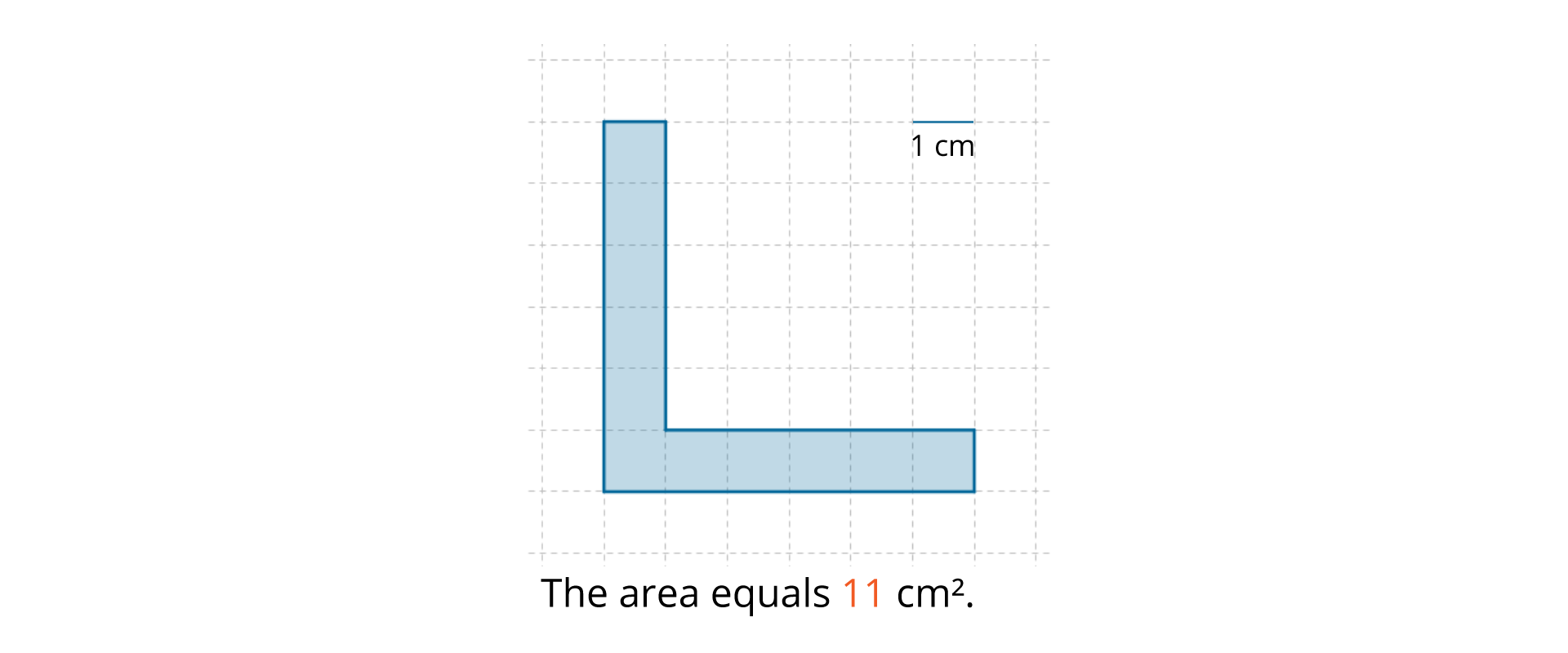
Calculate the areaarea of the polygon reading the length of the sides of the drawing. Take 1 as the width of one gridgrid. If it is necessary, use the method of division into smaller polygons or completing to the larger polygons.
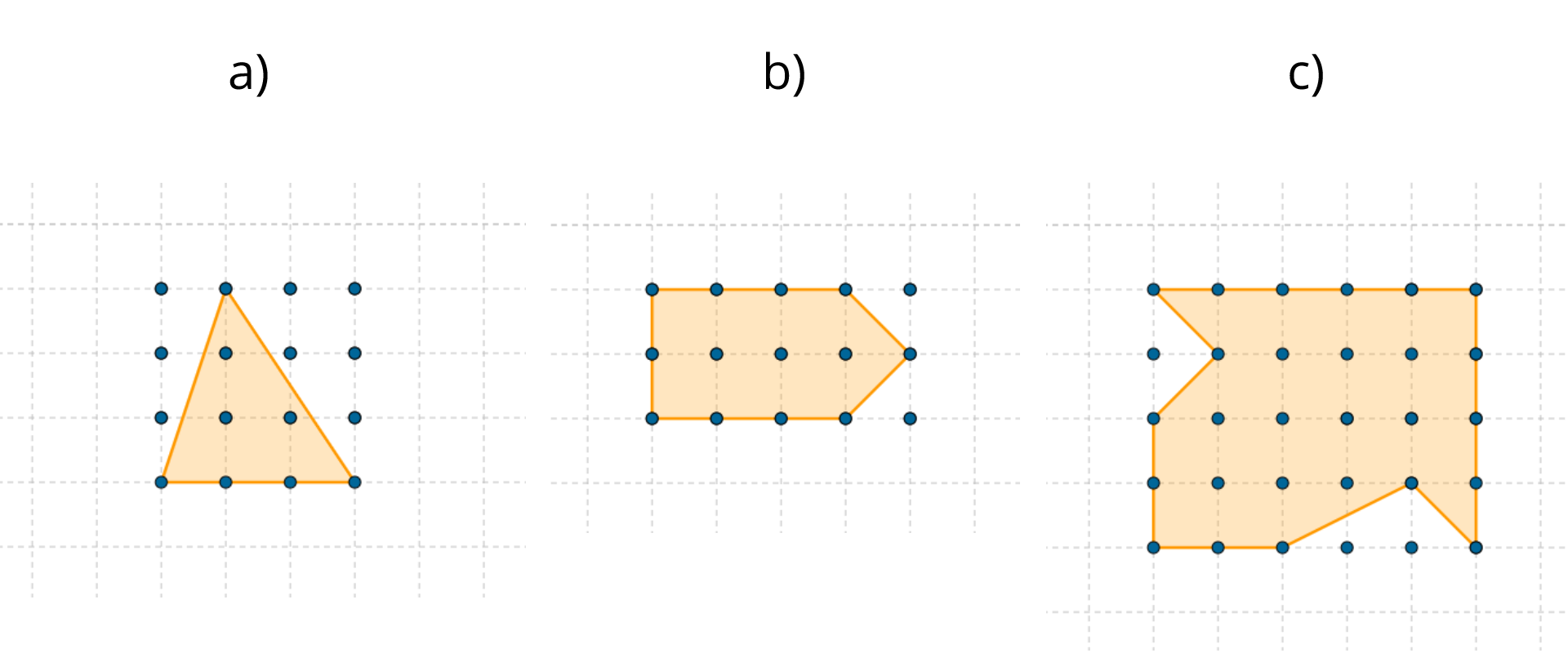
Note, that:
The areas of the polygons drawn in the coordinate system are calculated in the same way as the polygons drawn in the square gridgrid.
Calculate the areaarea of the polygon reading the length of its sides according to the drawing.
a)
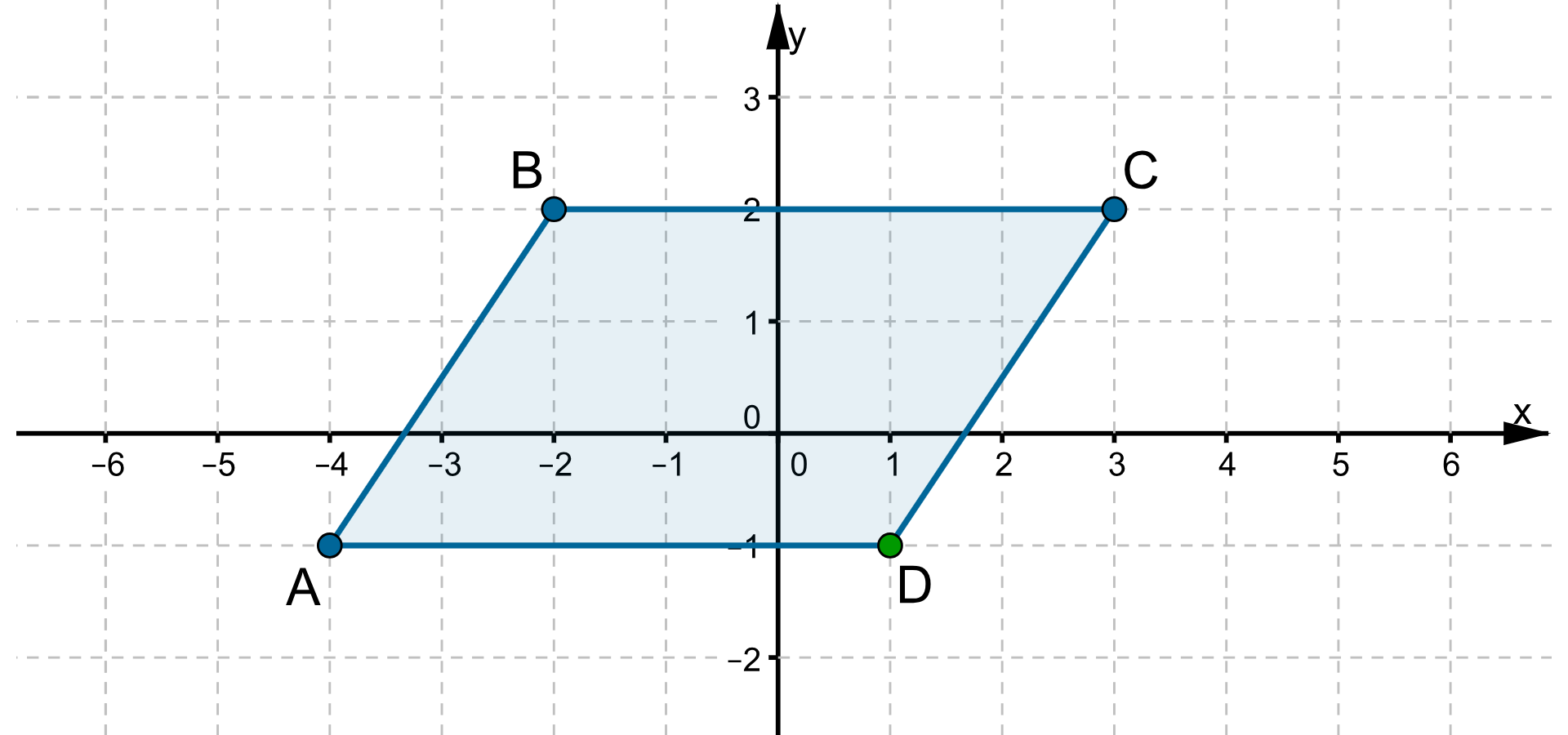
b)
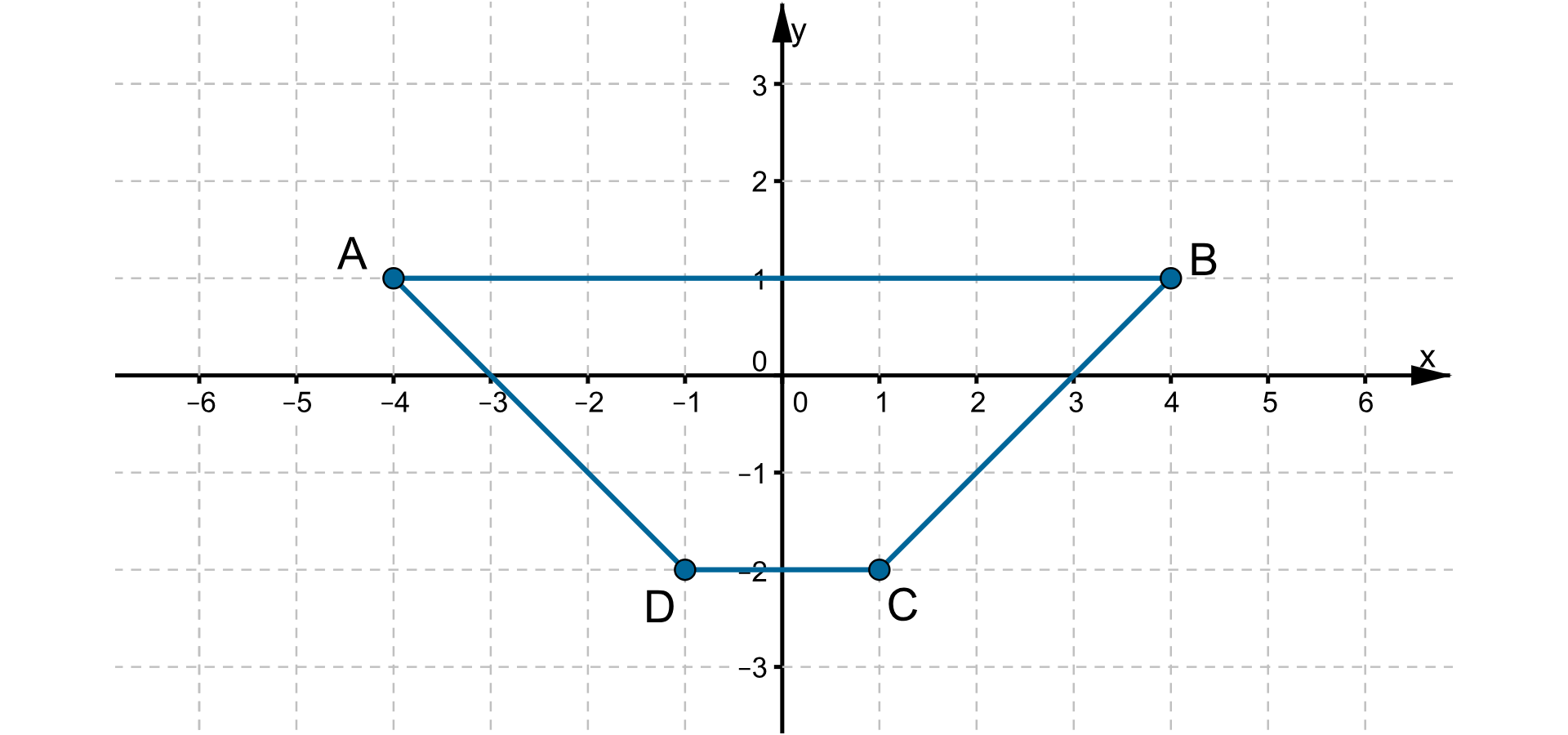
c)
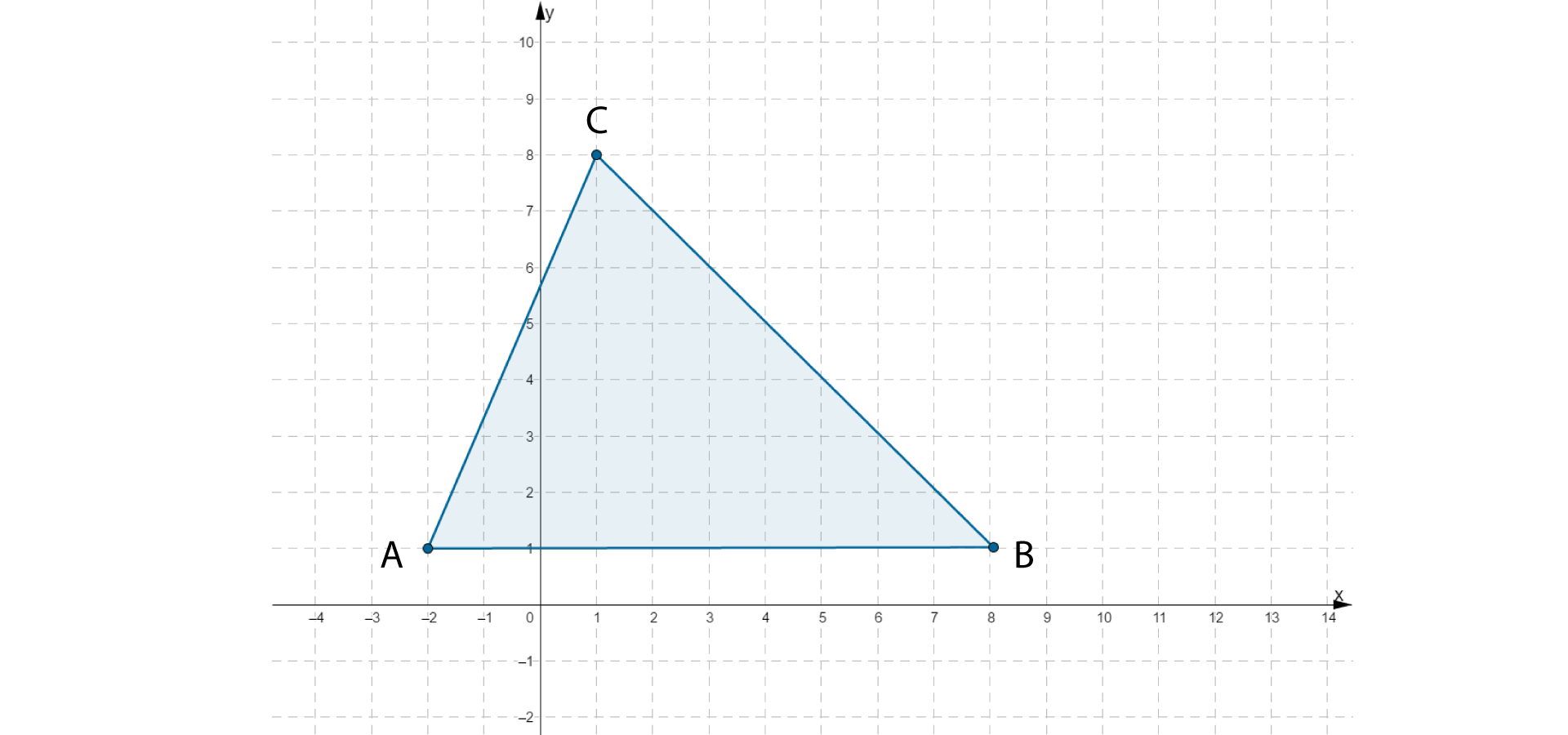
Open the applet. Calculate the areaarea of the polygon reading the lengths of its sides according to the drawing. Take 1 as the width of gridgrid. Use the method of division into smaller polygons or completing to the larger polygons.
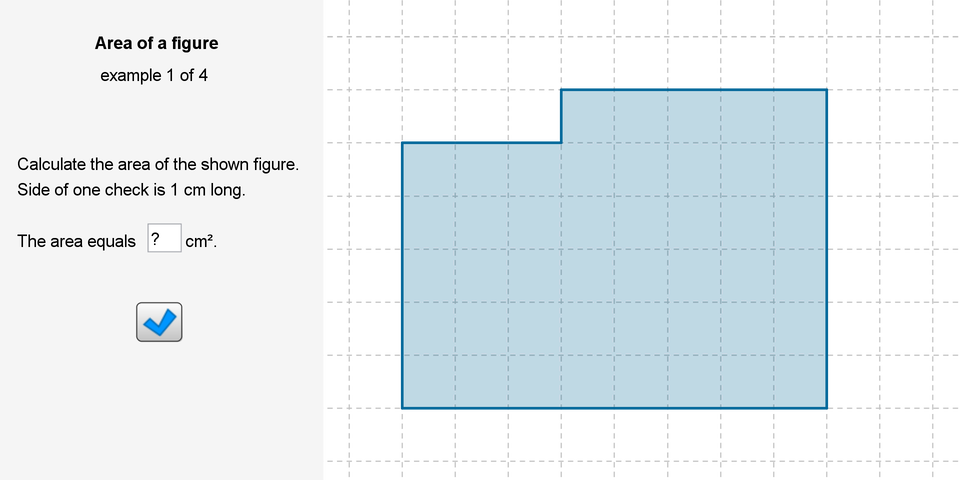
Zasób interaktywny dostępny pod adresem https://zpe.gov.pl/a/DQTEgCdmL
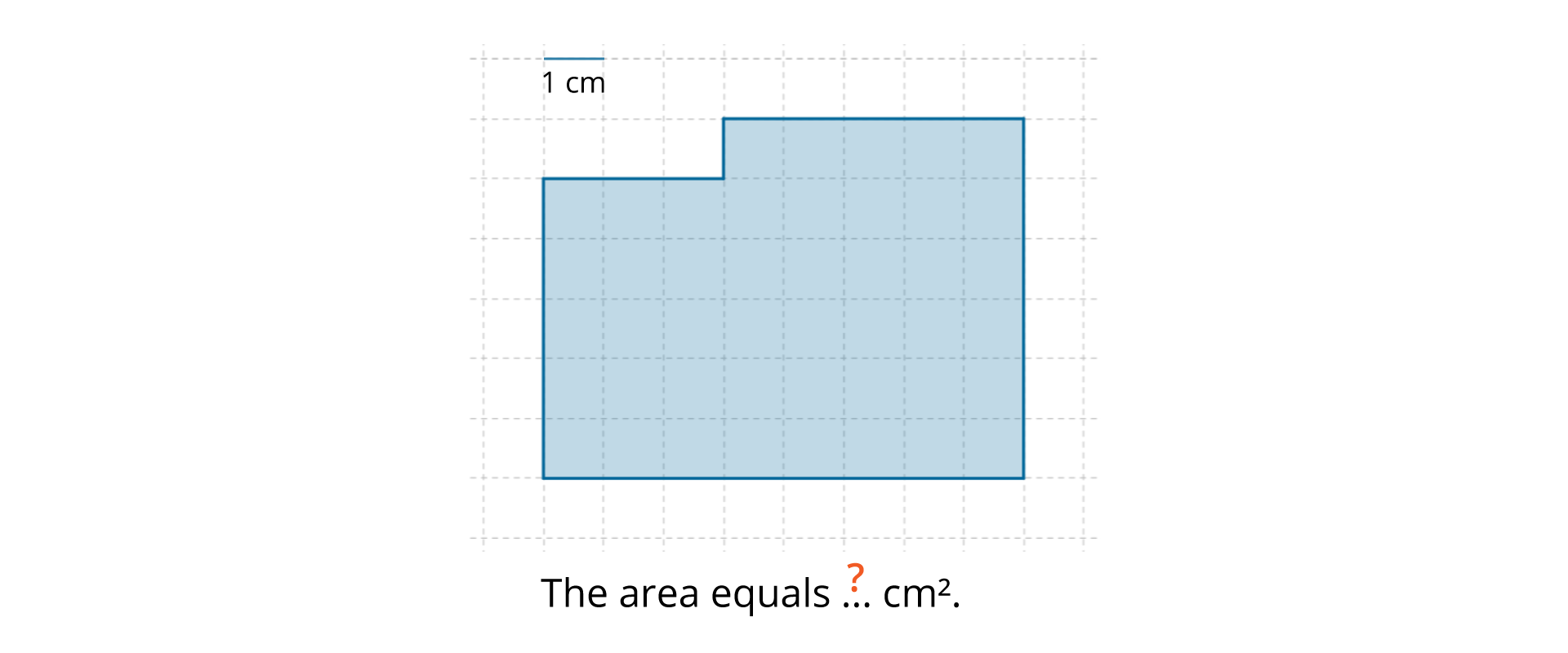
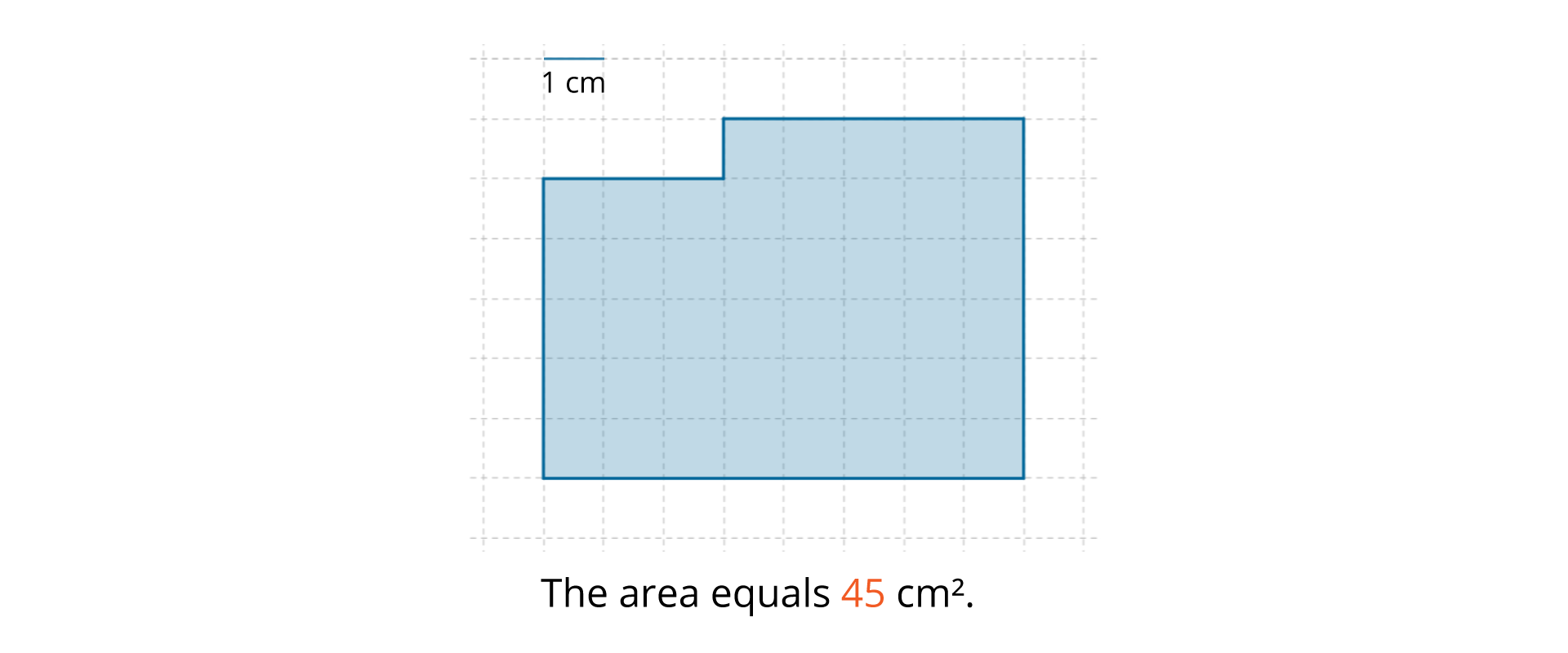
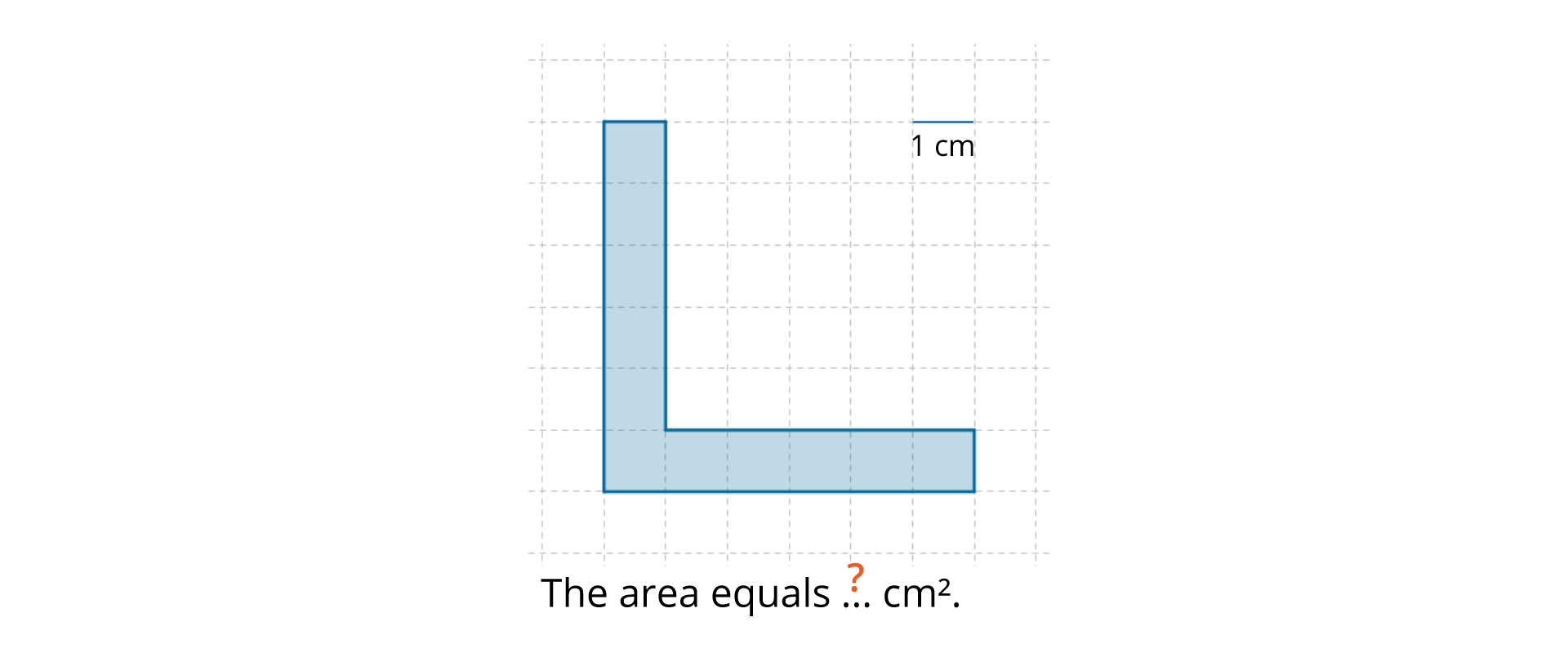
Use squared paper, rulers and red pens.
a) Draw the coordinate system and indicate the following points:
A = (4, 4), J = (1, 4), Ń = (0, -4), P = (-5, 2), R = (-4, 4), Y = (0, 2), Z = (-1, 4), Ź = (5, 2).
b) Connect the points by drawing the segments: PR, RZ, ZY, YJ, JA, AŹ, ŹŃ, ŃP in red.
c) Calculate the area of the polygon you have made.
An extra task:
a) Indicate the following points in the coordinate system: (3, 8), (5, 8), (5, 7), (7, 7), (7, 5), (5, 5), (5, 2), (6, 2), (8, 0), (5, 0), (3, 2), (0, 2), (-2, 0), (-2, -2), (-4, 0), (-2, 2), (-2, 4), (-4, 4), (-4, 6), (-2, 4).
b) Connect the points drawing the segments in the determined order.
Calculate the area of the figure.
Remember:
The areas of triangles and quadrangles drawn in the squared net and in the coordinate system can be calculated by reading the length of proper segments on the basis of the drawing.
The areas of complex polygons are calculated by using the method of division into smaller polygons or completing to the larger ones.
Check what you have learned by doing the following tasks.
Exercises
Determine which sentence is true.
- Every isosceles trapezium can be divided into two right triangles and the rectangle.
- Every deltoid can be divided into four congruent right triangles.
- The area of the square equals the half of the product of the length of its diagonals.
- The area of the right triangle equals the product of the length of its diagonals.
- The area of the rhombus equals the half of the product of its sides.
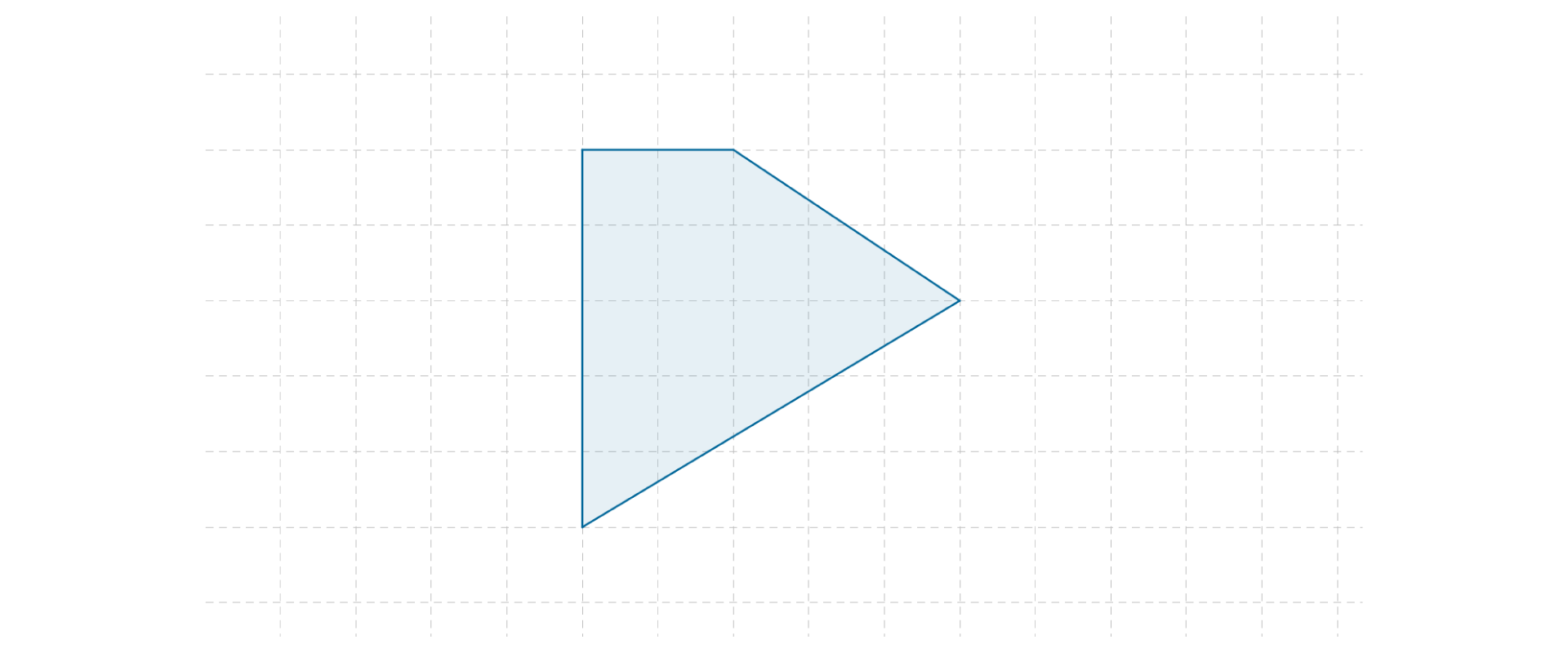
Calculate the area of the polygon below knowing the side of the grid is 1.
a) Draw the coordinate system and indicate the following points: A = (-2, 2), L = (-4, 0), O = (-2, -5), T = (0, 0).
b) Connect the points by drawing the following segments: LA, AT, TO, OL.
c) Calculate the area of the figure you have drawn.
Identify the figure and describe its properties in English.
Match Polish terms with their English equivalents.
point, area, method of dividing into smaller polygons, grid, method of completing to larger polygons
| punkt | |
| kwadratowa siatka | |
| metoda podziału na mniejsze wielokąty | |
| metoda uzupełniania do większych wielokątów | |
| pole |
- area
- czworokąt
- cooperate system
- triangle
- punkt
- quadrangle
- trójkąt
- point
- układ współrzędnych
- pole
Glossary
punkt
Nagranie dostępne na portalu epodreczniki.pl
wymowa w języku angielskim: point
trójkąt
Nagranie dostępne na portalu epodreczniki.pl
wymowa w języku angielskim: triangle
czworokąt
Nagranie dostępne na portalu epodreczniki.pl
wymowa w języku angielskim: quadrangle
pole
Nagranie dostępne na portalu epodreczniki.pl
wymowa w języku angielskim: area
kwadratowa siatka
Nagranie dostępne na portalu epodreczniki.pl
wymowa w języku angielskim: grid
metoda podziału na mniejsze wielokąty
Nagranie dostępne na portalu epodreczniki.pl
wymowa w języku angielskim: method of dividing into smaller polygons
metoda uzupełniania do większych wielokątów
Nagranie dostępne na portalu epodreczniki.pl
wymowa w języku angielskim: method of completing to larger polygons
trapez
Nagranie dostępne na portalu epodreczniki.pl
wymowa w języku angielskim: trapezium
deltoid
Nagranie dostępne na portalu epodreczniki.pl
wymowa w języku angielskim: deltoid
Keywords
pointpoint
triangletriangle
quadranglequadrangle
areaarea