bg‑azure

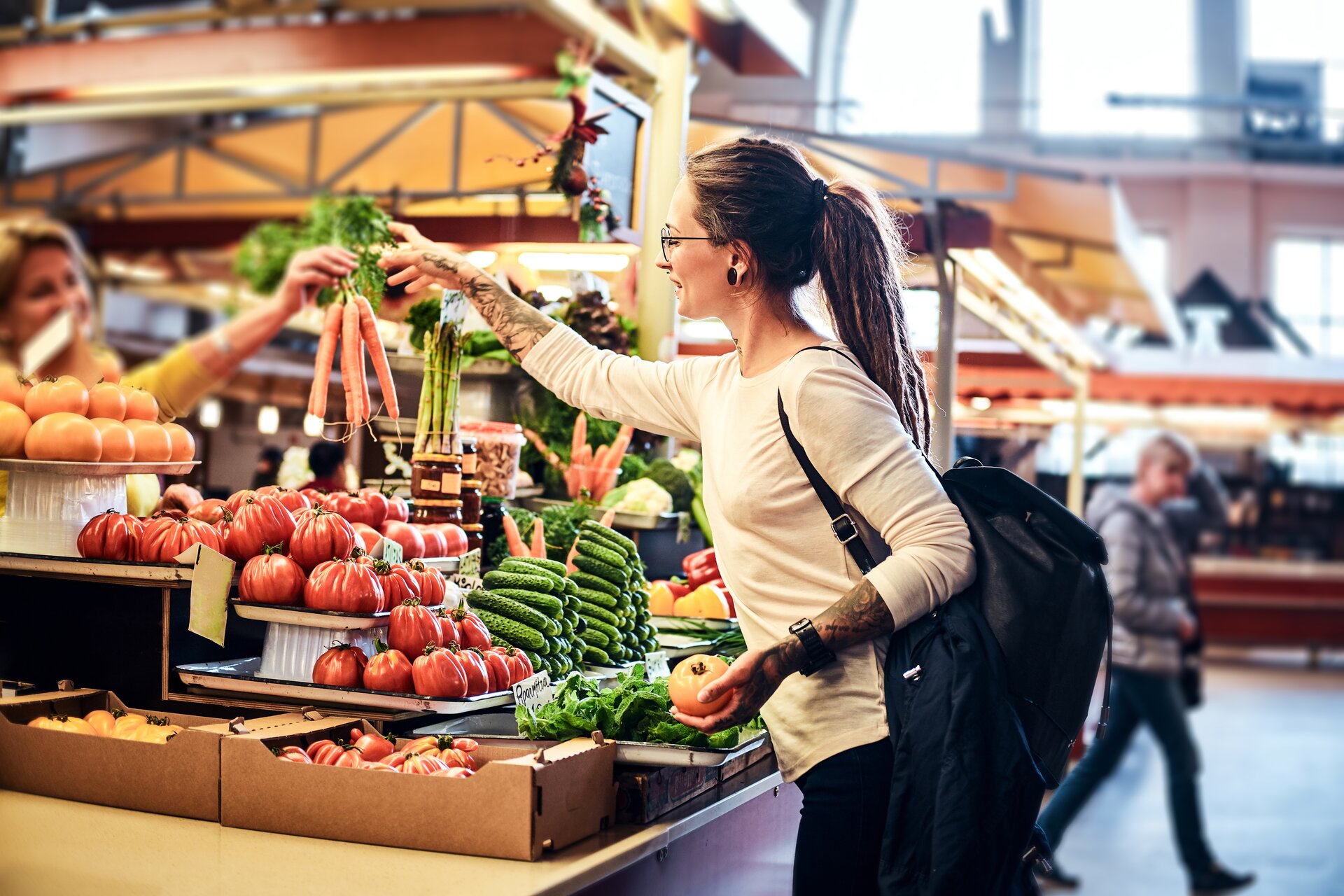
In this section, you are going to learn more about how to be an ethical consumer. Play the recordings and find out what people think about this concept.

W tej sekcji dowiesz się więcej o tym, jak być etycznym konsumentem lub konsumentką. Odtwórz nagrania i sprawdź, co ludzie myślą o tej koncepcji.
R1b0zwKtQUTE7
How to be an ethical consumer?
Jak być etycznym konsumentem/konsumentką?
Źródło: dostępny w internecie: www.freepik.com [dostęp 19.08.2022], domena publiczna.
Exercise 1
RPZWv46zYnNe4
Match the words to their English definitions. flea market Możliwe odpowiedzi: 1. change something to suit your needs, 2. a piece of material with information about the product, 3. related to food produced by animals which are not kept in cages, 4. a place, usually outdoors, where used goods are sold cheaply, 5. physical and mental health, 6. money earned from doing a job, 7. to make new furniture or clothes from used things or waste material, 8. refuse to buy a product or take part in something upcycle Możliwe odpowiedzi: 1. change something to suit your needs, 2. a piece of material with information about the product, 3. related to food produced by animals which are not kept in cages, 4. a place, usually outdoors, where used goods are sold cheaply, 5. physical and mental health, 6. money earned from doing a job, 7. to make new furniture or clothes from used things or waste material, 8. refuse to buy a product or take part in something label Możliwe odpowiedzi: 1. change something to suit your needs, 2. a piece of material with information about the product, 3. related to food produced by animals which are not kept in cages, 4. a place, usually outdoors, where used goods are sold cheaply, 5. physical and mental health, 6. money earned from doing a job, 7. to make new furniture or clothes from used things or waste material, 8. refuse to buy a product or take part in something welfare Możliwe odpowiedzi: 1. change something to suit your needs, 2. a piece of material with information about the product, 3. related to food produced by animals which are not kept in cages, 4. a place, usually outdoors, where used goods are sold cheaply, 5. physical and mental health, 6. money earned from doing a job, 7. to make new furniture or clothes from used things or waste material, 8. refuse to buy a product or take part in something income Możliwe odpowiedzi: 1. change something to suit your needs, 2. a piece of material with information about the product, 3. related to food produced by animals which are not kept in cages, 4. a place, usually outdoors, where used goods are sold cheaply, 5. physical and mental health, 6. money earned from doing a job, 7. to make new furniture or clothes from used things or waste material, 8. refuse to buy a product or take part in something boycott Możliwe odpowiedzi: 1. change something to suit your needs, 2. a piece of material with information about the product, 3. related to food produced by animals which are not kept in cages, 4. a place, usually outdoors, where used goods are sold cheaply, 5. physical and mental health, 6. money earned from doing a job, 7. to make new furniture or clothes from used things or waste material, 8. refuse to buy a product or take part in something customise Możliwe odpowiedzi: 1. change something to suit your needs, 2. a piece of material with information about the product, 3. related to food produced by animals which are not kept in cages, 4. a place, usually outdoors, where used goods are sold cheaply, 5. physical and mental health, 6. money earned from doing a job, 7. to make new furniture or clothes from used things or waste material, 8. refuse to buy a product or take part in something free-range Możliwe odpowiedzi: 1. change something to suit your needs, 2. a piece of material with information about the product, 3. related to food produced by animals which are not kept in cages, 4. a place, usually outdoors, where used goods are sold cheaply, 5. physical and mental health, 6. money earned from doing a job, 7. to make new furniture or clothes from used things or waste material, 8. refuse to buy a product or take part in something
Źródło: GroMar Sp. z o.o., licencja: CC BY-SA 3.0.
RKIeh6ra7Aa1v
Exercise 2
Play the recordings and match each speaker to the picture connected with the topic he/she is talking about. There is one extra picture which you don’t need to use.
Źródło: GroMar Sp. z o.o., licencja: CC BY-SA 3.0.
Exercise 2
R175ChzlUQzJ6
Play the recording. Then match the speakers with the correct topic. There is one extra topic.
Źródło: GroMar Sp. z o.o., licencja: CC BY-SA 3.0.
RZ0wmopD5J0D4
Nagranie dźwiękowe
R1c6s1oHTCwWE
Nagranie dźwiękowe
R17hP8I5CCLwt
Nagranie dźwiękowe
R1Id5WJZR9v6U
Nagranie dźwiękowe
TRANSCRIPTazurewhite
Exercise 3
RjWyNxbhe0AED
Study the recordings of what four speakers say about fair trade and complete the sentences below with words or short phrases.

  1. You can save money and protect the environment if you buy 1. local communities, 2. income, 3. artisans, 4. organic, 5. exchange party, 6. boycotting, 7. pre-loved, 8. palm oil goods from flea markets or charity shops.
  2. If you want to swap clothes with friends, throwing a clothes 1. local communities, 2. income, 3. artisans, 4. organic, 5. exchange party, 6. boycotting, 7. pre-loved, 8. palm oil is a great idea.
  3. More and more consumers try to avoid products containing 1. local communities, 2. income, 3. artisans, 4. organic, 5. exchange party, 6. boycotting, 7. pre-loved, 8. palm oil.
  4. For a product to be called 1. local communities, 2. income, 3. artisans, 4. organic, 5. exchange party, 6. boycotting, 7. pre-loved, 8. palm oil it must not contain hormones, antibiotics, or GMOs.
  5. Buying fair trade cosmetics, bracelets, cards, or other similar products causes 1. local communities, 2. income, 3. artisans, 4. organic, 5. exchange party, 6. boycotting, 7. pre-loved, 8. palm oil to be paid adequate money for their work.
  6. It’s not uncommon that fair trade is the only source of 1. local communities, 2. income, 3. artisans, 4. organic, 5. exchange party, 6. boycotting, 7. pre-loved, 8. palm oil for disadvantaged communities.
  7. One way to show your opposition to using child labour or harming the environemt is 1. local communities, 2. income, 3. artisans, 4. organic, 5. exchange party, 6. boycotting, 7. pre-loved, 8. palm oil companies which use such methods.
  8. If you buy products from small, independent producers, more money will stay in 1. local communities, 2. income, 3. artisans, 4. organic, 5. exchange party, 6. boycotting, 7. pre-loved, 8. palm oil.
Źródło: GroMar Sp. z o.o., licencja: CC BY-SA 3.0.
Exercise 4

Answer the questions below. Write 2–3 sentences in each case.

  1. Do you ever buy clothes in second‑hand shops, or use an app to buy or sell clothes? Why? Why not?

  2. When was the last time you bought something handmade? What was it? Where did you buy it?

  3. Do you usually buy products from big or small, local companies? Why?

Rx2SRme823mfz
(Uzupełnij).
Źródło: GroMar Sp. z o.o., licencja: CC BY-SA 3.0.