World War II erupted on 1 September 1939 and was the largest conflict in human history. 61 states and over 110 million people took part in it, and war operations were conducted in the entire world. The first victim of Nazi Germany’s and the Soviet Union’s offensive. In the next years, the two great totalitarianTotalitarianismtotalitarian (respectively, Nazi and Communist) states conquered almost the entire Europe, as well as significant portions of Africa and Asia. The world was divided between the anti‑Hitler coalition (e.g. Poland, Great Britain, France) and the AxisAxisAxis, led by the Third Reich, Japan, and Italy.
The German attack on the USSR on 22 June 1941 (until then, the two states were allies), as well as the Japanese attack on the United States on 7 December 1941 were the breakthrough moments in the war – both the USSR and the United States joined the war against Hitler, creating a great coalition. From then on, the decisions of the so‑called Big ThreeBig ThreeBig Three – that is, the leaders of the USA, Great Britain, and the USSR that would met during conferences between the allies – would set the tone for the subsequent stages of war. They were the ones to decide the next moves and prepare plans for what the world would look like after the conflict. The culmination point of World War II was the German losses in Russia in the battles of Stalingrad (1942‑1943) and Kursk (1943). Due to them, they lost their military potential, and suffered large losses of manpower. This allowed the AlliesAlliesAllies to launch their counteroffensive, and finally defeat the Third Reich and its military in 1945. The war in Europe ended with the surrenderSurrendersurrender of Berlin in May, and that of Japan in September 1945.
The war turned out to be the most brutal conflict in the history of mankind. Millions of people – not just soldiers, but, above all, civilians – lost their lives in it. Planned extermination of nations (the HolocaustHolocaustHolocaust), ethnic minorities (the genocide of the European Roma) and social groups (clergy, intelligentsia) took place on an unprecedented scale. Many towns and villages, cultural goods, works of art – none of which bore any military potential – were destroyed. Attempts to account for the crimes were undertaken by the Allied interstate tribunals.
Based on the acquired knowledge and available resources, perform a SWOT analysis of the Ribbentrop‑Molotov Pact from the Third Reich’s perspective.
RuERwnHmuSbxS
Dokonaj analizy paktu Ribbentropp- Mołotow.
Dokonaj analizy paktu Ribbentropp- Mołotow.
Strengths Weaknesses Opportunities Threats
Exercise 1
R15Q6zTrdZGfN
Explain the meaning of concepts related to the struggle of Polish society:
passive resistance (Uzupełnij)
economic sabotage (Uzupełnij)
subversive actions (Uzupełnij).
Explain the meaning of concepts related to the struggle of Polish society:
passive resistance (Uzupełnij)
economic sabotage (Uzupełnij)
subversive actions (Uzupełnij).
Explain the meaning of concepts related to the struggle of Polish society:
Task 2
Wysłuchaj nagrania abstraktu, ułóż do niego pytania i zadaj je koledze.
Wysłuchaj nagrania abstraktu, ułóż do niego pytania i zadaj je koledze.
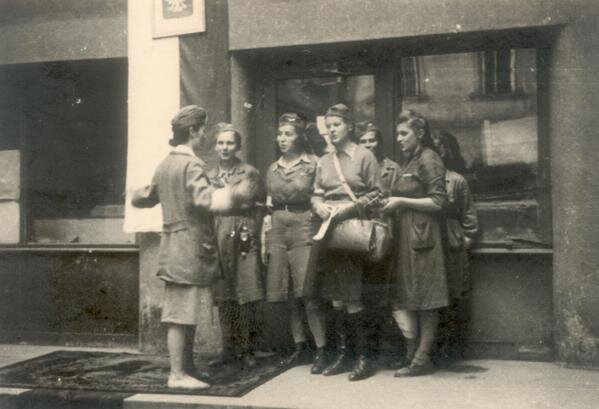
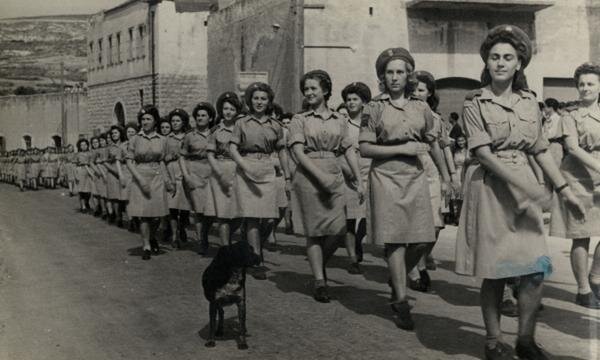
Prepare the infographic: „Women and war” using the photographs found on the internet. Remember to comment on each photo. Take into account that the ladies fought directly on the front, took part in intelligence campaigns, were paramedics, struggled with the hardships of war in besieged cities or survived the tragedy of life in the camps.
RJSei2F66b24y
Fotografia czarno-biała przedstawiająca sanitariuszki i posłańcy z plutonu 207 grupy "Żaglowców" w powstaniu warszawskim.
Paramedics and messengers from the 207 Platoon of the "Sailing Ship" grouping in the Warsaw Uprising. Collections of the Committee on the History of Women in the Battle for the Independence of Poland.
Source: State Archives, domena publiczna.
R1HNBjkj6UsWv
Fotografia czarno-biała przedstawiająca maszerujące dziewczyny Defilady z Młodszej Szkoły Wolontariatu, Nazaret 1946.
Defilada girls from the Younger Volunteer School, Nazareth 1946. Collections of the Women's History Committee in the Fight for the Independence of Poland
Source: Archiwa Państwowe, domena publiczna.
RVAFjsJstm01z1
Exercise 2
Match the terms with their definitions. Holocaust Możliwe odpowiedzi: 1. the armed forced within Poland; the secret armed forces of the Polish Underground State of the World War II era, active in the occupied Polish territories., 2. the states fighting against Germany and the states allied with her during World War II., 3. the planned, institutionalized and systematic murder of over 6 million European Jews perpetrated by Nazi Germany and her helpers during World War II., 4. the states on the side of the Third Reich, Japan, and Italy, fighting against the Allies during World War II., 5. an isolated place where large numbers of people deemed undesirable or inconvenient for the authorities are kept with no court sentence., 6. a separate part of a town or city meant for Jews to live in, created by the Third Reich authorities in the occupied territories., 7. yielding of the military, be it parts of it or the whole army. It may be either unconditional or on pre-established conditions. Usually, it ends an armed conflict., 8. in other words, lightning war – a term used to denote quick and massive attacks of the armed forces, usually of all types (airborne, navy, land armies), conducted in order to conquer a country., 9. the armed forces of Soviet Russia between 1918 and 1946., 10. collaboration with the enemy, partitioner, or occupant/ Concentration camp Możliwe odpowiedzi: 1. the armed forced within Poland; the secret armed forces of the Polish Underground State of the World War II era, active in the occupied Polish territories., 2. the states fighting against Germany and the states allied with her during World War II., 3. the planned, institutionalized and systematic murder of over 6 million European Jews perpetrated by Nazi Germany and her helpers during World War II., 4. the states on the side of the Third Reich, Japan, and Italy, fighting against the Allies during World War II., 5. an isolated place where large numbers of people deemed undesirable or inconvenient for the authorities are kept with no court sentence., 6. a separate part of a town or city meant for Jews to live in, created by the Third Reich authorities in the occupied territories., 7. yielding of the military, be it parts of it or the whole army. It may be either unconditional or on pre-established conditions. Usually, it ends an armed conflict., 8. in other words, lightning war – a term used to denote quick and massive attacks of the armed forces, usually of all types (airborne, navy, land armies), conducted in order to conquer a country., 9. the armed forces of Soviet Russia between 1918 and 1946., 10. collaboration with the enemy, partitioner, or occupant/ Ghetto Możliwe odpowiedzi: 1. the armed forced within Poland; the secret armed forces of the Polish Underground State of the World War II era, active in the occupied Polish territories., 2. the states fighting against Germany and the states allied with her during World War II., 3. the planned, institutionalized and systematic murder of over 6 million European Jews perpetrated by Nazi Germany and her helpers during World War II., 4. the states on the side of the Third Reich, Japan, and Italy, fighting against the Allies during World War II., 5. an isolated place where large numbers of people deemed undesirable or inconvenient for the authorities are kept with no court sentence., 6. a separate part of a town or city meant for Jews to live in, created by the Third Reich authorities in the occupied territories., 7. yielding of the military, be it parts of it or the whole army. It may be either unconditional or on pre-established conditions. Usually, it ends an armed conflict., 8. in other words, lightning war – a term used to denote quick and massive attacks of the armed forces, usually of all types (airborne, navy, land armies), conducted in order to conquer a country., 9. the armed forces of Soviet Russia between 1918 and 1946., 10. collaboration with the enemy, partitioner, or occupant/ Collaborationism Możliwe odpowiedzi: 1. the armed forced within Poland; the secret armed forces of the Polish Underground State of the World War II era, active in the occupied Polish territories., 2. the states fighting against Germany and the states allied with her during World War II., 3. the planned, institutionalized and systematic murder of over 6 million European Jews perpetrated by Nazi Germany and her helpers during World War II., 4. the states on the side of the Third Reich, Japan, and Italy, fighting against the Allies during World War II., 5. an isolated place where large numbers of people deemed undesirable or inconvenient for the authorities are kept with no court sentence., 6. a separate part of a town or city meant for Jews to live in, created by the Third Reich authorities in the occupied territories., 7. yielding of the military, be it parts of it or the whole army. It may be either unconditional or on pre-established conditions. Usually, it ends an armed conflict., 8. in other words, lightning war – a term used to denote quick and massive attacks of the armed forces, usually of all types (airborne, navy, land armies), conducted in order to conquer a country., 9. the armed forces of Soviet Russia between 1918 and 1946., 10. collaboration with the enemy, partitioner, or occupant/ Surrender Możliwe odpowiedzi: 1. the armed forced within Poland; the secret armed forces of the Polish Underground State of the World War II era, active in the occupied Polish territories., 2. the states fighting against Germany and the states allied with her during World War II., 3. the planned, institutionalized and systematic murder of over 6 million European Jews perpetrated by Nazi Germany and her helpers during World War II., 4. the states on the side of the Third Reich, Japan, and Italy, fighting against the Allies during World War II., 5. an isolated place where large numbers of people deemed undesirable or inconvenient for the authorities are kept with no court sentence., 6. a separate part of a town or city meant for Jews to live in, created by the Third Reich authorities in the occupied territories., 7. yielding of the military, be it parts of it or the whole army. It may be either unconditional or on pre-established conditions. Usually, it ends an armed conflict., 8. in other words, lightning war – a term used to denote quick and massive attacks of the armed forces, usually of all types (airborne, navy, land armies), conducted in order to conquer a country., 9. the armed forces of Soviet Russia between 1918 and 1946., 10. collaboration with the enemy, partitioner, or occupant/ Allies Możliwe odpowiedzi: 1. the armed forced within Poland; the secret armed forces of the Polish Underground State of the World War II era, active in the occupied Polish territories., 2. the states fighting against Germany and the states allied with her during World War II., 3. the planned, institutionalized and systematic murder of over 6 million European Jews perpetrated by Nazi Germany and her helpers during World War II., 4. the states on the side of the Third Reich, Japan, and Italy, fighting against the Allies during World War II., 5. an isolated place where large numbers of people deemed undesirable or inconvenient for the authorities are kept with no court sentence., 6. a separate part of a town or city meant for Jews to live in, created by the Third Reich authorities in the occupied territories., 7. yielding of the military, be it parts of it or the whole army. It may be either unconditional or on pre-established conditions. Usually, it ends an armed conflict., 8. in other words, lightning war – a term used to denote quick and massive attacks of the armed forces, usually of all types (airborne, navy, land armies), conducted in order to conquer a country., 9. the armed forces of Soviet Russia between 1918 and 1946., 10. collaboration with the enemy, partitioner, or occupant/ Home Army (AK) Możliwe odpowiedzi: 1. the armed forced within Poland; the secret armed forces of the Polish Underground State of the World War II era, active in the occupied Polish territories., 2. the states fighting against Germany and the states allied with her during World War II., 3. the planned, institutionalized and systematic murder of over 6 million European Jews perpetrated by Nazi Germany and her helpers during World War II., 4. the states on the side of the Third Reich, Japan, and Italy, fighting against the Allies during World War II., 5. an isolated place where large numbers of people deemed undesirable or inconvenient for the authorities are kept with no court sentence., 6. a separate part of a town or city meant for Jews to live in, created by the Third Reich authorities in the occupied territories., 7. yielding of the military, be it parts of it or the whole army. It may be either unconditional or on pre-established conditions. Usually, it ends an armed conflict., 8. in other words, lightning war – a term used to denote quick and massive attacks of the armed forces, usually of all types (airborne, navy, land armies), conducted in order to conquer a country., 9. the armed forces of Soviet Russia between 1918 and 1946., 10. collaboration with the enemy, partitioner, or occupant/ Red Army Możliwe odpowiedzi: 1. the armed forced within Poland; the secret armed forces of the Polish Underground State of the World War II era, active in the occupied Polish territories., 2. the states fighting against Germany and the states allied with her during World War II., 3. the planned, institutionalized and systematic murder of over 6 million European Jews perpetrated by Nazi Germany and her helpers during World War II., 4. the states on the side of the Third Reich, Japan, and Italy, fighting against the Allies during World War II., 5. an isolated place where large numbers of people deemed undesirable or inconvenient for the authorities are kept with no court sentence., 6. a separate part of a town or city meant for Jews to live in, created by the Third Reich authorities in the occupied territories., 7. yielding of the military, be it parts of it or the whole army. It may be either unconditional or on pre-established conditions. Usually, it ends an armed conflict., 8. in other words, lightning war – a term used to denote quick and massive attacks of the armed forces, usually of all types (airborne, navy, land armies), conducted in order to conquer a country., 9. the armed forces of Soviet Russia between 1918 and 1946., 10. collaboration with the enemy, partitioner, or occupant/ Blitzkrieg Możliwe odpowiedzi: 1. the armed forced within Poland; the secret armed forces of the Polish Underground State of the World War II era, active in the occupied Polish territories., 2. the states fighting against Germany and the states allied with her during World War II., 3. the planned, institutionalized and systematic murder of over 6 million European Jews perpetrated by Nazi Germany and her helpers during World War II., 4. the states on the side of the Third Reich, Japan, and Italy, fighting against the Allies during World War II., 5. an isolated place where large numbers of people deemed undesirable or inconvenient for the authorities are kept with no court sentence., 6. a separate part of a town or city meant for Jews to live in, created by the Third Reich authorities in the occupied territories., 7. yielding of the military, be it parts of it or the whole army. It may be either unconditional or on pre-established conditions. Usually, it ends an armed conflict., 8. in other words, lightning war – a term used to denote quick and massive attacks of the armed forces, usually of all types (airborne, navy, land armies), conducted in order to conquer a country., 9. the armed forces of Soviet Russia between 1918 and 1946., 10. collaboration with the enemy, partitioner, or occupant/ Axis Możliwe odpowiedzi: 1. the armed forced within Poland; the secret armed forces of the Polish Underground State of the World War II era, active in the occupied Polish territories., 2. the states fighting against Germany and the states allied with her during World War II., 3. the planned, institutionalized and systematic murder of over 6 million European Jews perpetrated by Nazi Germany and her helpers during World War II., 4. the states on the side of the Third Reich, Japan, and Italy, fighting against the Allies during World War II., 5. an isolated place where large numbers of people deemed undesirable or inconvenient for the authorities are kept with no court sentence., 6. a separate part of a town or city meant for Jews to live in, created by the Third Reich authorities in the occupied territories., 7. yielding of the military, be it parts of it or the whole army. It may be either unconditional or on pre-established conditions. Usually, it ends an armed conflict., 8. in other words, lightning war – a term used to denote quick and massive attacks of the armed forces, usually of all types (airborne, navy, land armies), conducted in order to conquer a country., 9. the armed forces of Soviet Russia between 1918 and 1946., 10. collaboration with the enemy, partitioner, or occupant/
Match the terms with their definitions. Holocaust Możliwe odpowiedzi: 1. the armed forced within Poland; the secret armed forces of the Polish Underground State of the World War II era, active in the occupied Polish territories., 2. the states fighting against Germany and the states allied with her during World War II., 3. the planned, institutionalized and systematic murder of over 6 million European Jews perpetrated by Nazi Germany and her helpers during World War II., 4. the states on the side of the Third Reich, Japan, and Italy, fighting against the Allies during World War II., 5. an isolated place where large numbers of people deemed undesirable or inconvenient for the authorities are kept with no court sentence., 6. a separate part of a town or city meant for Jews to live in, created by the Third Reich authorities in the occupied territories., 7. yielding of the military, be it parts of it or the whole army. It may be either unconditional or on pre-established conditions. Usually, it ends an armed conflict., 8. in other words, lightning war – a term used to denote quick and massive attacks of the armed forces, usually of all types (airborne, navy, land armies), conducted in order to conquer a country., 9. the armed forces of Soviet Russia between 1918 and 1946., 10. collaboration with the enemy, partitioner, or occupant/ Concentration camp Możliwe odpowiedzi: 1. the armed forced within Poland; the secret armed forces of the Polish Underground State of the World War II era, active in the occupied Polish territories., 2. the states fighting against Germany and the states allied with her during World War II., 3. the planned, institutionalized and systematic murder of over 6 million European Jews perpetrated by Nazi Germany and her helpers during World War II., 4. the states on the side of the Third Reich, Japan, and Italy, fighting against the Allies during World War II., 5. an isolated place where large numbers of people deemed undesirable or inconvenient for the authorities are kept with no court sentence., 6. a separate part of a town or city meant for Jews to live in, created by the Third Reich authorities in the occupied territories., 7. yielding of the military, be it parts of it or the whole army. It may be either unconditional or on pre-established conditions. Usually, it ends an armed conflict., 8. in other words, lightning war – a term used to denote quick and massive attacks of the armed forces, usually of all types (airborne, navy, land armies), conducted in order to conquer a country., 9. the armed forces of Soviet Russia between 1918 and 1946., 10. collaboration with the enemy, partitioner, or occupant/ Ghetto Możliwe odpowiedzi: 1. the armed forced within Poland; the secret armed forces of the Polish Underground State of the World War II era, active in the occupied Polish territories., 2. the states fighting against Germany and the states allied with her during World War II., 3. the planned, institutionalized and systematic murder of over 6 million European Jews perpetrated by Nazi Germany and her helpers during World War II., 4. the states on the side of the Third Reich, Japan, and Italy, fighting against the Allies during World War II., 5. an isolated place where large numbers of people deemed undesirable or inconvenient for the authorities are kept with no court sentence., 6. a separate part of a town or city meant for Jews to live in, created by the Third Reich authorities in the occupied territories., 7. yielding of the military, be it parts of it or the whole army. It may be either unconditional or on pre-established conditions. Usually, it ends an armed conflict., 8. in other words, lightning war – a term used to denote quick and massive attacks of the armed forces, usually of all types (airborne, navy, land armies), conducted in order to conquer a country., 9. the armed forces of Soviet Russia between 1918 and 1946., 10. collaboration with the enemy, partitioner, or occupant/ Collaborationism Możliwe odpowiedzi: 1. the armed forced within Poland; the secret armed forces of the Polish Underground State of the World War II era, active in the occupied Polish territories., 2. the states fighting against Germany and the states allied with her during World War II., 3. the planned, institutionalized and systematic murder of over 6 million European Jews perpetrated by Nazi Germany and her helpers during World War II., 4. the states on the side of the Third Reich, Japan, and Italy, fighting against the Allies during World War II., 5. an isolated place where large numbers of people deemed undesirable or inconvenient for the authorities are kept with no court sentence., 6. a separate part of a town or city meant for Jews to live in, created by the Third Reich authorities in the occupied territories., 7. yielding of the military, be it parts of it or the whole army. It may be either unconditional or on pre-established conditions. Usually, it ends an armed conflict., 8. in other words, lightning war – a term used to denote quick and massive attacks of the armed forces, usually of all types (airborne, navy, land armies), conducted in order to conquer a country., 9. the armed forces of Soviet Russia between 1918 and 1946., 10. collaboration with the enemy, partitioner, or occupant/ Surrender Możliwe odpowiedzi: 1. the armed forced within Poland; the secret armed forces of the Polish Underground State of the World War II era, active in the occupied Polish territories., 2. the states fighting against Germany and the states allied with her during World War II., 3. the planned, institutionalized and systematic murder of over 6 million European Jews perpetrated by Nazi Germany and her helpers during World War II., 4. the states on the side of the Third Reich, Japan, and Italy, fighting against the Allies during World War II., 5. an isolated place where large numbers of people deemed undesirable or inconvenient for the authorities are kept with no court sentence., 6. a separate part of a town or city meant for Jews to live in, created by the Third Reich authorities in the occupied territories., 7. yielding of the military, be it parts of it or the whole army. It may be either unconditional or on pre-established conditions. Usually, it ends an armed conflict., 8. in other words, lightning war – a term used to denote quick and massive attacks of the armed forces, usually of all types (airborne, navy, land armies), conducted in order to conquer a country., 9. the armed forces of Soviet Russia between 1918 and 1946., 10. collaboration with the enemy, partitioner, or occupant/ Allies Możliwe odpowiedzi: 1. the armed forced within Poland; the secret armed forces of the Polish Underground State of the World War II era, active in the occupied Polish territories., 2. the states fighting against Germany and the states allied with her during World War II., 3. the planned, institutionalized and systematic murder of over 6 million European Jews perpetrated by Nazi Germany and her helpers during World War II., 4. the states on the side of the Third Reich, Japan, and Italy, fighting against the Allies during World War II., 5. an isolated place where large numbers of people deemed undesirable or inconvenient for the authorities are kept with no court sentence., 6. a separate part of a town or city meant for Jews to live in, created by the Third Reich authorities in the occupied territories., 7. yielding of the military, be it parts of it or the whole army. It may be either unconditional or on pre-established conditions. Usually, it ends an armed conflict., 8. in other words, lightning war – a term used to denote quick and massive attacks of the armed forces, usually of all types (airborne, navy, land armies), conducted in order to conquer a country., 9. the armed forces of Soviet Russia between 1918 and 1946., 10. collaboration with the enemy, partitioner, or occupant/ Home Army (AK) Możliwe odpowiedzi: 1. the armed forced within Poland; the secret armed forces of the Polish Underground State of the World War II era, active in the occupied Polish territories., 2. the states fighting against Germany and the states allied with her during World War II., 3. the planned, institutionalized and systematic murder of over 6 million European Jews perpetrated by Nazi Germany and her helpers during World War II., 4. the states on the side of the Third Reich, Japan, and Italy, fighting against the Allies during World War II., 5. an isolated place where large numbers of people deemed undesirable or inconvenient for the authorities are kept with no court sentence., 6. a separate part of a town or city meant for Jews to live in, created by the Third Reich authorities in the occupied territories., 7. yielding of the military, be it parts of it or the whole army. It may be either unconditional or on pre-established conditions. Usually, it ends an armed conflict., 8. in other words, lightning war – a term used to denote quick and massive attacks of the armed forces, usually of all types (airborne, navy, land armies), conducted in order to conquer a country., 9. the armed forces of Soviet Russia between 1918 and 1946., 10. collaboration with the enemy, partitioner, or occupant/ Red Army Możliwe odpowiedzi: 1. the armed forced within Poland; the secret armed forces of the Polish Underground State of the World War II era, active in the occupied Polish territories., 2. the states fighting against Germany and the states allied with her during World War II., 3. the planned, institutionalized and systematic murder of over 6 million European Jews perpetrated by Nazi Germany and her helpers during World War II., 4. the states on the side of the Third Reich, Japan, and Italy, fighting against the Allies during World War II., 5. an isolated place where large numbers of people deemed undesirable or inconvenient for the authorities are kept with no court sentence., 6. a separate part of a town or city meant for Jews to live in, created by the Third Reich authorities in the occupied territories., 7. yielding of the military, be it parts of it or the whole army. It may be either unconditional or on pre-established conditions. Usually, it ends an armed conflict., 8. in other words, lightning war – a term used to denote quick and massive attacks of the armed forces, usually of all types (airborne, navy, land armies), conducted in order to conquer a country., 9. the armed forces of Soviet Russia between 1918 and 1946., 10. collaboration with the enemy, partitioner, or occupant/ Blitzkrieg Możliwe odpowiedzi: 1. the armed forced within Poland; the secret armed forces of the Polish Underground State of the World War II era, active in the occupied Polish territories., 2. the states fighting against Germany and the states allied with her during World War II., 3. the planned, institutionalized and systematic murder of over 6 million European Jews perpetrated by Nazi Germany and her helpers during World War II., 4. the states on the side of the Third Reich, Japan, and Italy, fighting against the Allies during World War II., 5. an isolated place where large numbers of people deemed undesirable or inconvenient for the authorities are kept with no court sentence., 6. a separate part of a town or city meant for Jews to live in, created by the Third Reich authorities in the occupied territories., 7. yielding of the military, be it parts of it or the whole army. It may be either unconditional or on pre-established conditions. Usually, it ends an armed conflict., 8. in other words, lightning war – a term used to denote quick and massive attacks of the armed forces, usually of all types (airborne, navy, land armies), conducted in order to conquer a country., 9. the armed forces of Soviet Russia between 1918 and 1946., 10. collaboration with the enemy, partitioner, or occupant/ Axis Możliwe odpowiedzi: 1. the armed forced within Poland; the secret armed forces of the Polish Underground State of the World War II era, active in the occupied Polish territories., 2. the states fighting against Germany and the states allied with her during World War II., 3. the planned, institutionalized and systematic murder of over 6 million European Jews perpetrated by Nazi Germany and her helpers during World War II., 4. the states on the side of the Third Reich, Japan, and Italy, fighting against the Allies during World War II., 5. an isolated place where large numbers of people deemed undesirable or inconvenient for the authorities are kept with no court sentence., 6. a separate part of a town or city meant for Jews to live in, created by the Third Reich authorities in the occupied territories., 7. yielding of the military, be it parts of it or the whole army. It may be either unconditional or on pre-established conditions. Usually, it ends an armed conflict., 8. in other words, lightning war – a term used to denote quick and massive attacks of the armed forces, usually of all types (airborne, navy, land armies), conducted in order to conquer a country., 9. the armed forces of Soviet Russia between 1918 and 1946., 10. collaboration with the enemy, partitioner, or occupant/
Match the terms with their definitions.
the armed forces of Soviet Russia between 1918 and 1946., yielding of the military, be it parts of it or the whole army. It may be either unconditional or on pre-established conditions. Usually, it ends an armed conflict., the states fighting against Germany and the states allied with her during World War II., a separate part of a town or city meant for Jews to live in, created by the Third Reich authorities in the occupied territories., the planned, institutionalized and systematic murder of over 6 million European Jews perpetrated by Nazi Germany and her helpers during World War II., the states on the side of the Third Reich, Japan, and Italy, fighting against the Allies during World War II., collaboration with the enemy, partitioner, or occupant/, an isolated place where large numbers of people deemed undesirable or inconvenient for the authorities are kept with no court sentence., the armed forced within Poland; the secret armed forces of the Polish Underground State of the World War II era, active in the occupied Polish territories., in other words, lightning war – a term used to denote quick and massive attacks of the armed forces, usually of all types (airborne, navy, land armies), conducted in order to conquer a country.
Totalitaryzm – system rządów politycznych połączony z uzasadniającą jego istnienie ideologią, która głosi całkowite podporządkowanie jednostki i pełną kontrolę przez państwo społeczeństwa.
Pakt Ribbentrop‑Mołotow – porozumienie zawarte między ZSRS i III Rzeszą 23 sierpnia 1939 r., jego tajny protokół przewidywał m.in. podział ziem polskich.
Faszyzm – doktryna polityczna i ustrojowa powstała na początku lat 20. XX we Włoszech. Głosiła kult państwa i solidaryzm społeczny, występując przeciwko demokracji, liberalizmowi i pluralizmowi politycznemu. Był ustrojem totalitarnym.
Generalne Gubernatorstwo – utworzone na części ziem polskich, nie wcielonych do III Rzeszy jednostka terytorialna nad którą władzę cywilną i wojskową sprawowały hitlerowskie Niemcy.
Deutsche Volksliste – niemiecka lista narodowościowa podzielona na 4 kategorie oznaczające stopień pochodzenia niemieckiego. Osoby wpisane na Volkslistę, w zależności od kategorii, miały pewne przywileje w porównaniu z ludnością polską.
Tajne komplety – określenie nielegalnych zajęć i wykładów organizowanych poza szkołami w okresie zaborów lub okupacji. Najczęściej odbywało się w prywatnych domach.
Propaganda – celowe działania, które mają doprowadzić do określonych zachować i poglądów. Służy ona do upowszechnienia dogodnych informacji dla nadawcy. W języku potocznym synonim kłamstwa i manipulacji.
Zbrodnia katyńska – zbrodnia popełniona przez policję polityczną Związku Sowieckiego na Polakach wiosną 1940 roku. Wzięci do niewoli Polacy (ponad 21 tys. ludzi) uznani za „wrogów władzy sowieckiej” zostali zamordowani strzałem w tył głowy. Przez 50 lat (1940‑1990) władze ZSRS zaprzeczały swojej odpowiedzialności za ten czyn.
Holokaust – zaplanowany, instytucjonalnie zorganizowany i systematycznie przeprowadzony przez nazistowskich Niemców i ich pomocników mord na prawie 6 milionach europejskich Żydów w latach II wojny światowej.
Obóz koncentracyjny – odizolowane miejsce przetrzymywania znacznej liczby osób bez wyroku sądowego, które uznano za niepożądane lub niewygodne dla władz. Miał służyć izolacji, niewolniczej pracy i eksterminacji osób tam przebywających.
Getto – wydzielona część miasta przeznaczona do zamieszkania przez Żydów, utworzona przez władze III Rzeszy na terenach okupowanych. Mieszkający w niej Żydzi żyli w bardzo trudnych warunkach.
Sprawiedliwy wśród narodów świata – odznaczenie izraelskie nadawane osobom, które bezinteresownie i z narażeniem życia ratowały Żydów podczas II wojny światowej.
Dziwna wojna – określenie sytuacji trwającej od września 1939 do maja 1940 r. wojny na froncie zachodnim. Gdzie po formalnym wypowiedzeniu wojny przez Wielką Brytanię i Francję nie nastąpiły działania zbrojne.
Kapitulacja – poddanie się części lub całości wojska przeciwnikowi. Może być bezwarunkowa lub pod pewnymi wcześniej ustalonymi warunkami. Najczęściej kończy konflikt zbrojny.
Ruch oporu – oddziały, których celem jest walka z okupantem kraju najczęściej sposobami partyzanckimi. Swoją działalność rozpoczynają najczęściej po zaprzestaniu regularnych działań wojennych.
Bitwa o Anglię – kampania lotnicza toczona między lotnictwem niemieckim i brytyjskim od lipca do października 1941 r. Jej celem była obrona Anglii przed atakami niemieckimi i planowanym desantem morskim. Zakończyła się zwycięstwem wojsk alianckich, co uniemożliwiło III Rzeszy desant na Wyspy Brytyjskie.
Polskie Siły Zbrojne (PSZ) – polskie formacje wojskowe utworzone jesienią 1939 r. na Zachodzie Europy, na podstawie porozumień z Francją i Wielką Brytanią. Dowodził nimi Naczelny Wódz. Istniały do 1947 r., kiedy to zostały rozwiązane przez Brytyjczyków.
Polskie Państwo Podziemne – istniejące w czasie II wojny światowej tajne struktury państwa polskiego na terenach okupowanych przez III Rzeszę i ZSRS. Istniało od 27 września 1939 do 1 lipca 1945 roku.
Rząd na uchodźstwie – polski rząd w latach 1939‑1990 będący jedyną legalną, w świetle polskiego prawa, kontynuacją władz Rzeczypospolitej Polskiej po wybuchu II wojny światowej. Jego siedzibą był najpierw Paryż, następnie Angers, a od 1940 r. Londyn. Zakończył swoją działalność po wyborze Lecha Wałęsy na prezydenta Polski.
Armia Krajowa (AK) – Siły Zbrojne w Kraju; tajne siły zbrojne Polskiego Państwa Podziemnego w czasie II wojny światowej działające na okupowanych ziemiach Rzeczypospolitej Polskiej. Były podporządkowane Naczelnemu Wodzowi. Pierwszym dowódcą został gen. Stefan Grot‑Rowecki. Działała od 14 lutego 1942 do 19 stycznia 1945 r. i liczyła nawet do 390 tys. żołnierzy.
Polski Komitet Wyzwolenia Narodowego (PKWN) – marionetkowy i tymczasowy organ władzy wykonawczej Rzeczypospolitej Polski utworzony w 1944 r. i zdominowany przez komunistów. Działał pod ścisłą kontrolą Stalina.
Akcja „Burza” – operacja militarna zorganizowana przez Armię Krajową przeciwko niemieckiemu wojsku w ostatnich dniach okupacji, tuż przed wkroczeniem na ziemie polskie Armii Czerwonej. Rozpoczęła się w styczniu 1944 r. i jej głównym celem było pokazanie władzy sowieckiej, że na wyzwolonych terenach gospodarzami są Polacy.
Wielka Trójka – określenie przywódców mocarstw alianckich podczas II wojny światowej (Stanów Zjednoczonych – Roosevelt; Wielkiej Brytanii – Churchill; ZSRS - Stalin), którzy omawiali sprawy wojenne i kształt przyszłego świata na konferencjach międzynarodowych w Teheranie (1943), Jałcie i Poczdamie (obie 1945).
Sojusznicza Rada Kontroli – urząd powołany do życia po kapitulacji Niemiec w maju 1945 r., w skład którego wchodzili przedstawiciele zwycięskich mocarstw – Wielkiej Brytanii, USA, ZSRS oraz Francji. Był najwyższym organem prawodawczym i administracyjnym działającym na terenie okupowanych Niemiec. Jego powołanie przewidziano na konferencji w Jałcie w lutym 1945 r.
ONZ – Organizacja Narodów Zjednoczonych – organizacja międzynarodowa, następczyni Ligii Narodów, powstała w październiku 1945 r. Jej głównymi celami są zapewnienie pokoju i bezpieczeństwa międzynarodowego, rozwój współpracy między narodami oraz promocja przestrzegania praw człowieka.
Blitzkrieg – inaczej wojna błyskawiczna, termin oznaczający szybki i zmasowany atak siłami zbrojnymi, najczęściej wszystkich typów (lotnictwo, marynarka, wojska lądowe), w celu zajęcia kraju.
Lend‑Lease Act – dosłownie umowa pożyczki‑dzierżawy, ustawa z 1941 r. pozwalająca prezydentowi Stanów Zjednoczonych sprzedawać i udostępniać rządom innych państw broni, amunicji i innych towarów z obszaru obronności.