Poland as a granary of Europe
to describe what grangesgranges were and their rapid development in the sixteenth century;
to explain what serfdom was and the consequences of its increase;
to list the most important Polish export products in the 16th and 17th centuries;
to characterize the significance of the Vistula River and the port of Gdansk for the Polish‑Lithuanian Commonwealth in the 16th century.
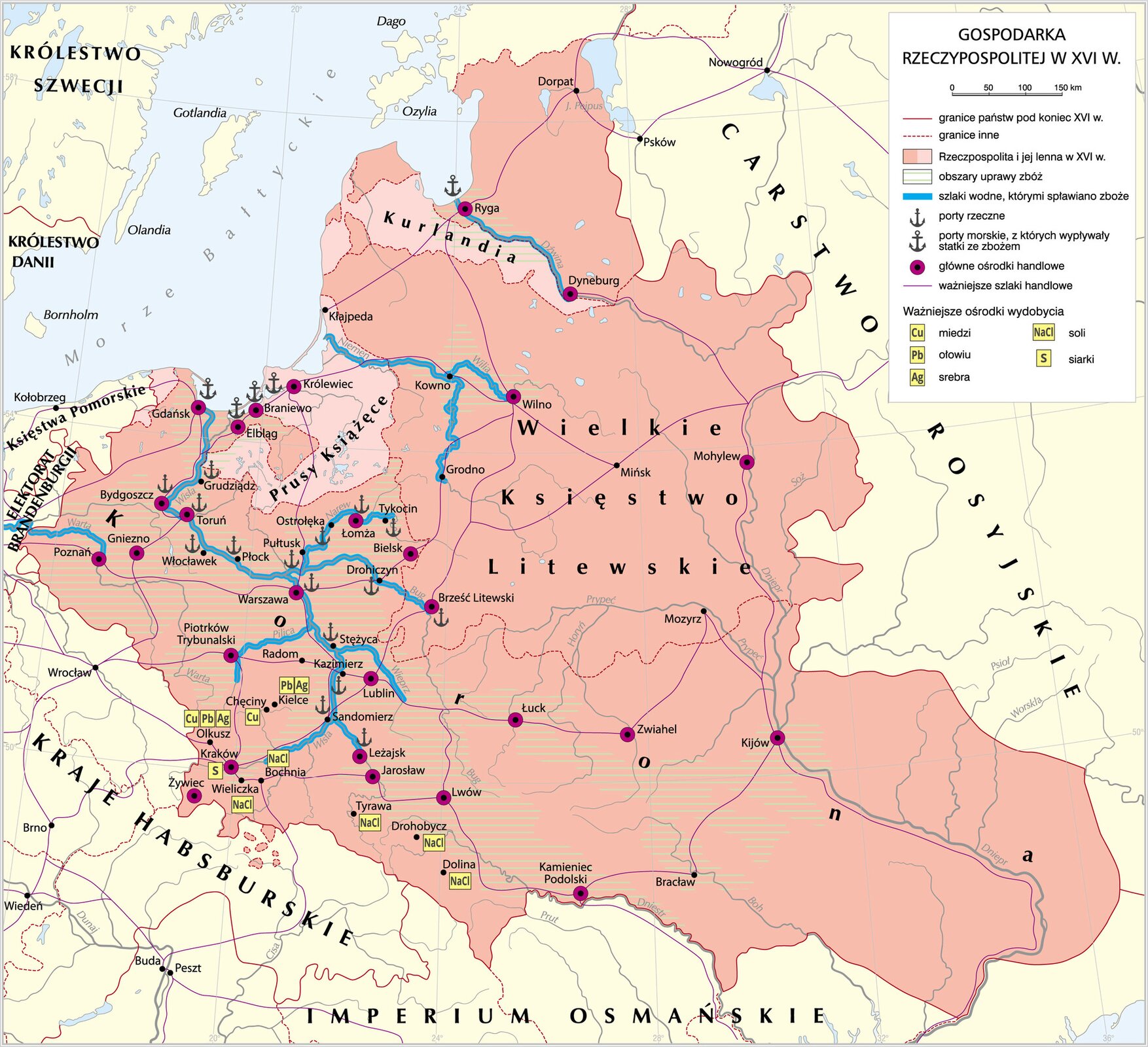
At the end of the fifteenth century in Europe there was a huge demand for grain (local economies switched to other tracks, eg in England they dealt mainly with sheep grazing and drapery). Polish and Lithuanian nobility came against these needs. There were granges created, which were large farm buildings producing for sale. They were managed by the lord of the village. Peasants from the countryside were the work force on the farm, where the cash and agricultural produce for them were replaced with serfdomserfdom (rent, labor). The grain was floated through the Vistula River to Gdansk and transported later to Europe. The nobility was enriched by grain trade. For the earned money they imported luxury goods from distant countries, invested in the expansion of estates and culture.
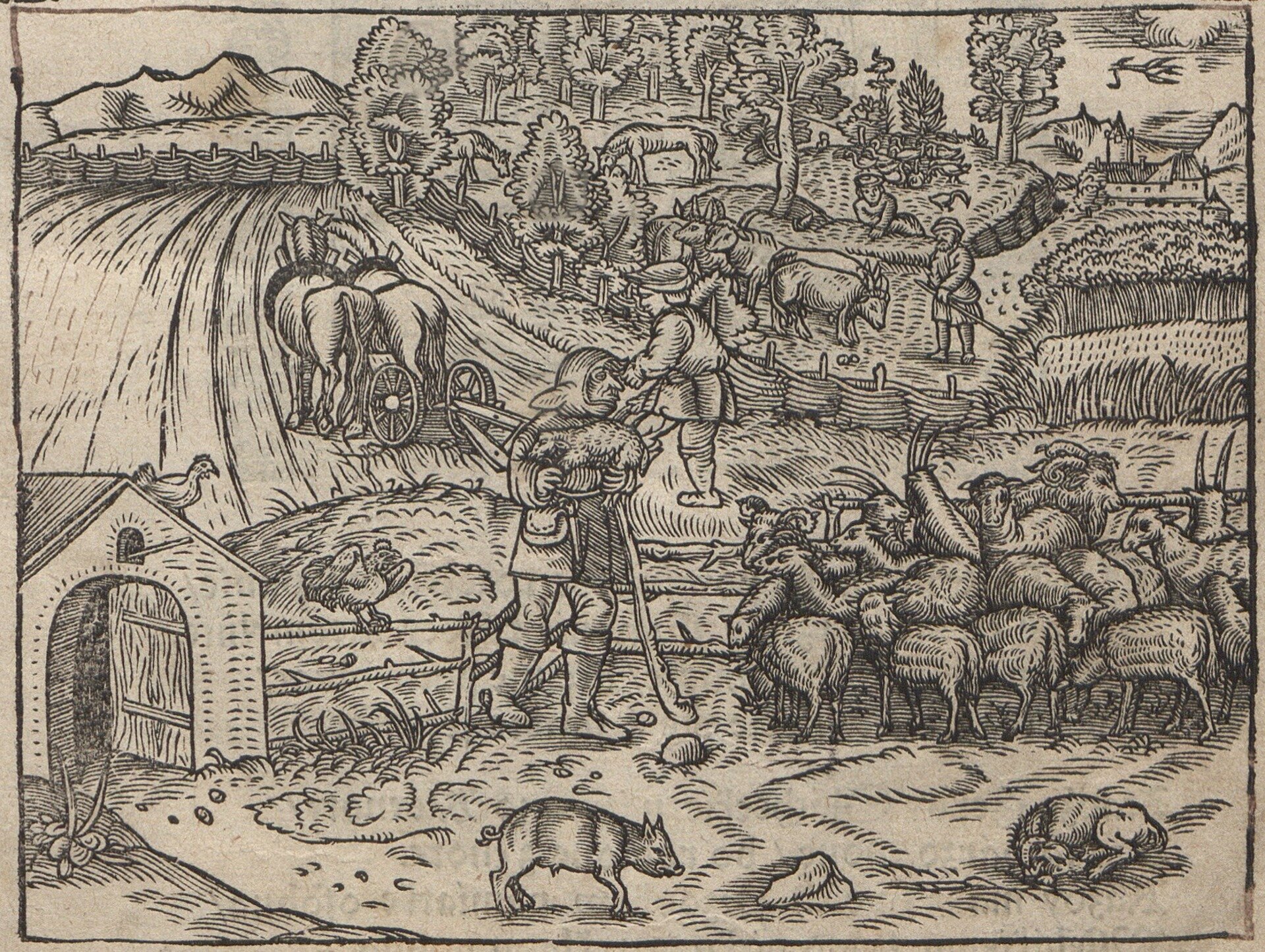
In the sixteenth century in Poland ...
- sheep were bred.
- agricultural machines were used.
- horses were used to work in the fields.
- goats were bred.
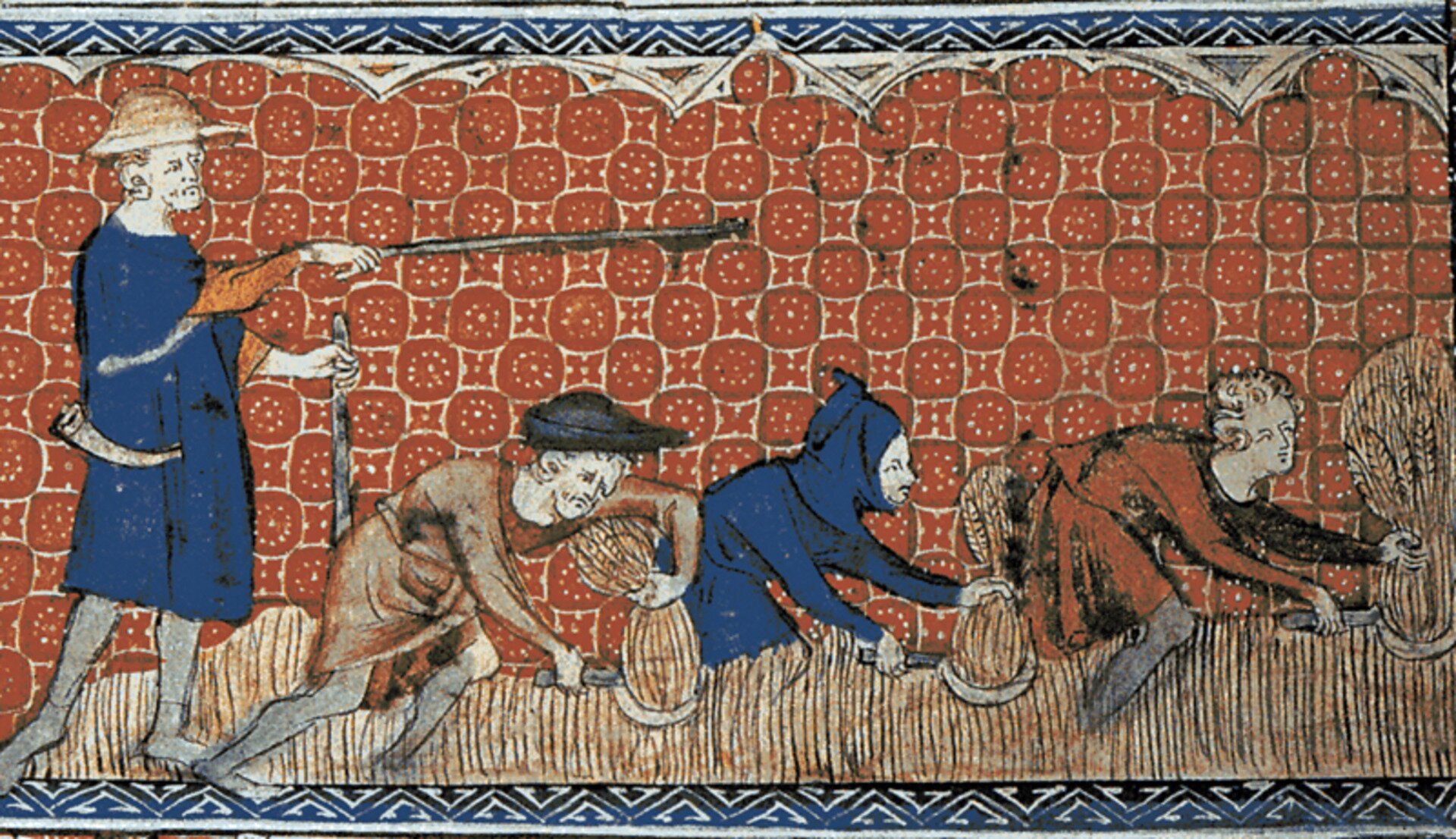
In medieval Poland, the right to own land had: the king, the nobility and the church. The peasants received lands for cultivation, which they could inherit. They were given by the owner of the village. However, the land was not their property. Therefore, the peasants were charged with various duties related to the payment for the use of land. One of the ways of paying for land was doing the so‑called serfdom, which was a compulsory work in a farm grange. In the 16th century, the obligatory peasant serfdom in the farm granges was 2‑3 days a week. Peasants in the farm, under the supervision of the nobleman, cultivated the fields, sowed and harvested the grain, which then threshed, mowed the grass, worked in the forest at felling trees, grazed cattle and looked after fishponds.
Analyze the table showing the number of ships sent to Gdansk by the richest noble families and then do the tests.
A noble family | Number of ships with grain sent to Gdansk |
The Zamoyskis | 271 |
The Ossolinskis | 167 |
The Firlejs | 153 |
The Teczynskis | 150 |
The largest number of ships with grain in the first half of the 17th century was sent to Gdansk by a family ...
- Zamoyskis.
- Ossolinskis.
- Firlejs.
- Teczyńskis.
The Firlejs family sent to Gdansk ...
- 271 ships.
- 153 ships.
- 167 ships.
- 150 ships.
The family who sent more ships than the Ossolinskis was …
- Zamoyskis.
- Firlejs.
- Teczyńskis.
The third place in terms of the number of ships sent took ...
- Zamoyskis.
- Firlejs
- Tęczyńskis.
- Ossolińskis
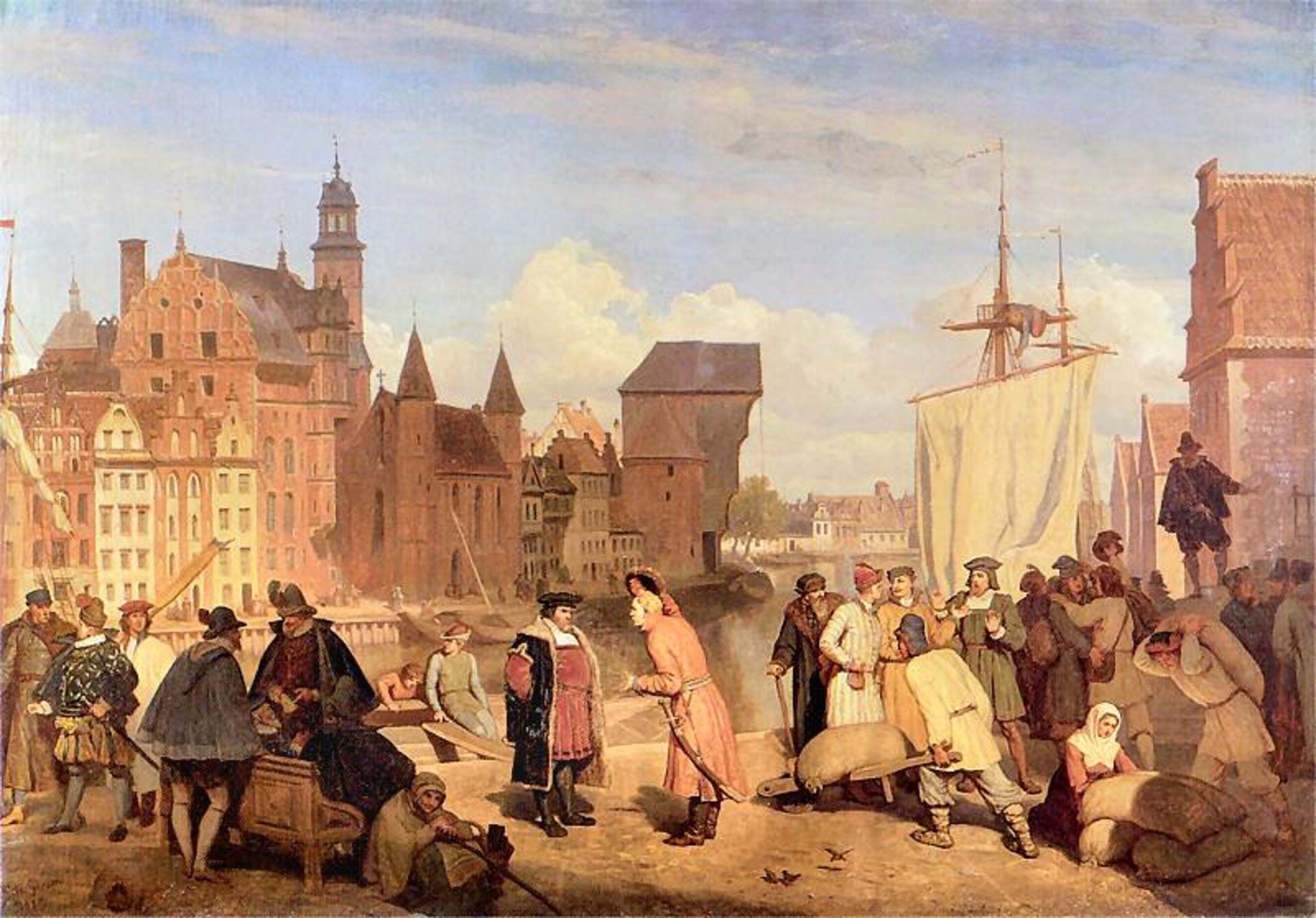
Select true sentences.
- There are two ships in the port.
- There is a port crane visible in the background.
- A nobleman talking to a buyer.
- Three noblemen are arguing with a buyer.
- There is a castle on the hill in the background.
Listen to the source text and then solve the task.
About Polish trade in the second half of the 16th centuryPoland trades not only with its neighbors, but also with remote countries. The entirety of the near‑trade is concentrated in Gdansk, a port on the Baltic Sea, belonging to the Polish king. In the month of August, there is a big fair in honor to Saint Dominic lasting fourteen days and longer, when German, French, Flemish, English, Spanish and Portuguese people meet and then there are 400 ships loaded with French and Spanish wine, silk, olive oil, lemons, jam and other Spanish crops, Portuguese roots, tin and English cloth. They find in Gdansk warehouses full of wheat, rye and other grain, flax, hemp, wax, honey, potash, wood for construction, salted beef, and other minor things. Merchants reload their ships again, what takes place in the first eight days of the fair and in the last eight ones and throughout the year, not only domestic buyers come to this city, but many others to equip their stores or houses with wine, cloth, roots and other things they need. The grain and other crops exceeding domestic needs are floated to Gdansk in spring and sold to merchants in Gdansk wholesalely. Gdansk merchants put them in their warehouses for the next fair and due to fact they are only allowed to trade, they are extremely rich and there is no other city that would bring more money to the Polish king.
Cracow also trades significantly with Germany, Hungary and Italy. From Germany, they bring canvas, cloth and many other goods, Hungarian wine, which Poles taste more than others, from Italy: malaise [sweet, aromatic wines], olive oil, lemons and other similar crops, but most of the lama [silk fabrics interwoven with gold] and other silk fabrics that are commonly used by the nobility and which are preferred by Poles. But Poland does not send abroad [nothing more] but silver, leather and some cattle.
In Poznan, as in Cracow, they trade with Germany, in Lviv with Turkey, from where they bring through Wallachia: wall carpets, thin woolen fabrics, Turkish fabrics, malaise, ginger, raisins and many other crops and eastern goods. At the end, Vilnius has significant trade with the Muscovite countries, where it provides domestic and foreign crops in exchange for fur of different species and other things of lower value (…).
The peasants worked in the field under the supervision of the overseer”
Source: Juliusz Ruggieri, About Polish trade in the second half of the 16th century, oprac. M. Sobańska-Bondaruk, S.B. Lenard, Warszawa 1999, s. 73.
Select true sentences.
- Grain, honey and wood were imported to Poland.
- Wine, olive oil, silk and spices were brought to Poland.
- The biggest trade event in Gdańsk was the fair held in August.
- The most important commercial centers in Poland were Gdansk, Cracow and Poznan.
- Poland traded mainly with the Scandinavian countries.
Keywords
Serfdom, GranaryGranary, Grange
Glossary
Folwark – duże gospodarstwo rolne, którego celem była masowa uprawa zboża przeznaczonego na sprzedaż. Upowszechnił się w XVI wieku. Wykorzystywano w nim pańszczyźnianą pracę chłopów.
Pańszczyzna – forma renty feudalnej (świadczenia chłopów na rzecz swoich panów) polegająca na obowiązkowej i bezpłatnej pracy na gruntach należących do pana (właściciela).
Sukmana – długie, wierzchnie, męskie okrycie noszone przede wszystkim przez chłopów. Była strojem codziennym, rzadko barwionym, najczęściej występująca w kolorach wełny, szarym, brązowym lub burym.
Szkuta – śródlądowy statek z płaskim dnem przystosowany do spławiania towarów po płytkich rzekach. Mogła pomieścić nawet do 100 ton produktów, przede wszystkim zboża.
Flisak – osoba zajmująca się rzecznym spławianiem towarów (flisem). Najczęściej byli to chłopi zamieszkujący wsie znajdujące się nad rzekami, dla których było to dodatkowe, sezonowe zajęcie. Z biegiem czasu i powiększeniem się grupy flisaków utworzyli oni własną organizację za wzór cechu miejskiego.
Spichlerz – budynek do przechowywania ziaren zbóż, zarówno luzem jak i w workach. Charakteryzował się stromymi dachami, trójkątnym szczytem i niewielkimi oknami.
Żuraw – duży dźwig, np. portowy, o specjalnym zastosowaniu, służący m.in. do załadunku towarów na statki i stawiania ich masztów. Jednym z najsłynniejszych jest Brama Żuraw w Gdańsku zbudowany w 1444 roku.