Poland, Europe, World after World War I (revision)
to name the provisions of the Treaty of Versailles with Poland;
to describe the Polish military’s engagement in the fight for Poland's borders after 1918;
to characterize the factors hindering the integration of the Polish state, the most important reforms of the Grabski’s government and the principles of the March Constitution.
The end of the First World War
On November 11, 1918, a ceasefire was concluded in Compiègne, France, ending operations on the fronts of World War I. The new order introduced the Treaty of Versailles, signed on June 28, 1919, with Germany. Separate peace treaties were signed with Austria, Hungary, Bulgaria, and Turkey. New countries appeared on the map of Europe: Poland, Lithuania, Latvia, Estonia, Czechoslovakia, Finland, the Kingdom of SHS, Ireland and Iceland as well as Austria and Hungary. The League of Nations was established.
Fight for the borders of the Polish state
In the course of the Greater Poland Uprising in 1918, the Poles managed to control almost the whole of the Greater Poland. The dispute over Upper Silesia was to be resolved by conducting a plebiscite, but the tense socio‑political situation led to three Silesian uprisings. The Council of Ambassadors finally granted Poland around 30% of the disputed areas. In Warmia and Masuria, Poland lost the plebiscite. The Council of Ambassadors set the border in Cieszyn Silesia. Attempts to establish the eastern border began during the I World War. In Galicia, October 1918, the Ukrainians took Lwów and announced the establishment of the Western Ukrainian People's Republic (Zakhidnoukrayins’ka Narodna Respublika - ZUNR). The Poles managed to regain the city and in 1919 to oust the Ukrainians over the river Zbrucz. In April, 1920, Józef Piłsudski formed an alliance with the leader of Ukrainian People's Republic (UNR), Semon Petlura, and began an offensive against the Red Army (Kiev expedition).
The Bolshevik counter‑offensive reached the forefield of Warsaw. On August 15, 1920, the decisive Battle of Warsaw took place, during which the units of the Red Army were destroyed. The war ended with the peace treaty, signed on March 18, 1921, in Riga. Even before the conclusion of the Treaty of Riga, the problem of the Vilnius region („Żeligowski's rebellion”) was solved.
Executive power in the first days of independence
On November 10, Józef Piłsudski came to Warsaw and a day later the Regency Council, representing Poles in the Kingdom, gave him military authority. Piłsudski appointed the cabinet of Jędrzej Moraczewski, who introduced a series of reforms and systemic changes. However, he did not have the support of all political forces in the country. Piłsudski, in agreement with Roman Dmowski, created the cabinet of Ignacy Paderewski. On March 17, 1921, the constitution was passed. On December 9, 1922, the president, Gabriel Narutowicz, was elected. A week later, in Warsaw's Zachęta, he was shot by a sympathizer of the National Democracy. Stanisław Wojciechowski became the next president.
Economic reforms of the Second Polish Republic
Hyperinflation prevailed in the country. In December 1923, the President decided to establish the so‑called government of specialists, appointed by Władysław Grabski, equipped with special powers. He carried out an agrarian reform. In 1924, a new currency was introduced, the zloty. As a result of customs wars with Germany, new markets for Polish goods were found. The construction of the port in Gdynia, opened in 1923, also begun.
Read the letter from the era and answer the questions.
Ławica, January 7, 1919
Dear Isia.
You cannot even imagine how much I miss your letters.
I await them every day, though they are only a small substitute for your presence, here, in the war, they give me hope a thousand times. Whenever I get them, I run with a beating heart to the place where I can read them peacefully. First, I open the envelope, then take out the letter, close my eyes, smell the pages. I smell your fragrance, on this little piece of paper, even though it's just a letter, I feel your closeness in it, it seems to me that I'm next to you, and that's what I need most now. I miss you, I want to touch you, feel your closeness, hold you.
You write that you miss me, I do miss you just as strongly. There is not one moment in which I do not think about you.
What times we have lived to, my beloved Isia?
We are half a year after the wedding, and from that moment we have only seen each other only a several times.
Well, but this is war, sacrifice is needed. I believe, however, that our desire to be together will finally come true.Yet, now I have to follow orders, to put them above the warmth of the family home.
The country needs us as it has never before, we have a real perspective of regaining independence, we must put off our family ambitions for some time to devote ourselves completely to our homeland.Our uprising in Poznań seems to be coming to an end. We plucked out vast expanses of land from the Germans, which belonged to Poland centuries ago.
Yesterday, on January 6, we took Ławica, where a larger German unit was stationed.
It seemed that we have a bloody fight ahead of us.
We invested the airport where the German unit was stationed, we started to shoot from a heavy cannon.
Only four shots were fired, one of them hit the flight tower.
The Germans responded with machine‑gun fire, but after a while their shots fell silent, the enemy understood that with such strength of our troops they will not be able to maintain the airport.
White flags signaled that the Germans gave up without a fight, it was the most beautiful view for the Poles.However, not for everyone, one of ours was killed, one could say that only one, but for me it is the one. He orphaned two children, a ten‑year‑old boy and a four‑year‑old girl. When I think what the family will feel when they find out about this tragedy, I have tears in my eyes. I knew this soldier, just like each one of us, he had his dreams and fought for something that unites us all, for free Poland.
Now we are so close to our target, we reached Bydgoszcz, and in the south we have already taken Ostrzeszów.
Nobody will take this away from us!Our victories at least partly fill up the emptiness that remains in my heart after I parted with you. Thanks to the fact that we win, I can somewhat cope in this world without you.
I love you, Isia, please write to me.Yours forever, Victor
P.S.
Yesterday, I was appointed the commandant of the Ławica airport, my first order was for the mechanics to prepare six captured aircrafts for the parade.
Today at 9 am, for the first time, my planes, with the white and red checkerboard, flew over Poznań.
I saw from up high people cheering at our sight.
Such moments make you feel alive!
Who is the author of this letter?
- Wiktor Chajes
- Wiktor Pniewski
- Wiktor Zygmunt Przedpełski
What is the author of the letter writing about?
- First Silesian Uprising
- Second Silesian Uprising
- Greater Poland Uprising
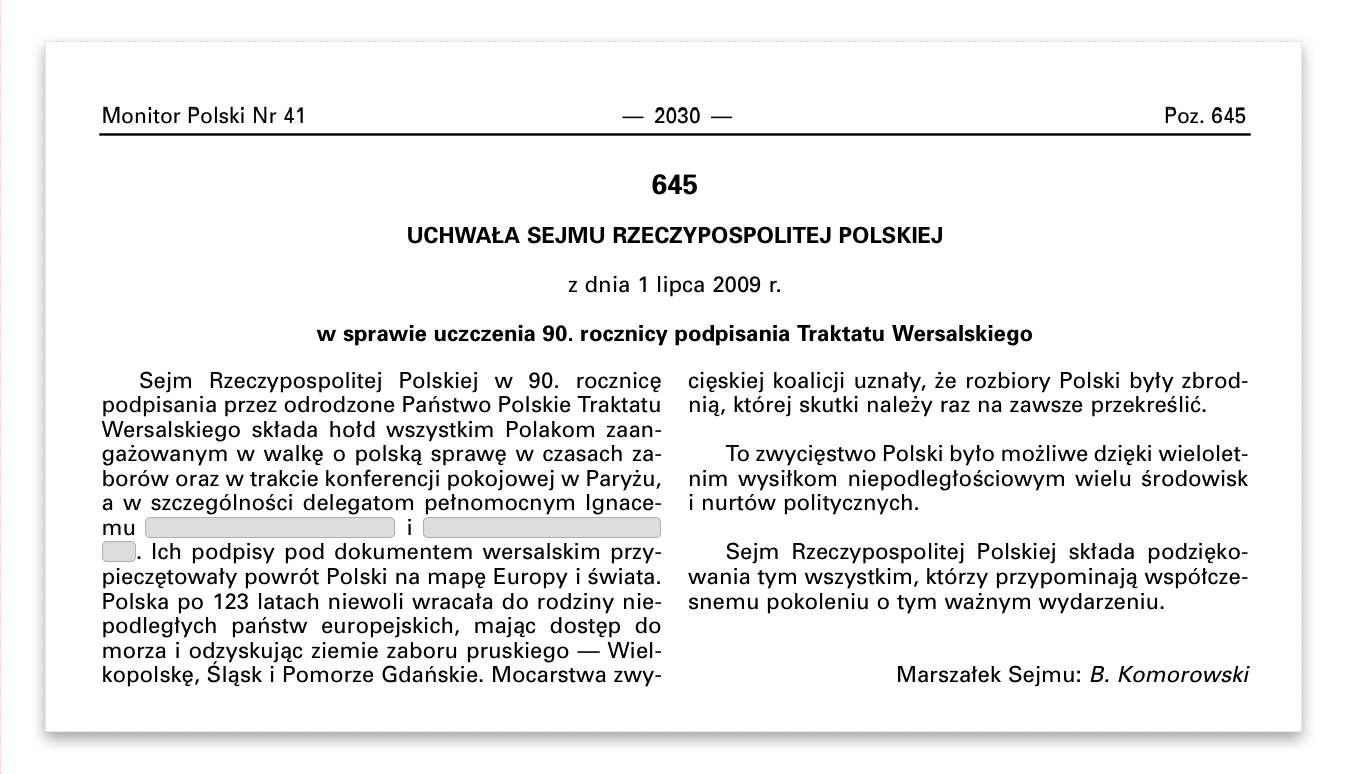
Choose the correct answer.
- Gabriel Narutowicz
- Ignacy Paderewski
- Jozef Pilsudski
- Roman Dmowski
- Stanisław Wojciechowski
- Wincenty Witos
- Zdzisław Lubomirski
Match the names of politicians with biographical notes.
Roman Dmowski, Władysław Grabski, Ignacy Paderewski, Józef Piłsudski, Gabriel Narutowicz, Stanisław Wojciechowski, Lucjan Zeligowski
| Prime Minister of the Second Polish Government. Participant of the Versailles conference. Pianist, composer. | |
| The leading Polish ideologist and national leader. A supporter of the incorporation concept. Participant of the Paris conference. | |
| Head of state, marshal, one of the PPS activists. Commander of the 1st Legion Brigade in the years 1914-1916. Supporter of the federation with Ukraine, Lithuania and Belarus. | |
| Socialist and popular politician. On December 20, 1922, he became the President of the Polish Republic. | |
| Polish general, the creator of the Lithuanian-Belarusian division. In the years 1925-1926 he was the Minister of Military Affairs, he helped to prepare the May Coup. | |
| Economist, right-wing politician. Prime Minister and Minister of the Treasury of the Second Republic of Poland, originator of the currency reform. | |
| Engineer, politician, president of the Republic of Poland. Professor of the Institute of Technology in Zurich. Shot by Eligiusz Niewiadomski. |
Keywords
Policymaker, demilitarization, Esperanto, war reparations
Glossary
Decydent – osoba uprawniona do podejmowania decyzji.
Demilitaryzacja – zmniejszenie potencjału wojskowego jakiegoś państwa na określonym terytorium mocą umowy międzynarodowej.
Demobilizacja – ogół czynności związany z przejściem danego państwa w stan pokoju.
Dyktat – narzucony nakaz, rozkaz
Esperanto – międzynarodowy język pomocniczy; jego twórcą był polski lekarz Ludwik Zamenhof, który w książce zatytułowanej „Dr Esperanto” (czyli Doktor Nadzieja) opublikował w 1887 podstawy języka; spopularyzowany przez Ligę Narodów.
Izolacjonizm – kierunek polityki zagranicznej sprowadzający się do obrony interesów i bezpieczeństwa własnego państwa.
Reparacje wojenne – inaczej odszkodowania wojenne, wynik roszczeń wysuwanych przez jedno państwo względem drugiego.
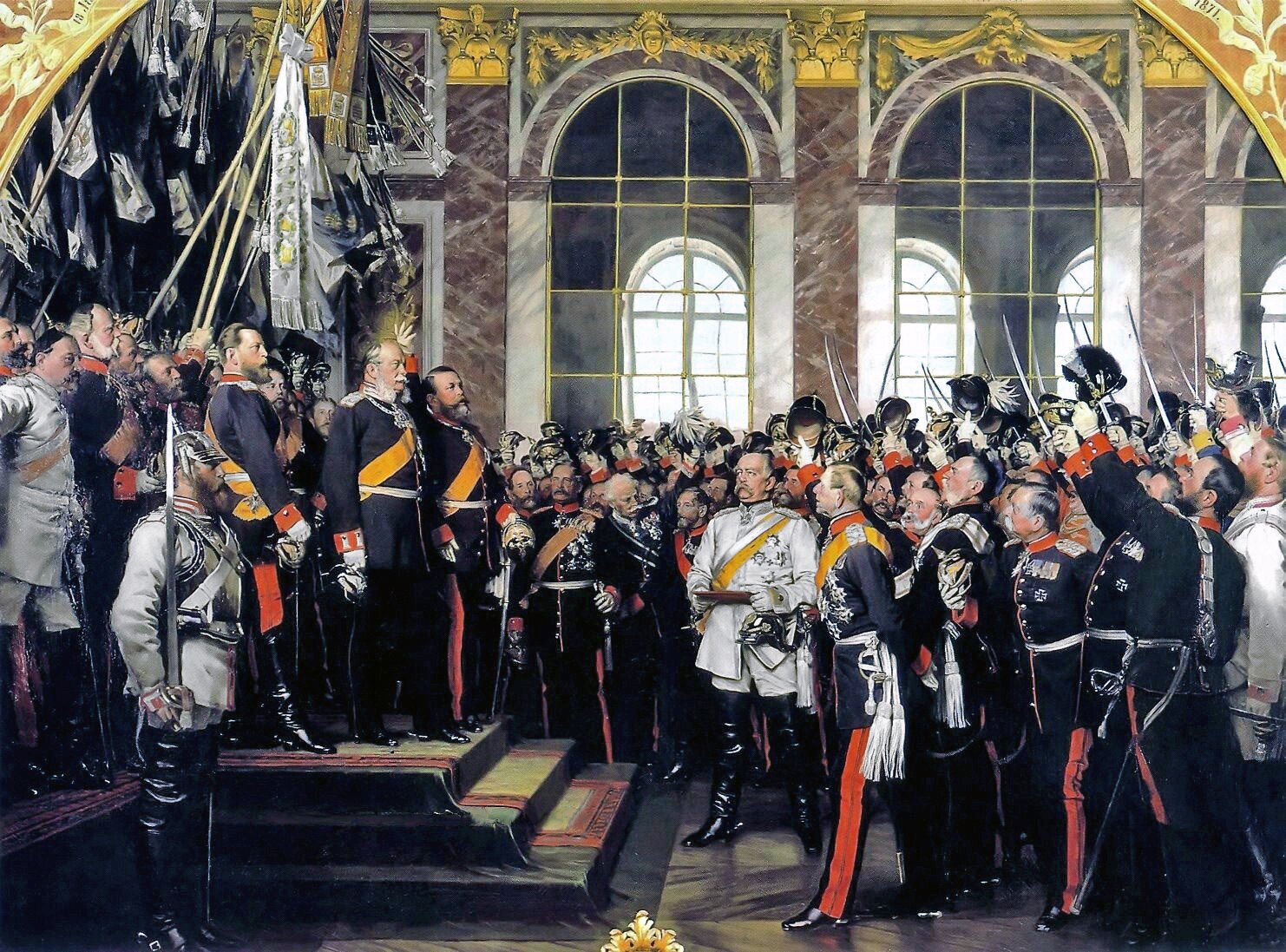
Sala Lustrzana – największa sala pałacu królewskiego w Wersalu; miejsce ważnych ustaleń i deklaracji, m.in. o zjednoczenia Niemiec w 1871 czy podpisania Traktatu wersalskiego w 1919 r.