The military confrontation between France and Austria, Prussia and Russia preceding the establishment of peace terms in Tilst made the Polish cause a bargain card of the European diplomacy. To Napoleon the Duchy of Warsaw was an important part of his Empire's political system. Not all Poles, however, supported cooperation with the French. Kościuszko, among others, was an opponent of linking the Polish cause with Napoleon. He flatly refused to cooperate with the French politicians who addressed him. He believed that Poles should fight for their freedom on their own. The enlargement of the area of the Duchy of Warsaw in 1809 undermined the relations between France and Russia. It was then that the idea of cooperation with the Tsar returned, brought back by Czartoryski at Alexander I's request. Nonetheless, the idea was rejected by the Duchy's authorities. The dilemma returned after Napoleon's defeat in Moscow. Prince Józef Poniatowski, stationed with the Polish troops in Kraków, having thought the situation through ultimately refused to go over to the Russian side. Napoleon's defeat in Leipzig and Poniatowski's death in October 1813 marked the end of the Polish pro‑French orientation.
Task 1
Read the text. Who among Poles supported Napoleon? Who believed we should not rely on France? Why?
1
Ri4cPsgAo88Il
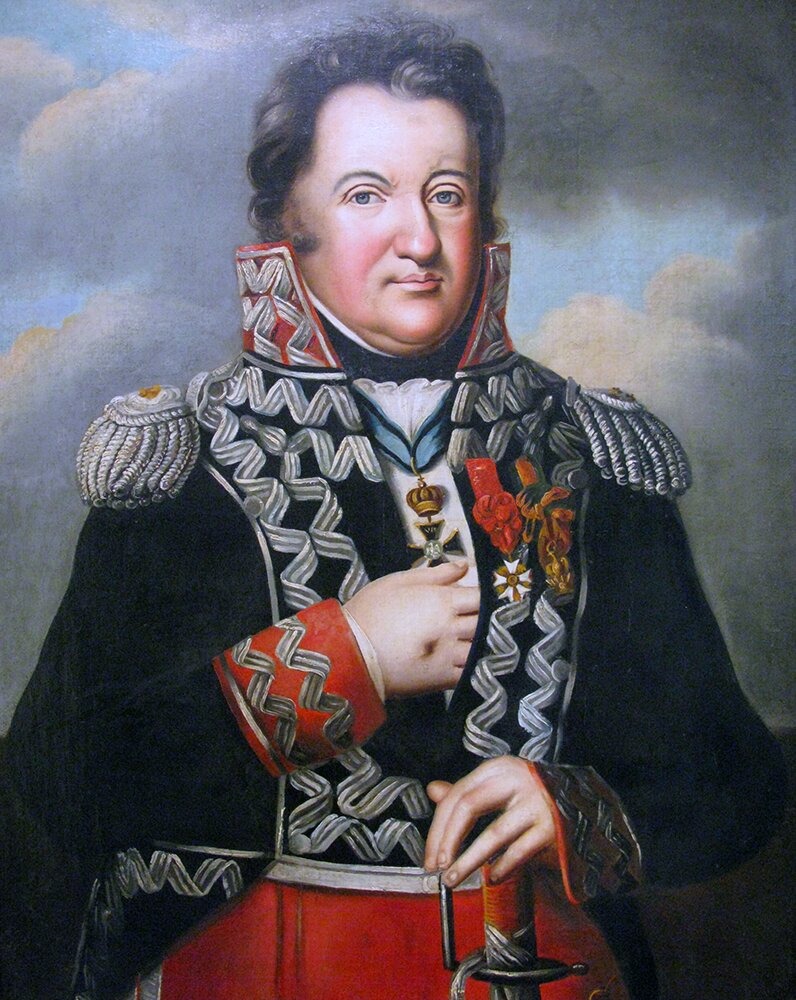
Obraz przedstawiający portret Jana Henryka Dąbrowskiego.
Jan Henryk Dąbrowski
Source: Jan Henryk Dąbrowski., oil on canvas, domena publiczna.
R1XcX5V01bv7T
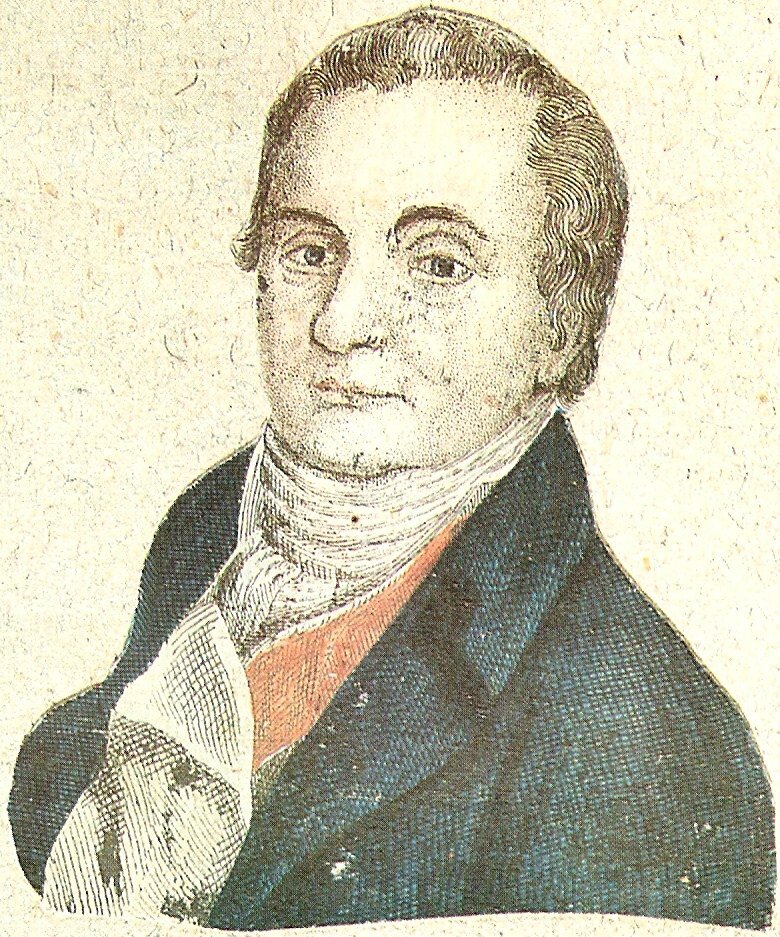
Obraz przedstawiający portret Józefa Wybickiego.
Józef Wybicki
Source: Józef Wybicki, 1822, domena publiczna.
Initially, in the era of formation of the Polish legions in Italy, the supporters of fighting by Napoleon's side derived mainly from the circles of political radicals (called the Polish Jacobins), urban people and petty nobility. It was not until the French military confrontation with Austria, Prussia and Russia that the Polish cause became a bargaining card of the European diplomacy and the circle of cooperators in the Polish society expanded. When the French armies entered the Prussian partition, in the course of talks held with Dąbrowski and Wybicki in Berlin in the autumn of 1806 Napoleon put the responsibility for the possible formation of an independent Polish state on the shoulders of Poles. The speed at which they organized administration and army after the disaster of Poland's partitioning in years 1805‑1806 clearly impressed the Emperor.
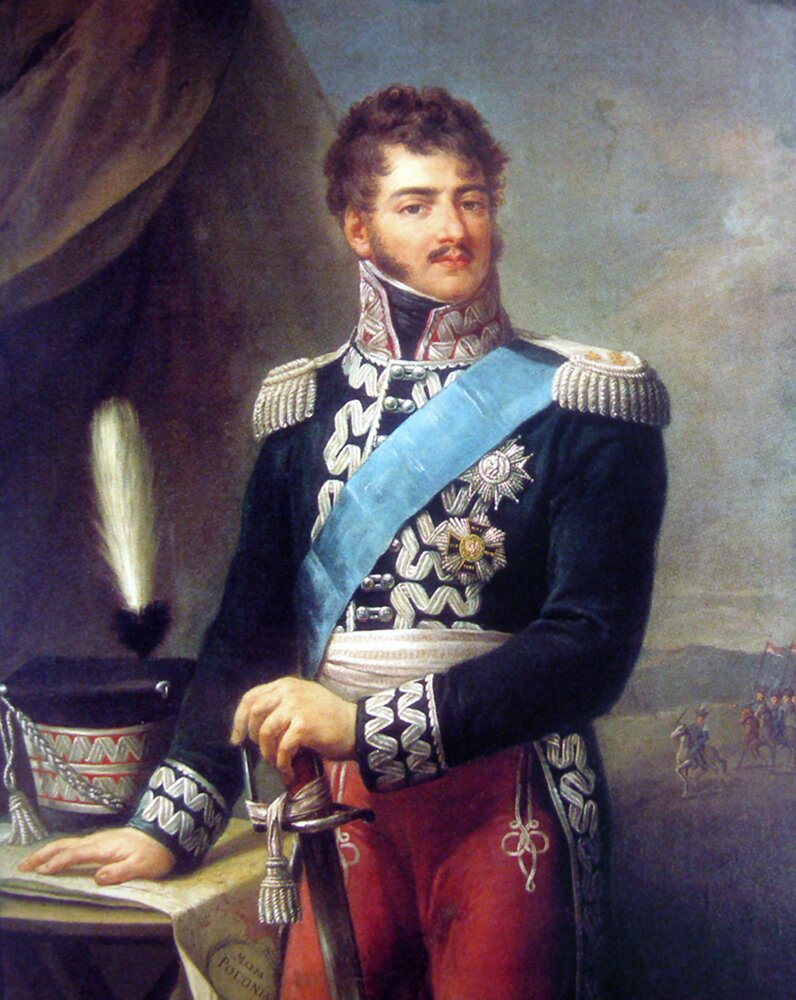
It was then that Napoleon started to notice the direct link between the power interests of France and the Polish cause for the first time. It put the pro‑French orientation, reborn after the legion's episode in a privileged position within the Polish society. In 1807, winning aristocracy and richer nobility, who then had the strongest political and socioeconomic position on the Polish territory proved to be the breakthrough. This cooperation was manifested by the involvement of Prince Józef Poniatowski, the nephew of the last King of Poland. By taking the helm in the military matters of the Duchy of Poland, he set aside general Henryk Dąbrowski, the creator of the Polish Legions in Italy. For the Polish political elites it also meant the rejection of the Prince Adam Czartoryski's pro‑Russian concept, which he had been developing since 1803, i.e. since he took management of the Russian foreign policy at Tsar Alexander I's side. It assumed the connection of all Polish territories under the Tsar's rule.
1
R1ZttN10hNmZD
Obraz przedstawiający portret księcia Józefa Poniatowskiego.
Prince Joseph Poniatowski
Source: Franciszek Paderewski, Prince Joseph Poniatowski, 1814, domena publiczna.
RV8GBcOYoEGGV
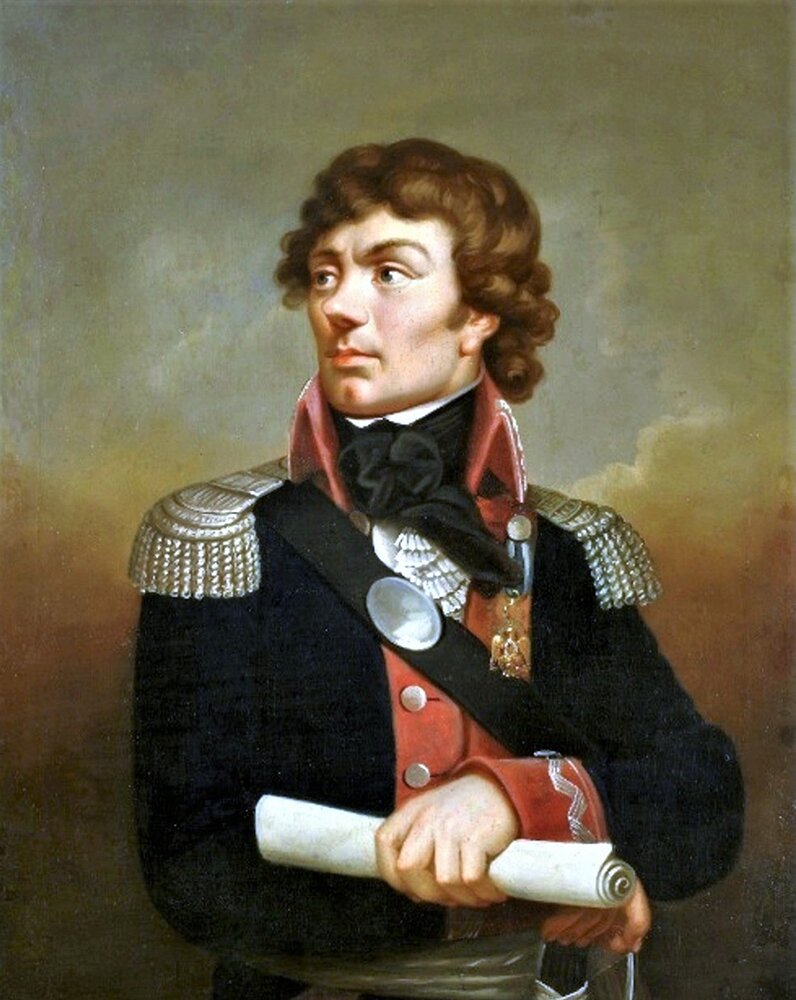
Obraz przedstawiający portret Tadeusza Kościuszko.
Tadeusz Kościuszko
Source: Karl Gottlieb Schweikart, Tadeusz Kościuszko, 1802, oil on canvas.
Prince Józef Poniatowski was the favourite of a significant part of the Polish society. Leftist idealists, however, preferred Tadeusz Kościuszko, seeing him as the incarnation of democratic and republican traditions. The leader of the uprising against Russia in 1794 and a national hero, following his liberation from the Russian imprisonment he emigrated to Switzerland. He flatly refused to cooperate with Napoleon. He believed that Poles should fight for their independence on their own, resorting to peasants. Józef Pawlikowski, Kościuszko's secretary presented the views of the Leader in a brochure titled Can the Poles win back their independence?, published in 1800.
Task 2
Read about the reality of battles of the Napoleonic era. Pay attention to the significance of events described to the Polish cause. What battle is referred to in the recording you listened to?
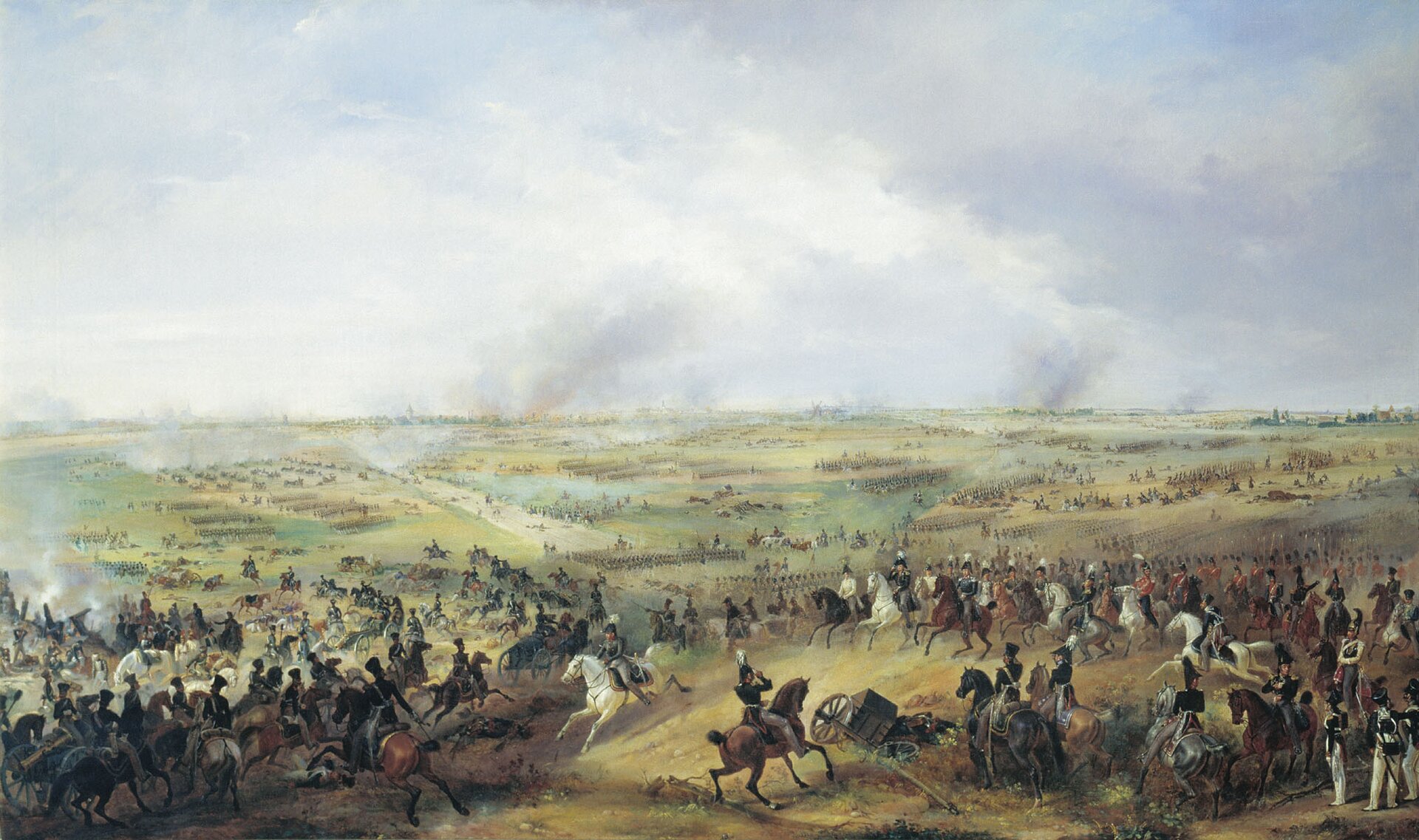
Source: Alexander Zaureweid, Battle of ???, 1844, domena publiczna.
Bernadotte was attacking from the north and was only opposed by the weak Souham's III corps, commanded by marshal Ney. Benningsen's army with the Austrian Klenau's IV corps was attacking the city from the east and south‑east. The decimated XI MacDonald's and V Lauriston's corpses stood on their way.
R19n6ibNMi19Z1
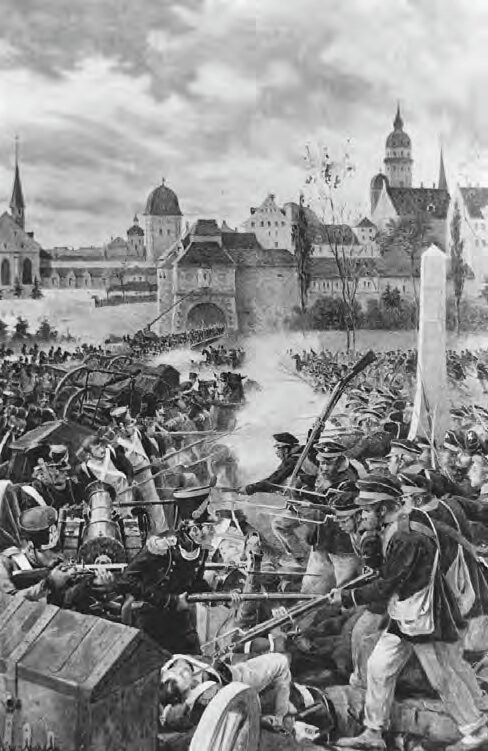
Obraz przedstawiający francuską piechotę broni barykady przed pruskim atakiem.
French infantry defend a barricade against a Prussian assault
Source: Paul-Émile Boutigny, French infantry defend a barricade against a Prussian assault, domena publiczna.
Initially the strongly advancing Prussian Bülov's III corps was fought off at the outskirts, however later the Wintzingerode's reinforcements and the Swedish forces tipped the scales of victory to the allied side.
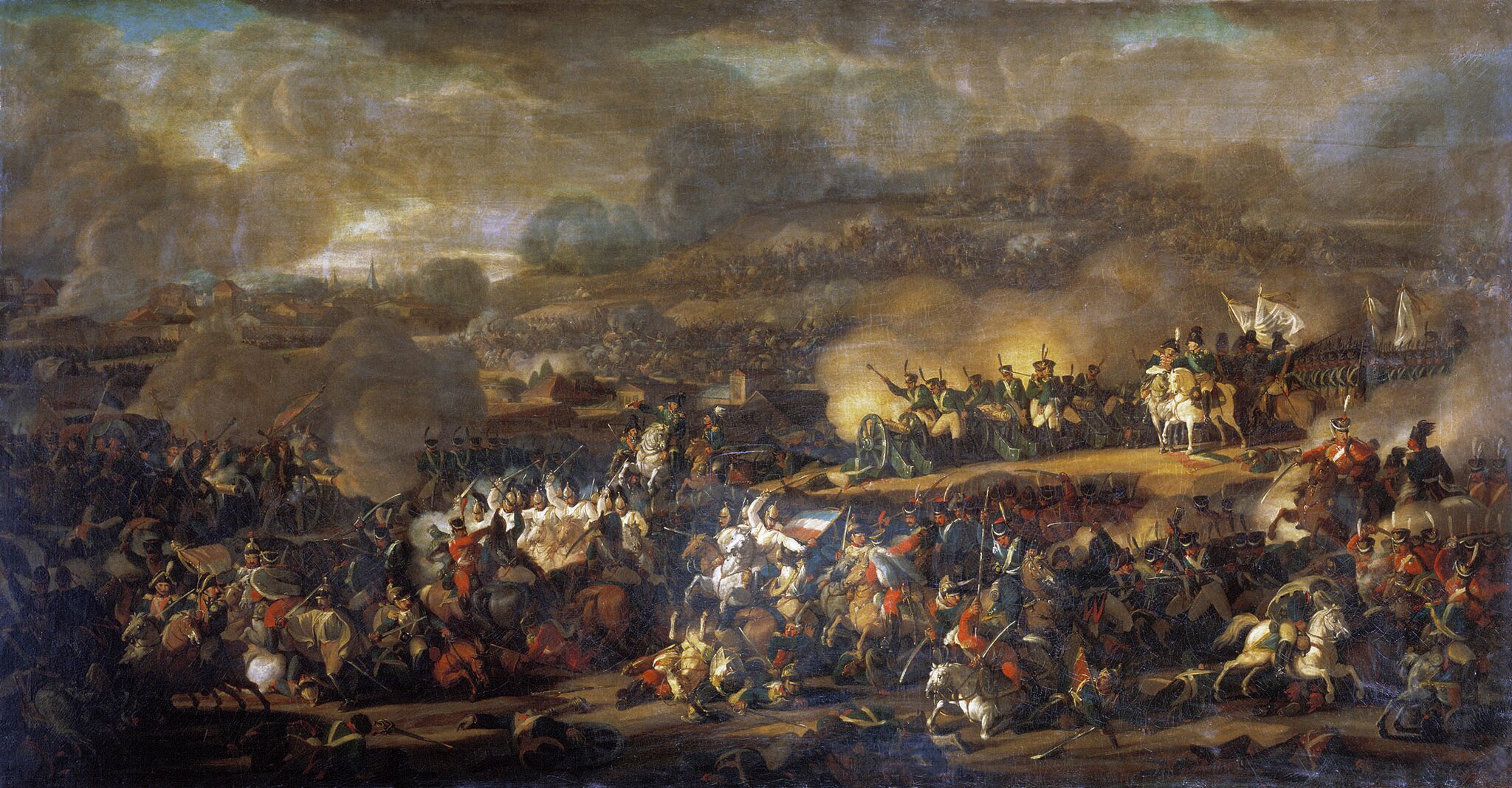
The masses of allied troops started penetrating the city. The worst consequence was that they threatened to capture the bridge the Napoleon's troops were using to evacuate from the city. Bennigsen's 50 cannons were firing at the French soldiers.
RsyNwTAbY3nn21
Obraz przedstawiający pole bitwy i walk.
Source: Vladimir Ivanovich Moshkov, 1815, domena publiczna.
R1LfGcLJRX7Va1
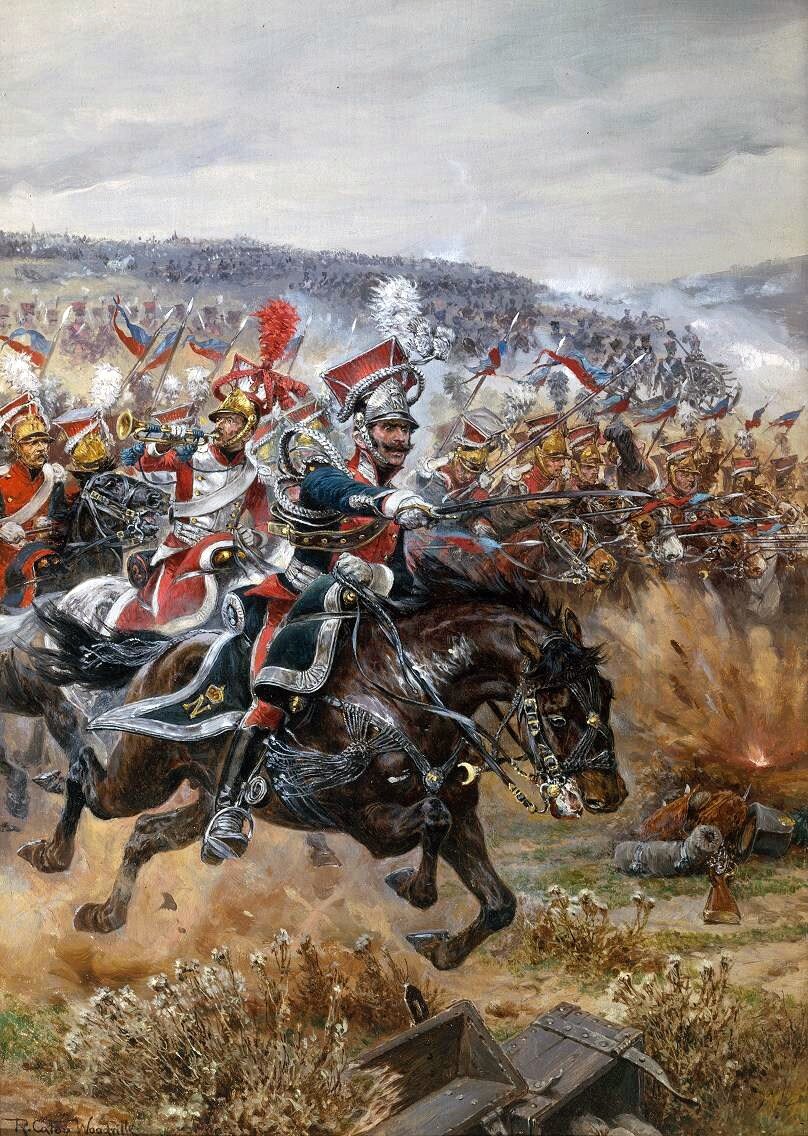
Obraz przedstawiający ostatnią szarżę Poniatowskiego pod Lipskiem.
Poniatowski's Last Charge
Source: Richard Caton Woodville, Poniatowski's Last Charge, 1812, domena publiczna.
Poniatowski had been fighting with his soldiers since the very morning, giving multiple proofs of courage. At the time his corps counted about 2 thousand men. With his people he bravely opposed Bennigsen's battalions, when they threatened MacDonald, by charging the enemy time and time again.
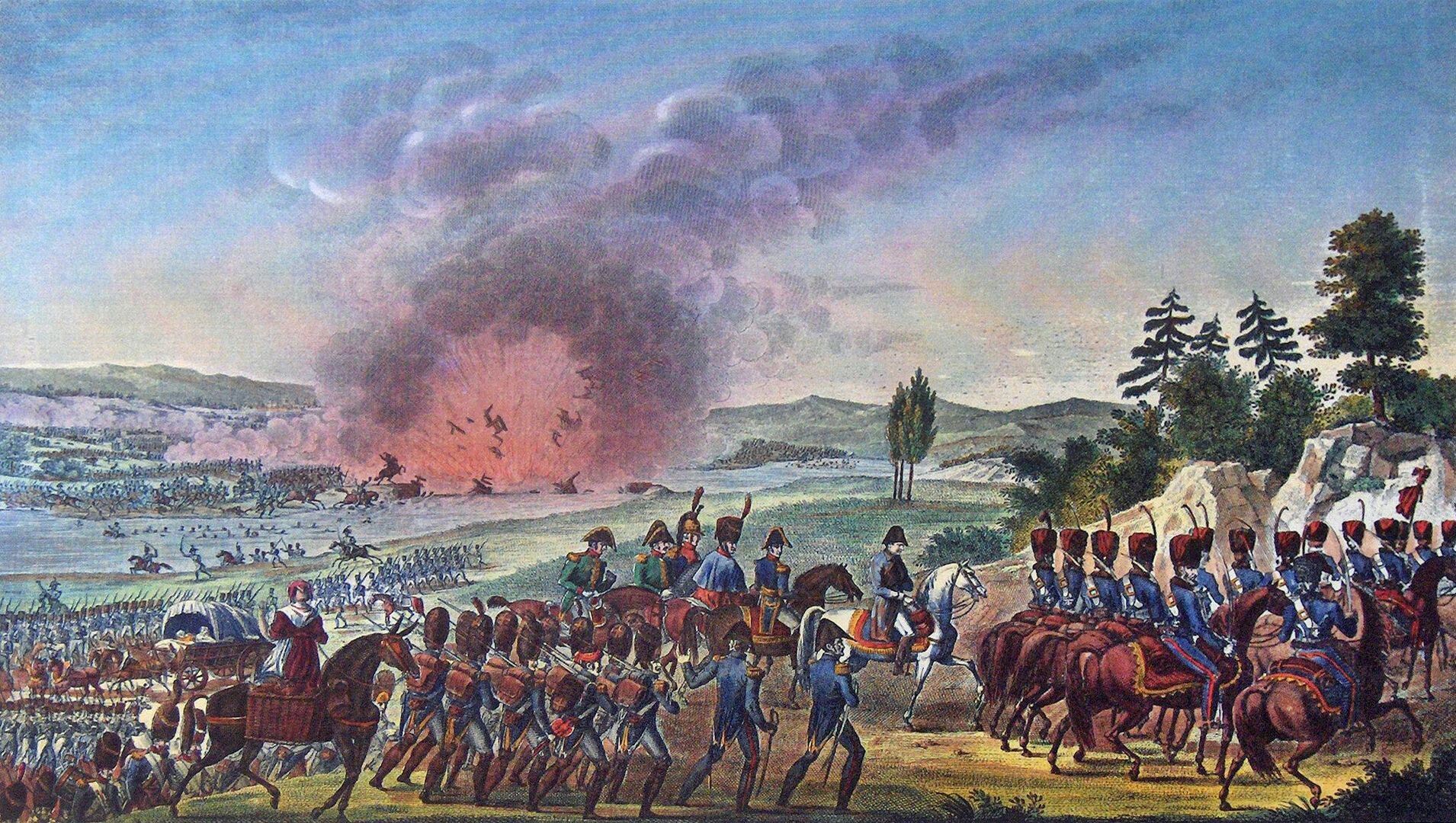
The southern outskirts fell around 11:00 o'clock, with the lack of sturdy fortifications rendering further defense impossible. Poniatowski was fighting his way through the city, battling not only the advancing enemy but also the local population shooting from the windows at the retreating soldiers. The VIII corps gave its last organized resistance to the enemy on the boulevards near the Wasserkunst fountain. It did not last long, and further retreat had to proceed. In disarray and scattered the corps made its way to reach the bridge at Fleischerplatz. Unfortunately, they were not able to reach it. The corporal who in the absence of the officer kept watch of the explosives prepared to blow up the bridge once Napoleon's troops have passed the bridge panicked, and thinking that the enemy was already there, he proceeded to blow the bridge off, cutting 15 thousand soldiers, including the forces of the IV Polish corps, off their salutary escape route. MacDonald, Poniatowski, Lauriston and Reynier were left on the right bank of the Elster river without the possibility of reconnecting with the rest of the army.
R1G65f1SSUmwv
Obraz przedstawiający odwrót Napoleona na polu bitwy.
Retreat of Napoleon
Source: Carle Vernet, Retreat of Napoleon, hand-colored lithograph, domena publiczna.
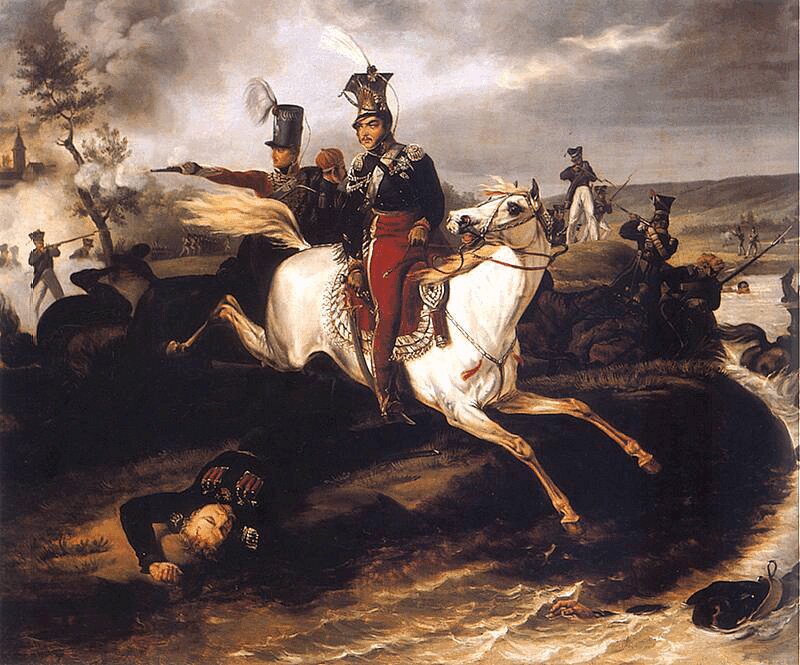
A makeshift bridge was built in a hurry, but it collapsed after a fraction of the troops had crossed it. Part of the Polish troops surrendered to the Austrians after the initial fight. Poniatowski, however, was trying to withdraw from the city which was almost entirely in the hands of the allied forces. The decision was made to swim across Elster river. The river swollen with the autumn rains was wild and dangerous. The horse, pulled by the strong current could not reach the bank. A young French staff officer, Hipolit Belchamps sought to help Poniatowski free from his horse and get out of the river. They further tried to walk through the gardens, where Poniatowski was hit by an enemy bullet for the fourth time that day, this time at his side. Very weak and losing consciousness the Prince mounted a new horse supported by the surrounding officers and rode towards the river once again.
Meanwhile, the enemy reached the bank of the river and in some places even made it to the other side, firing at the soldiers who were trying to cross the river.
R130TYTR4BWOq1
Obraz przedstawiający śmierć księcia Józefa Poniatowskiego.
Death of Prince Józef Poniatowski
Source: January Suchodolski, Death of Prince Józef Poniatowski, 1830, domena publiczna.
Seeing the enemy troops on his way, Poniatowski directed his horse to the Elster. The horse reached the other bank, but unfortunately during the climb on steep cliff a fifth bullet hit the Prince. He slid into the river. The faithful Blechamps jumped to help for the second time, but they both died in the white currents of Elster. With Prince Józef Poniatowski, the great Pole and the best example of sacrifice for the homeland, the wild waters buried the hope for rebuilding free Poland with Napoleon.
R1XrmD62I864F
Exercise 1
What battle is described in the text? The battle of Tu uzupełnij
What battle is described in the text? The battle of Tu uzupełnij
What battle is described in the text?
The battle of ..............
RysINfzMlTB5W1
Exercise 2
Sprawdź, z jakimi polskimi kobietami związany był Napoleon.
Sprawdź, z jakimi polskimi kobietami związany był Napoleon.
Rn32jDfTkDVFz1
Exercise 3
Match the pairs: English words with Polish definition. Political orientation Możliwe odpowiedzi: 1. zajmowanie określonego stanowiska w kwestii politycznej; odnosi się również do metod walki o niepodległość narodu, 2. określenie używane przez Napoleona w trakcie wyprawy moskiewskiej 1812 roku. "Second Polish War" Możliwe odpowiedzi: 1. zajmowanie określonego stanowiska w kwestii politycznej; odnosi się również do metod walki o niepodległość narodu, 2. określenie używane przez Napoleona w trakcie wyprawy moskiewskiej 1812 roku.
Match the pairs: English words with Polish definition. Political orientation Możliwe odpowiedzi: 1. zajmowanie określonego stanowiska w kwestii politycznej; odnosi się również do metod walki o niepodległość narodu, 2. określenie używane przez Napoleona w trakcie wyprawy moskiewskiej 1812 roku. "Second Polish War" Możliwe odpowiedzi: 1. zajmowanie określonego stanowiska w kwestii politycznej; odnosi się również do metod walki o niepodległość narodu, 2. określenie używane przez Napoleona w trakcie wyprawy moskiewskiej 1812 roku.
Match the pairs: English words with Polish definition.
zajmowanie określonego stanowiska w kwestii politycznej; odnosi się również do metod walki o niepodległość narodu, określenie używane przez Napoleona w trakcie wyprawy moskiewskiej 1812 roku.