that each map is generalized, so it depicts the most important issues in terms of the presented scope;
where countries are located in the world;
that apart from independent states there are dependent and disputed territories.
You will learn
to discuss the changes in the arrangement of states on the political map of the world which occurred after 1989, and to discuss the reasons for these changes;
to indicate on the political map of Europe the states which were created after the division of the USSR and Yugoslavia;
to explain the terms: a dependent territory, an exclave, an enclave and to indicate examples of them on the map.
After the Second World War, following the defeat of Nazi Germany, the leaders of the victorious powers decided that the countries of Central and Eastern Europe, including Poland, would be subordinated to the USSR (Union of Soviet Socialist Republics). Germany itself was also divided - at first, into occupation zones, and then, in 1949, into two separate states. The eastern part – GDR (German Democratic Republic) – went to the custody of the Soviet Union, whereas the western part – West Germany (Federal Republic of Germany) – got under the influence of the Western powers (United States, Great Britain and France).
In the 1980s the nations under the domination of the Soviet Union in the central‑eastern part of the continent began a march towards sovereignty. The first transformations took place in Poland and brought about, among others, some changes on the political map.
On the one hand, the reunification of Germany – divided in 1945 as a result of the decisions of the leaders of the United States, the Soviet Union and Great Britain – was effected. On the other hand, federal countries disintegrated, mostly those which comprised nations with a strong sense of identity or economic exploitation. The Velvet Revolution led to the division of Czechoslovakia into the Czech Republic and Slovakia. The Czechs believed that Slovakia’s development was at their expense, while the Slovaks had aspirations to create an independent state.
Task 1
Search for the reasons for the break‑up of Yugoslavia and the Soviet Union based on the information to be found in the textbook and in the Internet resources. Write down the conclusions below.
R8zQFiV1uCCHZ
Reasons for the break-up of Yugoslavia (Uzupełnij). Reasons for the break-up of the Soviet Union (Uzupełnij).
Reasons for the break-up of Yugoslavia (Uzupełnij). Reasons for the break-up of the Soviet Union (Uzupełnij).
Transformations on the territory of Yugoslavia
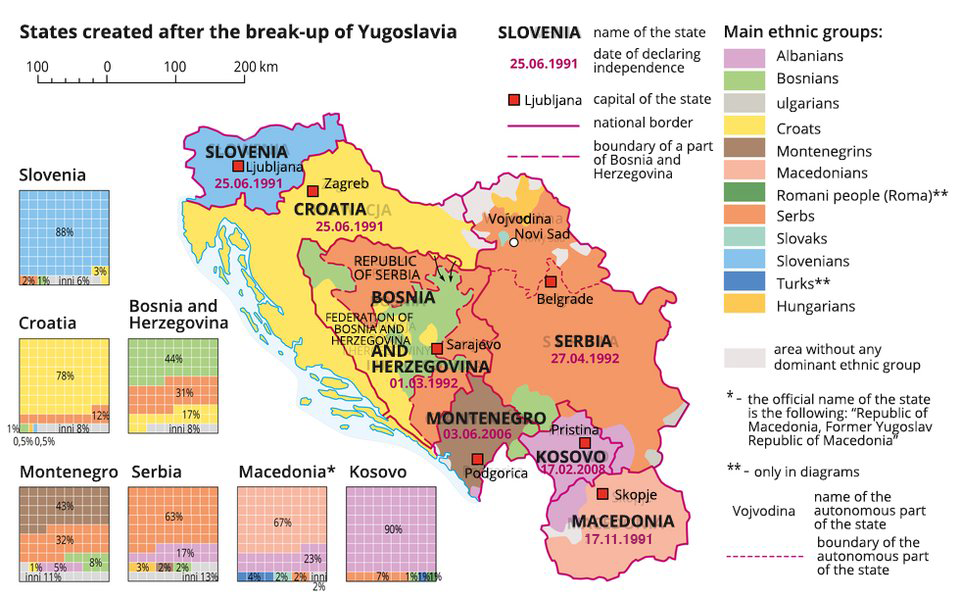
The longest and most tragic disintegration was the one of Yugoslavia. The reasons for that were the ethnic and religious diversity and the mutual historical resentments dating back many centuries.
R1T4UbbK7CiGS
Ilustracja przedstawia mapę państw powstałych po rozpadzie Jugosławii, States created after the break up of Yugoslavia. Mapa zajmuje centralną część ilustracji, po prawej stronie umieszczono spis dwunastu głównych grup etnicznych. Grupy etniczne: Albańczycy, Albanians, Bośniacy, Bosnians, Bułgarzy, Bulgarians, Chorwaci, Croats, Czarnogórcy, Montenegrins, Macedończycy, Macedonians, Romowie, Romani people, Serbowie, Serbs, Słowacy, Slovaks, Słoweńcy, Slovenians, Turcy, Turks, Węgrzy, Hungarians. Po lewej stronie umieszczono siedem kwadratowych diagramów procentowych dla nowopowstałych państw, na których przedstawiono skład etniczny ludności w danym państwie. W Słowenii, Slovenia widać zróżnicowany skład etniczny ludności. 88% stanowią Slovenians, 3% stanowią Croats, 6% Bulgarians, 1% Bosnians, 2% Serbs. Państwami najmniej zróżnicowanymi etnicznie są Kosowo, Kosovo – dziewięćdziesiąt procent ludności to Albańczycy, Albanians oraz Serbia – osiemdziesiąt osiem procent ludności to Serbowie, Serbs. Państwami najbardziej zróżnicowanymi etnicznie są Bośnia i Hercegowina, Bosnia and Herzegovina – tylko czterdzieści cztery procent ludności stanowią Bośniacy, Bosnians oraz Czarnogóra, Montenegro – tylko czterdzieści trzy procent ludności stanowią Czarnogórcy, Montenegrins. Na mapie zaznaczono granice nowo powstałych państw: Slovenia, Croatia, Bosnia and Herzegovina, Serbia, Montenegro, Kosovo, Macedonia. Wzdłuż zachodniego wybrzeża wąski fragment Morza Adriatyckiego głównie wzdłuż wybrzeży Chorwacji. By the time of its break-up, Yugoslavia consisted of six federal republics: Slovenia, Croatia, Bosnia and Herzegovina, Montenegro, Macedonia and Serbia, the latter comprising also two autonomous provinces: Vojvodina and Kosovo.
By the time of its break-up, Yugoslavia consisted of six federal republics: Slovenia, Croatia, Bosnia and Herzegovina, Montenegro, Macedonia and Serbia, the latter comprising also two autonomous provinces: Vojvodina and Kosovo
Source: licencja: CC BY 3.0.
In 1991 Slovenia, Croatia and Macedonia were the first to declare independence. A year later, after the proclamation of independence by Bosnia and Herzegovina, Yugoslavia was formed only by Serbia and Montenegro. The proclamation became the cause of the civil war. Bosnia and Herzegovina was the most diversified ethnically and religiously: it was inhabited by Orthodox Serbs, Catholic Croats and Muslim Bosnians. In addition, none of the communities lived in a cohesive area. In the years 1993‑1995, the fighting took place on the territories of Bosnia and Croatia. Not uncommon were genocide and ethnic cleansing. The estimates indicate around 100,000 people killed and 1.8 million forced to leave their homes. Pursuant to the treaty signed in Dayton (USA), Bosnia and Herzegovina maintained its independence, but the country was divided into two parts: the Republic of Serbia and the Muslim‑Croat Federation (Federation of Bosnia and Herzegovina). In order to preserve stability, the decisions of the central authorities have to be approved by both parties. An additional consequence of those turbulent changes was the emergence on the political map of the independent Kosovo – a region in the south of Serbia inhabited largely by Muslim Albanians, but very important historically for the Serbs because of the significance of the battle of Kosovo, fought at Kosovo Polje, near the present‑day city of Pristina. The armed struggle against the aspirations of Albanians on the part of the Serbian army led to the escalation of violence, and the NATO joined the conflict. Consequently, that area came under the administration of the United Nations, and in 2008 declared independence.
In 2006, the Federation of Serbia and Montenegro disintegrated peacefully. Two separate countries emerged: Serbia and Montenegro.
Transformations on the territory of the Soviet Union
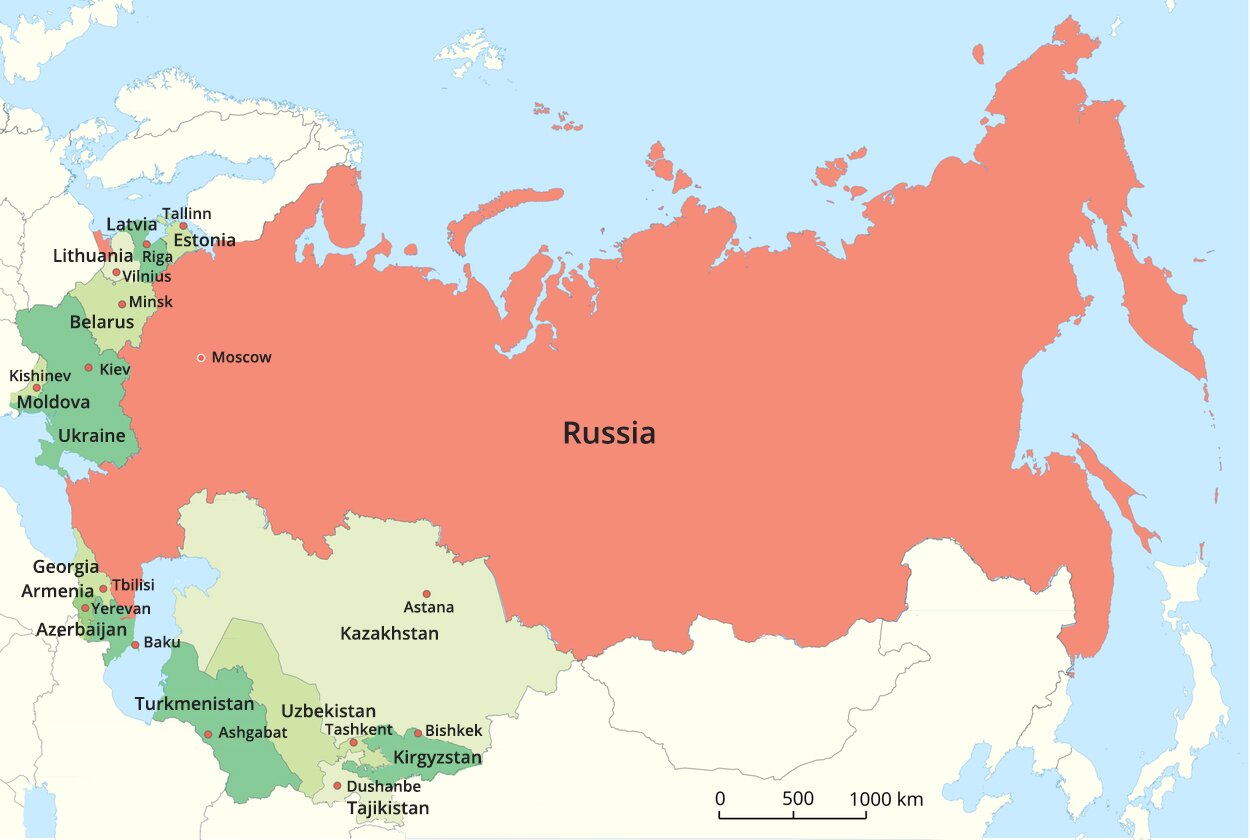
The greatest territorial changes concerned the area of the Soviet Union. In 1991, as a result of the transformations, 15 new states were created. Some of them, for example Lithuania, regained their independence, others – for example Belarus – were born anew as independent states.
R1EH4Lu2CGoLf
Na ilustracji mapa polityczna obrazująca rozpad Związku Radzieckiego. Na mapie oznaczono Rosję, Russia ze stolicą Moscow i czternaście kolejnych państw, powstałych w wyniku rozpadu Związku Radzieckiego: Armenia, Armenia, stolica Yerevan, Azerbejdżan, Azerbaijan, stolica Baku, Estonia, Estonia, stolica Tallinn, Gruzja, Georgia, stolica Tbilisi, Kazachstan, Kazakhstan, stolica Astana, Kirgistan, Kyrgyzstan, stolica Bishkek, Litwa, Lithuania, stolica Vilnius, Łotwa, Latvia, stolica Riga, Mołdawia, Moldova, stolica Kishinev, Tadżykistan, Tajikistan, stolica Dushanbe, Turkmenistan, Turkmenistan, stolica Ashgabat, Ukraina, Ukraine stolica Kiev, Uzbekistan, Uzbekistan, stolica Tashkent, Białoruś, Belarus, stolica Minsk.
As a result of the disintegration of the USSR, 15 countries were established
Source: Wydawnictwo Edukacyjne Wiking, licencja: CC BY 3.0.
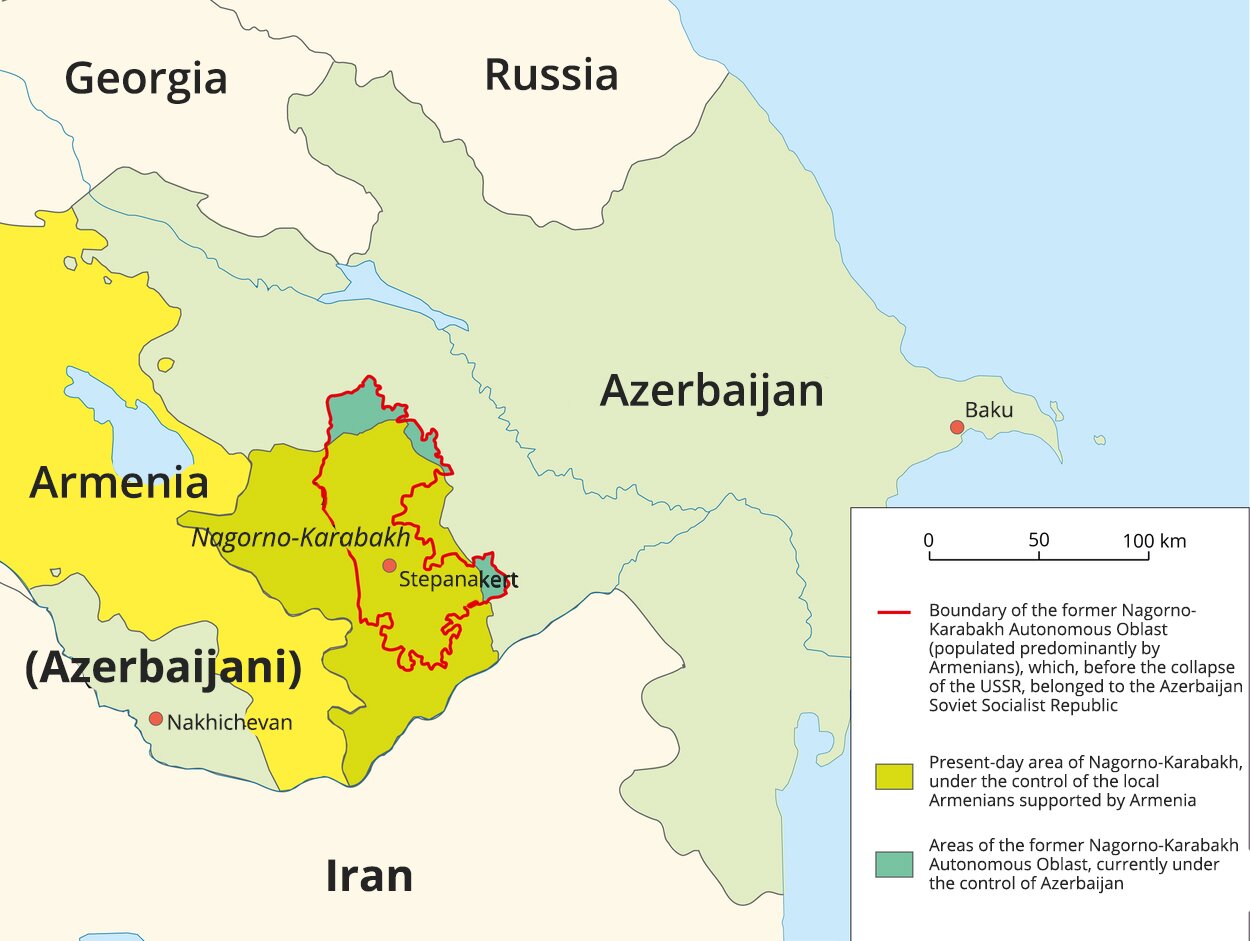
One of the consequences of the First World War and the Soviet rule in the Caucasus was the specific arrangement of the borders of Christian Armenia and Muslim Azerbaijan. The conflicting interests of both communities led to an armed conflict and to the seizing of a part of the territory belonging to Azerbaijan by Armenia. As a result, Nagorno‑Karabakh, inhabited mostly by Armenians, currently has direct contact with Armenia.
R3jqCOdqRybdd
Na ilustracji mapa wschodniej część Kaukazu. Po lewej stronie mapy: Gruzja, Georgia, Rosja, Russia, Armenia, Armenia, Azerbejdżan, Azerbaijani, górski Karabach, Nagorno - Karabakh, Iran, Iran. Po prawej stronie morze. Centralna część mapy przedstawia zmiany zasięgu Górskiego Karabachu. Na mapie oznaczono granicę Nagorno-Karabachskiego Obwodu Autonomicznego wchodzącego dawniej w skład Azerbejdżańskiej Socjalistycznej Republiki Radzieckiej. Na mapie oznaczono również obszary dawnego Nagorno-Karabachskiego Obwodu Autonomicznego, obecnie pod kontrolą Azerbejdżanu.
The current range of Nagorno-Karabakh is much larger than that of the Armenian enclave (Nagorno-Karabakh Autonomous Oblast) in Azerbaijan in the times of the USSR
Source: Olga Mikos, Roman Nowacki, TUBS, licencja: CC BY-SA 3.0.
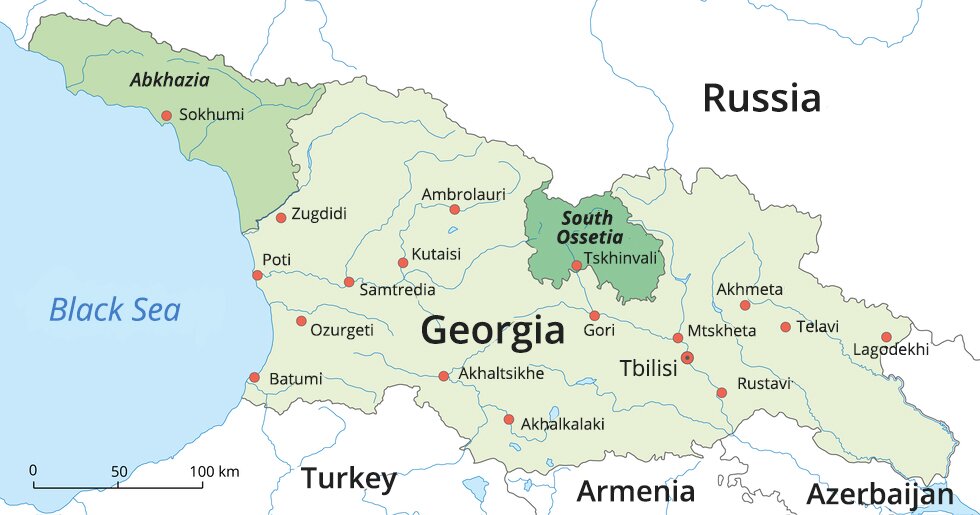
Not less complicated is the situation in the Western Caucasus. The Georgian authorities do not control South Ossetia and Abkhazia, which countries in 1991 and 1992 declared independence and function with the support of Russia.
R1Bm8RbR5Vx7t
Na ilustracji mapa polityczna. Abchazja, Abkhazia i Południowa Osetia, South Ossetia na terytorium Gruzji, Georgia. Państwa te wydzielone w obrębie Gruzji. Gruzja graniczy na północy z Rosją, Russia, na południu z Turcją, Turkey, Armenią, Armenia i Azerbejdżanem, Azerbaijan. Z lewej strony Morze Czarne, Black Sea.
Abkhazia and South Ossetia – self-proclaimed states on the territory of Georgia
Source: Wydawnictwo Edukacyjne Wiking, licencja: CC BY 3.0.
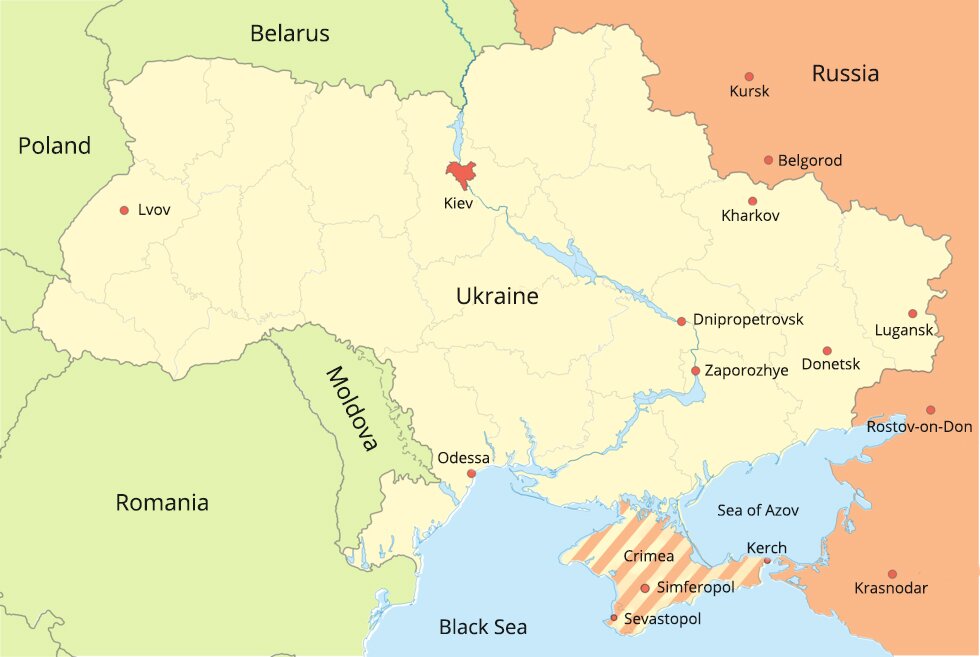
In March 2014, Russia took control of Crimea belonging to Ukraine since 1954. Russia justified its actions by invoking the will of the Russian‑speaking population expressed in a referendum, the validity of which was not recognized by the United Nations General Assembly.
R1GKFY5nZbVkO
Na ilustracji mapa polityczna. W centralnej części Ukraina, Ukraine. Na północy Białoruś, Belarus na zachodzie Polska, Poland. Na południu Rumunia, Romania i Mołdawia, Moldova. Na wschodzie Rosja, Russia. Na południu Krym, Crimea, teren sporny. Miasta Ukrainy: Lvov, Kiev, Kharkov, Dnipropetrovsk, Zaporozhye, Donetsk, Lugansk, Odessa. Miasta Rosji: Kursk, Belgorod, Rostov-on-Don, Krasnodar. Kerch. Miasta na Krymie, obszaru spornego między Ukrainą a Rosją: Simferopol, Sevastopol. On March 18, 2014, Russia’s President Vladimir Putin signed a treaty on the incorporation of Crimea and Sevastopol into the Russian Federation.
On March 18, 2014, Russia’s President Vladimir Putin signed a treaty on the incorporation of Crimea and Sevastopol into the Russian Federation
Source: Wydawnictwo Edukacyjne Wiking, licencja: CC BY 3.0.
Another region in Europe outside the control of the internationally recognized authorities is Transnistria – a fragment of Moldova inhabited mainly by Russians, which territory declared independence, not willing to be a small part of the Moldovan community. In spring 2014, following the example of Crimea, the parliament of Transnistria appealed to the Russian parliament with a request to incorporate this area into the Russian Federation.
RTWi6p1gspkPC
Exercise 1
Podaj stolice Łotwy, Litwy, Ukrainy i Rosji.
Podaj stolice Łotwy, Litwy, Ukrainy i Rosji.
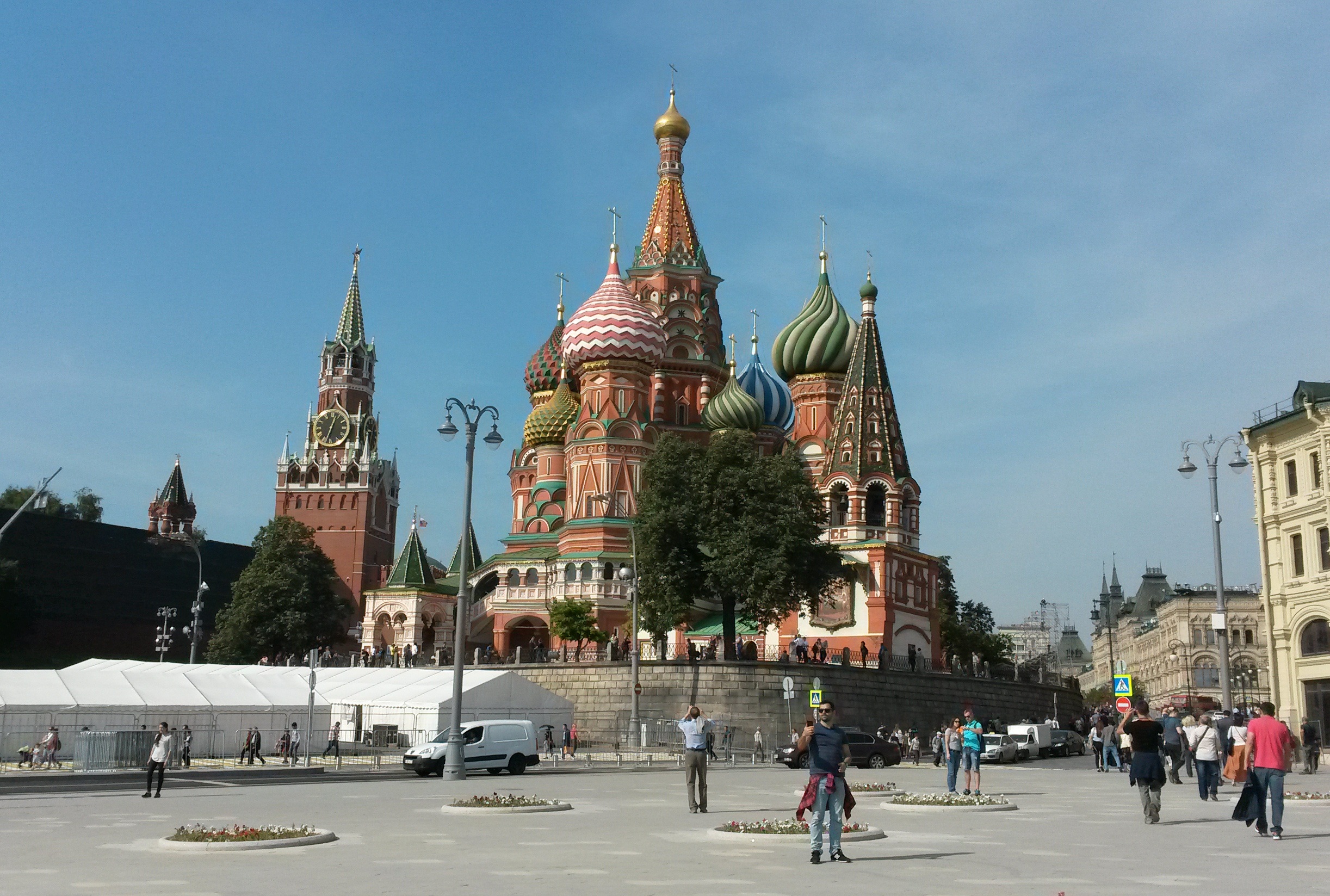
In the photo you can see a fragment of a city which is the capital of...
Ukraine.
Lithuania.
Latvia.
Russia.
RPOgTPrNLgSC4
Exercise 2
Match the states created after the break-up of the Soviet Union with their capital cities. Ukraine Możliwe odpowiedzi: 1. Vilnius, 2. Yerevan, 3. Baku, 4. Minsk, 5. Tashkent, 6. Tbilisi, 7. Ashgabat, 8. Dushanbe, 9. Kiev, 10. Riga Belarus Możliwe odpowiedzi: 1. Vilnius, 2. Yerevan, 3. Baku, 4. Minsk, 5. Tashkent, 6. Tbilisi, 7. Ashgabat, 8. Dushanbe, 9. Kiev, 10. Riga Lithuania Możliwe odpowiedzi: 1. Vilnius, 2. Yerevan, 3. Baku, 4. Minsk, 5. Tashkent, 6. Tbilisi, 7. Ashgabat, 8. Dushanbe, 9. Kiev, 10. Riga Georgia Możliwe odpowiedzi: 1. Vilnius, 2. Yerevan, 3. Baku, 4. Minsk, 5. Tashkent, 6. Tbilisi, 7. Ashgabat, 8. Dushanbe, 9. Kiev, 10. Riga Azerbaijan Możliwe odpowiedzi: 1. Vilnius, 2. Yerevan, 3. Baku, 4. Minsk, 5. Tashkent, 6. Tbilisi, 7. Ashgabat, 8. Dushanbe, 9. Kiev, 10. Riga Latvia Możliwe odpowiedzi: 1. Vilnius, 2. Yerevan, 3. Baku, 4. Minsk, 5. Tashkent, 6. Tbilisi, 7. Ashgabat, 8. Dushanbe, 9. Kiev, 10. Riga Turkmenistan Możliwe odpowiedzi: 1. Vilnius, 2. Yerevan, 3. Baku, 4. Minsk, 5. Tashkent, 6. Tbilisi, 7. Ashgabat, 8. Dushanbe, 9. Kiev, 10. Riga Tajikistan Możliwe odpowiedzi: 1. Vilnius, 2. Yerevan, 3. Baku, 4. Minsk, 5. Tashkent, 6. Tbilisi, 7. Ashgabat, 8. Dushanbe, 9. Kiev, 10. Riga Armenia Możliwe odpowiedzi: 1. Vilnius, 2. Yerevan, 3. Baku, 4. Minsk, 5. Tashkent, 6. Tbilisi, 7. Ashgabat, 8. Dushanbe, 9. Kiev, 10. Riga Uzbekistan Możliwe odpowiedzi: 1. Vilnius, 2. Yerevan, 3. Baku, 4. Minsk, 5. Tashkent, 6. Tbilisi, 7. Ashgabat, 8. Dushanbe, 9. Kiev, 10. Riga
Match the states created after the break-up of the Soviet Union with their capital cities. Ukraine Możliwe odpowiedzi: 1. Vilnius, 2. Yerevan, 3. Baku, 4. Minsk, 5. Tashkent, 6. Tbilisi, 7. Ashgabat, 8. Dushanbe, 9. Kiev, 10. Riga Belarus Możliwe odpowiedzi: 1. Vilnius, 2. Yerevan, 3. Baku, 4. Minsk, 5. Tashkent, 6. Tbilisi, 7. Ashgabat, 8. Dushanbe, 9. Kiev, 10. Riga Lithuania Możliwe odpowiedzi: 1. Vilnius, 2. Yerevan, 3. Baku, 4. Minsk, 5. Tashkent, 6. Tbilisi, 7. Ashgabat, 8. Dushanbe, 9. Kiev, 10. Riga Georgia Możliwe odpowiedzi: 1. Vilnius, 2. Yerevan, 3. Baku, 4. Minsk, 5. Tashkent, 6. Tbilisi, 7. Ashgabat, 8. Dushanbe, 9. Kiev, 10. Riga Azerbaijan Możliwe odpowiedzi: 1. Vilnius, 2. Yerevan, 3. Baku, 4. Minsk, 5. Tashkent, 6. Tbilisi, 7. Ashgabat, 8. Dushanbe, 9. Kiev, 10. Riga Latvia Możliwe odpowiedzi: 1. Vilnius, 2. Yerevan, 3. Baku, 4. Minsk, 5. Tashkent, 6. Tbilisi, 7. Ashgabat, 8. Dushanbe, 9. Kiev, 10. Riga Turkmenistan Możliwe odpowiedzi: 1. Vilnius, 2. Yerevan, 3. Baku, 4. Minsk, 5. Tashkent, 6. Tbilisi, 7. Ashgabat, 8. Dushanbe, 9. Kiev, 10. Riga Tajikistan Możliwe odpowiedzi: 1. Vilnius, 2. Yerevan, 3. Baku, 4. Minsk, 5. Tashkent, 6. Tbilisi, 7. Ashgabat, 8. Dushanbe, 9. Kiev, 10. Riga Armenia Możliwe odpowiedzi: 1. Vilnius, 2. Yerevan, 3. Baku, 4. Minsk, 5. Tashkent, 6. Tbilisi, 7. Ashgabat, 8. Dushanbe, 9. Kiev, 10. Riga Uzbekistan Możliwe odpowiedzi: 1. Vilnius, 2. Yerevan, 3. Baku, 4. Minsk, 5. Tashkent, 6. Tbilisi, 7. Ashgabat, 8. Dushanbe, 9. Kiev, 10. Riga
Match the states created after the break-up of the Soviet Union with their capital cities.
Vilnius, Tashkent, Kiev, Yerevan, Baku, Minsk, Tbilisi, Dushanbe, Ashgabat, Riga
Ukraine
Belarus
Lithuania
Georgia
Azerbaijan
Latvia
Turkmenistan
Tajikistan
Armenia
Uzbekistan
R1YCvoBIbB06F
Exercise 3
Arrange in the right order the states of the former Yugoslavia which gained independence. Elementy do uszeregowania: 1. Bosnia and Herzegovina, 2. Montenegro, 3. Croatia, 4. Kosovo, 5. Macedonia, 6. Serbia
Arrange in the right order the states of the former Yugoslavia which gained independence. Elementy do uszeregowania: 1. Bosnia and Herzegovina, 2. Montenegro, 3. Croatia, 4. Kosovo, 5. Macedonia, 6. Serbia
Arrange in the right order the states of the former Yugoslavia which gained independence.
Macedonia
Bosnia and Herzegovina
Montenegro
Kosovo
Serbia
Croatia
RKujdz9ieMibo
Exercise 4
Wysłuchaj nagrania abstraktu, ułóż do niego pytania i zadaj je koledze.
Wysłuchaj nagrania abstraktu, ułóż do niego pytania i zadaj je koledze.
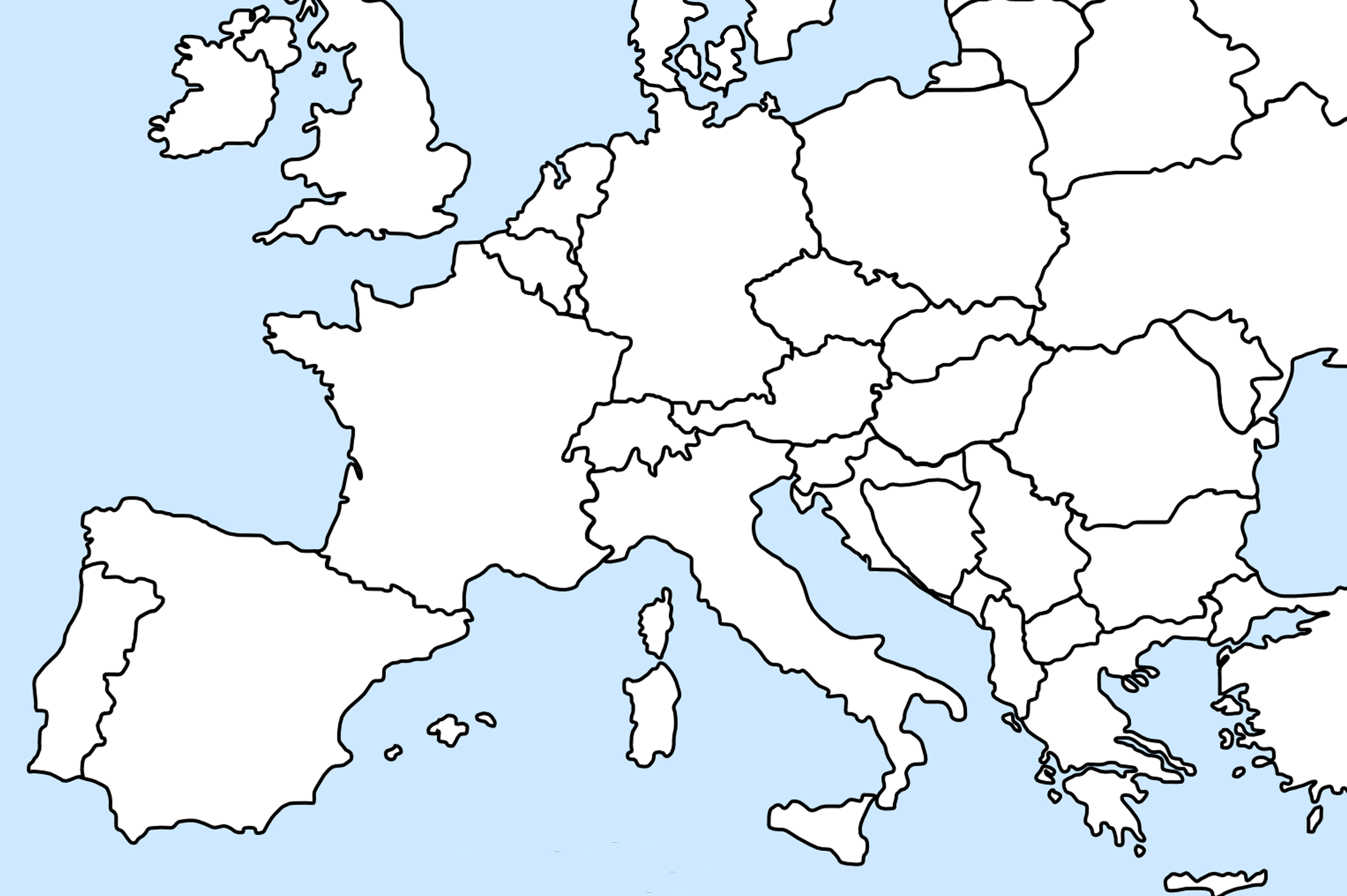
On the map, indicate the states which were created or merged after 1989.
Germany, Montenegro, Croatia, The Czech Republic, Slovakia, Bosnia and Herzegovina
.................
.................
.................
.................
.................
.................
RuABVjYelKGep
Exercise 5
Indicate the right answers. Możliwe odpowiedzi: 1. Kosovo was created from a part of the territory of Serbia., 2. Macedonia was one of the republics of Yugoslavia., 3. After the political changes in Europe, Poland’s borders changed., 4. Poland was a part of the Soviet Union., 5. The Blue Revolution led to the division of Czechoslovakia into the Czech Republic and Slovakia., 6. Germany was divided in 1945.
Indicate the right answers. Możliwe odpowiedzi: 1. Kosovo was created from a part of the territory of Serbia., 2. Macedonia was one of the republics of Yugoslavia., 3. After the political changes in Europe, Poland’s borders changed., 4. Poland was a part of the Soviet Union., 5. The Blue Revolution led to the division of Czechoslovakia into the Czech Republic and Slovakia., 6. Germany was divided in 1945.
Mark the right answers.
Kosovo was created from a part of the territory of Serbia.
Macedonia was one of the republics of Yugoslavia.
After the political changes in Europe, Poland’s borders changed.
Poland was a part of the Soviet Union.
The Blue Revolution led to the division of Czechoslovakia into the Czech Republic and Slovakia.
Germany was divided in 1945.
Keywords
break‑up of Yugoslavia, break‑up of Czechoslovakia, unification of Germany, Nagorno‑Karabakh, South Ossetia, Crimea, break‑up of the USSR
terytorium zależne - ogólne określenie obszarów znajdujących się pod różnymi formami zależności politycznej od jakiegoś państwa. Terytoriami zależnymi są lub były na przykład kolonie, departamenty zamorskie i terytoria zamorskie itp.