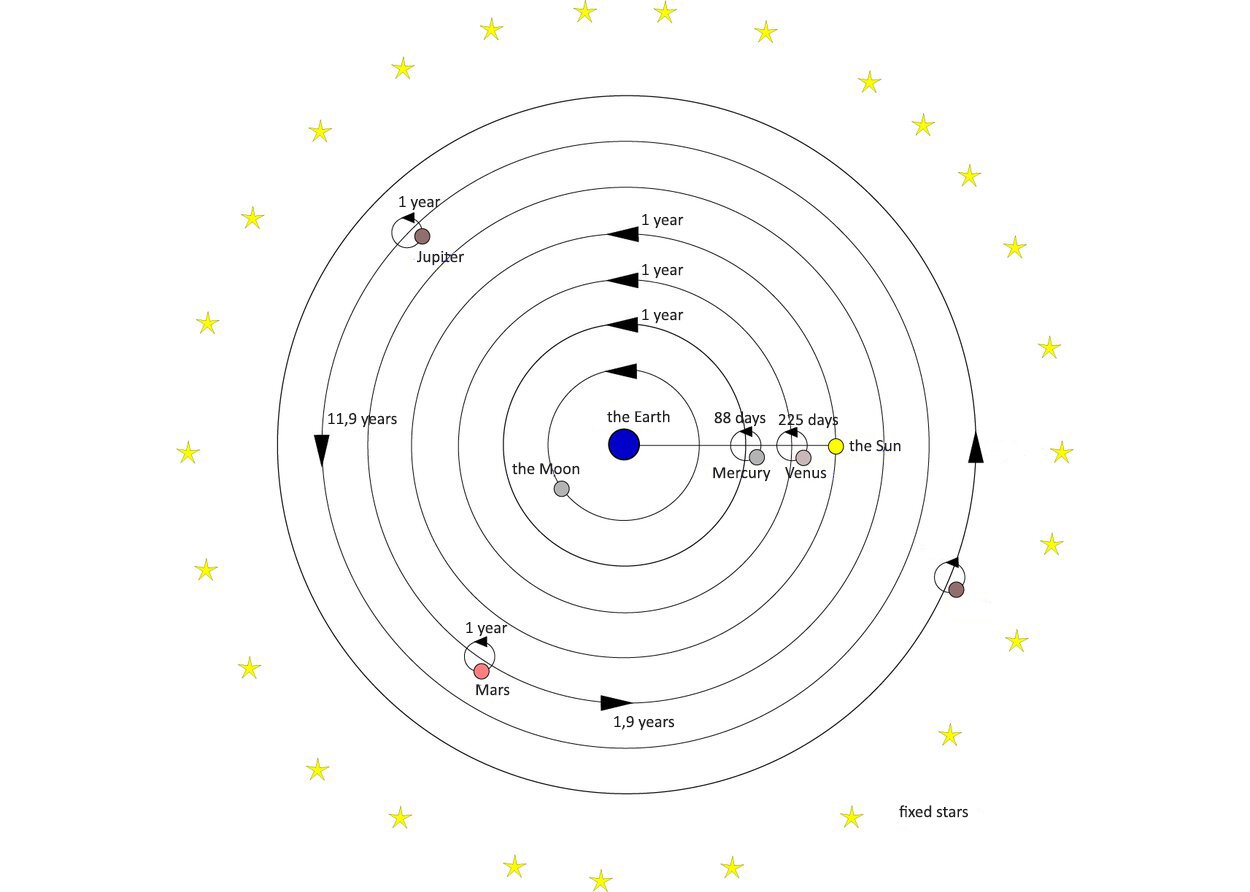
For thousands of years, people believed that the Earth is the center of the Universe, and that the Sun, the Moon, and other celestial bodies revolve around it. Such a view was scientifically elaborated in the 2nd century CE by a Greek mathematician, astronomer and geographer Claudius Ptolemy, and written down in documents that have survived to this day. For more than ten centuries, Ptolemy’s geocentric theorygeocentric theorygeocentric theory was treated as the only true image of the Universe.
R1cAbCMT0DaAt
The geocentric model of the Universe according to Ptolemy’s theory
Source: Grzegorz Petka, licencja: CC 0.
Heliocentric theory
Only the research, observations, measurements, and calculations carried out in the 16th century by Nicolaus Copernicus (astronomer, mathematician, economist, lawyer, military strategist, and doctor) – a Pole from Toruń – proved that the Earth (together with other planets and their moons) goes around the Sun. The currently accepted concept of Nicolaus Copernicus, modified by later scholars, is known as the heliocentric theoryheliocentric theoryheliocentric theory. It has made humanity aware that the Earth is not some special, central place, but only a small part of the huge Cosmos.
R1Q9xQM0whBNj
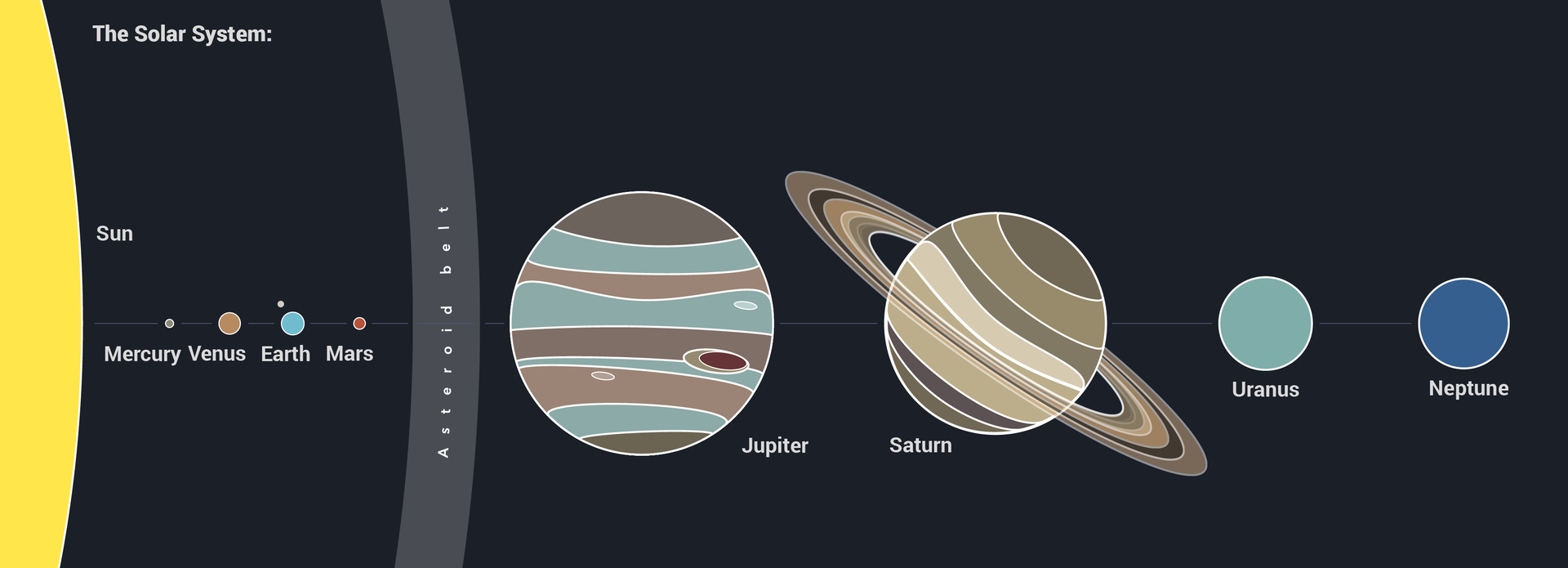
Słońce i planety Układu Słonecznego: odległości nie zachowują skali. Po lewej stronie widać Słońce. Najbliżej Słońca są kolejno: Merkury, Venus, Ziemia, Mars, Jowisz, Saturn, Uran, Neptun. Pomiędzy Marsem a Jowiszem znajduje się pas astoridalny.
The Sun and the planets of the Solar System: distances are not to scale
Source: licencja: CC BY-SA 4.0, [online], dostępny w internecie: https://en.wikipedia.org/wiki/File:Solar-System.pdf.
Terrestrial and Jovian planets
Task 1
Korzystając z dostępnych źródeł, dowiedz się więcej na temat budowy poszczególnych planet Układu Słonecznego.
Korzystając z dostępnych źródeł, dowiedz się więcej na temat budowy poszczególnych planet Układu Słonecznego.
View the photo gallery below and describe the following issues. The gallery below shows Terrestrial and Jovian planets.
R30MiTWJCUG3I
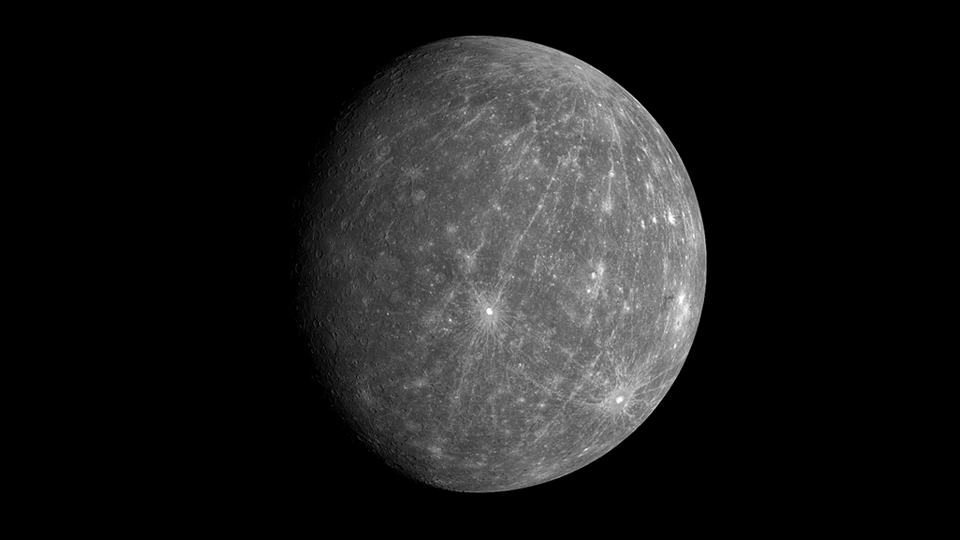
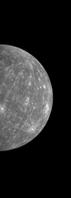
Merkury
A Terrestrial planet – Mercury
Source: licencja: CC 0, [online], dostępny w internecie: https://pixabay.com/pl/.
RxoVCLROnTji8
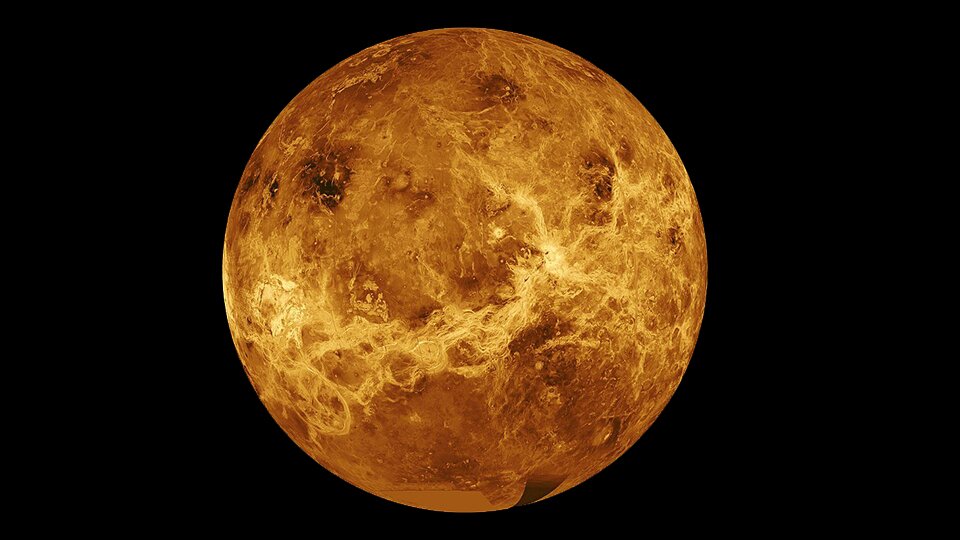
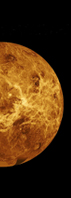
Wenus
A Terrestrial planet – Venus
Source: licencja: CC 0, [online], dostępny w internecie: https://pl.wikipedia.org.
R19rShuQvGpmf
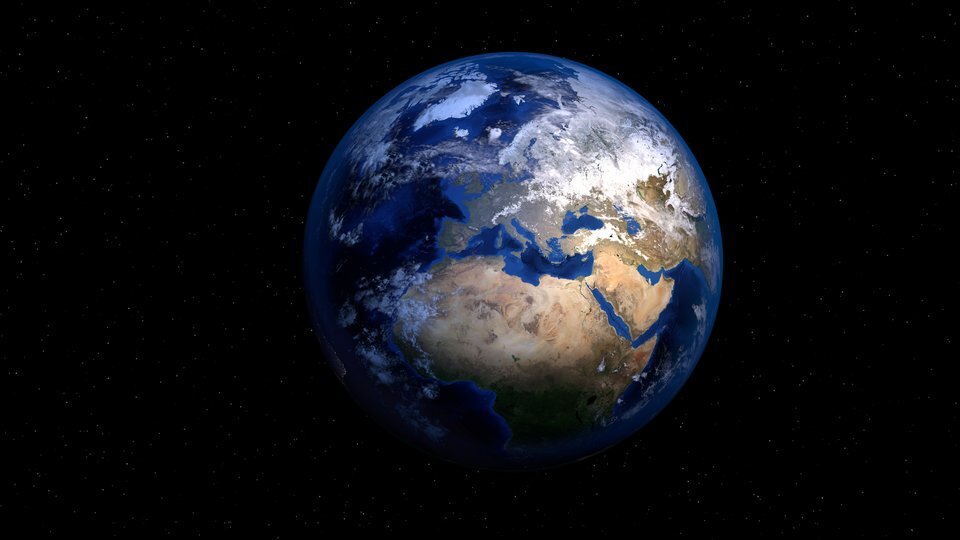
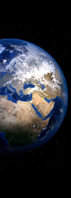
Ziemia
A Terrestrial planet – Earth
Source: licencja: CC 0, [online], dostępny w internecie: https://pixabay.com/pl/.
RHXM3sNsKEzuq
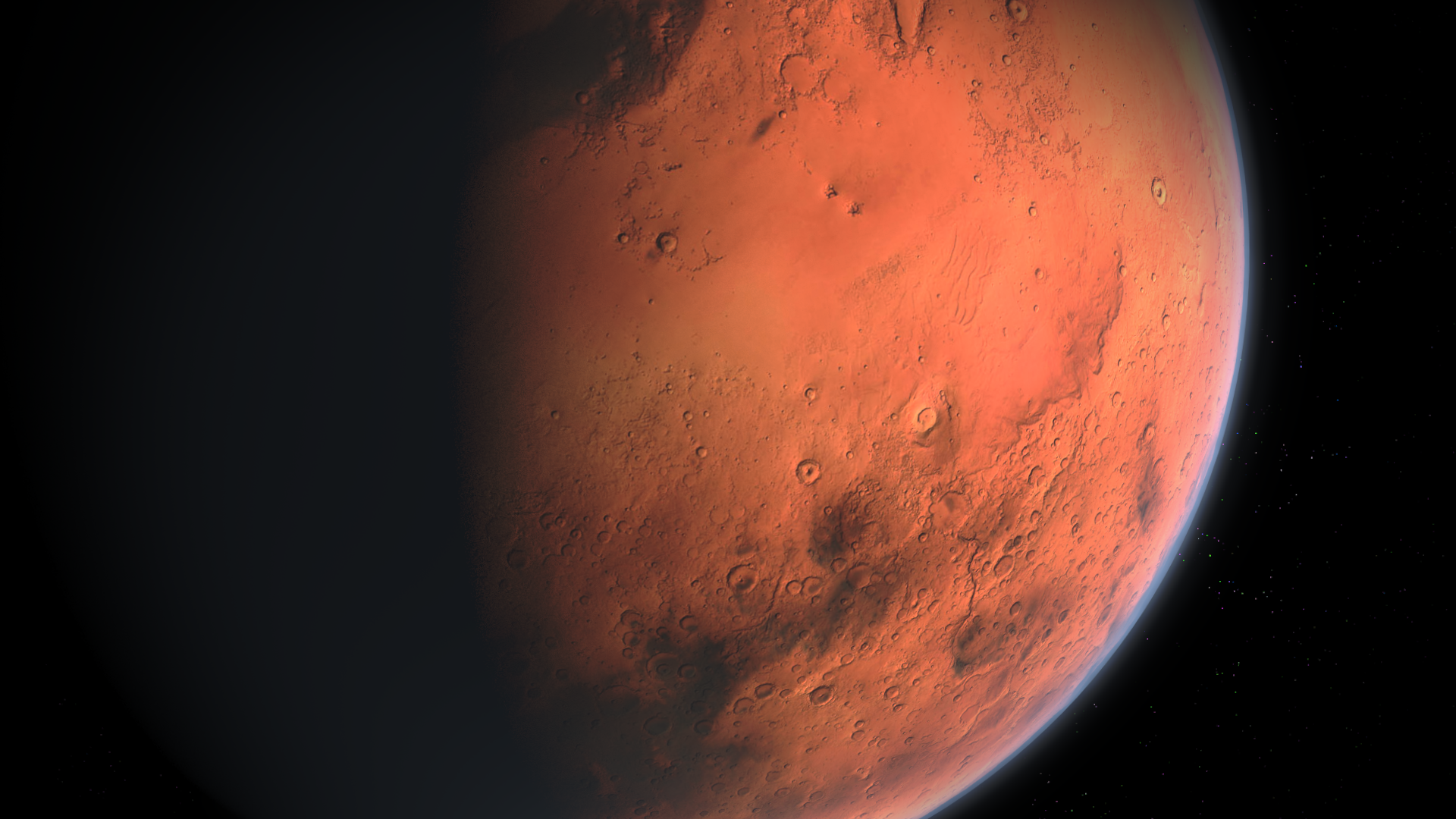
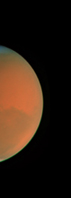
Fotografia przedstawia planetę Mars.
A Terrestrial planet – Mars
Source: [online], dostępny w internecie: https://pixabay.com.
R1XtjUdWBN7Yh
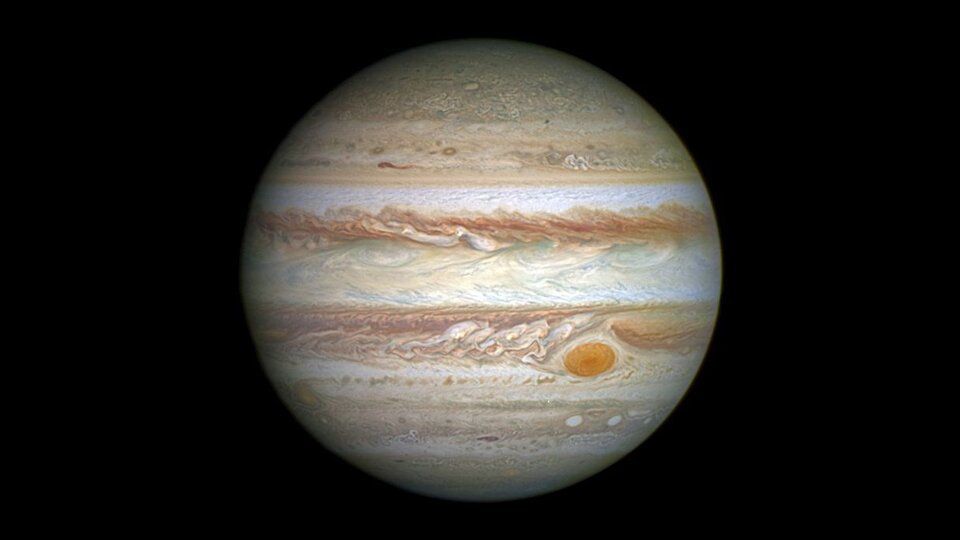
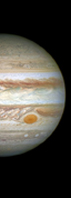
Jowisz
A Jovian planet – Jupiter
Source: licencja: CC 0, [online], dostępny w internecie: https://pl.wikipedia.org.
R1L1nqrtDnxeV
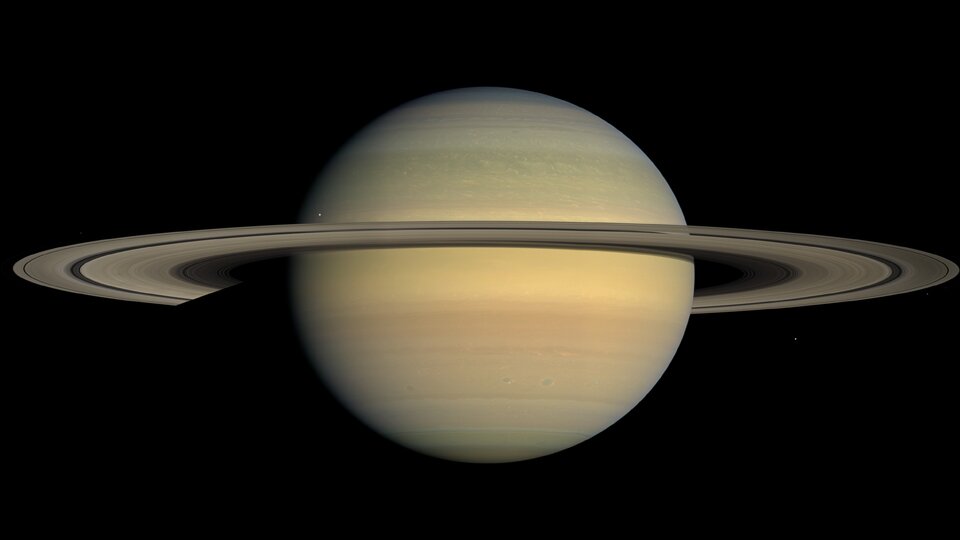
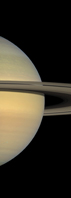
Saturn
A Jovian planet – Saturn
Source: licencja: CC 0, [online], dostępny w internecie: https://pl.wikipedia.org.
R1c2JjEyqWTD4
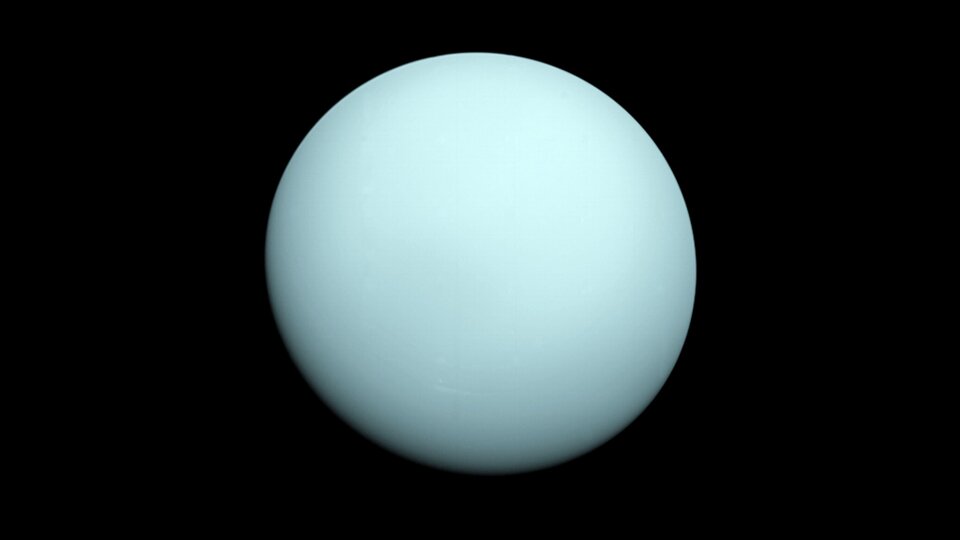
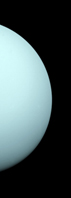
Uran
A Jovian planet – Uranus
Source: licencja: CC 0, [online], dostępny w internecie: https://pl.wikipedia.org.
R1BDNBENeOdss
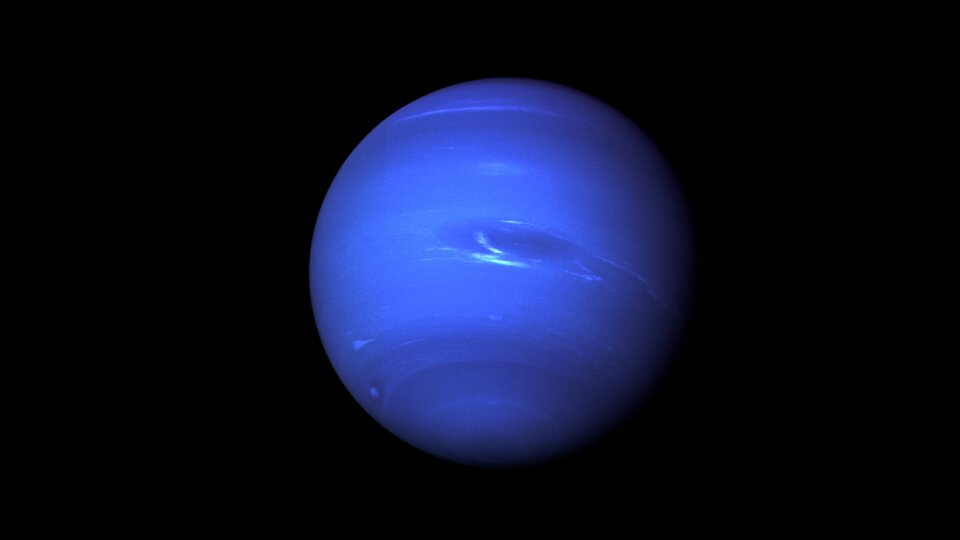
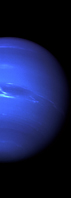
Neptun
A Jovian planet – Neptune
Source: licencja: CC 0, [online], dostępny w internecie: https://pl.wikipedia.org.
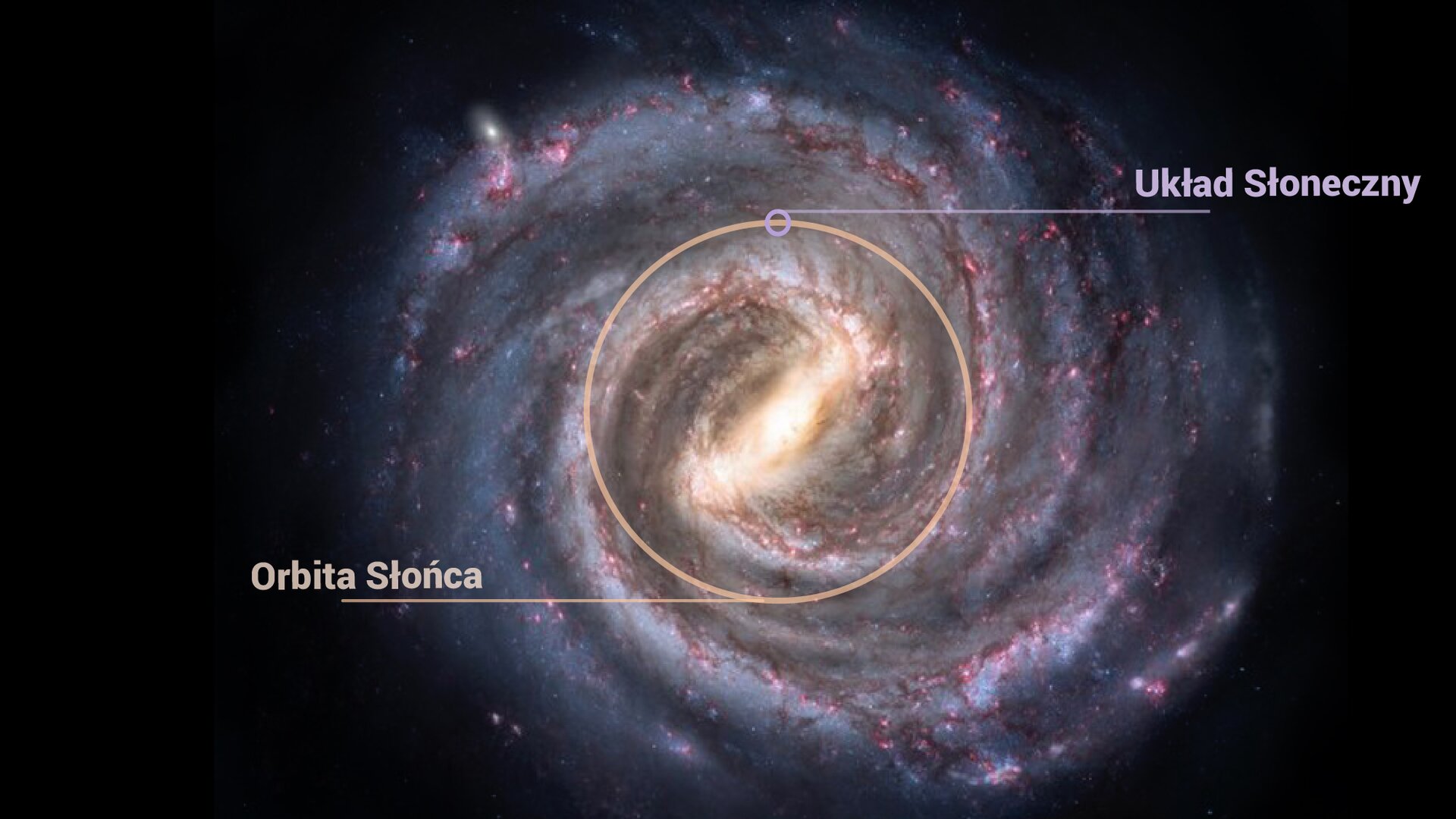
R7E65NXM7cyqx
The Milky Way. Location of the Solar System in the Galaxy
Source: licencja: CC BY 3.0, [online], dostępny w internecie: www.openwalls.com.
RVXo5MbLCJmDK
Opisz charakterystyczne cechy wybranej planety.
Opisz charakterystyczne cechy wybranej planety.
R1bWqxB6yVcOf
Exercise 1
Wymień planety we właściwej kolejności względem Słońca.
Wymień planety we właściwej kolejności względem Słońca.
Arrange the planets according to their distance from the Sun
R1Dngoighpk9p
Exercise 2
Opisz geocentryczną i heliocentryczną teorię.
Opisz geocentryczną i heliocentryczną teorię.
Move the elements to relevant groups in order to create correct descriptions of the geocentric and heliocentric theories
its originator was the Greek scholar Claudius Ptolemy, was developed in the 2nd century CE, stars, planets, the Sun and the Moon revolve around the Earth, according to its assumptions, the Sun is at the center of the Solar System, was developed in the 17th century CE, according to its assumptions, the Earth is at the center of the Universe, its creator was Nicolaus Copernicus from Toruń, the planets and the Earth, together with the Moon, revolve around the Sun
geocentric theory
heliocentric theory
RlReUvD1rr0JY
Exercise 3
Use the information found on the Internet and indicate, on the list below, those planets that were not known in ancient times and that were discovered only after observational instruments had been improved. Możliwe odpowiedzi: 1. Mercury, 2. Venus, 3. Earth, 4. Mars, 5. Jupiter, 6. Saturn, 7. Uranus, 8. Neptune
Use the information found on the Internet and indicate, on the list below, those planets that were not known in ancient times and that were discovered only after observational instruments had been improved. Możliwe odpowiedzi: 1. Mercury, 2. Venus, 3. Earth, 4. Mars, 5. Jupiter, 6. Saturn, 7. Uranus, 8. Neptune
Use the information found on the Internet and indicate, on the list below, those planets that were not known in ancient times and that were discovered only after observational instruments had been improved.
Mercury
Venus
Earth
Mars
Jupiter
Saturn
Uranus
Neptune
RN0hBkLvOLo5F
Exercise 4
Is there any evidence that exoplanets exist? Indicate the correct answer. Możliwe odpowiedzi: 1. There is no evidence of the existence of such celestial bodies – they probably do not exist at all., 2. Some calculations have been made which, in the future, may help to discover the first exoplanets., 3. So far, the existence of at least 1,000 exoplanets has been proven, and new ones are still being discovered., 4. Three exoplanets have already been discovered and space probes sent to that region have transmitted photographs of their surfaces to Earth.
Is there any evidence that exoplanets exist? Indicate the correct answer. Możliwe odpowiedzi: 1. There is no evidence of the existence of such celestial bodies – they probably do not exist at all., 2. Some calculations have been made which, in the future, may help to discover the first exoplanets., 3. So far, the existence of at least 1,000 exoplanets has been proven, and new ones are still being discovered., 4. Three exoplanets have already been discovered and space probes sent to that region have transmitted photographs of their surfaces to Earth.
Is there any evidence that exoplanets exist? Mark the correct answer.
There is no evidence of the existence of such celestial bodies – they probably do not exist at all.
Some calculations have been made which, in the future, may help to discover the first exoplanets.
So far, the existence of at least 1,000 exoplanets has been proven, and new ones are still being discovered.
Three exoplanets have already been discovered and space probes sent to that region have transmitted photographs of their surfaces to Earth.
Keywords
Solar System, Earth, Moon, Sun, heliocentric theory, geocentric theory
teoria geocentryczna - teoria budowy Wszechświata zakładająca, że nieruchoma Ziemia znajduje się w centrum układu, a wokół niej krążą inne ciała niebieskie, takie jak Słońce, pozostałe planety, Księżyc i gwiazdy
teoria heliocentryczna - teoria budowy Wszechświata zakładająca, że centrum naszej części kosmosu, czyli Układu Słonecznego, jest Słońce, a planety (w tym także Ziemia) okrążają je po eliptycznych orbitach