Properties of natural numbers
Learning objectives
You will consolidate your knowledge of natural numbers.
Learning effect
You use your knowledge of natural numbers.
Ways of writing and reading numbers. Positional decimal systemdecimal system. Large natural numbers.
Properties of operations in the set of natural numbers.
Prime numbers and composite numbers. Features of divisibility of numbers.
Prepare the information on the following topics.
Ways of writing and reading numbers. Positional decimal system. Large natural numbers.
Properties of operations in the set of natural numbers.
Prime numbers and composite numbers. Features of divisibility of numbers.
Prime factorization. The Greatest Common Divisor (GCD), the Least Common Multiple (LCM).
Check if the information you prepared contains the information provided below.
1. Ways of writing and reading numbers. Positional decimal system. Large natural numbers.
We use Arabic numerals to create numbers nowadays: 0, 1, 2, 3, 4, 5, 6, 7, 8 and 9.
The number system we use at present is called the positional decimal systemdecimal system.
The position of a digit in a number can be determined using the scheme below:
Millions | Thousands | Ones | ||||||
Hundreds | Tens | Ones | Hundreds | Tens | Ones | Hundreds | Tens | Ones |
1 000 000 - million
1 000 000 000 - billion
1 000 000 000 000 - trillion
1 000 000 000 000 000 – quadrillion
1 000 000 000 000 000 000 – quintillion
1 000 000 000 000 000 000 000 – sextillion
2. Properties of operations in the set of natural numbers.
Natural numbers can be added, subtracted, divided and squared or cubed.
The order of performing operations:
operations in brackets,
exponentiation,
multiplication or division - in the order of writing,
addition or subtraction - in the order of writing.
Properties of operations:
addition is associative and commutative,
multiplication is associative and commutative,
we do not divide by zero.
3. Prime numbers and composite numbers. Features of divisibility of numbers.
The prime numberprime number is a natural number greater than 1, whose only divisors are 1 and itself.
A composite numbercomposite number is a natural number greater than 1 that has more than two divisors.
Numbers 0 and 1 are neither prime numbers nor composite numbers.
Features of divisibility of natural numbers. The natural number is divisible:
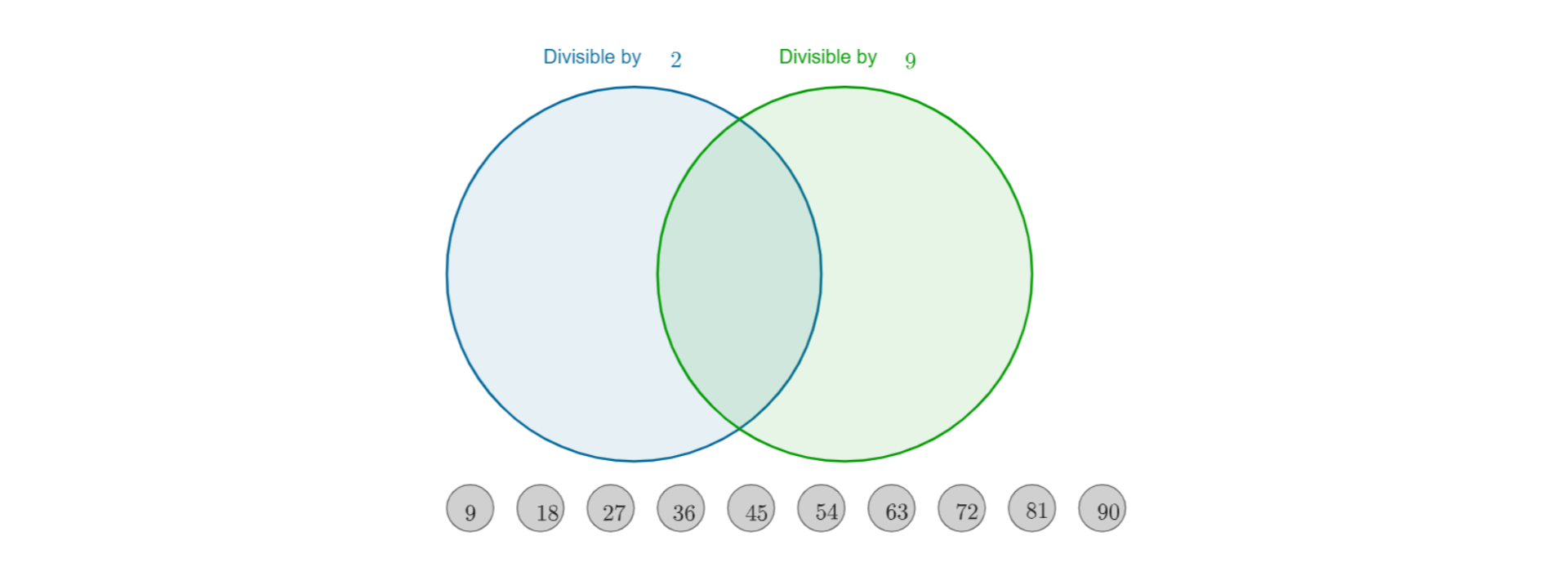
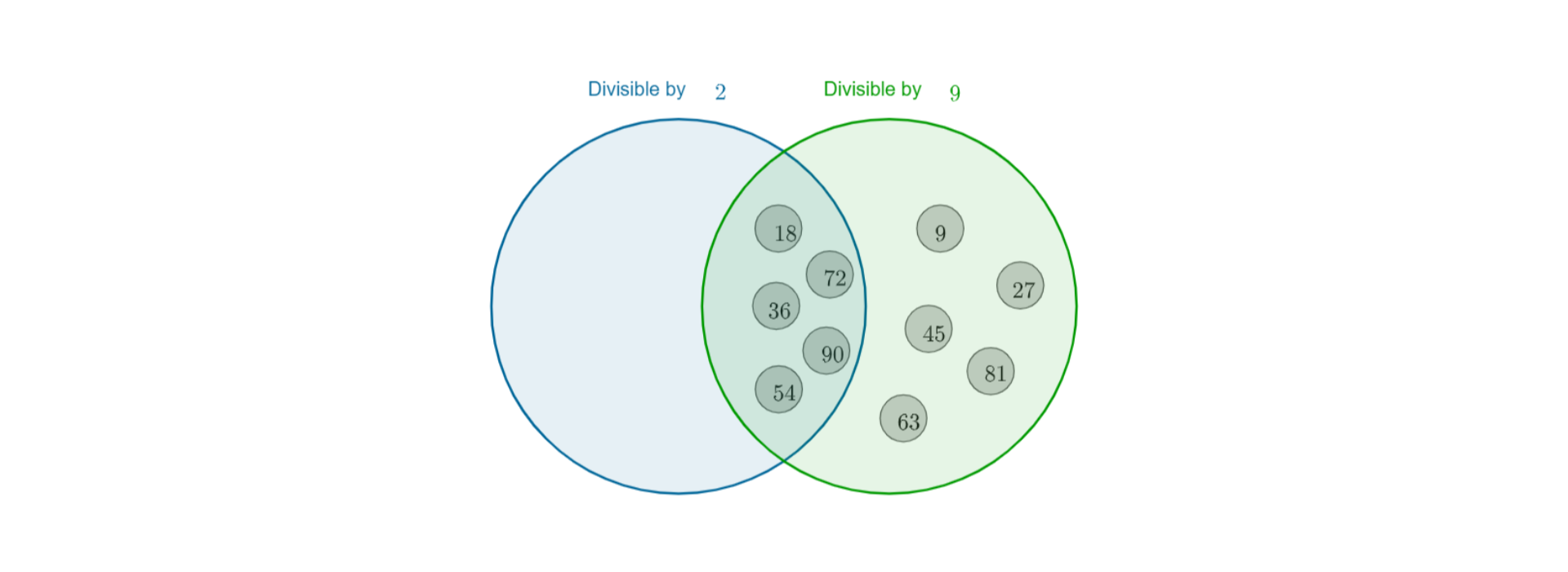
by 2 if its unity digit is 0, 2, 4, 6 or 8,
by 3 if the sum of its digits is a number divisible by 3,
by 4 if its last two digits form a number divisible by 4,
by 5 if its unity digit is 0 or 5,
by 9, if the sum of its digits is a number divisible by 9,
by 25 if its last two digits form a number divisible by 25.
4. Prime factorization. The Greatest Common Divisor (GCD), the Least Common Multiple (LCM).
Prime factorization is the representation of this number in the form of a product of prime numbers.
GCD (a, b) - the greatest common divisor of natural numbers a and bgreatest common divisor of natural numbers a and b, is the largest natural positive number, which is also the divisor of the number a and the divisor of the number b.
LCM (a, b) - the least common multiple of the numbers a and b, the smallest positive natural number that is divisible by the number of a and the number of b.
Tasks for Topic 1
Write two numbers, in which:
a) the number of hundreds is 5,
b) the number of thousands is 3,
c) the number of tens of thousands is 7.
Enter each number into the table and then provide their word names.
5254236
124509843548
78590452153624752
Quadrillions | Trillions | Billions | ||||||
Hundreds place | Tens place | Ones place | Hundreds place | Tens place | Ones place | Hundreds place | Tens place | Ones place |
Millions | Thousands | Ones | ||||||
Hundreds place | Tens place | Ones place | Hundreds place | Tens place | Ones place | Hundreds place | Tens place | Ones place |
Tasks for Topic 2
Not doing any calculations, compare the values of the arithmetic expressions. Put in the blank space the appropriate symbols <,> or = :
Calculate, remembering the order of operations:
13Indeks górny 22 - 12Indeks górny 22
5891 – 4716 : 9
(4125 + 275) : 25 - 12
Tasks for Topic 3
Write two prime numbers not greater than 60, which fulfill the condition:
a) the sum of the numbers is a prime number,
b) the difference between numbers is the prime numberprime number.
Open the applet. Using the features of divisibility, put the numbers in the right places.
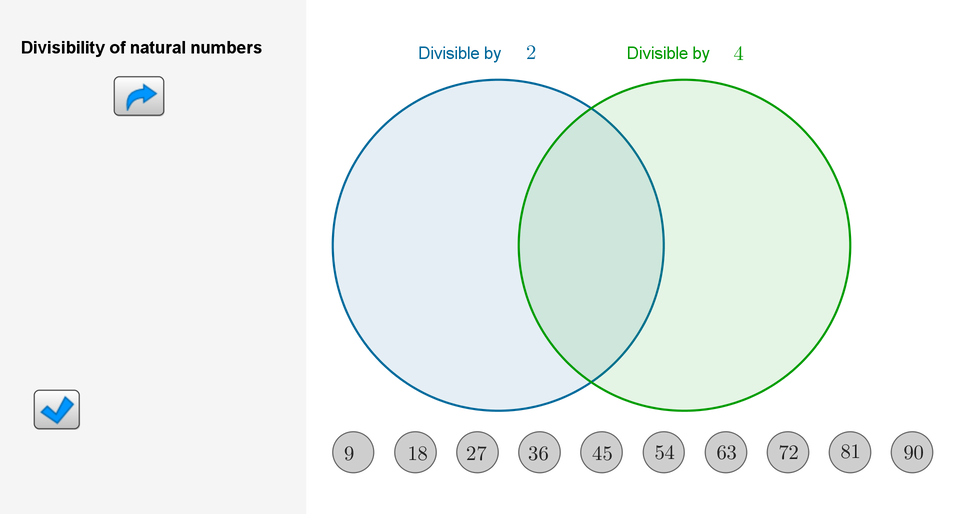
Zasób interaktywny dostępny pod adresem https://zpe.gov.pl/a/D1DmRTf4H
Tasks for Topic 4
Distribute into the factors the following numbers 420 and 525, then calculate GCD (420, 525) and LCM (420, 525).
Solve the word problem. Write down the solution.
Zosia equally divided 48 chocolate candies, 30 jellies and 12 fruit candies between her friends. How many friends received sweets from Zosia? How many candies did everyone get?
An extra task:
In the blank spaces write the number so that the number obtained is divisible by 18.
Remember:
We use Arabic numerals to create numbers nowadays: 0, 1, 2, 3, 4, 5, 6, 7, 8 and 9.
The number system we use at present is called the positional decimal systemdecimal system.
Natural numbers can be added, subtracted, divided and squared or cubed.
The order of performing operations:
operations in brackets,
exponentiation,
multiplication or division - in the order of writing,
addition or subtraction - in the order of writing.
Addition and Multiplication are Associative and Commutative.
We do not divide by zero.
The prime numberprime number is a natural number greater than 1, whose only divisors are 1 and itself.
A composite numbercomposite number is a natural number greater than 1 that has more than two divisors.
GCD (a, b) - the greatest common divisor of natural numbers a and bgreatest common divisor of natural numbers a and b, is the largest natural positive number, which is also the divisor of the number a and the divisor of the number b.
LCM (a, b) - the least common multiple of the numbers a and b, the smallest positive natural number that is divisible by the number of a and the number of b.
Exercises
In order to make the number 2547 * divisible by 6, the following number should be inserted in place of an asterisk:
- 3
- 2
- 0
- 4
Calculate the GCD (195, 845) and the LCM (195, 845), using prime factorization.
Write in English the divisibility properties of natural numbers by 6 and 8.
Indicate which pairs of expressions or words are translated correctly.
- liczba pierwsza - prime number
- liczba złożona - composite number
- największy wspólny dzielnik liczb naturalnych a i b - greatest common divisor of natural numbers a and b
- najmniejsza wspólna wielokrotność liczb a i b - least common multiple of numbers a and b
- kolejność wykonywania działań - associative property of addition
- łączność mnożenia - commutative property of multiplication
- największy wspólny dzielnik liczb naturalnych a i b
- najmniejsza wspólna wielokrotność liczb a i b
- liczba złożona
- prime number
- greatest common divisor of natural numbers a and b
- composite number
- kolejność wykonywania działań
- liczba pierwsza
- order of operations
- least common multiple of numbers a and b
Glossary
łączność dodawania
Nagranie dostępne na portalu epodreczniki.pl
wymowa w języku angielskim: associative property of addition
łączność mnożenia
Nagranie dostępne na portalu epodreczniki.pl
wymowa w języku angielskim: associative property of multiplication
przemienność dodawania
Nagranie dostępne na portalu epodreczniki.pl
wymowa w języku angielskim: commutative property of addition
przemienność mnożenia
Nagranie dostępne na portalu epodreczniki.pl
wymowa w języku angielskim: commutative property of multiplication
liczba złożona
Nagranie dostępne na portalu epodreczniki.pl
wymowa w języku angielskim: composite numbers
system dziesiątkowy
Nagranie dostępne na portalu epodreczniki.pl
wymowa w języku angielskim: decimal system
największy wspólny dzielnik liczb naturalnych a i b
Nagranie dostępne na portalu epodreczniki.pl
wymowa w języku angielskim: greatest common divisor of natural numbers a and b
najmniejsza wspólna wielokrotność liczb a i b
Nagranie dostępne na portalu epodreczniki.pl
wymowa w języku angielskim: least common multiple of numbers a and b
kolejność wykonywania działań
Nagranie dostępne na portalu epodreczniki.pl
wymowa w języku angielskim: the order of operations
liczba pierwsza
Nagranie dostępne na portalu epodreczniki.pl
wymowa w języku angielskim: prime number
Keywords
composite numbercomposite number - a natural number greater than 1 that has more than two divisors
greatest common divisor of natural numbers a and bgreatest common divisor of natural numbers a and b - the largest natural positive number, which is also the divisor of the number a and the divisor of the number b, order of operations
prime numberprime number - a natural number greater than 1, which has only two divisors: 1 and itself
least common multiple of numbers a and bleast common multiple of numbers a and b - the smallest positive natural number that is divisible by the number a and the number b