bg‑azure

Inventions are all around us. You can read books thanks to print. There is no light in your room without a light bulb. Read the text about inventions of the past and find out more about them.

Otaczają nas wynalazki. Możesz czytać książki dzięki drukowi. W twoim pokoju nie byłoby światła, gdyby nie żarówka. Przeczytaj tekst o różnych wynalazkach i dowiedz się więcej na ich temat.
R1066wpAd2rbo
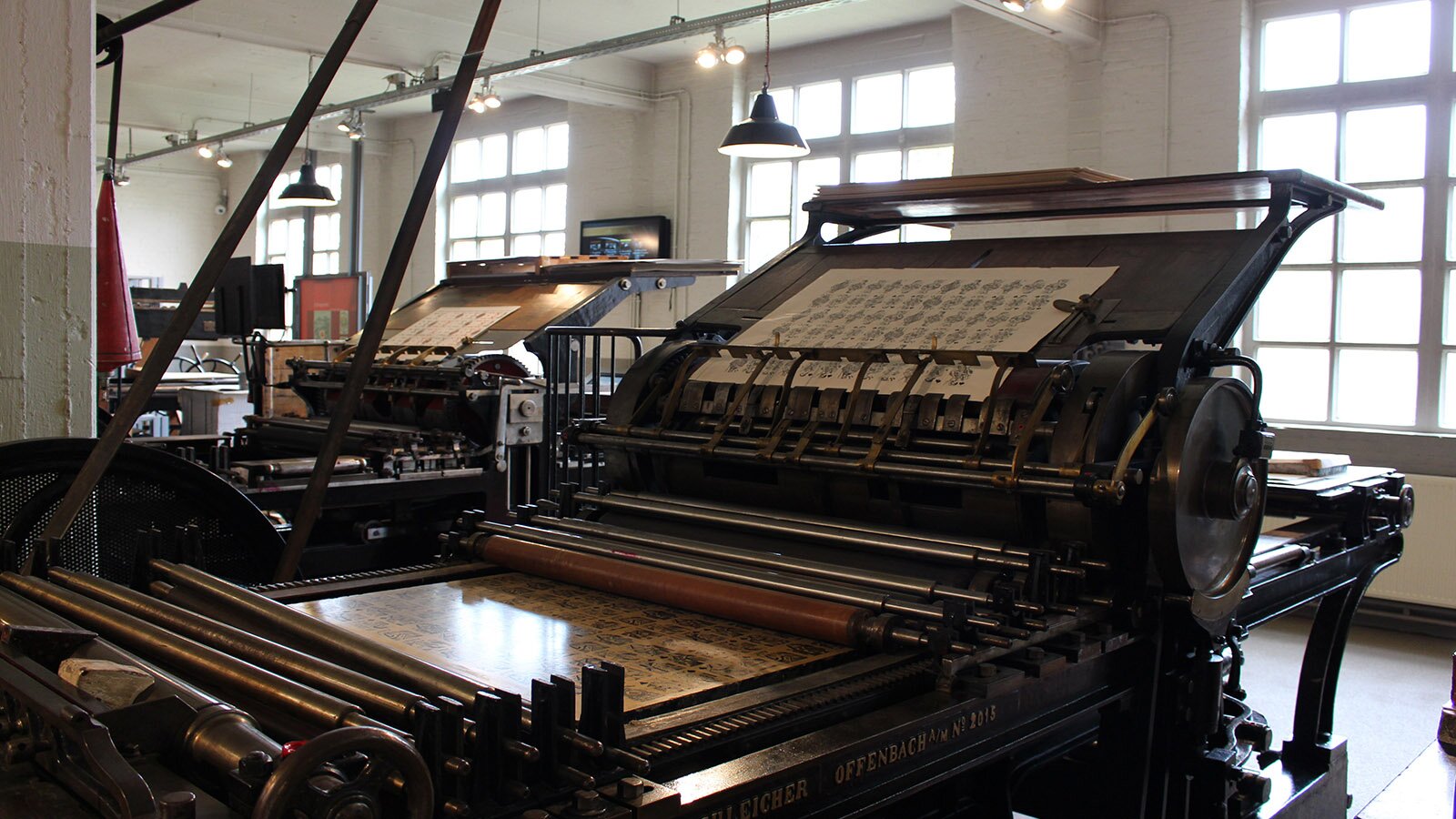
The printing press is a very important invention
Prasa drukarska jest bardzo ważnym wynalazkiem
Źródło: dostępny w internecie: www.unsplash.com [dostęp 19.08.2022], domena publiczna.
Exercise 1

Match the words with their definitions.

Połącz wyrazy z definicjami.

RvtZhg4kLXuUp
Źródło: GroMar Sp. z o.o., licencja: CC BY-SA 3.0.
Exercise 1

Match the names of inventions to the pictures.

Połącz nazwy wynalazków z ilustracjami.

R1Ci2QTUwxKHP
Źródło: dostępny w internecie: www.pixabay.com [dostęp 22.08.2022], domena publiczna.

Read the text about inventions from the past and do the exercises.

Przeczytaj tekst o wynalazkach z przeszłości i wykonaj ćwiczenia.

Great Inventions from the Past
Anna Olewińska‑Byliniak Great Inventions from the Past

Tim is going back home from school with his mum. They’re on the bus. Tim’s favourite song is on the radioradioradio. They get home. It’s dark, so his mum is turning on the lightis turning on the light [turn on the light]is turning on the light. The telephonetelephonetelephone is ringingis ringing [ring]is ringing. Who’s this? Oh, it’s aunt Rosie. She wants to go to the cinemacinemacinema with Tim and his mum. Maybe tomorrow. Today Tim has a lot of homework. He’s going to his room to work on his computercomputercomputer. Where is his cameracameracamera? He needs to take a picturetake a picturetake a picture of his room and printprint (verb)print it. OK, done! Tim’s tired and needs to relax. It’s time to watch TVwatch TVwatch TV!

Radio, light bulb, telephone, cinema, computer, camera, printer, TV. Can you imagineimagineimagine a life without these inventions? They’re not very old. Only the printing pressprinting pressprinting press is from 1440. Who inventedinvented [invent]invented it? Johannes Gutenberg. What’s the name of the youngestthe youngest [young]the youngest invention? It’s the computer! We say that Charles Babbage is the father of the computer. What did he do? He invented it in 1946.

In 1845, Francis Ronald invented the camera. Thanks tothanks toThanks to this invention, the Lumière brothers presentedpresented [present]presented the first film in 1895. It was the first cinema. Without the camera there is also no TV! In 1927, Philo Farnsworth transmittedtransmitted [transmit]transmitted the first TV image.

Thanks to the telephone and the radio we can talk to each other. Who invented them? The inventorinventorinventor of the telephone was Alexander Graham Bell in 1876. The story of the radio is more complicatedcomplicatedcomplicated. OfficiallyofficiallyOfficially, Nikola Tesla invented it in 1896. Thomas Edison invented the light bulb in 1879. What did people use before? Candlescandles [candle]Candles, of course!

1 Źródło: Anna Olewińska‑Byliniak, licencja: CC BY-SA 3.0.
Exercise 2

Read the text. Decide if the sentences below are true or false.

Przeczytaj tekst. Zdecyduj, czy poniższe zdania są prawdziwe, czy fałszywe.

R1L2GUorMoNK4
1. Tim did his homework in his notebook.
TRUEFALSE
2. Johannes Gutenberg invented the printing press in the 15th century.
TRUEFALSE
3. The invention of the camera was before the TV and the cinema.
TRUEFALSE
4. Philo Farnsworth presented the first cinema show.
TRUEFALSE
5. Nikola Tesla didn’t invent the radio.
TRUEFALSE
Źródło: GroMar Sp. z o.o., licencja: CC BY-SA 3.0.
Exercise 3

Match the names of inventions with the activities you can use them for.

Połącz nazwy wynalazków z czynnościami, do których możesz ich użyć.

R18xvLxpoMvyh
camera Możliwe odpowiedzi: 1. watch films, 2. send emails, play games, 3. talk to your friends, 4. listen to music, 5. take pictures, make films cinema Możliwe odpowiedzi: 1. watch films, 2. send emails, play games, 3. talk to your friends, 4. listen to music, 5. take pictures, make films computer Możliwe odpowiedzi: 1. watch films, 2. send emails, play games, 3. talk to your friends, 4. listen to music, 5. take pictures, make films telephone Możliwe odpowiedzi: 1. watch films, 2. send emails, play games, 3. talk to your friends, 4. listen to music, 5. take pictures, make films radio Możliwe odpowiedzi: 1. watch films, 2. send emails, play games, 3. talk to your friends, 4. listen to music, 5. take pictures, make films
Źródło: GroMar Sp. z o.o., licencja: CC BY-SA 3.0.
Exercise 4

Read the text and answer the question in one sentence.

Przeczytaj tekst i odpowiedz na pytanie jednym zdaniem.

Why is Charles Babbage “the father of the computer”?

R17N2OCeJ6deu
(Uzupełnij).
Źródło: GroMar Sp. z o.o., licencja: CC BY-SA 3.0.
GRAMATYKA

W tej części dowiesz się, jak brzmią pytania w czasie przeszłym (Past Simple) z użyciem wyrazów whowhat. Dzięki temu zapytasz m.in. o to, kto coś wynalazł i jak się ten ktoś nazywał oraz co zostało wynalezione.

Who invented this?Kto to wynalazł?

Who did this?Kto to zrobił?

What was his name?Jak miał na imię?

What was the name of…?Jak się nazywał…?

What did she do?Co ona zrobiła?

What did he invent?Co on wynalazł?

What happened?Co się stało?

Exercise 5

Drag the words to make correct and logical questions.

Przeciągnij wyrazy, aby utworzyć poprawne i logiczne pytania.

RVfLagT5Rwmc9
1. 1. What, 2. What, 3. Who, 4. What, 5. Who was Edison’s first name?
2. 1. What, 2. What, 3. Who, 4. What, 5. Who invented the light bulb?
3. 1. What, 2. What, 3. Who, 4. What, 5. Who happened?
4. 1. What, 2. What, 3. Who, 4. What, 5. Who did this?
5. 1. What, 2. What, 3. Who, 4. What, 5. Who did he invent?
Źródło: GroMar Sp. z o.o., licencja: CC BY-SA 3.0.
Exercise 6

Put the words in the correct order to make logical questions.

Ułóż wyrazy w odpowiedniej kolejności, aby utworzyć logiczne pytania.

R1Bk0wbFSSmt4
1. 1. was, 2. of the computer?, 3. Who, 4. the father 1. was, 2. of the computer?, 3. Who, 4. the father 1. was, 2. of the computer?, 3. Who, 4. the father 1. was, 2. of the computer?, 3. Who, 4. the father
Źródło: GroMar Sp. z o.o., licencja: CC BY-SA 3.0.
R1EdD3a3VyoI7
2. 1. invented, 2. Who, 3. the radio? 1. invented, 2. Who, 3. the radio? 1. invented, 2. Who, 3. the radio?
Źródło: GroMar Sp. z o.o., licencja: CC BY-SA 3.0.
RHX4blcdQHkSs
3. 1. of the inventor?, 2. was, 3. What, 4. the name 1. of the inventor?, 2. was, 3. What, 4. the name 1. of the inventor?, 2. was, 3. What, 4. the name 1. of the inventor?, 2. was, 3. What, 4. the name
Źródło: GroMar Sp. z o.o., licencja: CC BY-SA 3.0.
RiCWIJwt5waC1
4. 1. What, 2. he, 3. invent?, 4. did 1. What, 2. he, 3. invent?, 4. did 1. What, 2. he, 3. invent?, 4. did 1. What, 2. he, 3. invent?, 4. did
Źródło: GroMar Sp. z o.o., licencja: CC BY-SA 3.0.
RCYMjCR64KjCr
5. 1. the most important, 2. was, 3. invention?, 4. What 1. the most important, 2. was, 3. invention?, 4. What 1. the most important, 2. was, 3. invention?, 4. What 1. the most important, 2. was, 3. invention?, 4. What
Źródło: GroMar Sp. z o.o., licencja: CC BY-SA 3.0.
Exercise 7

Answer the questions in one sentence.

Odpowiedz na każde z pytań jednym zdaniem.

  1. What did Thomas Edison invent?

  2. Who invented the cinema?

R2Lq8pqcTtu2q
(Uzupełnij).
Źródło: GroMar Sp. z o.o., licencja: CC BY-SA 3.0.

Słownik

camera
camera

/ ˈkæmərə /

Ro4blgzIFVHnn1
Nagranie dźwiękowe

kamera, aparat fotograficzny

RJRdUFLEHRgfX1
Nagranie dźwiękowe
candles [candle]
candles [candle]

/ ˈkændl̩z /

R1KXJ7pZ9UrjQ1
Nagranie dźwiękowe

świeczki [świeczka]

R1FkijwyMywGa1
Nagranie dźwiękowe
century
century

/ ˈsentʃəri /

RkD9qxtLC7Lvb1
Nagranie dźwiękowe

wiek

R150Zkjei8CBC1
Nagranie dźwiękowe
cinema
cinema

/ ˈsɪnəmə /

RxHwOWnWzHCpa1
Nagranie dźwiękowe

kino

R10wVeLK9GIo51
Nagranie dźwiękowe
complicated
complicated

/ ˈkɒmplɪkeɪtɪd /

R1X5jP2LmUCqW1
Nagranie dźwiękowe

skomplikowane

R1coeup9Jr6K51
Nagranie dźwiękowe
computer
computer

/ kəmˈpjuːtə /

R1XhYeGyNCoyG1
Nagranie dźwiękowe

komputer

RZwR5NoYOZLCg1
Nagranie dźwiękowe
imagine
imagine

/ ɪˈmædʒɪn /

RQzKfE11vZET21
Nagranie dźwiękowe

wyobrazić sobie [wyobrażać sobie]

RRspTSfdbtmrh1
Nagranie dźwiękowe
invented [invent]
invented [invent]

/ ɪnˈventɪd / / ɪnˈvent /

R1bLdPKxfWQvK1
Nagranie dźwiękowe

wynalazł/wynalazła [wynaleźć]

RGzISBD9yTMhS1
Nagranie dźwiękowe
inventions [invention]

/ ɪnˈvenʃn̩z / / ɪnˈvenʃn̩ /

RvuDdCj5m0aUQ1
Nagranie dźwiękowe

wynalazki [wynalazek]

R1H72jg9owHqR1
Nagranie dźwiękowe
inventor
inventor

/ ɪnˈventə /

RJq6Shv6e4jSz1
Nagranie dźwiękowe

wynalazca/wynalazczyni

R10VgDYO9csCf1
Nagranie dźwiękowe
is ringing [ring]
is ringing [ring]

/ ɪz ˈrɪŋɪŋ / / rɪŋ /

RjtEw9RASUKLr1
Nagranie dźwiękowe

dzwoni [dzwonić]

Rw3GyRNiWfTUM1
Nagranie dźwiękowe
is turning on the light [turn on the light]

/ ɪz ˈtɜ:nɪŋ ˈɒn ðə laɪt / / ˈtɜ:n ˈɒn ðə laɪt /

R2PmjxDqFvg0U1
Nagranie dźwiękowe

włącza światło [włączać światło]

RkCrAChfohcJd1
Nagranie dźwiękowe
officially
officially

/ əˈfɪʃəli /

RxmEL9U6nsnwz1
Nagranie dźwiękowe

oficjalnie

RnuQs0TbaWvM31
Nagranie dźwiękowe
presented [present]
presented [present]

/ prɪˈzentɪd / / prɪˈzent /

Rx5d0TWugAOi01
Nagranie dźwiękowe

zaprezentowali/zaprezentowały [prezentować]

R116VVgXs8Ie81
Nagranie dźwiękowe
print (verb)
print (verb)

/ prɪnt /

R1C3f4aDWY2dX1
Nagranie dźwiękowe

drukować

RFRFllRQt0AhW1
Nagranie dźwiękowe
printing press
printing press

/ ˈprɪntɪŋ pres /

RtmagMyUnTRn41
Nagranie dźwiękowe

prasa drukarska

Rx6KnDYtrTPC51
Nagranie dźwiękowe
radio
radio

/ ˈreɪdɪəʊ /

R1Xecnj0l4o7w1
Nagranie dźwiękowe

radio

RQ2AJ3Eo5R7r01
Nagranie dźwiękowe
take a picture
take a picture

/ ˈteɪk ə ˈpɪktʃə /

RaF80teXJBMPM1
Nagranie dźwiękowe

robić zdjęcie

R1OTXDKvqVgQx1
Nagranie dźwiękowe
telephone
telephone

/ ˈtelɪfəʊn /

R14ITDbqhYKdM1
Nagranie dźwiękowe

telefon

RGivHfwNzEhH11
Nagranie dźwiękowe
thanks to
thanks to

/ thetaæŋks tuː /

RpL6y6SOtmAk41
Nagranie dźwiękowe

dzięki (czemuś)

R87Qddi3ouV6m1
Nagranie dźwiękowe
the youngest [young]

/ ðə ˈjʌŋɡɪst / / jʌŋ /

R1RKReTQJyP4e1
Nagranie dźwiękowe

najmłodszy/najmłodsza [młody/młoda]

RlZDtkzH10teH1
Nagranie dźwiękowe
transmitted [transmit]

/ trænzˈmɪtɪd / / trænzˈmɪt /

Rv7GUKfwThOal1
Nagranie dźwiękowe

transmitował/transmitowała [transmitować]

R1FtWbmSR1IRx1
Nagranie dźwiękowe
watch TV
watch TV

/ ˈwɒtʃ ˌtiːˈviː /

R1Mwzlc5h4ARY1
Nagranie dźwiękowe

oglądać telewizję

Rfd4CR0tXZd3h1
Nagranie dźwiękowe

Źródło: GroMar Sp. z o.o., licencja: CC BY‑SA 3.0

R1BesUKshZPMD
(Uzupełnij).
Źródło: GroMar Sp. z o.o., licencja: CC BY-SA 3.0.