bg‑azure

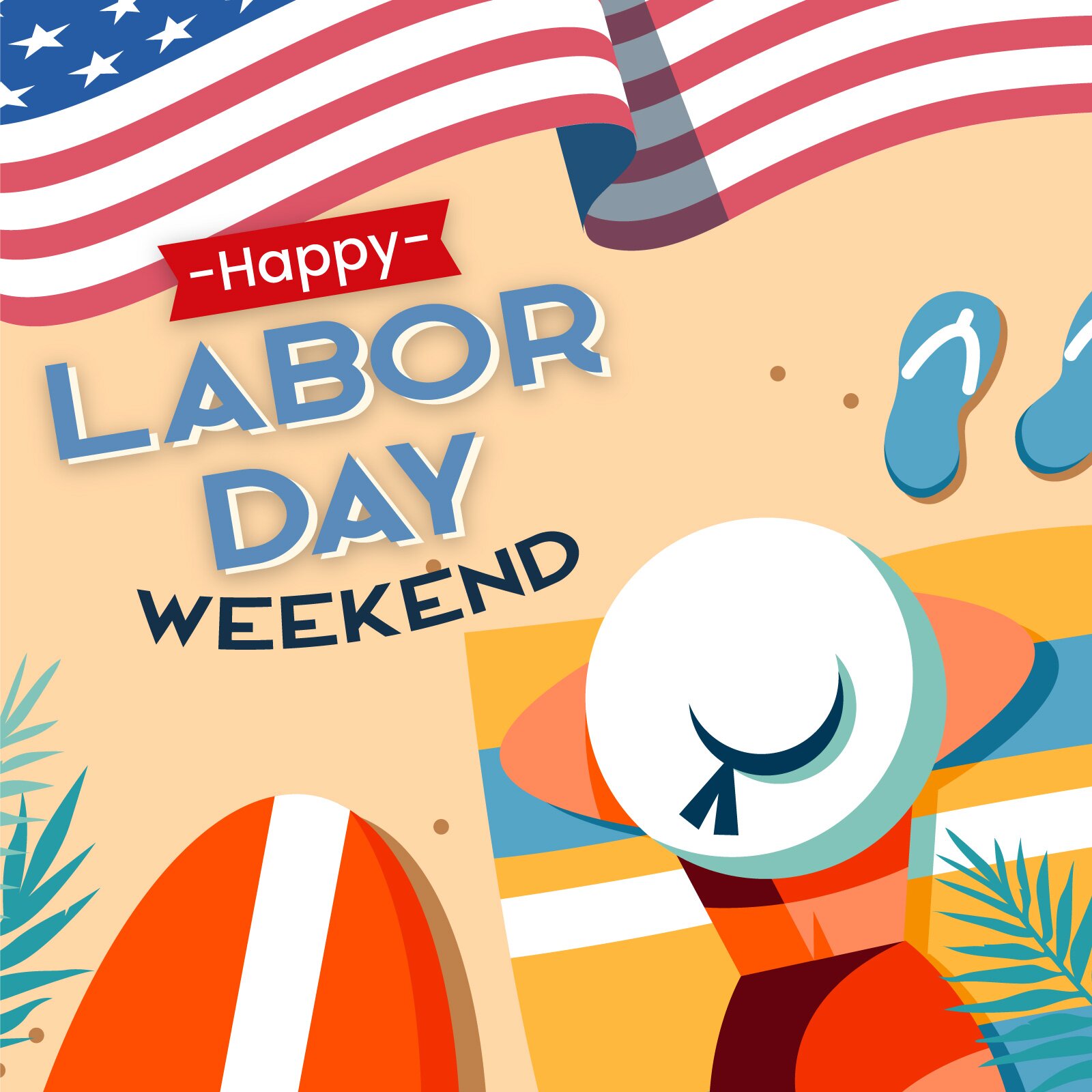
The illustration below is an example of an electronic holiday card that Americans send to their loved ones on Labor Day. Europeans do not have such a tradition. In this section, you are going to explore the history of this holiday. But first, ask yourself: under what circumstances was this festival established? How is it celebrated in your country? By analyzing the postcard, deduce how it is celebrated in the USA.

Poniższa ilustracja to przykład elektronicznej kartki świątecznej, jaką Amerykanie wysyłają bliskim z okazji Święta Pracy. Europejczycy nie mają takiej tradycji. W tej sekcji przeczytasz o historii tego święta. Najpierw jednak zastanów się: W jakich okolicznościach ustanowiono to święto? Jak się je obchodzi w twoim kraju? Analizując pocztówkę, wydedukuj, jak obchodzone jest w USA.
R4yIJQKCo6Sgu
Would you send your friends best wishes on Labor Day? Is this what you’d expect it to look like?
Czy wysłałbyś/wysłałabyś pozdrowienia z okazji Święta Pracy swoim przyjaciołom? Czy twoja kartka wyglądałaby podobnie do tej?
Źródło: dostępny w internecie: www.freepik.com [dostęp 10.12.2021], domena publiczna.
Exercise 1

In 3‑5 sentences describe how you think Americans celebrate Labor Day. Use the following words: barbecue, decorate, flags, parade, fireworks.

R8AleNc2QGMp1
Źródło: GroMar Sp. z o.o., licencja: CC BY-SA 3.0.
Exercise 1

Complete the puzzle and find out what is one of the most typical activities of the American people on Labor Day. What do you expect? Then, answer the question.

R1KZeYFWUe1K1
Zdjęcie przedstawia trzy roześmiane nastolatki siedzące przy piknikowym stole. Dziewczyny trzymają w dłoniach powiewające flagi Stanów Zjednoczonych. Na stole widoczne kubki i talerze z jedzeniem.
Źródło: dostępny w internecie: www.freepik.com [dostęp 10.12.2021], domena publiczna.
RWCBwrKpMGjxl
In 3-5 sentences describe what is in the picture. (Uzupełnij).
Źródło: GroMar Sp. z o.o., licencja: CC BY-SA 3.0.

Study the text and do the exercises below.

HISTORY OF LABOR DAY IN THE U.S.
Joanna Sobierska‑Paczesny HISTORY OF LABOR DAY IN THE U.S.

A

Everyone in the United States loves the Labor DayLabor DayLabor Day weekend and it’s impossible to overlookoverlookoverlook it as people both travel and celebratecelebratecelebrate it in every part of the country. For students and teachers who had the summerhad the summer off [have the summer off]had the summer offoffoff, it’s the last days of freedom. And for those who worked through the summer, it’s a long weekend that allows them to take a breath and maybe get awayget awayget away for a few days before the colder days of fall arrive.

B

Although today it’s mostly associated with fun and relaxing with friends and loved ones, its originsorigins [origin]origins go back to the times when those who worked the hardest had neither time nor reason to celebrate. The amazing advancementsadvancements [advancement]advancements of the 1800s in technology and the way goodsgoodsgoods were produced and transported increasedincreased [increase]increased the need for workers. With hardly any laws to protect them (the first act that passedpassed [pass]passed in 1802 left many issues unsolvedunsolvedunsolved), workers sufferedsuffered [suffer]suffered as much as they worked.

C

Most of them seemed to always be working. During the industrial revolutionindustrial revolutionindustrial revolution, for an average American it was twelve hours a day, seven days a week, hardly making enough to get byget byget by. This meant that whole families had to seek employmentemploymentemployment to make ends meetmake ends meetmake ends meet and age didn’t matter to employersemployers [employer]employers. InsufficientinsufficientInsufficient legislationlegislationlegislation prohibiting child laborlabor (BrE: labour)labor caused children as young as 5 to work in factories or even minesmines [mine]mines, where their wageswages [wage]wages were much lower than those of adults. Additionally, they had hardly any breaks, toilets, or water.

D

People needed help, protection, and understanding of their situation, but it took time. Although in 1794 shoemakers formed a Federal Society in Philadelphia, the first organisation that could be considered a workers’ unionunionunion, it wasn’t until the mid 19th century that labor unions really started to pop uppop uppop up all over the United States. They organized protests and riotsriots [riot]riots and demandeddemanded, [demand]demanded changes. In 1882, on September 5th, ten thousand of them marchedmarched [march]marched through the streets of New York City in what became the first Labor Day paradeparadeparade.

E

Among the organizers of that particular march was Peter McGuire from the American Federation of Labor, who supposedlysupposedlysupposedly wanted this day to become a holiday for the hard‑working classes. Some say, however, that it was Mathew Maguire from the Central Labor Union who suggested establishingestablishingestablishing such a holiday. Whoever it was, it didn’t happen immediately, so protests and strikesstrikes [strike]strikes continued and intensified. It took twelve years for the Congress to create the legislation, finally signed by President Grover Cleveland, thus making it an official holiday to honorhonor (verb) (BrE: honour)honor those who work so hard.

1 Źródło: Joanna Sobierska‑Paczesny, licencja: CC BY-SA 3.0.
Exercise 2
R1NoDPVYcxcDD
Drag the events to put them in chronological order. Elementy do uszeregowania: 1. huge strikes, riots, and protests, 2. people celebrate with picnics and barbecues, 3. first parade in New York City, 4. President signs legislation creating Labor Day, 5. shoemakers form a Federal Society
Źródło: GroMar Sp. z o.o., licencja: CC BY-SA 3.0.
Exercise 3
RvF2vkvCBRtFh
Complete the table. Put in letters A-E to match the headings with correct paragraphs. One heading doesn’t match any paragraph - type in ‘none’ next to it.
Źródło: GroMar Sp. z o.o., licencja: CC BY-SA 3.0.
Exercise 4
R1R3vbP4TZYWJ
Study the text above. Then type in the missing words that meaningfully complete the summary below. The first Labor Day parade was in fact a march of workers who were forced to work in horrible conditions for very little money and they     1. dTu uzupełnijTu uzupełnijTu uzupełnijTu uzupełnijTu uzupełnijTu uzupełnijTu uzupełnij     changes. They wanted a holiday that would     2. hTu uzupełnijTu uzupełnijTu uzupełnijTu uzupełnij     them and allow them one day of rest, because all year long they worked very hard just to     3. gTu uzupełnijTu uzupełnij     by. Back then, in the 19th century, Labor Day meant mostly parades and speeches of important people. But since the holiday was eTu uzupełnijTu uzupełnijTu uzupełnijTu uzupełnijTu uzupełnijTu uzupełnijTu uzupełnijTu uzupełnijTu uzupełnijTu uzupełnij over one hundred years ago, a lot has changed in the way people     4. cTu uzupełnijTu uzupełnijTu uzupełnijTu uzupełnijTu uzupełnijTu uzupełnijTu uzupełnijTu uzupełnij     it. It’s always the 1st Monday of September, which for most Americans makes it the last long weekend of the summer and the last chance to     5. gTu uzupełnijTu uzupełnij     away. They relax and have fun often at picnics and barbecues.
Źródło: GroMar Sp. z o.o., licencja: CC BY-SA 3.0.

Brytyjski i amerykański angielski – różnice w pisowni.

Te dwie odmiany angielskiego różnią się między sobą m.in. pisownią niektórych wyrazów. W tekście powyżej występują wyrazy laborhonor, które zapisane są w amerykańskim angielskim. Brytyjczycy zapisaliby je jako labourhonour. Poniżej jeszcze kilka przykładów podobnych wyrazów.

Brytyjski angielski

Amerykański angielski

Polski

behaviour

behavior

zachowanie

colour

color

kolor

neighbour

neighbor

sąsiad/sąsiadka

saviour

savior

wybawca/wybawczyni

Słownik

advancements [advancement]

/ ədˈvɑːnsmənts / / ədˈvɑːnsmənt /

RjhIa3yAVHEXy1
Nagranie dźwiękowe

postępy [postęp]

R1FyBCnfIpAsj1
Nagranie dźwiękowe
celebrate
celebrate

/ ˈselɪbreɪt /

Re4jKeezA6VHO1
Nagranie dźwiękowe

świętować

R1PvHalVjnFJL1
Nagranie dźwiękowe
demanded, [demand]
demanded, [demand]

/ dɪˈmɑːndɪd / / dɪˈmɑːnd /

RQXergZEN5mcx1
Nagranie dźwiękowe

żądali [żądać]

RiVpx7E96cD2B1
Nagranie dźwiękowe
employers [employer]

/ ɪmˈploɪəz / / ɪmˈploɪə /

R1QtLkek5NiYb1
Nagranie dźwiękowe

pracodawcy [pracodawca/pracodawczyni]

RsT6MADnLJFoA1
Nagranie dźwiękowe
employment
employment

/ ɪmˈploɪmənt /

R1NNVPF1ALbsO1
Nagranie dźwiękowe

zatrudnienie

RviMcGrAyQ9CR1
Nagranie dźwiękowe
establishing
establishing

/ ɪˈstæblɪʃɪŋ /

RE1NKxnJfW3hH1
Nagranie dźwiękowe

ustanowienie

RwVS2nUDv1G911
Nagranie dźwiękowe
get away
get away

/ ˈget əˈweɪ /

Rgx1sozRNK7fh1
Nagranie dźwiękowe

wyjechać na wakacje

R6wvCxXi5GwPO1
Nagranie dźwiękowe
get by
get by

/ ˈget baɪ /

R1KY7HXdGab6E1
Nagranie dźwiękowe

przeżyć, wiązać koniec z końcem

R1WMfTsj42um31
Nagranie dźwiękowe
goods
goods

/ ɡʊdz /

R16LPL8cC9xPn1
Nagranie dźwiękowe

produkty, dobra

R1FZoXKgD7yX81
Nagranie dźwiękowe
had the summer off [have the summer off]

/ həd ðə ˈsʌmər ɒf / / həv ðə ˈsʌmər ɒf /

RjsrzyXm3V7Ty1
Nagranie dźwiękowe

mieli wakacje [mieć wakacje]

RrxgoWWdNxyb31
Nagranie dźwiękowe
honor (verb) (BrE: honour)

/ ˈɒnə /

Rtnzgdf7WnEkW1
Nagranie dźwiękowe

uhonorować

R18ssYYyFbxMi1
Nagranie dźwiękowe
increased [increase]

/ ɪnˈkriːst / / ɪnˈkriːs /

R1bldtyklkWIt1
Nagranie dźwiękowe

podniosło [podnosić]

RL6DGTgW7rXhV1
Nagranie dźwiękowe
industrial revolution

/ ɪnˈdʌstrɪəl ˌrevəˈluːʃn̩ /

R1FYMKrNxFYeE1
Nagranie dźwiękowe

rewolucja przemysłowa

Rrwugc2waPtEa1
Nagranie dźwiękowe
insufficient
insufficient

/ ˌɪnsəˈfɪʃnt /

R1Wx14DUXA5Yh1
Nagranie dźwiękowe

niewystarczające

R1OWrk6OkeSfW1
Nagranie dźwiękowe
labor (BrE: labour)
labor (BrE: labour)

/ ˈleɪbə /

RhnsLUTrV6Zug1
Nagranie dźwiękowe

praca

Re3G9oketVcla1
Nagranie dźwiękowe
Labor Day
Labor Day

/ ˈleɪbə ˈdeɪ /

R17a16MAIwDAO1
Nagranie dźwiękowe

Święto Pracy

RNl7tw0tZIV761
Nagranie dźwiękowe
legislation
legislation

/ ˌledʒɪsˈleɪʃn̩ /

RX73dUBYHfDYH1
Nagranie dźwiękowe

legislacja, ustawodawstwo

R1K97Xr4OeiLT1
Nagranie dźwiękowe
make ends meet
make ends meet

/ ˈmeɪk endz miːt /

RY74HCgmyLTkw1
Nagranie dźwiękowe

wiązać koniec z końcem

RHvYNOVQ7L6av1
Nagranie dźwiękowe
marched [march]
marched [march]

/ mɑːtʃt / / mɑːtʃ /

RHxXbg7kDcXMA1
Nagranie dźwiękowe

maszerowali [maszerować]

R1RozwM8Vlswc1
Nagranie dźwiękowe
mines [mine]
mines [mine]

/ maɪnz / / maɪn /

Rdv63CfPOHDKL1
Nagranie dźwiękowe

kopalnie [kopalnia]

R16FwmUegnfLw1
Nagranie dźwiękowe
origins [origin]
origins [origin]

/ ˈɒrɪdʒɪnz / / ˈɒrɪdʒɪn /

R1UxuFOsTP3aK1
Nagranie dźwiękowe

początki [początek]

R16eZBDlazPfq1
Nagranie dźwiękowe
overlook
overlook

/ ˌəʊvəˈlʊk /

RxEDMbcsYfDul1
Nagranie dźwiękowe

przeoczyć

RCZanvWmHcZaa1
Nagranie dźwiękowe
parade
parade

/ pəˈreɪd /

RO7840FuoMIyg1
Nagranie dźwiękowe

parada

RBsBEiqN6aovG1
Nagranie dźwiękowe
passed [pass]
passed [pass]

/ pɑːst / / pɑːs /

RHiFB7vGrC6rB1
Nagranie dźwiękowe

uchwalone, ustanowione [uchwalić, ustanowić]

Ryco07Jw1rXEK1
Nagranie dźwiękowe
pop up
pop up

/ pɒp ʌp /

R19B8tz8AIn9A1
Nagranie dźwiękowe

pojawić się

RJLqPjTGWf6BN1
Nagranie dźwiękowe
riots [riot]
riots [riot]

/ ˈraɪəts / / ˈraɪət /

R1WbygjH88AMn1
Nagranie dźwiękowe

zamieszki

RkqSQ3baiiN3h1
Nagranie dźwiękowe
strikes [strike]
strikes [strike]

/ straɪks / / straɪk /

RymDR9VJCuAz61
Nagranie dźwiękowe

strajki [strajk]

R1L6YivCOq1iB1
Nagranie dźwiękowe
suffered [suffer]
suffered [suffer]

/ ˈsʌfəd / / ˈsʌfə /

RfzyX46TY72v81
Nagranie dźwiękowe

cierpieli [cierpieć]

R173zLDsNi5Ai1
Nagranie dźwiękowe
supposedly
supposedly

/ səˈpəʊzədli /

R1bE6hoOueKJF1
Nagranie dźwiękowe

rzekomo

RCM0Y2xYlpk9j1
Nagranie dźwiękowe
union
union

/ ˈjuːnɪən /

R1BLJTzy8Zm3T1
Nagranie dźwiękowe

związek

R1eO1MX3Z3b0I1
Nagranie dźwiękowe
unsolved
unsolved

/ ʌnˈsɒlvd /

R1QycDYxzK66j1
Nagranie dźwiękowe

nierozwiązany

R1KzSoKi3Y6f41
Nagranie dźwiękowe
wages [wage]
wages [wage]

/ ˈweɪdʒɪz / / weɪdʒ /

RSkUtSWLZnI7M1
Nagranie dźwiękowe

płace [płaca]

R5hpj3bnYYkIq1
Nagranie dźwiękowe

Źródło: GroMar Sp. z o.o., licencja: CC BY‑SA 3.0

RQlktGMqOK8vN
(Uzupełnij).
Źródło: GroMar Sp. z o.o., licencja: CC BY-SA 3.0.
off
off

/ ɒf /

R1NJwIplZ5Ca81
Nagranie dźwiękowe

wolny

R19oULsXPdmqg1
Nagranie dźwiękowe