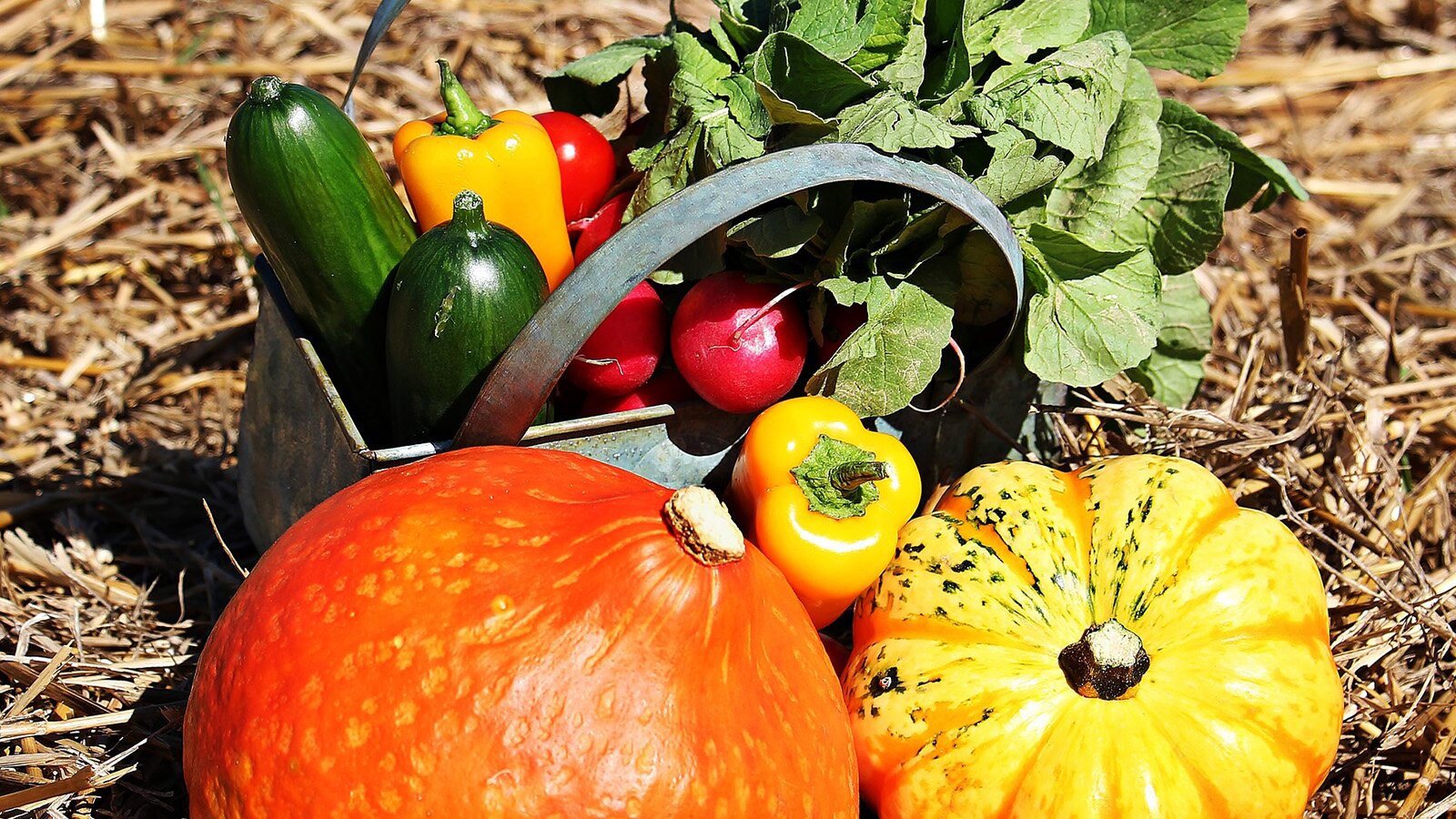
The picture below shows fresh vegetables from a garden. Would you know how to grow them? You are going to read a text explaining how to do that step by step, so read on to learn how to become an organic gardener.
Poniższe zdjęcie przedstawia świeże warzywa z ogrodu. Czy wiesz, jak je wyhodować? Przeczytasz tekst wyjaśniający, jak to zrobić krok po kroku, więc jeśli chcesz być ogrodnikiem z organicznym ogródkiem, do dzieła.
R1YUjNODaiBwN
Zdjęcie przedstawia ułożone obok siebie warzywa na sianie. Są tam: dynie, cukinie, papryki, pomidory oraz rzodkiewka. Transkrypcja nagrań znajduje się poniżej.
Organic vegetables, anyone?
Komu organiczne warzywa?
Źródło: dostępny w internecie: www.pixabay.com [dostęp 29.12.2021], domena publiczna.
Źródło: GroMar Sp. z o.o., licencja: CC BY-SA 3.0.
Exercise1
Name the objects in the pictures. Choose all the correct answers.
RJxX8qgSnQovg
1.
1.
Źródło: dostępny w internecie: www.freepik.com [dostęp 29.12.2021], domena publiczna.
R6ONh0nTf4BFo
2.
2.
Źródło: dostępny w internecie: www.pixabay.com [dostęp 29.12.2021], domena publiczna.
R5YHjMtIAtGL6
3.
3.
Źródło: dostępny w internecie: www.pixabay.com [dostęp 29.12.2021], domena publiczna.
R1dieDxt1bYXk
4.
4.
Źródło: dostępny w internecie: www.freepik.com [dostęp 29.12.2021], domena publiczna.
RgZKX0T0XFSoh
5.
5.
Źródło: dostępny w internecie: www.pexels.com [dostęp 28.06.2022], domena publiczna.
Read the text and do the exercises below. Find out if organic gardening is for you!
Let's Make Our Own Organic Garden
Agnieszka Sękiewicz‑Magoń Let's Make Our Own Organic Garden
When you are a buddingbuddingbudding gardener, setting up any garden may seem like a really complicated process. There are so many things you need to know and learn before you even start! And then the maintenancemaintenancemaintenance of the garden also seems like work for skilled professionals, so you might feel a bit overwhelmed by all the information. However, the truth is you don’t have to have a green thumbto have a green thumbto have a green thumb to start your own garden. With our step‑by‑step guide you will see it is not so difficult, and will be able to enjoy bountiful harvestsbountiful harvests [bountiful harvest]bountiful harvests from your garden.
Let’s start with a simple definition of what organic gardening is. Simply put, it is growing plants without using syntheticsyntheticsynthetic products like fertilisersfertilisers [fertiliser]fertilisers or pesticides. It means that you base all your gardening on natural products and solutions, and so anything you produce will also be organic, making any livestocklivestocklivestock fed on such foods organic as well. If, however, you decide to use any level of human‑made products, such as e.g. growth stimulantsgrowth stimulantsgrowth stimulants or antibiotics, then that is conventional gardening. Now we can get down to preparations for your garden. Here is what you need to do before you actually start planting anything:
Prepare the soilsoilsoil. It is a good idea to test the soil’s pH to see what it lackslacks [lack]lacks and to figure out what additional substances, such as compost, you will have to add to it. Make sure there are plenty of nutrientsnutrients [nutrient]nutrients for your plants in the soil, as their growth will heavily depend on it. As the motto of organic gardeners goes, “Feed the soil, not the plant,” so in other words, understand the makeupmakeupmakeup of your soil and give it what it needs.
Make good compost. It will help with many different functions: will provide plants with necessary nutrients, conserve water, reduce weedingweedingweeding, and keep food and yard waste out of landfillslandfills [landfill]landfills. You can make good compost from leaves, grass trimminggrass trimminggrass trimming, yard remains or kitchen wastekitchen wastekitchen waste.
Prepare your garden. This step will involve buying some gardening tools, such as a troweltroweltrowel, pruning shearspruning shearspruning shears, spadespadespade, rakerakerake or watering canwatering canwatering can. Put your gardening tools to good use, just make sure you don’t completely destroy the soil.
Select the right plants. Your choice should be based on what gardening zonegardening zonegardening zone you have, and that depends on region and climate. Choose plants which will grow and thrivethrivethrive best in this specific microclimate, considering factors such as moisturemoisturemoisture, light and drainagedrainagedrainage, as well as soil quality. If you are not going to start with seeds but rather buy seedlingsseedlings [seedling]seedlings, go for the plants which look healthy and are without overcrowded rootsroots [root]roots.
This is the moment when it comes to the actual planting. Decide if you want to use containerscontainers [container]containers, raised bedsraised bedsraised beds or in‑ground rowsin‑ground rowsin‑ground rows. Most gardeners plant the crops in wide beds, which prevents them from walking on them or destroying the soil while harvesting or cutting the flowers. It is also advisable to group crops, as it reduces weeding or water waste, and makes it easier to apply compost. If you want to have a fantastic harvest, take the next steps:
Water the crops. It is best to water them immediately after planting, so they have much‑needed water to continue growing. Generally, early morning is the best time for watering, as there are no strong winds then, it’s cool, and thus water loss due to evaporationevaporationevaporation will be reduced to a minimum. Plants which are already establishedestablished [establish]established should not be watered frequently.
Weeding. This is a very important part of your organic garden maintenance, as weeds compete with your plants for water, light, space, and nutrients. They are also hostshosts [host]hosts for parasites or disease and a shelter for insects. If you want to be organic, do it by hand, even though it takes some effort.
Protecting your garden and providing nutrients. Organic gardening promotes using natural ways of protecting your garden through beneficial insects like ladybugsladybugs [ladybug]ladybugs, but also birds, toadstoads [toad]toads, spiders or bats. Also, grow a wide variety of companion cropscompanion cropscompanion crops and use crop rotationcrop rotationcrop rotation to make the most of the soil.
Use organic fertilisers. Compost will improve water and nutrient retentionretentionretention in the soil, but you can also use fertilisers made from natural sources like wood ashwood ashwood ash, manuresmanures [manure]manures or animal byproductsanimal byproducts [animal byproduct]animal byproducts.
Take care of your organic garden. This is the last and most general step, as it includes activities which are essential if you want your garden to thrive. The most important ones are: mulchingmulchingmulching, watering in the mornings, using compost, making use of natural manure, weeding at the right time and pruningpruningpruning regularly.
If you follow the guidelines above, your organic garden will repay you with rich harvests, good both for people and the environment.
1 Źródło: Agnieszka Sękiewicz‑Magoń , licencja: CC BY-SA 3.0.
RaSaT1dQmPYuf
Exercise2
Źródło: GroMar Sp. z o.o., licencja: CC BY-SA 3.0.
Ra3ufGbKpMsO1
Exercise3
Read the text above. Then, drag and drop the elements below to fill in the summary. Organic gardening is an option which is good both for humans and the environment, as it uses natural products like 1. 1. manures, 2. trowel, 3. companion crops, 4. watering, 5. thrive, 6. moisture, 7. weeding, 8. produce to fertilise the soil, and natural methods of protecting the plants, for example by planting 2. 1. manures, 2. trowel, 3. companion crops, 4. watering, 5. thrive, 6. moisture, 7. weeding, 8. produce which repel insects. Creating such a garden isn’t difficult, you only have to buy basic tools like, for example, a 3. 1. manures, 2. trowel, 3. companion crops, 4. watering, 5. thrive, 6. moisture, 7. weeding, 8. produce. Careful planning and preparing the soil are important elements of the process. Make sure that the plants that you choose and then seed will 4. 1. manures, 2. trowel, 3. companion crops, 4. watering, 5. thrive, 6. moisture, 7. weeding, 8. produce in your garden. Taking good care of your garden will mean 5. 1. manures, 2. trowel, 3. companion crops, 4. watering, 5. thrive, 6. moisture, 7. weeding, 8. produce it regularly so the plants have the necessary 6. 1. manures, 2. trowel, 3. companion crops, 4. watering, 5. thrive, 6. moisture, 7. weeding, 8. produce, pruning, and 7. 1. manures, 2. trowel, 3. companion crops, 4. watering, 5. thrive, 6. moisture, 7. weeding, 8. produce. When you do all the things right, you will be rewarded with your own delicious 8. 1. manures, 2. trowel, 3. companion crops, 4. watering, 5. thrive, 6. moisture, 7. weeding, 8. produce of superior taste and nutritious content!
Read the text above. Then, drag and drop the elements below to fill in the summary. Organic gardening is an option which is good both for humans and the environment, as it uses natural products like 1. 1. manures, 2. trowel, 3. companion crops, 4. watering, 5. thrive, 6. moisture, 7. weeding, 8. produce to fertilise the soil, and natural methods of protecting the plants, for example by planting 2. 1. manures, 2. trowel, 3. companion crops, 4. watering, 5. thrive, 6. moisture, 7. weeding, 8. produce which repel insects. Creating such a garden isn’t difficult, you only have to buy basic tools like, for example, a 3. 1. manures, 2. trowel, 3. companion crops, 4. watering, 5. thrive, 6. moisture, 7. weeding, 8. produce. Careful planning and preparing the soil are important elements of the process. Make sure that the plants that you choose and then seed will 4. 1. manures, 2. trowel, 3. companion crops, 4. watering, 5. thrive, 6. moisture, 7. weeding, 8. produce in your garden. Taking good care of your garden will mean 5. 1. manures, 2. trowel, 3. companion crops, 4. watering, 5. thrive, 6. moisture, 7. weeding, 8. produce it regularly so the plants have the necessary 6. 1. manures, 2. trowel, 3. companion crops, 4. watering, 5. thrive, 6. moisture, 7. weeding, 8. produce, pruning, and 7. 1. manures, 2. trowel, 3. companion crops, 4. watering, 5. thrive, 6. moisture, 7. weeding, 8. produce. When you do all the things right, you will be rewarded with your own delicious 8. 1. manures, 2. trowel, 3. companion crops, 4. watering, 5. thrive, 6. moisture, 7. weeding, 8. produce of superior taste and nutritious content!
Źródło: GroMar Sp. z o.o., licencja: CC BY-SA 3.0.
R1Y2RVhwZsWHL
Exercise4
Read the text above. Then, type in the missing words to complete the text below. A lot of gardeners praise 1. rTu uzupełnij bTu uzupełnij as the best way of planting your vegetables. They are fabulously handy, and the 2. yTu uzupełnij which you get after months of growing are usually much better than the ones which you get from vegetables planted, for example, in regular vegetable patches. There are several reasons for it. First of all, they reduce the number of 3. wTu uzupełnij and there is more growing space. They also provide better 4. dTu uzupełnij, especially in areas with clay 5. sTu uzupełnij. Any gardening activities, such as watering or 6. pTu uzupełnij, are so much easier there, as you have access from every side and you do not trample any plants on your way. Of course, you can use natural 7. fTu uzupełnij for them just like for vegetables grown in any other arrangement, with chicken 8. mTu uzupełnij being probably the best since it has a very high content of nitrogen, so important for the growth of plants. Try this way of growing your veggies and you will see that the 9. pTu uzupełnij you get is worth all the effort!
Read the text above. Then, type in the missing words to complete the text below. A lot of gardeners praise 1. rTu uzupełnij bTu uzupełnij as the best way of planting your vegetables. They are fabulously handy, and the 2. yTu uzupełnij which you get after months of growing are usually much better than the ones which you get from vegetables planted, for example, in regular vegetable patches. There are several reasons for it. First of all, they reduce the number of 3. wTu uzupełnij and there is more growing space. They also provide better 4. dTu uzupełnij, especially in areas with clay 5. sTu uzupełnij. Any gardening activities, such as watering or 6. pTu uzupełnij, are so much easier there, as you have access from every side and you do not trample any plants on your way. Of course, you can use natural 7. fTu uzupełnij for them just like for vegetables grown in any other arrangement, with chicken 8. mTu uzupełnij being probably the best since it has a very high content of nitrogen, so important for the growth of plants. Try this way of growing your veggies and you will see that the 9. pTu uzupełnij you get is worth all the effort!
Źródło: GroMar Sp. z o.o., licencja: CC BY-SA 3.0.
(putting a layer of something such as old leaves, small pieces of wood, or manure on the soil round plants in order to protect them and help them to grow)
(the organ of a higher plant that anchors the rest of the plant in the ground, absorbs water and mineral salts from the soil, and does not bear leaves or buds)