Przeczytaj
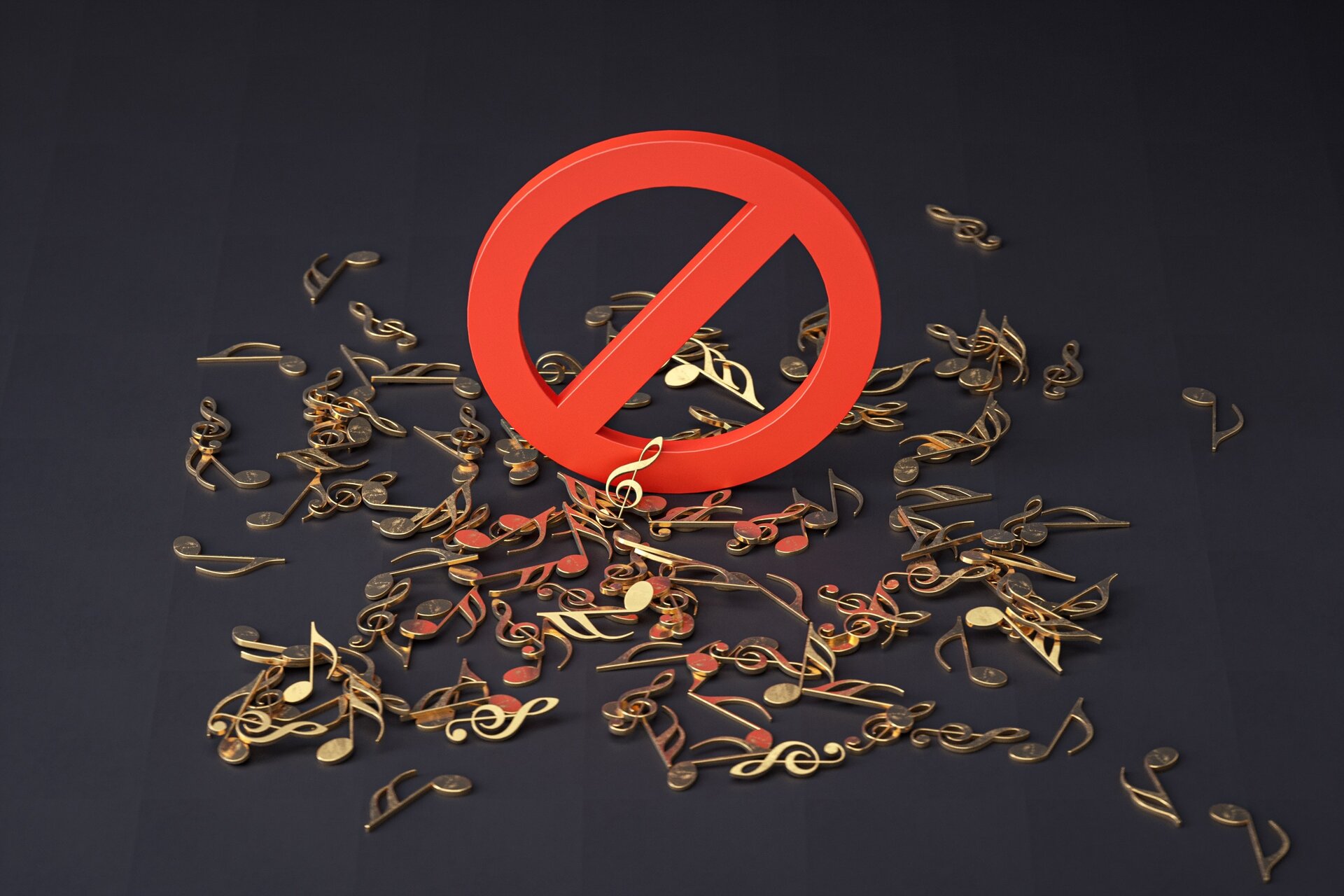
The picture below illustrates a symbolic ban on illegal copying of music, which is one of the most popular forms of violating copyrights. Do you realise that more than 70,000 jobs a year in the U.S.A. alone are lost due to music piracy? In this section, you are going to read a text on copyrights, which will give you a clearer idea about what they are and in what situations you may be breaking the law.
Poniższe zdjęcie w symboliczny sposób obrazuje zakaz nielegalnego kopiowania muzyki. Proceder ten jest jedną z najpopularniejszych form nierespektowania praw autorskich. Czy zdajesz sobie sprawę, że tylko w Stanach Zjednoczonych co roku ponad 70 000 osób z branży muzycznej traci pracę z powodu piractwa? W tej sekcji przeczytasz tekst na temat praw autorskich, z którego dowiesz się, czym one są, a także w jakich sytuacjach być może ty sam/sama łamiesz prawo.
Now read the text and find out about what you can or cannot copy legally.
What You Need to Know About CopyrightCopyrightCopyright is a form of intellectual propertyintellectual property which grants the owner legal rights to his or her creative work. Simply put, it’s the right to copycopy. Copyrights make the owner the only person who has exclusive rights to reproduce and distribute copiesdistribute copies of their work, make derivative worksderivative works, and present them publicly. That means that if anyone wants to reproduce the original work, make a copymake a copy of it, or perform it, they have to ask its creators for authorisationauthorisation.
There are a lot of areas which are protected by copyright. The most common examples include artistic work, such as novels, art, poetry, musical lyrics, compositions, photographs (when at least minimal degree of creativity is involved) or film; but also things connected to computing, like computer software applications or various types of software codes. Copyrights also apply to some business elements, for example, databases, business plans, proposals, annual reports, architectural plans, or even letters and emails written by a business. Not all creative works can be copyrightedcopyrighted. The list here includes discoveries, themes, ideas or theories, individual words, things created not by man but by nature, unoriginal works, and works with expired copyrightsexpired copyrights. There are also differences in the interpretation of what can be protected under the copyright lawcopyright law in individual countries. For example, in the U.S.A. such works need to be in a tangible formtangible form, which means that a speech or a sermonsermon will not be protected unless they are written down on paper, whereas in the EU or in Poland it is not a requirement.
Since Poland is a member of the Berne Convention, copyright is automatic and doesn’t require any official registration in a government office. The author’s work is protected by copyright law the moment it is seen, heard, or read in public, and the protection lasts throughout the whole life of the author, and 70 years after his or her death, or if the author is not known, for 70 years after its first disseminationdissemination. After this time, the work returns to the public domainpublic domain and may be used in any way.
Unfortunately, copyright infringementcopyright infringement happens every day. You have probably infringed oninfringed on somebody’s copyright at some moment in your life too, perhaps not even realising it. The most common types of infringement are text and image copyright violationscopyright violations. They occur in photography, literature, and art, but also in film and music, which have been plagued by piracyplagued by piracy and illegal distributionillegal distribution of copies. Nevertheless, there are ways of avoiding the unauthorised useunauthorised use of somebody else’s work. The first one is fair use,fair use, allowing you to legally copy parts of a book, film, or other copyrighted material if it is for comment, reporting, research, works of criticism, or for educational purposes. Additionally, remember that works from the public domain can be used for any personal usepersonal use or purpose. You can also use works with Creative CommonsCreative Commons licences, which stipulatestipulate what rights you have concerning a given work. Finally, if you want to use someone else’s intellectual property, you can seek direct licensingdirect licensing from its creator. Hopefully, you will think twice next time you are tempted to copy‑paste a text from an internet source or use a random photo for your school assignment.
Źródło: Agnieszka Sękiewicz‑Magoń , licencja: CC BY-SA 3.0.
a) you read someone else’s work.
b) you create a work based on another work.
c) buy a reproduction of a work.
2. Which work would be protected by copyright?
a) A short story.
b) An odd-looking stone.
c) An X-ray photo.
3. Which work would NOT be protected by copyright?
a) Computer animation.
b) A mathematical formula.
c) A sculpture.
4. How long does a copyright protect your work in Poland?
a) Until you are 70 years old.
b) Until 70 years after the first publication of your work.
c) Until 70 years after your death.
5. Fair use means that you can
a) copy portions of copyrighted material for certain purposes.
b) copy whole books for your private use.
c) copy a copyrighted material for a small, fair price.
Answer the questions in 2–3 sentences.
Which information surprised you the most?
Do you pay attention to the licences that a photo you want to use has? Why? Why not?
Which type of copyright infringement do you think is the most common in Poland and why?
Słownik
/ ˌɔːthetaəraɪˈzeɪʃn̩ /
upoważnienie (official permission to do something)
/ ˈkɒpi /
kopiować (to produce something so that it is the same as an original piece of work)
/ ˈkɒpɪraɪt /
prawo autorskie (the right to reproduce, publish, sell, or distribute artistic work)
/ ˈkɒpɪraɪt ɪnˈfrɪndʒmənt /
naruszenie prawa autorskiego (potocznie piractwo medialne)(an illegal activity of copying and sellingof a work for which someone does not have a copyright)
/ ˈkɒpɪraɪt lɔː /
prawo (ustawy) dotyczące praw autorskich (the law concerning the right to reproduce, publish, sell, or distribute artistic work)
/ ˈkɒpɪraɪt ˌvaɪəˈleɪʃn̩z / / ˈkɒpɪraɪt ˌvaɪəˈleɪʃn̩ /
pogwałcenie praw autorskich (use or production of copyright‑protected material without the author’s permission)
/ ˈkɒpɪraɪtɪd /
chroniony/chroniona prawem autorskim (under the protection of copyrights)
/ kriːˈeɪtɪv ˈkɒmənz ˈlaɪsnsɪz / / kriːˈeɪtɪv ˈkɒmənz ˈlaɪsns /
licencje Creative Commons [licencja Creative Commons](an official document which states someone's right to a given work, for example a book)
/ dɪˈrɪvətɪv ˈwɜːks / / dɪˈrɪvətɪv ˈwɜːk /
utwory zależne [utwór zależny] (copyrighted work that comes from another copyrighted work)
/ dɪˈrekt ˈlaɪsnsɪŋ /
bezpośrednie licencjonowanie (when the rights owner sells a licence directly to the user)
/ dɪˌsemɪˈneɪʃn̩ /
rozpowszechnianie (the act of spreading information or knowledge)
/ dɪˈstrɪbjuːt ˈkɒpɪz /
rozprowadzać kopie (to share copies of a product)
/ ɪkˈspaɪəd ˈkɒpɪraɪts / / ɪkˈspaɪəd ˈkɒpɪraɪt /
prawa autorskie, których ważność wygasła [prawo autorskie, którego ważność wygasła] (copyright protection ends or expires and the work(s) fall into the public domain)
/ feə ˈjuːs /
dozwolony użytek (when certain uses of copyrighted material, e.g. for teaching or research purposes, are considered fair)
/ ɪˈliːɡl̩ ˌdɪstrɪˈbjuːʃn̩ /
nielegalna dystrybucja, nielegalne rozpowszechnianie (the act of sharing copies of a product without the permission of the owner, in violation of the law)
/ ɪnˈfrɪndʒd ɒn / / ɪnˈfrɪndʒ ɒn /
naruszyłeś/naruszyłaś [naruszyć] (to break a law or rule)
/ ˌɪntəˈlektʃʊəl ˈprɒpəti /
własność intelektualna (ownership of creations of human mind treated as intangible assets that are not physical in nature, e.g. literary or artistic works)
/ ˈmeɪk ə ˈkɒpi /
stworzyć kopię (to produce something so that it is the same as an original piece of work)
/ ˈpɜːsənl̩ ˈjuːs /
prywatny użytek (non‑commercial use ) (using a copyrighted work for private purposes)
/ pleɪɡd ˈbaɪ ˈpaɪərəsi /
nękane przez piractwo (falling repeatedly victim to illegal copying)
/ ˌpʌblɪk dəʊˈmeɪn /
domena publiczna, własność publiczna (being available to the public as not being subject to copyright or other legal restrictions)
/ ˈsɜːmən /
kazanie (a talk on a moral or religious subject)
/ ˈstɪpjʊleɪt /
określają [określać] (state clearly and definitely how something must be done)
/ ˈtændʒəbl̩ ˈfɔːm /
namacalna forma (material or physical form that can be touched or perceived by the senses)
/ ʌnˈɔːthetaəraɪzd ˈjuːs /
nieuprawnione użycie (a use without a proper permission)