Przeczytaj
If you think weather forecasting is looking at the sky and trying to figure out if it’s going to rain or be sunny today, think again. Modern weather forecasting is based on mathematical modelling and requires knowledge of mathematics, physics, and programming. Weather affects not only our decisions about what to wear but has an impact on transport, food production, supply chains, and many other aspects of our daily lives. A good weather forecast can save lives, a bad one puts some at risk. How much do you know about the process of preparing a weather forecast?
Jeżeli wydaje ci się, że prognozowanie pogody polega na spoglądaniu w niebo i próbach odgadnięcia, czy będzie padać deszcz, czy raczej będzie świecić słońce – to się mylisz. Współczesne przewidywanie pogody opiera się bowiem na modelowaniu matematycznym, wymaga znajomości metod numerycznych, fizyki i programowania.
Pogoda wiąże się nie tylko z naszymi decyzjami o tym, w co się ubrać, wpływa również na transport, produkcję żywności, łańcuchy dostaw i wiele innych aspektów naszej codzienności. Jej trafne przewidywanie może uratować życie, a złe – narazić na niebezpieczeństwo. Czy wiesz, jak przygotowuje się prognozę pogody?
2. I liked the 1. snowed, 2. black, 3. rainbow, 4. breeze, 5. whirl, 6. lightning, 7. flooded, 8. icebreakers, 9. rain our teacher used at the beginning of the school year to help us get to know one another and integrate.
3. I broke my leg skiing here last year, but I know 1. snowed, 2. black, 3. rainbow, 4. breeze, 5. whirl, 6. lightning, 7. flooded, 8. icebreakers, 9. rain never strikes in the same place twice and it will be ok this year.
4. It took me a while to understand that my dreams about becoming an astronaut were just chasing a 1. snowed, 2. black, 3. rainbow, 4. breeze, 5. whirl, 6. lightning, 7. flooded, 8. icebreakers, 9. rain.
5. Thank you for your invitation, but I will take a 1. snowed, 2. black, 3. rainbow, 4. breeze, 5. whirl, 6. lightning, 7. flooded, 8. icebreakers, 9. rain check this time.
6. I needn’t have worried – the test was simply a 1. snowed, 2. black, 3. rainbow, 4. breeze, 5. whirl, 6. lightning, 7. flooded, 8. icebreakers, 9. rain.
Study the text and do the exercises below.
How are Weather Forecasts Made?
How are Weather Forecasts Made?In the times of climate change and extreme weather phenomenaextreme weather phenomena, a weather forecastweather forecast can make the difference between life and death. Severe weather conditionsSevere weather conditions can cost the local economy large sums of money, so it is the meteorologists’ job to issue alertsissue alerts for people to be prepared.
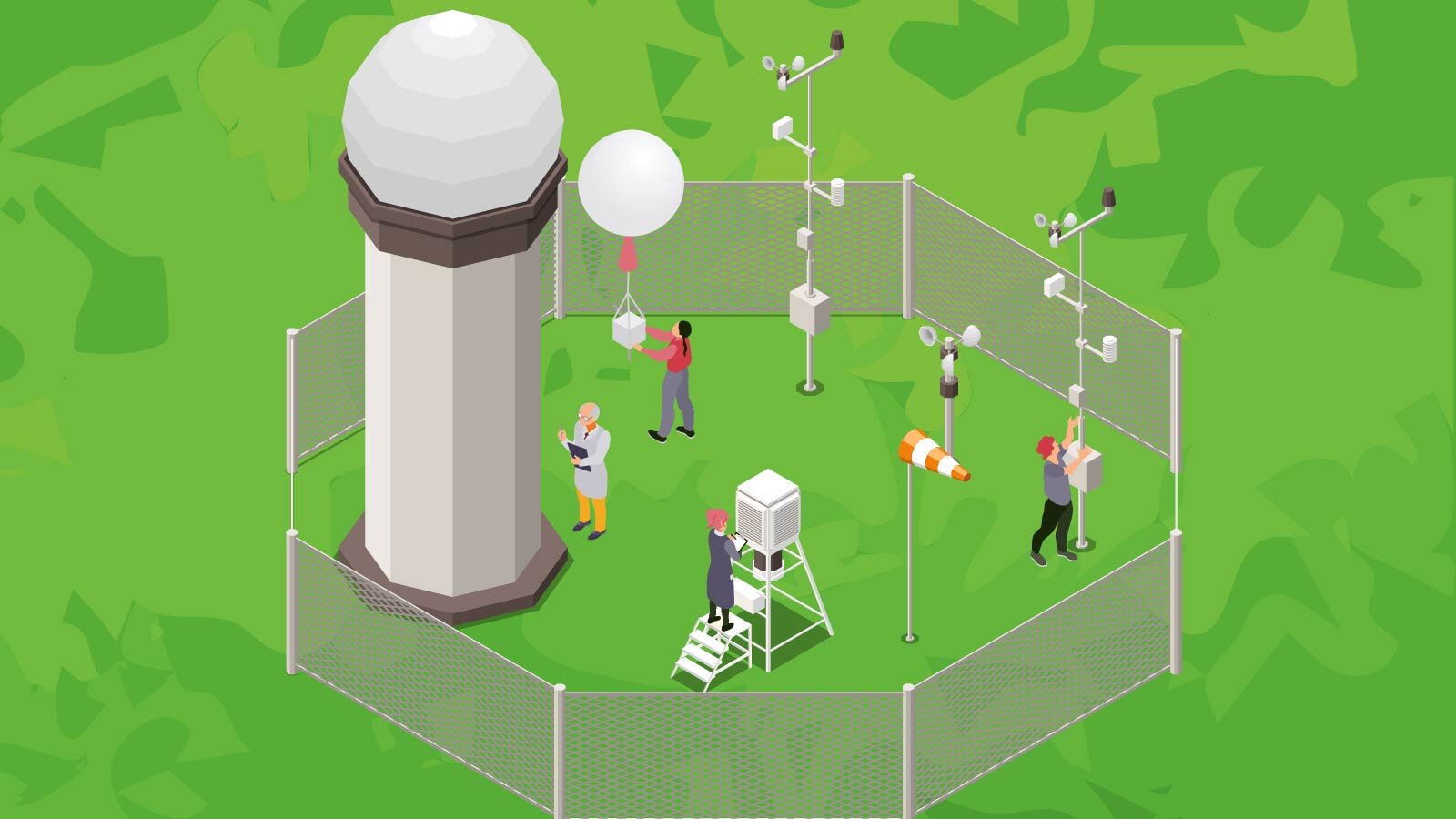
Weather forecasting starts with taking measurementstaking measurements and making observationsmaking observations of the weather which has already happened. Nowadays, scientists use satellites, balloons, land and ship‑based instruments, buoysbuoys, and different kinds of aircraft to collect as much and as accurate data as possible. 1.1 ___ Parameters such as temperature, wind speed and direction, and humidityhumidity are measured and recorded. For example, radiationradiation from Earth’s surface is detected and measured by satellites orbitingorbiting the planet. Balloons and aircraft fly through different layers of the atmospherelayers of the atmosphere collecting data on their way up and down. It must be pointed out that observations are carried out 24/7, 365 days of the year.
Next, all collected information is entered into supercomputersentered into supercomputers which have very high computing powerscomputing powers. A large number of mathematical calculations is performed on the basis of the data regarding all aspects of atmospheric conditions. 1.2 ___ Because the atmosphere has a rather chaotic nature, every new developmentdevelopment can affect the whole model. It explains why weather forecasts are not always fully accurateaccurate. It’s enough to miss something or to add it to a model too late and people will receive a misleadingmisleading forecast.
Despite the fact that the computing power of modern machines is truly impressive, human participation in the forecasting process is still necessary. Computers don’t have the experience and expertise which allow forecastersforecasters to compare computer‑generated predictionscomputer‑generated predictions against actual observations. By doing so, people can react quickly and adjust forecasts to make them as up‑to‑dateup‑to‑date as possible. What is more, forecasters perform risk assessmentperform risk assessment and prepare forecasts customisedcustomised for different groups of people. 1.3 ___
How accurate are weather forecasts nowadays? Their reliabilityreliability is actually also measured and the results show that there has been an upward trendupward trend. As the British Met Office reports, six out of seven forecasts done by them are accurate. Their four‑day forecasts are now as accurate as one‑day forecasts were three decades ago. 1.4___ However, some people say that checking weather forecasts doesn’t make sense as predictions for the same region, but done by different Met Offices, sometimes varyvary significantly. The fact that Met Offices around the world use slightly different computer programmes to create weather models results in different forecasts for the same regions.
As weather forecasters state, it’s their duty to provide various groups of people with the most accurate weather information possible. 1.5___ In many countries authoritiesauthorities work closely with Met Offices to put in placeput in place special warning services which inform people by means of text messages sent directly to their phones about possibly dangerous weather conditions. Weather forecasting nowadays is a vital part of strategic planningstrategic planning at the individual, local, nationwide, and global scale.
Źródło: Anna Posyniak‑Dutka, licencja: CC BY-SA 3.0.
1.2 1. Unfortunately, long-term forecasts are less accurate than they were some years ago., 2. Some people accuse forecasters of publishing only pessimistic information., 3. The computing power of a device decides how much information can be processed and how fast it can be done., 4. On the basis of that, people are able to make informed decisions when it comes to their short or long-term plans., 5. Each of these instruments has a different function and gathers information about different sections of the Earth’s atmosphere., 6. It’s the result of better measurement instruments, more observations, and faster computers we use nowadays., 7. The general public may be interested in slightly different aspects of the weather than, for example, farmers or plane pilots.
1.3 1. Unfortunately, long-term forecasts are less accurate than they were some years ago., 2. Some people accuse forecasters of publishing only pessimistic information., 3. The computing power of a device decides how much information can be processed and how fast it can be done., 4. On the basis of that, people are able to make informed decisions when it comes to their short or long-term plans., 5. Each of these instruments has a different function and gathers information about different sections of the Earth’s atmosphere., 6. It’s the result of better measurement instruments, more observations, and faster computers we use nowadays., 7. The general public may be interested in slightly different aspects of the weather than, for example, farmers or plane pilots.
1.4 1. Unfortunately, long-term forecasts are less accurate than they were some years ago., 2. Some people accuse forecasters of publishing only pessimistic information., 3. The computing power of a device decides how much information can be processed and how fast it can be done., 4. On the basis of that, people are able to make informed decisions when it comes to their short or long-term plans., 5. Each of these instruments has a different function and gathers information about different sections of the Earth’s atmosphere., 6. It’s the result of better measurement instruments, more observations, and faster computers we use nowadays., 7. The general public may be interested in slightly different aspects of the weather than, for example, farmers or plane pilots.
1.5 1. Unfortunately, long-term forecasts are less accurate than they were some years ago., 2. Some people accuse forecasters of publishing only pessimistic information., 3. The computing power of a device decides how much information can be processed and how fast it can be done., 4. On the basis of that, people are able to make informed decisions when it comes to their short or long-term plans., 5. Each of these instruments has a different function and gathers information about different sections of the Earth’s atmosphere., 6. It’s the result of better measurement instruments, more observations, and faster computers we use nowadays., 7. The general public may be interested in slightly different aspects of the weather than, for example, farmers or plane pilots.
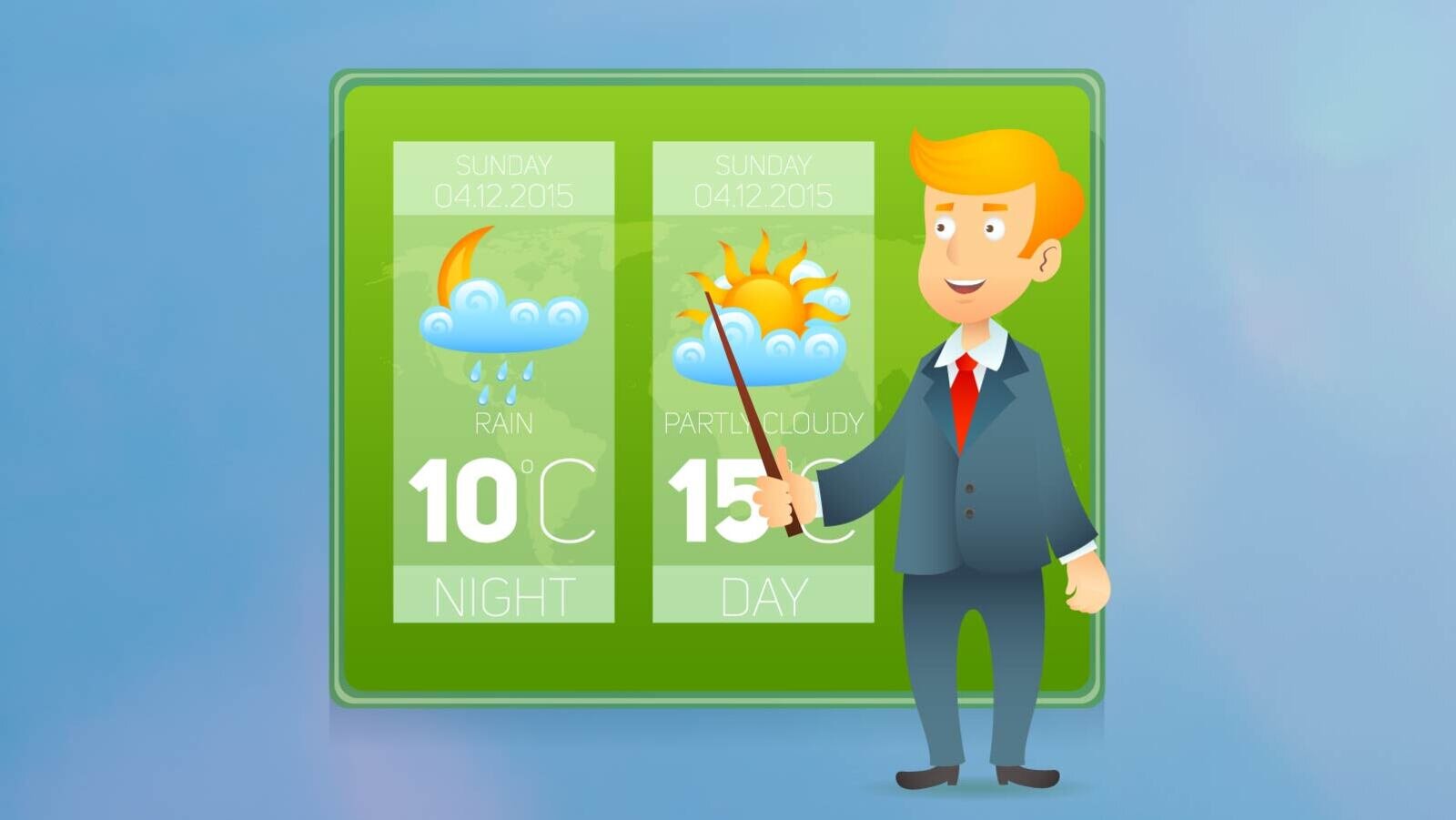
The picture below shows the TV weather forecast. Do you watch TV weather forecasts? Why? Why not? Answer the question in 4–5 sentences.
Słownik
/ ˈækjərət /
dokładany/dokładna
/ ɔːˈthetaɒrətiz / / ɔːˈthetaɒrəti /
władze [władza]
/ ˈblɪzəd /
burza śnieżna (a storm with strong winds and heavy snowfall)
/ bɔɪz / / bɔɪ /
boje [boja] (an anchored floating object that serves as a navigation mark or can be used for installing measurement instruments)
/ kəmˈpjuːtə ˈdʒenəreɪtɪd prɪˈdɪkʃn̩z / / kəmˈpjuːtə ˈdʒenəreɪtɪd prɪˈdɪkʃn̩ /
komputerowo wygenerowane prognozy [komputerowo wygenerowana prognoza]
/ kəmˈpjuːtɪŋ ˈpaʊə /
moc obliczeniowa (how much work a computer can do in a unit of time)
/ ˈkʌstəˌmaɪzd / / ˈkʌstəˌmaɪz /
wykonany/wykonana zgodnie z indywidualnymi potrzebami [wykonać zgodnie z indywidualnymi potrzebami]
/ dɪˈveləpmənt /
rozwój (appearance of a new phenomenon)
/ ˈdrɪzl̩ /
mżawka (a light rain)
/ ˈentəd ˈɪntə ˈsuːpəkəmpjuːtəz / / ˈentər ˈɪntə ə ˈsuːpəkəmpjuːtə /
wprowadzany/wprowadzana do superkomputerów [wprowadzić do superkomputera]
/ ɪkˈstriːm ˈweðə fɪˈnɒmɪnə / / ɪkˈstriːm ˈweðə fɪˈnɒmɪnən /
ekstremalne zjawiska pogodowe [ekstremalne zjawisko pogodowe] (natural events such as rain or storms, but much more powerful and destructive than usual)
/ ˈfɔːkɑːstəz / / ˈfɔːkɑːstə /
synoptycy/synoptyczki, osoby zajmujące się sporządzaniem prognoz pogody [synoptyk/synoptyczka, osoba zajmująca się sporządzaniem prognoz pogody]
/ fɔːˈwɔːnd ɪz ˌfɔːˈrɑːmd /
przezorny zawsze ubezpieczony (przysłowie, dosł. zawczasu ostrzeżony [jest] na czas uzbrojony) (a proverb which says that knowing about something in advance gives you a chance to get ready for it)
/ heɪl /
grad (frozen rain)
/ hjuːˈmɪdɪti /
wilgotność
/ ˈɪʃuː əˈlɜːts / / ˈɪʃuː ən əˈlɜːt /
wydawać ostrzeżenia [wydać ostrzeżenie]
/ ˈleɪəz əv ði ˈætməsfɪə / / ˈleɪər əv ði ˈætməsfɪə /
warstwy atmosfery [warstwa atmosfery] (any of the 5 major parts of the Earth’s atmosphere)
/ ˈmeɪkɪŋ ˌɒbzəˈveɪʃn̩z / / ˈmeɪk ˌɒbzəˈveɪʃn̩ /
dokonywanie obserwacji (l.m.) [dokonać obserwacji (l.p.)]
/ ˌmɪsˈliːdɪŋ /
mylący/myląca
/ ˈɔːbɪtɪŋ / / ˈɔːbɪt /
krążący/krążąca wokół [krążyć wokół]
/ ˌəʊvəˈkɑːst /
pochmurno
/ pəˈfɔːm rɪsk əˈsesmənt /
dokonać oceny ryzyka
/ prɪˌsɪpɪˈteɪʃn̩ /
opady (rain, snow, or hail)
/ ˈpʊt ɪn ˈpleɪs /
wprowadzić
/ ˌreɪdɪˈeɪʃn̩ /
promieniowanie (emission of energy from a given source)
/ rɪˌlaɪəˈbɪlɪti /
solidność
/ sɪˈvɪə ˈweðə kənˈdɪʃn̩z /
trudne warunki pogodowe
/ sliːt /
deszcz ze śniegiem
/ strəˈtiːdʒɪk ˈplænɪŋ /
planowanie strategiczne (a process of establishing goals and planning methods of achieving them)
/ ˈsʌni ˈɪntəvl̩z / / ˈsʌni ˈɪntəvl̩ /
przejaśnienia [przejaśnienie]
/ ˈteɪkɪŋ ˈmeʒəmənts / / ˈteɪk ˈmeʒəmənt /
robienie pomiarów [robić pomiar]
/ ˌʌp tə ˈdeɪt /
aktualny/aktualna
/ ˈʌpwəd trend /
trend zwyżkowy, poprawa (gradual growth or improvement)
/ ˈveəri /
różnić się
/ ˌvɪzəˈbɪlɪti /
widzialność
/ ˈweðə ˈfɔːkɑːst /
prognoza pogody
Źródło: GroMar Sp. z o.o., licencja: CC BY‑SA 3.0