bg‑azure

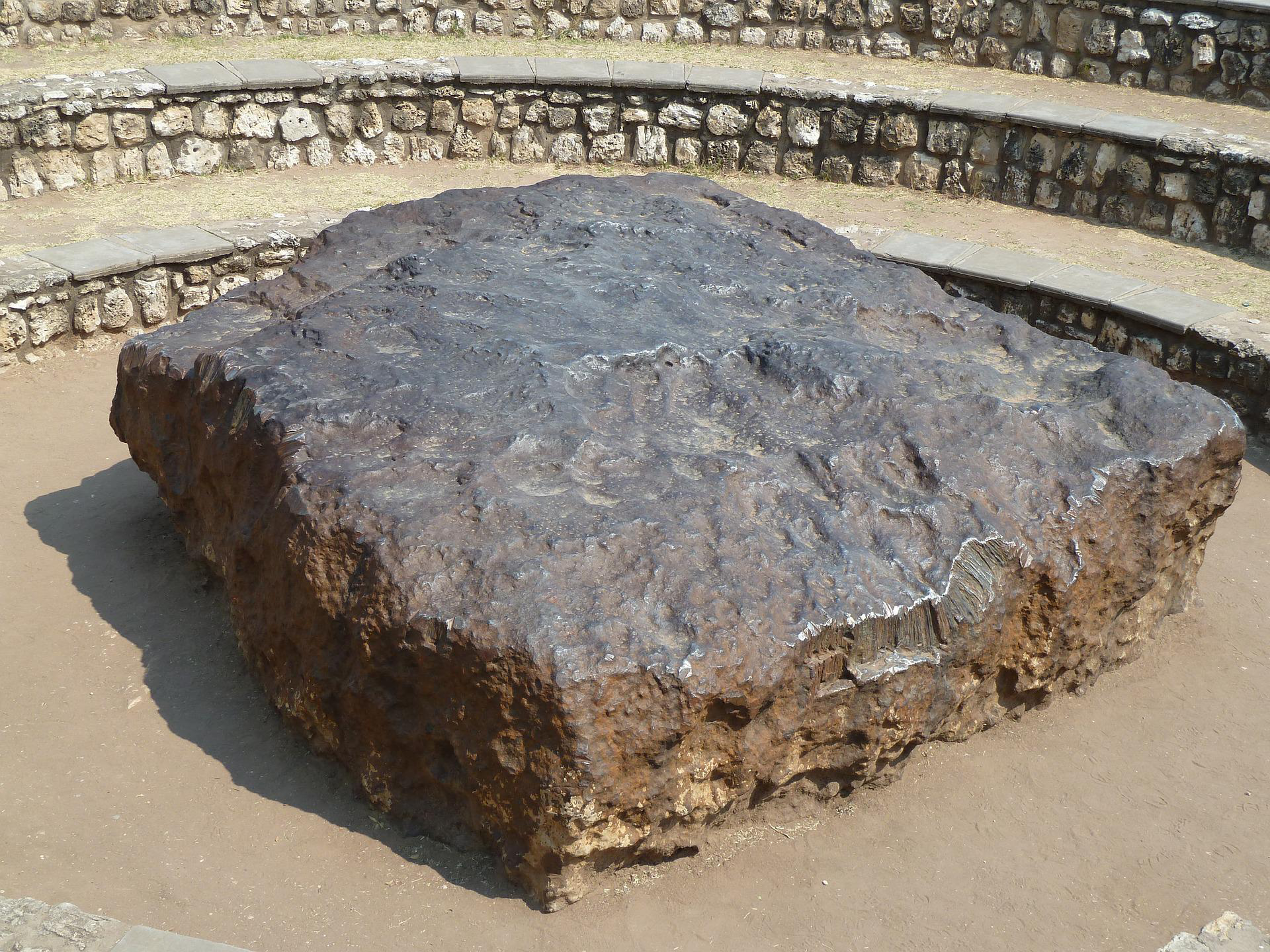
Do you recognise the rock in the picture? It’s Hoba, the largest meteorite ever found on the Earth. It is located in South West Africa, where it is believed to have fallen 80,000 years ago. The total weight of the meteorite is about 66 tons! Now it’s a tourist attraction, though a well protected one. Do you know how many meteorites get through the Earth’s atmosphere? Is this phenomenon dangerous for humans? In this part of the material, you will find answers to these questions.

Czy rozpoznajesz skałę na zdjęciu? To Hoba, największy meteoryt odnaleziony do tej pory na ziemi. Można go oglądać w południowo‑zachodniej części Afryki. Jego całkowita waga wynosi 66 ton! Obecnie jest on bardzo dobrze strzeżoną atrakcją turystyczną. Czy słyszałeś/słyszałaś kiedyś o meteorytach, które spadły na powierzchnię ziemi? Czy wiesz, jak wiele z meteoroidów przelatujących w sąsiedztwie naszej planety przedostaje się przez atmosferę ziemską? Myślisz, że to zjawisko jest dla nas niebezpieczne? W tej części materiału odnajdziesz odpowiedzi na wszystkie te pytania.
R17v8gkkS9LS7
Hoba, the biggest meteorite found so far on Earth
Hoba, największy meteoryt znaleziony dotąd na ziemi
Źródło: dostępny w internecie: www.pixabay.com [dostęp 20.09.2022], domena publiczna.
1
Exercise 1

Match the following words with their translations.

R1Pul1w9IVsoB
Źródło: GroMar Sp. z o.o., licencja: CC BY-SA 3.0.
Exercise 1
RiJ2EHIRTDiwO
Match the pictures with the terms related to stargazing.
Źródło: GroMar Sp. z o.o., licencja: CC BY-SA 3.0.

Study the text and do the exercises below.

When You Wish Upon a Star
Anna Faszcza When You Wish Upon a Star

Do you like to watch the sky and search for star constellationsstar constellations [star constellation]star constellations? Do you know that a star is actually a ball of gas? What is a shooting starshooting starshooting star then? Is it the same as an ordinary star? You’d better investigate it thoroughly before you make a wish upon a star next time!

If you’ve ever happened to observe the clear skyclear sky clear sky at night, you probably noticed that there are a great number of things to be seen including the Moon, stars, and even some planets, or other celestial bodiescelestial bodies [celestial body]celestial bodies. A.___ People take it for a shooting star, which it’s not.

Many stargazersstargazers [stargazer] stargazers will find it absolutely astonishing that meteors are called meteoroidsmeteorids [meteorid]meteoroids as long as they stay in the solar systemSolar Systemsolar system. B. ___ When meteoroidsmeteorids [meteorid]meteoroids fall through the Earth’s atmospherefall through the Earth’s atmospherefall through the Earth’s atmosphere, they are start to be called meteorsmeteors [meteor]meteors. When they fall toward the Earth, they move so fast that they heat up the air around them and burn up, making the air glow. This is what we call a shooting star. It turns out that hardly any meteor will hit the surface of our globe because most of them will be destroyed in the atmosphere. Consequently, there is nothing to worry about if pieces of rocks fall towards the Earth.

If more than one meteor burns up in the Earth’s atmosphereburns up in the Earth’s atmosphere [burn up in the Earth’s atmosphere]burns up in the Earth’s atmosphere, then there is a meteor showermeteor showermeteor shower. C. ___ A meteor shower appears when the Earth’s orbit crosses the orbit of a comet, which leaves behind the trails of rocky material. In other words, a cometcometcomet passes near the path where the Earth moves around the Sun. As it passes by, some dust from the comet breaks off. It can stay in space for a very long time. Every year, when the Earth gets close to the place with the dust and as it moves around, the Earth gets sprinkled with rocky material. Each little piece of dust creates a meteor. Those meteors can be of various sizes: they can be as small as grains of sand, or pebblespebbles [pebble]pebbles, or as giant as rocks!

There are different meteor showers throughout the year. The biggest meteor shower is called the Perseids, and it takes place around August 12th. You do not need to go to an observatory nor have a telescope to see a spectacular light show. Meteor showers can be seen on a clear night!

However, some meteors do reach the surface of the Earth and hit the ground. Those are called meteoritesmeteorites [meteorite]meteorites. They mostly land in the oceans or remote, uninhabited areas. D. ___

Nearly 50 tons of space debrisspace debris space debris crash into the Earth daily. The biggest meteorite ever found on Earth is Hoba in Africa. This piece of space rock and metal weighs over 60 tons! Most meteorites aren’t that heavy. Their usual weight is less than a pound. Another interesting example is the meteorite in China. That one is believed to be about 4.5 billion years old! It seems to be as old as our planet or even older!

1 Źródło: Anna Faszcza, licencja: CC BY-SA 3.0.
Exercise 2
RFpibyMQDYvKk
Complete the gaps (A‑D) with sentences so that they create a logical text about a meteor shower. A. Możliwe odpowiedzi: 1. It looks like thousands of shooting stars falling from the sky., 2. Due to these reasons they are hardly spotted by people., 3. Meteoroids are pieces of rock or metal that break off comets when they hit one another in space., 4. And if you are really lucky, you might spot a meteor, which is a streak of light that bursts across the sky. B. Możliwe odpowiedzi: 1. It looks like thousands of shooting stars falling from the sky., 2. Due to these reasons they are hardly spotted by people., 3. Meteoroids are pieces of rock or metal that break off comets when they hit one another in space., 4. And if you are really lucky, you might spot a meteor, which is a streak of light that bursts across the sky. C. Możliwe odpowiedzi: 1. It looks like thousands of shooting stars falling from the sky., 2. Due to these reasons they are hardly spotted by people., 3. Meteoroids are pieces of rock or metal that break off comets when they hit one another in space., 4. And if you are really lucky, you might spot a meteor, which is a streak of light that bursts across the sky. D. Możliwe odpowiedzi: 1. It looks like thousands of shooting stars falling from the sky., 2. Due to these reasons they are hardly spotted by people., 3. Meteoroids are pieces of rock or metal that break off comets when they hit one another in space., 4. And if you are really lucky, you might spot a meteor, which is a streak of light that bursts across the sky.
Źródło: GroMar Sp. z o.o., licencja: CC BY-SA 3.0.
Exercise 3
R1HQ8fMomRJHf
Match the words used in the text with their definitions. meteor Możliwe odpowiedzi: 1. a space rock that stays in the Solar System, 2. a group of stars that create a particular pattern, 3. a space rock that reaches and hits the Earth’s surface, 4. a space rock that falls through the Earth’s atmosphere and creates a bright streak of light, 5. a system of the Sun and a group of celestial objects around it, 6. non-functioning material that is orbiting the Earth meteorite Możliwe odpowiedzi: 1. a space rock that stays in the Solar System, 2. a group of stars that create a particular pattern, 3. a space rock that reaches and hits the Earth’s surface, 4. a space rock that falls through the Earth’s atmosphere and creates a bright streak of light, 5. a system of the Sun and a group of celestial objects around it, 6. non-functioning material that is orbiting the Earth meteoroid Możliwe odpowiedzi: 1. a space rock that stays in the Solar System, 2. a group of stars that create a particular pattern, 3. a space rock that reaches and hits the Earth’s surface, 4. a space rock that falls through the Earth’s atmosphere and creates a bright streak of light, 5. a system of the Sun and a group of celestial objects around it, 6. non-functioning material that is orbiting the Earth Solar System Możliwe odpowiedzi: 1. a space rock that stays in the Solar System, 2. a group of stars that create a particular pattern, 3. a space rock that reaches and hits the Earth’s surface, 4. a space rock that falls through the Earth’s atmosphere and creates a bright streak of light, 5. a system of the Sun and a group of celestial objects around it, 6. non-functioning material that is orbiting the Earth star constellation Możliwe odpowiedzi: 1. a space rock that stays in the Solar System, 2. a group of stars that create a particular pattern, 3. a space rock that reaches and hits the Earth’s surface, 4. a space rock that falls through the Earth’s atmosphere and creates a bright streak of light, 5. a system of the Sun and a group of celestial objects around it, 6. non-functioning material that is orbiting the Earth space debris Możliwe odpowiedzi: 1. a space rock that stays in the Solar System, 2. a group of stars that create a particular pattern, 3. a space rock that reaches and hits the Earth’s surface, 4. a space rock that falls through the Earth’s atmosphere and creates a bright streak of light, 5. a system of the Sun and a group of celestial objects around it, 6. non-functioning material that is orbiting the Earth
Źródło: GroMar Sp. z o.o., licencja: CC BY-SA 3.0.
Exercise 4

Based on the information from the text, answer the questions below.

  1. What is a star?

  2. What is the difference between a meteor, meteorite, and meteoroid?

  3. What is a meteor shower?

R71sD4hf4qEKe
(Uzupełnij).
Źródło: GroMar Sp. z o.o., licencja: CC BY-SA 3.0.

Słownik

burns up in the Earth’s atmosphere [burn up in the Earth’s atmosphere]

/ bɜːnz ˈʌp ɪn ði ˈɜːthetas ˈætməsfɪə / / ˈbɜ:n ˈʌp ɪn ði ˈɜːthetas ˈætməsfɪə /

R1bEcngCeM7zY1
Nagranie dźwiękowe

spala się w ziemskiej atmosferze [palić się w ziemskiej atmosferze] (get destroyed by fire in the Earth’s atmosphere)

R19dyOOvZRBPm1
Nagranie dźwiękowe
celestial bodies [celestial body]

/ sɪˈlestɪəl ˈbɒdɪz / / sɪˈlestɪəl ˈbɒdi /

RbYMODGC7NDsJ1
Nagranie dźwiękowe

ciała niebieskie [ciało niebieskie] (natural object outside of the Earth’s atmosphere)

RvMBYYtjIWOB71
Nagranie dźwiękowe
clear sky
clear sky

/ ˈklɪə skaɪ /

R1X17qliXH2wg1
Nagranie dźwiękowe

bezchmurne niebo (sky with no clouds)

R1IxXFEAmpurg1
Nagranie dźwiękowe
comet
comet

/ ˈkɒmɪt /

R1XjnsMEHeVGp1
Nagranie dźwiękowe

kometa (celestial body composed of dust, rock, and ice)

Ri0VREupTjvf41
Nagranie dźwiękowe
fall through the Earth’s atmosphere

/ fɔːl thetaruː ði ˈɜːthetas ˈætməsfɪə /

R1O5ynCxiL1g91
Nagranie dźwiękowe

wpadać przez ziemską atmosferę (get through the Earth’s atmosphere)

R19i9xFQhQQsK1
Nagranie dźwiękowe
go gazing at the sky

/ ˈɡəʊ ˈɡeɪzɪŋ ət ðə skaɪ /

RY6h6yKdaUWmo1
Nagranie dźwiękowe

pójść obserwować niebo (go to observe the sky)

RxF25n0kKx9Ox1
Nagranie dźwiękowe
meteor shower
meteor shower

/ ˈmiːtɪə ˈʃaʊə /

RRrSud4vFgqWa1
Nagranie dźwiękowe

rój meteorów (a period when meteors move fast across the sky)

RxoS4doBDdvzM1
Nagranie dźwiękowe
meteorites [meteorite]

/ ˈmiːtɪəraɪts / / ˈmiːtɪəraɪt /

RKPBnK0aYApiG1
Nagranie dźwiękowe

meteoryty [meteoryt] (a space rock that reaches and hits the Earth’s surface)

RrSQh5xM9RIBH1
Nagranie dźwiękowe
meteorids [meteorid]

/ ˈmitiəˌrɔɪd / / ˈmitiəˌrɔɪd /

R1C6QWyvKTkeH1
Nagranie dźwiękowe

meteoroidy [meteoroid] (a space rock that stays in the solar system)

R1zebCzqUHmgY1
Nagranie dźwiękowe
meteors [meteor]
meteors [meteor]

/ ˈmiːtɪəz / / ˈmiːtɪə /

RVe3jA6Oggb9b1
Nagranie dźwiękowe

meteory [meteor] (a space rock that falls through the Earth’s atmosphere that makes a bright streak of light)

RNtZOoEVzGWVw1
Nagranie dźwiękowe
pebbles [pebble]
pebbles [pebble]

/ ˈpebl̩z / / ˈpebl̩ /

R1eQfndEy3YXh1
Nagranie dźwiękowe

kamyki [kamyk]

R1I9L2oIg8fWv1
Nagranie dźwiękowe
shooting star
shooting star

/ ʃu:tɪŋ stɑː /

R1AUFnmebqwGb1
Nagranie dźwiękowe

spadająca gwiazda (a meteor that produces bright light when it travels through the Earth’s atmosphere)

R15Peai2x8eXp1
Nagranie dźwiękowe
shower peaks [shower peak]

/ ˈʃaʊə piːks / / ˈʃaʊə piːk /

R1Gd3VNg35EV61
Nagranie dźwiękowe

szczyty występowania roju meteorów [szczyt występowania roju meteorów] (time when meteor showers appear most often)

RNWiwGSp9MkcI1
Nagranie dźwiękowe
Solar System
Solar System

/ ˌsəʊlə ˈsɪstəm /

RmjGheOpvj3Js1
Nagranie dźwiękowe

układ słoneczny (a system of the Sun and a group of celestial objects around it)

RRdlm3yH2ywdf1
Nagranie dźwiękowe
space debris
space debris

/ speɪs ˈdeɪbriː /

Rroy3Mieu01Mx1
Nagranie dźwiękowe

kosmiczne szczątki, śmieci (non‑functioning material that is orbiting Earth)

Rb69vWpUjsjcM1
Nagranie dźwiękowe
star constellations [star constellation]

/ stɑː ˌkɒnstəˈleɪʃn̩z / / stɑː ˌkɒnstəˈleɪʃn̩ /

RYxaZBA0ZI0vk1
Nagranie dźwiękowe

konstelacje gwiazd [konstelacja gwiazd] (a group of stars that create a particular pattern in the sky, often an animal)

R1B75dgn0TJ3v1
Nagranie dźwiękowe
stargazers [stargazer]

/ ˈstɑːɡeɪzəz / / ˈstɑːɡeɪzə /

R1FQ7TdWcR8Ev1
Nagranie dźwiękowe

obserwatorzy gwiazd [obserwator/obserwatorka gwiazd] (a person whose hobby is to observe the sky)

R1Rcam72OM2uU1
Nagranie dźwiękowe
streak of light
streak of light

/ striːk əv laɪt /

RjK8TAbUZ9mvy1
Nagranie dźwiękowe

smuga światła (a flash of light)

RgfSqHm7kX5Rb1
Nagranie dźwiękowe

Źródło: GroMar Sp. z o.o., licencja: CC BY‑SA 3.0

R8emt5zlGKMaq
Źródło: GroMar Sp. z o.o., licencja: CC BY-SA 3.0.