bg‑azure

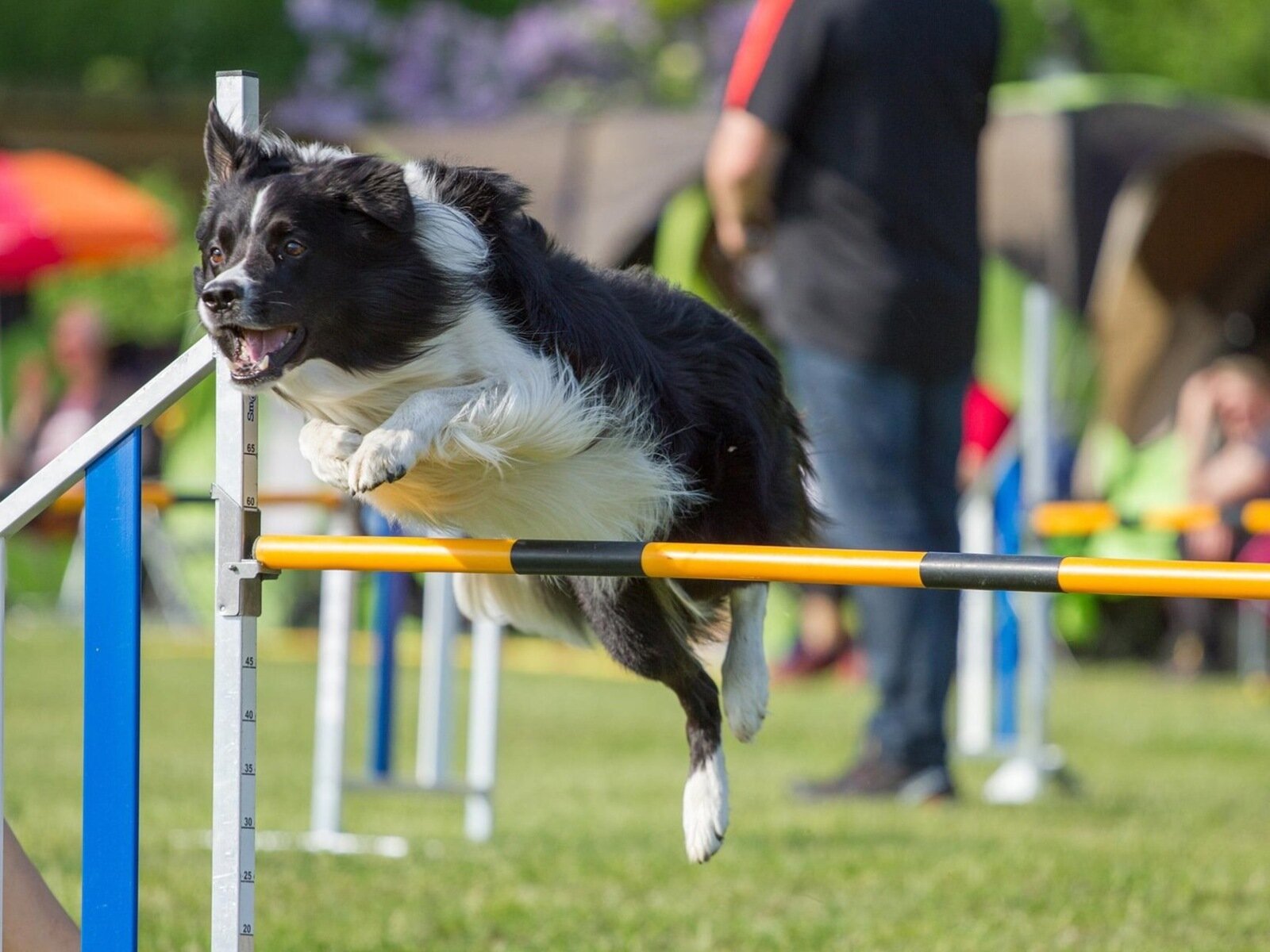
Border collies are considered to be one of the most talented and hardworking dogs. They can easily impress with their intelligence and eagerness to please people. Did you know that those smart creatures also make great search and rescue dogs? The picture below shows a border collie jumping over an obstacle. Why is it doing that? What other obstacles are there for it? Read the text to find out.

Border collie są uważane za jedne z najbardziej utalentowanych i pracowitych psów. Z łatwością mogą zaimponować swoją inteligencją i chęcią przypodobania się człowiekowi. Czy wiesz, że te mądre stworzenia są również świetnymi psami poszukiwawczymi i ratowniczymi? Na poniższym zdjęciu widać psa rasy border collie przeskakującego przez przeszkodę. Dlaczego to robi? Jakie inne przeszkody na niego czekają? Przeczytaj tekst, aby się tego dowiedzieć.
RdZmwxS79ajbq
We also want to play and train!
My też chcemy się bawić i trenować!
Źródło: dostępny w internecie: www.pixabay.com [dostęp 9.06.2022], domena publiczna.
R1Mxr2NZzi0dI
Exercise 1
Match the words with their definitions. dog’s nails Możliwe odpowiedzi: 1. claws, 2. harness, 3. collar, 4. bark, 5. lead, 6. wag, 7. snout, 8. paw a piece of leather, strap, or rope that is used when going for a walk Możliwe odpowiedzi: 1. claws, 2. harness, 3. collar, 4. bark, 5. lead, 6. wag, 7. snout, 8. paw set of straps attached to a dog’s upper body Możliwe odpowiedzi: 1. claws, 2. harness, 3. collar, 4. bark, 5. lead, 6. wag, 7. snout, 8. paw dog’s nose Możliwe odpowiedzi: 1. claws, 2. harness, 3. collar, 4. bark, 5. lead, 6. wag, 7. snout, 8. paw a piece of strap put around a dog’s neck Możliwe odpowiedzi: 1. claws, 2. harness, 3. collar, 4. bark, 5. lead, 6. wag, 7. snout, 8. paw a sound that a dog makes Możliwe odpowiedzi: 1. claws, 2. harness, 3. collar, 4. bark, 5. lead, 6. wag, 7. snout, 8. paw a movement of a tail indicating that a dog is happy Możliwe odpowiedzi: 1. claws, 2. harness, 3. collar, 4. bark, 5. lead, 6. wag, 7. snout, 8. paw a dog’s foot Możliwe odpowiedzi: 1. claws, 2. harness, 3. collar, 4. bark, 5. lead, 6. wag, 7. snout, 8. paw
Źródło: GroMar Sp. z o.o., licencja: CC BY-SA 3.0.

Read the text to learn more about a sport called dog agility. Have you heard about it?

Sport For Dogs
Dorota Giżyńska Sport For Dogs

Dog agilitydog agilityDog agility can be traced back to an event at the Crufts Dog Show in the United Kingdom in the late 1970s. During the break, dogs were running around a course similar to horse jumping coursescourses [course]courses to entertainentertainentertain the audience. It has now become very popular, with big tournamentstournaments [tournament]tournaments taking place all over the world. Dog agility is a dog sport in which a handlerhandlerhandler guides a dog through an obstacle courseobstacle courseobstacle course in a time and accuracy competition. Dogs are allowed to run off leadoff leadoff lead, but they don’t get treats or toys as rewards. The handler is not allowed to touch either the dog or the obstacles. 1..... . It means that the level of communication between the handler and the dog must be exceptionalexceptionalexceptional.

An agility course is made up of a collection of standard obstacles which are arranged by a judge in a design of his or her choice in a designateddesignateddesignated area. Grass, rubberrubberrubber, dirtdirtdirt, or special mattingmattingmatting can be used as the surface. The obstacles may be labelledlabelled [label]labelled with numbers indicating the order in which they must be performedperformed [perform]performed, depending on the type of competition. Courses are complexcomplexcomplex enough that a dog would be unable to complete them without human assistanceassistanceassistance. In a competition, the handler must evaluateevaluateevaluate the course, choose appropriate handling methodshandling methods [handling method]handling methods, and guide the dog through the course with precision and speed. 2..... . This also refers to the strengths and weaknesses of different dogs and handlers.

Before the competition begins, handlers are given a short walk‑throughwalk‑throughwalk‑through (usually 5 to 25 minutes) due to the fact that each course is uniqueuniqueunique. 3..... . In this way, they can see how they can best guide their dogs to get the most accurate and quickest pathpathpath through the obstacles. Because the handler's path differs from the dog’s, the handler may spend a significant amount of time planning for the whole route, which in a competition is only a briefbriefbrief run.

Contact obstacles are made up of planksplanks [plank]planks and rampsramps [ramp]ramps, and they require dogs to climb and descenddescenddescend the obstacle while placing a paw on a “contact zone,” which is a coloured area. Other obstacles include crossoverscrossovers [crossover]crossovers, tunnels, towers, or seesawseesawseesaw. Dogs are also expected to perform different jumps and cross over various hurdleshurdles [hurdle]hurdles. 4..... .Ribbonsribbons [ribbon]Ribbons, rosettesrosettes [rosette]rosettes, trophiestrophies [trophy]trophies and medals are common rewards for dogs.

According to handler surveyssurveys [survey]surveys, between 32 to 41.7% of dogs are injured while participating in agility events. Strainsstrains [strain] (noun)Strains, sprainssprains [sprain] (noun)sprains, and contusionscontusions [contusion]contusions were the most prevalentprevalentprevalent types of injuries. Border Collies are more likely than other breedsbreeds [breed] (noun)breeds to get hurt. According to reports, the injury rate varies by country, with Australia reporting the greatest percentage of injuries and the United States having the lowest.

1 Źródło: Dorota Giżyńska , licencja: CC BY-SA 3.0.
Exercise 2
RMvVnPGphLIQa
Read the text and drag the missing sentences into the spaces 1–4. There is one extra sentence which doesn’t match any of the gaps. 1. 1. He or she can only use spoken commands or body signals, 2. During this period, all handlers competing in a given class are allowed to walk around the course without their dogs, 3. There are numerous ways of making up for the natural differences in human and dog speeds, 4. The dog and the handler get one chance to complete the course, 5. They are assessed based on both speed and accuracy
2. 1. He or she can only use spoken commands or body signals, 2. During this period, all handlers competing in a given class are allowed to walk around the course without their dogs, 3. There are numerous ways of making up for the natural differences in human and dog speeds, 4. The dog and the handler get one chance to complete the course, 5. They are assessed based on both speed and accuracy
3. 1. He or she can only use spoken commands or body signals, 2. During this period, all handlers competing in a given class are allowed to walk around the course without their dogs, 3. There are numerous ways of making up for the natural differences in human and dog speeds, 4. The dog and the handler get one chance to complete the course, 5. They are assessed based on both speed and accuracy
4. 1. He or she can only use spoken commands or body signals, 2. During this period, all handlers competing in a given class are allowed to walk around the course without their dogs, 3. There are numerous ways of making up for the natural differences in human and dog speeds, 4. The dog and the handler get one chance to complete the course, 5. They are assessed based on both speed and accuracy
Źródło: GroMar Sp. z o.o., licencja: CC BY-SA 3.0.
Exercise 3
R1UKA4HDSqV6j
Analyse the text and decide if the following sentences are true or false. 1. Dogs are kept on a lead during the competition.
TRUE FALSE

2. The course is designed in such a way as to make it possible for the dog to complete it on its own.
TRUE FALSE

3. Planning the route before a competition usually takes more time than the run itself.
TRUE FALSE

4. Dogs are awarded points for precision and flexibility.
TRUE FALSE

5. In the U.S.A. there are more dog injuries than in other parts of the world.
TRUE FALSE
Źródło: GroMar Sp. z o.o., licencja: CC BY-SA 3.0.
Exercise 4
RzSpmSFrj0NEO
Choose the correct answers. 1. Dog agility requires:
a) a handler
b) a lead
c) an obstacle course
d) human assistance

2. The surface which can be used on an obstacle course can be:
a)rubber
b) dirt
c) matting
d) path

3. Obstacles may include:
a) planks
b) ramps
c) towers
d) seesaws

4. The most common rewards for dogs are:
a) snacks
b) rosettes
c) ribbons
d) trophies

5. Dogs can suffer from the following injuries:
a) strains
b) sprains
c) breeds
d) contusions
Źródło: GroMar Sp. z o.o., licencja: CC BY-SA 3.0.
Exercise 5
R14Ap6uarsnDJ
Read the text again and fill in the missing English words in the following blog entry. Hi everyone! Have you got a dog? Maybe you would like to take part with your pet in a sport called dog agility? What is it? It’s a good way of not having to keep it off     1. lTu uzupełnij. You are not allowed to say anything or touch your dog, so your communication must be     2. eTu uzupełnij, which probably means years of practice. The courses are prepared in such a way that they are     3. cTu uzupełnij     enough for the dog not to be able to run through it without its handler. Before the competition, handlers are allowed to have a walk-through, like in a game, because each course is     4. uTu uzupełnij. This helps them to prepare the quickest route for the competition. In the tournament, dogs must run through, or over, different     5. oTu uzupełnij     which include towers to tunnels. You might be thinking that this is a dangerous sport. It is. The most common type of     6. bTu uzupełnij     is Border Collie and the rate of injuries is quite high between 32 to 41.7%. So? Are you still interested, or will you give it a miss?
Źródło: GroMar Sp. z o.o., licencja: CC BY-SA 3.0.

Słownik

accuracy
accuracy

/ ˈækjərəsi /

R1KR8nZhDoGL21
Nagranie dźwiękowe

dokładność

Rx6qKgYzbcotb1
Nagranie dźwiękowe
assistance
assistance

/ əˈsɪstəns /

RaNacmIxo8WIh1
Nagranie dźwiękowe

pomoc

R1YwTLMUy3ot61
Nagranie dźwiękowe
bark (verb)
bark (verb)

/ bɑːk /

R12VXmX2w2PFl1
Nagranie dźwiękowe

szczekać

RcsFUwv6TlyfY1
Nagranie dźwiękowe
breeds [breed] (noun)

/ briːdz / / briːd /

RnfagdOeuEfP41
Nagranie dźwiękowe

rasy [rasa]

R2254Cl9EI4Yd1
Nagranie dźwiękowe
brief
brief

/ briːf /

RhSz8V3qJxNfx1
Nagranie dźwiękowe

krótki/krótka

R1IYUlFrQnq7V1
Nagranie dźwiękowe
claws [claw]
claws [claw]

/ klɔːz / / klɔː /

RIQHdn5IWR3nS1
Nagranie dźwiękowe

pazury [pazur]

RDQaaxC1iU0Fm1
Nagranie dźwiękowe
collar
collar

/ ˈkɒlə /

RS5LFLPZA6DdE1
Nagranie dźwiękowe

obroża

R1MXqW0k7E59P1
Nagranie dźwiękowe
complex
complex

/ ˈkɒmpleks /

R10kMG2nqc5R91
Nagranie dźwiękowe

skomplikowany/skomplikowana

RSYQZ8SoSPsRZ1
Nagranie dźwiękowe
contusions [contusion]

/ kənˈtjuːʒn̩z / / kənˈtjuːʒn̩ /

R1EcbK3OrxEmk1
Nagranie dźwiękowe

stłuczenia [stłuczenie]

RgLPxXRXnnhqd1
Nagranie dźwiękowe
courses [course]
courses [course]

/ ˈkɔːsɪz / / kɔːs /

R1RPElCWg29IK1
Nagranie dźwiękowe

tu: tory [tor] (trasa, po której coś lub ktoś się porusza)

R1J3LAQ0bVbiZ1
Nagranie dźwiękowe
crossovers [crossover]

/ ˈkrɒsəʊvəz / / ˈkrɒsəʊvə /

R18oBVCTjDWRZ1
Nagranie dźwiękowe

przejścia [przejście], tunele [tunel] (rodzaj przeszkody)

RR2LJV2i8Ffb91
Nagranie dźwiękowe
descend
descend

/ dɪˈsend /

R1KvlRJWW1U1n1
Nagranie dźwiękowe

schodzić z czegoś

Rh7YrtcYuwK6f1
Nagranie dźwiękowe
designated
designated

/ ˈdezɪɡneɪtɪd /

RASRAEqACX3rV1
Nagranie dźwiękowe

wyznaczony/wyznaczona

RzEKOvkzmkHAc1
Nagranie dźwiękowe
dirt
dirt

/ dɜːt /

R1NsxQ16Ec6Mm1
Nagranie dźwiękowe

ziemia, gleba

RL7EU84VpAs4v1
Nagranie dźwiękowe
dog agility
dog agility

/ dɒg əˈdʒɪləti /

R1aV9ELFNgNY51
Nagranie dźwiękowe

agility (sport dla psów polegający na jak najszybszym pokonaniu toru przeszkód)

R13SHEsidWac41
Nagranie dźwiękowe
entertain
entertain

/ ˌentəˈteɪn /

ReCGHY9cmQ9l81
Nagranie dźwiękowe

zabawiać, zapewniać rozrywkę

RxeYfeQVOEITf1
Nagranie dźwiękowe
evaluate
evaluate

/ ɪˈvæljʊeɪt /

R1X346ibUEpmX1
Nagranie dźwiękowe

oceniać

RhNbTrkVjaDNW1
Nagranie dźwiękowe
exceptional
exceptional

/ ɪkˈsepʃn̩əl /

RBfNWp3dK7lz61
Nagranie dźwiękowe

wyjątkowy/wyjątkowa

RL90wpoWBQmXM1
Nagranie dźwiękowe
handler
handler

/ˈhænd.lər/

R14WnIVVJrsFv1
Nagranie dźwiękowe

treser/treserka

R1ZMzlHozj1ZR1
Nagranie dźwiękowe
handling methods [handling method]

/ ˈhændl̩ɪŋ ˈmethetaədz / / ˈhændl̩ɪŋ ˈmethetaəd /

R1TcpfvHtXrXU1
Nagranie dźwiękowe

metody prowadzenia [metoda prowadzenia]

R16Uybtu5B1gt1
Nagranie dźwiękowe
harness
harness

/ ˈhɑːnəs /

R19kX4IJVIcQ61
Nagranie dźwiękowe

tu: szelki dla psa

ReK3sNMLicQ9n1
Nagranie dźwiękowe
hurdles [hurdle]
hurdles [hurdle]

/ ˈhɜːdl̩z / / ˈhɜːdl̩ /

RXpFPIVBMJe1Q1
Nagranie dźwiękowe

płotki [płotek] (rodzaj przeszkody)

R1X4KNhm9mQBu1
Nagranie dźwiękowe
labelled [label]
labelled [label]

/ ˈleɪbl̩d / / ˈleɪbl̩ /

RlfYbVqgdcplP1
Nagranie dźwiękowe

oznaczony/oznaczona [oznaczać]

RvlNpOfpLJu7m1
Nagranie dźwiękowe
lead
lead

/ liːd /

RhPvzXBsShI2z1
Nagranie dźwiękowe

smycz

RiTtkP88Pq5xd1
Nagranie dźwiękowe
off lead
off lead

/ ɒf liːd /

Rsz2NHJQY8zaO1
Nagranie dźwiękowe

bez smyczy

R1cM756Nb7aDG1
Nagranie dźwiękowe
matting
matting

/ ˈmætɪŋ /

R4WYViR4qPfjm1
Nagranie dźwiękowe

mata

R1HH4wXJZeo421
Nagranie dźwiękowe
obstacle course
obstacle course

/ ˈɒbstəkl̩ kɔːs /

R2NhQIs4i0hHn1
Nagranie dźwiękowe

tor przeszkód

R1eylvewFvUlt1
Nagranie dźwiękowe
path
path

/ pɑːtheta /

RWzi0fyBwbhcB1
Nagranie dźwiękowe

ścieżka

RbHUQ7xmZ0FDM1
Nagranie dźwiękowe
paw
paw

/ pɔː /

R11wDWwu8znd71
Nagranie dźwiękowe

łapa

RJnPJNdhcgp7O1
Nagranie dźwiękowe
performed [perform]
performed [perform]

/ pəˈfɔːmd / / pəˈfɔːm /

RZqSFGgIs8srY1
Nagranie dźwiękowe

wykonany/wykonana [wykonywać]

R1SxjeKwgb9KW1
Nagranie dźwiękowe
planks [plank]
planks [plank]

/ plæŋks / / plæŋk /

RtqaR1mOMXxQq1
Nagranie dźwiękowe

deski [deska]

Rq2GfIrdxjU701
Nagranie dźwiękowe
prevalent
prevalent

/ ˈprevələnt /

R10ISASouFCfb1
Nagranie dźwiękowe

przeważający/przeważająca

Rg2W13KaCdcox1
Nagranie dźwiękowe
ramps [ramp]
ramps [ramp]

/ ræmps / / ræmp /

R10JawPhhU3cs1
Nagranie dźwiękowe

rampy [rampa]

R14rHWdSml9TJ1
Nagranie dźwiękowe
ribbons [ribbon]
ribbons [ribbon]

/ ˈrɪbənz / / ˈrɪbən /

R11epfVVWlT621
Nagranie dźwiękowe

wstęgi [wstęga]

R1HGXz2PoTW8S1
Nagranie dźwiękowe
rosettes [rosette]
rosettes [rosette]

/ rəʊˈzets / / rəʊˈzet /

R1BS16CSYjzcO1
Nagranie dźwiękowe

kotyliony [kotylion]

R61LILpCVtOMP1
Nagranie dźwiękowe
rubber
rubber

/ ˈrʌbə /

R3lbQn8xQhMe71
Nagranie dźwiękowe

guma (materiał)

RGbasmtmErGMC1
Nagranie dźwiękowe
seesaw
seesaw

/ ˈsiːsɔː /

RndvBUQjUMo4l1
Nagranie dźwiękowe

huśtawka

R113A9WMxjqKy1
Nagranie dźwiękowe
snout
snout

/ snaʊt /

RDKRazRLXxbiR1
Nagranie dźwiękowe

pysk

RaM1AjuA4Ii8h1
Nagranie dźwiękowe
sprains [sprain] (noun)

/ spreɪnz / / spreɪn /

R1TLiy1XHG9VW1
Nagranie dźwiękowe

zwichnięcia [zwichnięcie]

RPVl8RxvlzxHc1
Nagranie dźwiękowe
strains [strain] (noun)

/ streɪnz / / streɪn /

R1CwDJDWsRai71
Nagranie dźwiękowe

naderwania [naderwanie]

RIgTeO7gQhhcN1
Nagranie dźwiękowe
surveys [survey]
surveys [survey]

/ səˈveɪz / / səˈveɪ /

RkcCbY9k5fCYH1
Nagranie dźwiękowe

ankiety [ankieta]

R1OA7mJvoYHLT1
Nagranie dźwiękowe
tournaments [tournament]

/ ˈtɔːnəmənts / / ˈtɔːnəmənt /

Ra0kncY1Mjc2b1
Nagranie dźwiękowe

turnieje [turniej]

R1Jshro1QV4hg1
Nagranie dźwiękowe
trophies [trophy]
trophies [trophy]

/ ˈtrəʊfɪz / / ˈtrəʊfi /

R1ANczzPP2a3p1
Nagranie dźwiękowe

trofea [trofeum], puchary [puchar]

RUoGf5AHxAYGo1
Nagranie dźwiękowe
unique
unique

/ juːˈniːk /

RrkY8aPdCqoT71
Nagranie dźwiękowe

jedyny w swoim rodzaju

Rlp88lD0cokmF1
Nagranie dźwiękowe
wag (verb)
wag (verb)

/ wæɡ /

R1OyD9Xy5SlbQ1
Nagranie dźwiękowe

machać, merdać

RU81JIROvI69W1
Nagranie dźwiękowe
walk‑through
walk‑through

/ wɔːk thetaruː /

R2Yffo1KUtlGZ1
Nagranie dźwiękowe

przećwiczenie, przejście

R2hK0Exp3z08K1
Nagranie dźwiękowe

Źródło: GroMar Sp. z o.o., licencja: CC BY‑SA 3.0

Rt7rf8wsNWQHN
(Uzupełnij).
Źródło: GroMar Sp. z o.o., licencja: CC BY-SA 3.0.