Przeczytaj
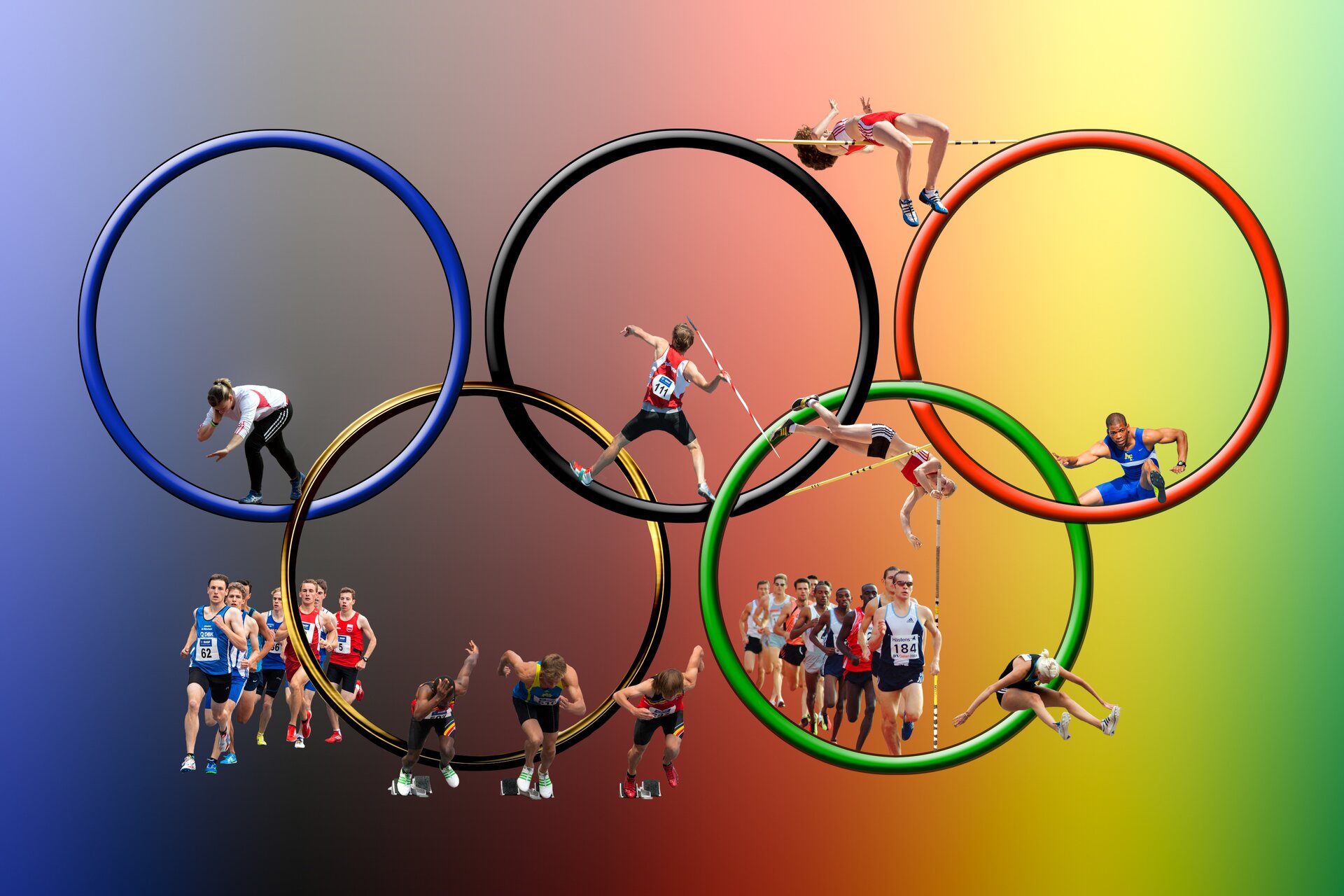
The picture below shows the Olympic rings which are the graphic symbol of the Olympics. Together with the Olympics motto: “Faster, Higher, Stronger – Together,” they encourage athletes to give their best during competition. You are going to read a text about the Olympics and learn more about this world’s leading multi‑sport event.
Poniższa ilustracja przedstawia koła olimpijskie – graficzny symbol igrzysk. Razem z mottem igrzysk, które brzmi „Szybciej, wyżej, mocniej – razem”, motywują one sportowców do wzmożonego wysiłku podczas rywalizacji. Przeczytaj tekst o igrzyskach olimpijskich i dowiedz się więcej o tej najważniejszej na świecie imprezie sportowej.
Match the words with their translations.
Połącz wyrazy z ich tłumaczeniami.
Find the words listed below. They are all related to the Olympic Games. Search up, down, forward, backward, and on the diagonal to find the hidden words.
Znajdź wyrazy podane poniżej. Wszystkie są związane z igrzyskami olimpijskimi. Możesz ich szukać pionowo, poziomo, od góry do dołu, od dołu do góry oraz na ukos.
Read the text about the Olympic Games to find out more about the event. Then, do the exercises below.
Przeczytaj tekst o igrzyskach olimpijskich, aby dowiedzieć się więcej na ich temat. Po przeczytaniu wykonaj zadania zamieszczone poniżej.
The Olympic Games - Then and Now!The Olympic GamesOlympic Games are the world’s greatest sporting eventsporting event 1. … to compete withcompete with each other. The list of sports on the programme is surprisingly long and, as such, it suits all tastessuits all tastes. No wonder the Olympics is watched all over the world and has its summer and winter editions. The first modern Summer Games took placetook place in Athens, Greece, in 1896, while 2. …, in France, in 1924.
Of course, the history of the Olympics is much longer. It started in ancient Greece about 776 B.C. as a religious and athletic festival held in Olympia to honour the Greek god Zeus. Back then, sports fans could watch running, jumping and throwing competitions as well as boxing, wrestling and chariot racingchariot racing. The ancient Olympic Games lastedlasted to at least 393 A.D., 3. … such a celebration. The modern Olympic Games look very different, but they are as exciting as those in the past. Let’s take a look attake a look at some fascinating facts about the Olympics from the days of the ancient Greeks to modern times. Here they are:
In ancient Greece, all athletes competed without any clothes, because it was a sign of couragecourage and power.
The five Olympic ringsOlympic rings symbolise five continents, and their colours were chosen because they all appear on the flags of all competing nations from around the world.
Nowadays, we have three medals: gold, silver and bronze, but at the ancient Olympics, there was just one medal – a gold one for the winner.
The Olympic flameOlympic flame, 4. …, is always litlit.
The London 2012 Olympic Games are known as the Women’s Games, as for the first time in the history of the Olympics, each nation had a female competitorcompetitor in its representation.
In the ancient Games, the athletes who made a false startmade a false start were punished withpunished with death.
The first Paralympic GamesParalympic Games took place in Rome in 1960, and they were designed for war veterans.
English and French are the two official languagesofficial languages of the International Olympics Committee (IOC).
Did you know any of the facts? Aren’t the Olympic Games the most thrilling sporting event in the world?
Źródło: Marta Fesnak, licencja: CC BY-SA 3.0.
Read the text in which parts of four sentences have been removed. Match each of them (A–E) with the right gap (1–4) typing in the correct letter. There is an extra one which does not fit into any gap.
Przeczytaj tekst, w którym usunięto fragmenty czterech zdań. Dopasuj każdy z nich (A–E) do właściwych luk (1–4), wpisując odpowiednią literę. Jeden fragment został podany dodatkowo i nie pasuje do żadnej luki.
Read the text again and decide if the following sentences are true or false.
Przeczytaj tekst ponownie, a następnie zdecyduj, czy podane zdania są prawdziwe, czy fałszywe.
a) were only a sporting event.
b) were both a religious and sports festival.
c) were just a religious celebration.
2. In ancient Greece athletes
a) wore special costumes.
b) could choose what to wear
c) competed without any clothes on.
3. The Olympic flame can’t be
a) transferred from one place to another.
b) extinguished.
c) carried in relays.
4. Why are the 2012 London Olympic Games called Women’s Games?
a) Because every nation had a female representative.
b) Because there were new women’s sports introduced then.
c) Because there were more women competing than men.
5. The first Paralympic Games were held in
a) Athens.
b) London.
c) Rome.
Read the text again and choose the correct answer.
Przeczytaj tekst ponownie, a następnie wybierz prawidłową odpowiedź.
a) were only a sporting event.
b) were both a religious and sports festival.
c) were just a religious celebration.
2. In ancient Greece athletes
a) wore special costumes.
b) could choose what to wear
c) competed without any clothes on.
3. The Olympic flame can’t be
a) transferred from one place to another.
b) extinguished.
c) carried in relays.
4. Why are the 2012 London Olympic Games called Women’s Games?
a) Because every nation had a female representative.
b) Because there were new women’s sports introduced then.
c) Because there were more women competing than men.
5. The first Paralympic Games were held in
a) Athens.
b) London.
c) Rome.
Read the text again and drag the words to fill in the gaps. There is one extra word.
Przeczytaj tekst ponownie, a następnie przeciągnij wyrazy w odpowiednie luki. Jeden wyraz nie pasuje do żadnej luki.
2. The list of sports on the Olympic programme is long and it 1. suits, 2. relay, 3. lasted, 4. courage, 5. competitor, 6. false all tastes.
3. The ancient Olympic Games 1. suits, 2. relay, 3. lasted, 4. courage, 5. competitor, 6. false to at least 393 A.D..
4. A 1. suits, 2. relay, 3. lasted, 4. courage, 5. competitor, 6. false race is a competition where members of a team take turns completing parts of the race course.
5. There was one 1. suits, 2. relay, 3. lasted, 4. courage, 5. competitor, 6. false start and the runners had to start again.
Read the text and write the missing words to fill in the gaps..
Przeczytaj tekst i wpisz brakujące wyrazy, żeby wypełnić luki.
Słownik
/ ˈæthetaliːts / / ˈæthetaliːt /
sportowcy [sportowiec]
/ ˈtʃærɪət ˈreɪsɪŋ /
wyścigi rydwanów
/ kəmˈpiːt wɪð /
rywalizować z
/ ˌkɒmpəˈtɪʃn̩ /
rywalizacja
/ kəmˈpetɪtə /
zawodnik/zawodniczka
/ ˈkʌrɪdʒ /
odwaga
/ ˈfiːmeɪl /
kobiecy/kobieca
/ fiːld /
boisko
/ ˈɡæðəz / / ˈɡæðə /
gromadzi się [gromadzić się]
/ ˈlɑːstɪd / / lɑːst /
trwały [trwać]
/ lɪt // laɪt /
zapalony/zapalona [zapalić]
/ ˈmeɪd ə ˈfɔːls stɑːt / / ˈmeɪk ə ˈfɔːls stɑːt /
zrobił/zrobiła falstart [zrobić falstart]
/ əˈfɪʃl̩ ˈlæŋɡwɪdʒɪz / / əˈfɪʃl̩ ˈlæŋɡwɪdʒ /
języki urzędowe [język urzędowy]
/ əˈlɪmpɪk fleɪm /
znicz olimpijski
/ əˈlɪmpɪk ɡeɪmz /
igrzyska olimpijskie
/ əˈlɪmpɪk rɪŋz /
koła olimpijskie
/ ˌperəˈlɪmpɪk ɡeɪmz /
igrzyska paraolimpijskie
/ ˈpʌnɪʃt wɪð / / ˈpʌnɪʃ wɪð /
ukarany czymś [ukarać czymś]
/ skɪlz / / skɪl /
umiejętności [umiejętność]
/ ˈspɔːtɪŋ ɪˈvent /
wydarzenie sportowe
/ ˈteɪk ə ˈlʊk æt /
spojrzeć na
/ suːts ɔ:l teɪsts / / suːt ɔ:l teɪsts /
zaspokaja wszystkie gusta [zaspokajać wszystkie gusta]
/ tiːmz / / tiːm /
drużyny [drużyna]
/ ˈtʊk ˈpleɪs / / ˈteɪk ˈpleɪs /
miały miejsce [mieć miejsce]
/ wə held / / bi held /
były zorganizowane [zostać zorganizowanym]
Źródło: GroMar Sp. z o.o., licencja: CC BY‑SA 3.0