Przeczytaj
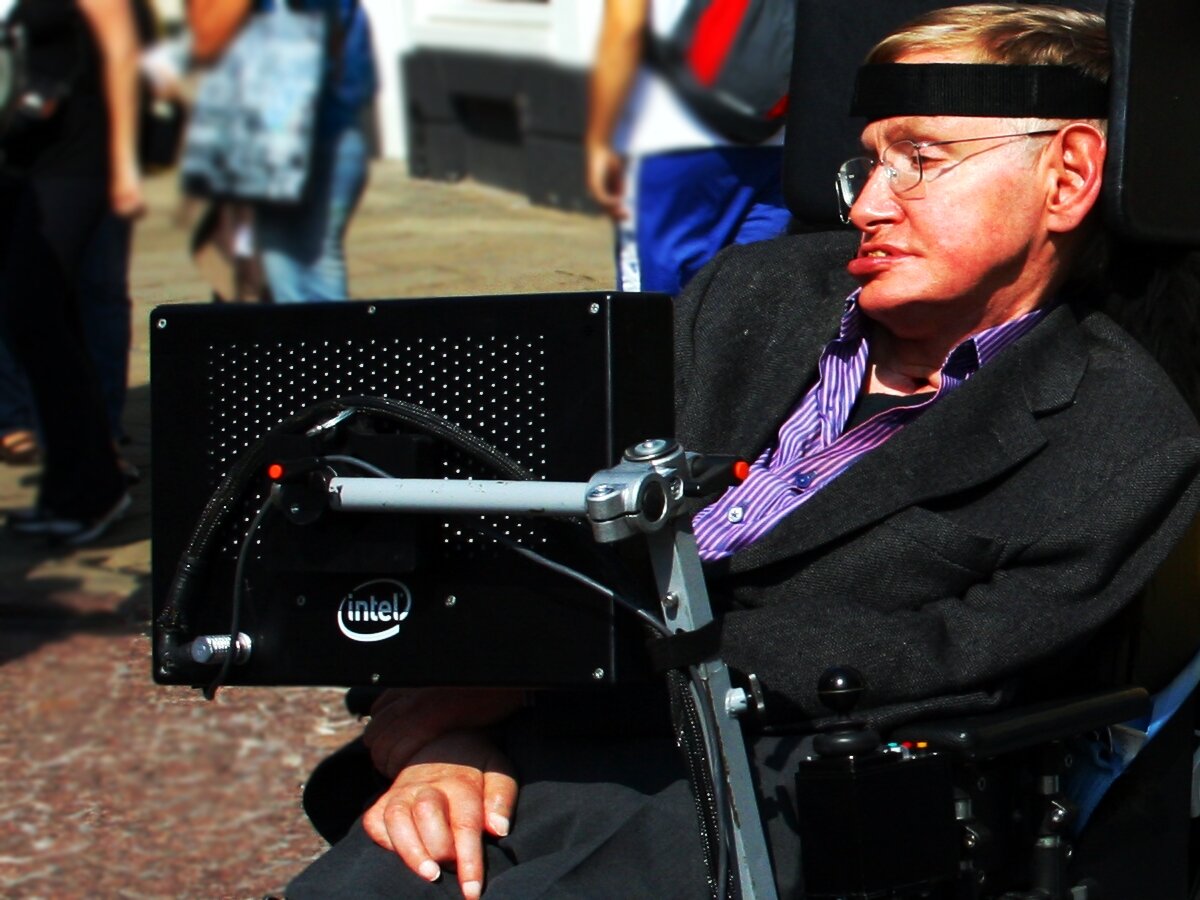
The picture below shows Stephen Hawking, a well‑known figure, one of the most famous physicists and cosmologists who was disabled and wheelchair‑bound. At a very early age, he showed signs of genius. He spent many years in his wheelchair, and kept carrying on with his studies about cosmology. Despite his disabilities, he was able to remain active in the world of science. You are going to read a text about assistive technology whose aim is to make disabled peoples’ lives easier.
Poniższe zdjęcie przedstawia Stephena Hawkinga, jednego z najwybitniejszych astrofizyków i znawców kosmosu, który był osobą z niepełnosprawnością i poruszał się na wózku inwalidzkim. Już w młodym wieku wykazywał cechy geniuszu. Większość życia spędził na wózku inwalidzkim. Pomimo swojej choroby, nieustannie prowadził badania w dziedzinie kosmologii i pozostał aktywny w świecie naukowym. W tej części przeczytasz tekst o technologii asystującej, której celem jest ułatwienie życia osobom z niepełnosprawnościami.
Read the text and do the exercises below.
"Difficulties allow us to change for the better." - Thomas S. MonsonIf you have a disability, you surely face a vast number of barriers in everyday life. Depending on the type of disability, you might find it hard or even impossible to open the window, use the toilet, walk, watch a movie, or talk to other people. Some people may need assistance with these things. Assistive Technology, or AT, is the system and services that assist you, improve your life and return independencereturn independence.
As disabilities are different, the required assistance also varies. It doesn’t matter how old you are and if you suffer from dementiadementia or learning disorderslearning disorders, physical disabilities, or mental conditions, AT helps everyone. Imagine a situation when you are alone at home and it is getting hotter and hotter inside and you cannot move from the bed or chair. AT might help you open the window without moving your seat by installing a special device.
In schools, assistive technology can be essential in allowing students with disorders or disabilities to access the general education curriculum. For those struggling with learning disorders, such as dyslexiadyslexia, electronic worksheets enable students to complete their school tasks due to options like text‑to‑speechtext‑to‑speech. Furthermore, students with dyscalculiadyscalculia might be familiar withbe familiar with a voice calculatorvoice calculator, which makes it easier to check tasks, read numbers and do calculationsdo calculations. Tools, such as automatic page turners, book holders, or adapted pencil gripsadapted pencil grips, help disabled students cope with school duties. In some countries, there are special education learning materials and individualised educational programmes for the disabled which are paid by the government when prescribed by the doctor as obligatory. There is much more to offer in the educational field. Educational software with its text readers, notetakers, text enlargerstext enlargers, or talking word processors, assist students with reading, comprehension, learning, and organisational difficulties.
Assistive technology provides great help to caregiverscaregivers who assist the patients with physical and mental disabilities, especially the elderly. Among the supportive devices, we can find sensor mats with alarms, wearable GPS tracking deviceswearable GPS tracking devices, automated pill dispensersautomated pill dispensers, universal big button TV remotes and many others. Not only do they help in everyday struggleseveryday struggles but they also provide some peace and rest to caregivers. It means that both family and patients can take advantage oftake advantage of AT.
Undoubtedly, AT is beneficial forbeneficial for monitoring the health and safety of the patient. Everyone might purchase specific equipment which makes their lives easier. Moreover, devices, such as personal alarms or telecare, give a chance to react quickly in case of an emergencyin case of an emergency. For example, when a person has a heart attack, a fast response can help save the patient’s life.
There are some cons, though. For some people, this technology might seem too complicated at first and, as a result, they may get confused and discouraged quickly. The price of devices leaves much to be desiredleaves much to be desired for too many patients and not everybody is able to get them. It must be remembered that any device should be chosen carefully and prescribed by the doctor or other specialist in order to function and work most effectively. There’s no point choosingThere’s no point choosing a cheaper equivalent as it may not be well‑fitted to our needs.
All in all, assistive technology aims to allow the disabled to participate inparticipate in every aspect of life, including home, school, work, or community. Due to AT, reliance on carereliance on care is reduced, and so the greater independence of people can be achieved. This way, people will gain more peace of mind, self‑confidence and consequently, they start to develop social lives by participating in events.
Źródło: Anna Faszcza, licencja: CC BY-SA 3.0.
A) provide people with entertainment.
B) help people regain autonomy.
C) allow people to use electronic devices.
2. Assistive technology
A) supports mainly old people.
B) provides devices for people with motor disabilities.
C) supports people with various disorders.
3. Students with learning disabilities
A) can get a refund of material costs as medical indications.
B) get educational materials for free.
C) have the devices obligatory paid by the government.
4. Caregivers
A) have it easier due to AT.
B) must purchase specific equipment to get some rest.
C) are often members of the patient’s family.
5. The price of certain devices
A) is affordable for everybody.
B) varies depending on the specialist selling it.
C) is unreachable for many people.
Read the questions related to the reading part in this section and answer them in 2–3 sentences each.
Take a look again at the statement by Stephen Hawking “And however difficult life may seem, there is always something you can do, and succeed at. It matters that you don’t give up.” How it makes you feel? Do you agree with the author?
What kind of improvements does assistive technology offer to disabled students.
Słownik
/ əˈdæptɪd ˈpensl̩ ɡrɪps / / əˈdæptɪd ˈpensl̩ ɡrɪp /
dostosowane uchwyty do ołówków [dostosowany uchwyt do ołówka] (a grip of a pencil modified for easier use)
/ ˈɔːtəmætɪd pɪl dɪˈspensə /
zautomatyzowany dozownik do lekarstw (a device which feeds out pills in an automatic manner)
/ bi fəˈmɪlɪə wɪð /
być obeznanym z (czymś) (to know or understand something)
/ ˌbenɪˈfɪʃl̩ fɔː /
korzystny/korzystna dla (advantageous)
/ ˈkerˌɡɪvərz / / ˈkerˌɡɪvə /
opiekunowie [opiekun/opiekunka] (a person who takes care of somebody)
/ dɪˈmenʃə /
demencja (brain conditions causing dysfunction of memory, thinking and body control)
/ du: ˌkælkjʊˈleɪʃn̩z /
obliczać (to perform mathematical operations)
/ ˌdɪskalˈkjuːlɪə /
dyskalkulia (learning disability causing impairment of mathematical ability)
/ dɪsˈleksɪə /
dysleksja (learning disability causing impairment of ability to read and write)
/ ˈevrɪdeɪ ˈstrʌɡl̩ /
codzienne zmaganie (difficult things one has to do every day)
/ ɪn keɪs əv ɪˈmɜːdʒənsi /
w nagłym wypadku (in case of an accident demanding immediate action)
/ ˈlɜːnɪŋ dɪsˈɔːdəz / / ˈlɜːnɪŋ dɪsˈɔːdə /
zaburzenia uczenia się [zaburzenie uczenia się] (disorders characterised by inadequate development of specific academic, language, and speech skills, e.g. dyslexia, dyscalculia or dysgraphia)
/ liːvz ˈmʌtʃ tu bi dɪˈzaɪəd / / ˈli:v ˈmʌtʃ tu bi dɪˈzaɪəd /
pozostawia dużo do życzenia [pozostawiać dużo do życzenia] (not satisfactory)
/ pɑːˈtɪsɪpeɪt ɪn /
uczestniczyć w (to take part in)
/ rɪˈlaɪəns ˈɒn keə /
zależność od opieki (dependence on care)
/ rɪˈtɜːn ˌɪndɪˈpendəns /
przywrócić niezależność (to help somebody be self‑reliant again)
/ ˈteɪk ədˈvɑːntɪdʒ ɒv /
skorzystać z (to benefit from)
/ tekst ɪnˈlɑːdʒəz / / tekst ɪnˈlɑːdʒə /
powiększalniki tekstu [powiększalnik tekstu] (a device which magnifies letters in a text and makes it easier to read it)
/ tekst tu spiːtʃ /
syntezator mowy (a device or software changing written text into speech)
/ ðeəz ˈnəʊ poɪnt ˈtʃuːzɪŋ /
nie ma sensu wybierać (there's no sense in selecting)
/ vɔɪs ˈkælkjʊleɪtə /
kalkulator głosowy (a device used for performing mathematical operations which is voice‑operated)
/ ˈweərəbl̩ ˌdʒiːˈpiːˈɛs ˈtrækɪŋ dɪˈvaɪs /
urządzenie lokacyjne noszone na sobie (a device one can wear on oneself which is used to check and follow one's location)
Źródło: GroMar Sp. z o.o., licencja: CC BY‑SA 3.0