Przeczytaj
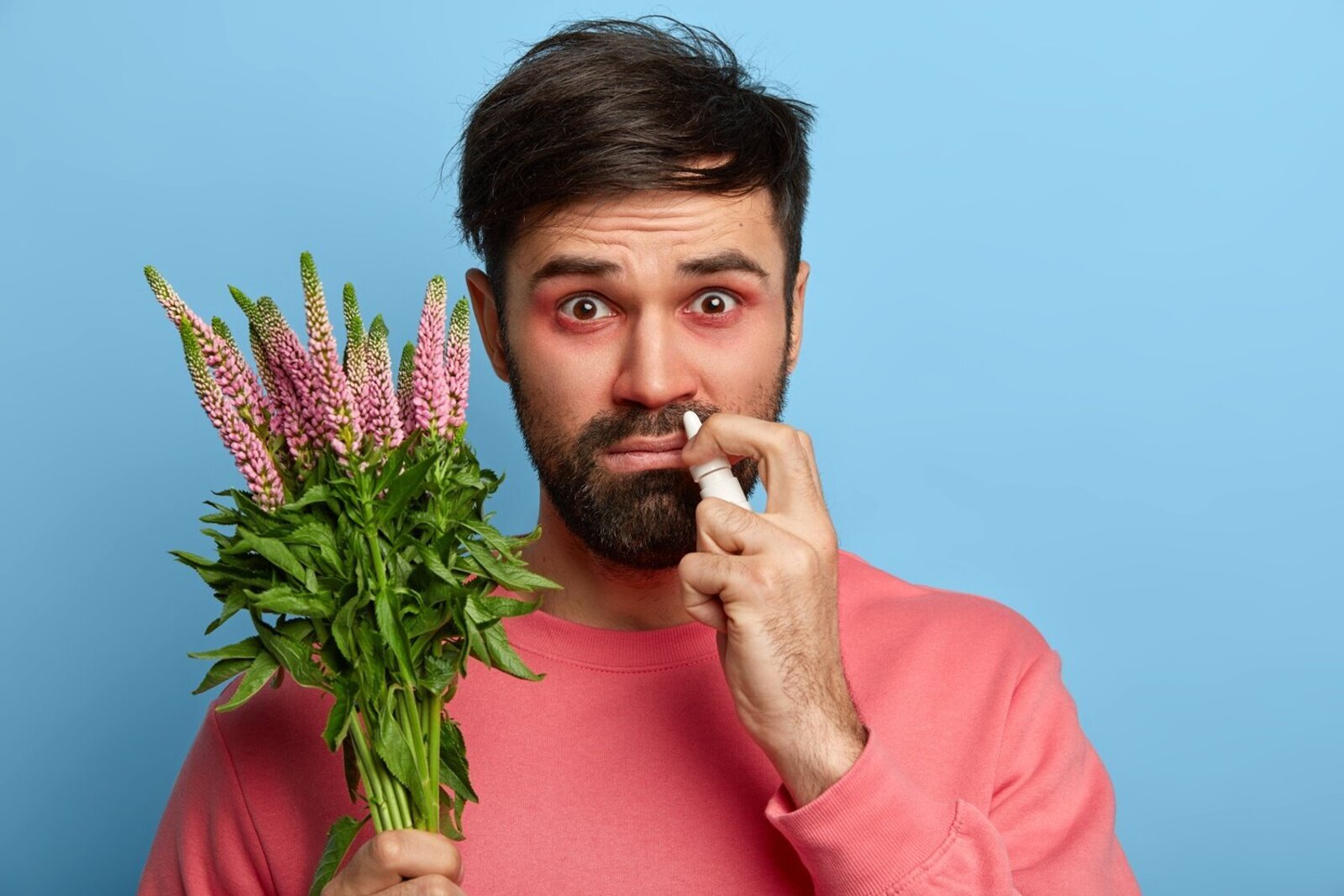
The picture below shows a man with symptoms of an allergy. Did you know that there are people who are allergic to sun, cold, or even water? Living with such extreme allergies can’t be easy! In this section you are going to read a text introducing you to the subject of allergies, thanks to which you will learn some facts about this health problem.
Poniższe zdjęcie przedstawia mężczyznę z objawami alergii. Czy wiesz, że istnieją ludzie uczuleni na słońce, zimno, a nawet wodę? Życie z tak ekstremalnymi alergiami z pewnością nie jest łatwe! W tej sekcji przeczytasz tekst, który wprowadzi cię w zagadnienie alergii, dzięki czemu dowiesz się więcej na temat tego problemu zdrowotnego.
Read the text and find out some facts about allergies.
On Permanent AlertAn allergy happens when your body reacts to a substance, such as pollenpollen, mouldmould, or dust mitesdust mites, as if it was a harmful invader. Such a substance is called an allergenallergen. The immune system begins to produce allergic antibodiesantibodies, whose job is to track specific allergens and remove them from the body. When you come in contact with these allergens again, your immune system releases a chemical called histaminehistamine, which dilates blood vesselsdilates blood vessels and results in allergy symptoms including a stuffy nose and swellingswelling around the eyes.
Depending on what you are allergic to andare allergic to and how severe your allergy is, you may have mild symptoms, like rashrash, hiveshives, itchinessitchiness, hay feverhay fever, conjunctivitisconjunctivitis, runny nose, or moderate reactions, for example swelling and wheezingwheezing. The most severe allergic reactionsevere allergic reaction is called anaphylaxisanaphylaxis and is quite rare, but may be dangerous if immediate medical help is not given. It is most often triggered by certain foods, like peanuts, fish, eggs, or milk, or by an insect stinginsect sting or venomvenom, for example from a bee or wasp. Some people develop a drug allergydrug allergy to certain medicines, especially penicillin, so they have to be careful what they take. Having an allergy also increases your risk of getting other medical problems, for instance asthmaasthma, a disease which affects your lungs and causes shortness of breath.
There are many different allergens, and they all have one thing in common: proteinprotein. Even if some of them don’t have it, they bind withbind with protein once they enter your body, triggeringtriggering an allergic reaction. The most common allergens include: food (when food sensitivityfood sensitivity develops either into food intolerancefood intolerance or food allergyfood allergy), plants, medicines (prescription medicationsprescription medications, over‑the‑counter medicinesover‑the‑counter medicines and herbal preparations), insects, moulds (i.e. type of mushroom), animal danderanimal dander (e.g. fur), and chemicals or chemical products (e.g. latex rubber).
When you come out in a rashcome out in a rash and suspect that you might have an allergy, do an allergy testallergy test, which will help to find out what causes your allergy symptoms. The immunology specialist may decide you should have a patch testpatch test, which will induce contact dermatitisinduce contact dermatitis as a reaction to the substance you are allergic to. Another option could be a skin prick testskin prick test, which is performed by pricking your skin with an extract of an allergen, and then observing your skin’s reaction.
Allergies cannot be cured, but they can be put under control. Generally, the most important step in preventing allergic reactions is avoiding your allergy triggersallergy triggers, especially if you develop any kind of occupational allergyoccupational allergy. Minor allergy symptoms may be treated with antihistaminesantihistamines, decongestantsdecongestants, or steroidssteroids. Immunotherapy is usually used for treating chronic allergy symptoms. It gradually exposes you to a given allergen, helping to decrease the immune system’s response to this allergy.
Although allergies are widely encountered, anyone suffering from them should consult a specialist who will prescribe the most appropriate treatment methods.
Źródło: Agnieszka Sękiewicz‑Magoń, licencja: CC BY-SA 3.0.
- An allergen is
a gene produced by your body.
a substance that causes an allergy reaction.
a substance produced by your body in an allergic reaction.
- Which type of allergy symptoms are watering eyes?
A mild symptom.
A moderate symptom.
Anaphylaxis.
- According to the text, asthma is
the direct result of an allergy.
more likely to occur when you have an allergy.
one of the reasons for an allergy.
- Which type of allergy test will not cause skin inflammation?
Patch test.
Skin prick test.
Blood test.
- Which is usually used to treat allergies?
Antihistamines.
Immunotherapy.
Beta blockers.
- Approximately 10% of the population have an allergic reaction to 1. antihistamine, 2. rash, 3. venom, 4. occupational allergies, 5. itchiness, 6. allergy triggers, 7. hay fever, 8. food allergy, 9. pollen released by a stinging insect.
- A lot of people are allergic to 1. antihistamine, 2. rash, 3. venom, 4. occupational allergies, 5. itchiness, 6. allergy triggers, 7. hay fever, 8. food allergy, 9. pollen, so spring is the worst season for them.
- You should have special tests to determine your 1. antihistamine, 2. rash, 3. venom, 4. occupational allergies, 5. itchiness, 6. allergy triggers, 7. hay fever, 8. food allergy, 9. pollen in order to avoid them.
- You may suffer from 1. antihistamine, 2. rash, 3. venom, 4. occupational allergies, 5. itchiness, 6. allergy triggers, 7. hay fever, 8. food allergy, 9. pollen if you have cold-like symptoms, such as sneezing, coughing, and a runny or blocked nose.
- The doctor will probably prescribe you an 1. antihistamine, 2. rash, 3. venom, 4. occupational allergies, 5. itchiness, 6. allergy triggers, 7. hay fever, 8. food allergy, 9. pollen for your allergy.
- Sometimes the 1. antihistamine, 2. rash, 3. venom, 4. occupational allergies, 5. itchiness, 6. allergy triggers, 7. hay fever, 8. food allergy, 9. pollen is hard to stand; I could scratch and scratch my whole body!
- More and more workers in industrialised societies are affected by 1. antihistamine, 2. rash, 3. venom, 4. occupational allergies, 5. itchiness, 6. allergy triggers, 7. hay fever, 8. food allergy, 9. pollen because of the exposure to harmful substances in their workplace.
- I can’t even be near fish because I have a 1. antihistamine, 2. rash, 3. venom, 4. occupational allergies, 5. itchiness, 6. allergy triggers, 7. hay fever, 8. food allergy, 9. pollen.
- When she woke up, she discovered she had a 1. antihistamine, 2. rash, 3. venom, 4. occupational allergies, 5. itchiness, 6. allergy triggers, 7. hay fever, 8. food allergy, 9. pollen all over her body.
Answer the questions. Write 2–3 sentences to each question.
Do you think it is very difficult to live with an allergy? Why? Why not?
Which type of allergy test would you prefer to be given and why?
Do you think there will be more or fewer allergies in the future? Why?
Słownik
/ ˈælədʒən /
alergen
/ ˈælədʒi ˈtest /
test alergologiczny, próba uczuleniowa
/ ˈælədʒi ˈtrɪɡəz / / ˈælədʒi ˈtrɪɡə /
czynniki powodujące alergię [czynnik powodujący alergię]
/ ˌænəfɪˈlæksɪs /
anafilaksja (w medycynie: reakcja alergiczna)
/ ænɪml ˈdændə /
łupież zwierzęcy
/ ˈæntiˌbɒdiz / / ˈæntiˌbɒdi /
przeciwciała [przeciwciało]
/ ˌæntiˈhɪstəmiːnz / / ˌæntiˈhɪstəmiːn /
leki przeciwhistaminowe [lek przeciwhistaminowy] (w medycynie: leki przeciw alergii)
/ ər əˈlɜːdʒɪk tuː / / bi əˈlɜːdʒɪk tuː /
jesteś uczulony/uczulona na [być uczulonym/uczuloną na]
/ ˈæsmə /
astma
/ baɪnd wɪð /
łączą się z [łączyć się z]
/ ˈkʌm aʊt ɪn ə ræʃ /
dostaniesz wysypki [dostać wysypki]
/ kənˌdʒʌŋktɪˈvaɪtɪs /
zapalenie spojówek
/ ˈkɒntækt ˌdɜːməˈtaɪtɪs /
kontaktowe zapalenie skóry
/ ˌdiːkənˈdʒestənts / / ˌdiːkənˈdʒestənt /
środki udrożniające górne drogi oddechowe [środek udrożniający górne drogi oddechowe]
/ daɪˈleɪts blʌd veslz / / daɪˈleɪt blʌd veslz /
rozszerza naczynia krwionośne [rozszerzać naczynia krwionośne]
/ ˈdrʌɡ ˈælədʒi /
alergia polekowa
/ dʌst maɪts / / dʌst maɪt /
roztocza [roztocze]
/ fuːd ˈælədʒi /
alergia pokarmowa
/ fuːd ɪnˈtɒlərəns /
nietolerancja pokarmowa
/ fuːd ˌsensəˈtɪvɪti /
nadwrażliwość pokarmowa
/ heɪ ˈfiːvə /
katar sienny
/ ˈhɪstəmiːn /
histamina
/ haɪvz /
pokrzywka
/ ɪnˈdjuːs ˈkɒntækt ˌdɜːməˈtaɪtɪs /
wywoła kontaktowe zapalenie skóry [wywołać kontaktowe zapalenie skóry]
/ ˈɪnsekt stɪŋ /
użądlenie owada
/ ˈɪtʃinəs /
swędzenie
/ məʊld /
pleśń
/ ˌɒkjʊˈpeɪʃnəl ˈælədʒi /
alergia o podłożu zawodowym
/ ˈəʊvəðəˈkaʊntə ˈmedsn̩z / / ˈəʊvəðəˈkaʊntə ˈmedsn̩ /
leki sprzedawane bez recepty [lek sprzedawany bez recepty]
/ ˈpætʃ ˈtest /
test plasterkowy
/ ˈpɒlən /
pyłek kwiatowy
/ prɪˈskrɪpʃn̩ ˌmedɪˈkeɪʃn̩z / / prɪˈskrɪpʃn̩ ˌmedɪˈkeɪʃn̩ /
leki na receptę [lek na receptę]
/ ˈprəʊtiːn /
białko
/ ræʃ /
wysypka
/ sɪˈvɪər əˈlɜːdʒɪk rɪˈækʃn̩ /
ostra reakcja alergiczna
/ ˈskɪn prɪk ˈtest /
punktowy test skórny
/ ˈsterɔɪdz / / ˈsterɔɪd /
sterydy [steryd]
/ ˈswelɪŋ /
opuchlizna
/ ˈtrɪɡərɪŋ / / ˈtrɪɡə /
wywołując [wywoływać]
/ ˈvenəm /
jad
/ ˈwiːzɪŋ /
świszczenie, świszczący oddech
Źródło: GroMar Sp. z o.o., licencja: CC BY‑SA 3.0