Przeczytaj
We take computers for granted. Many of us start and finish each day with our smartphones. We work and study in front of monitors or laptop screens. Computers are a common source of entertainment. An ever‑growing number of people hardly remembers the world from before personal computers. How old is this device and what were its beginnings? Is quantum computing the future?
Komputery stały się nieodłącznym elementem naszej codzienności. Wielu i wiele z nas zaczyna i kończy dzień ze smartfonem w ręce. Pracujemy bądź uczymy się przed monitorami czy wyświetlaczami laptopów. Komputery są dla nas również źródłem rozrywki. Coraz więcej ludzi zdaje się niemal nie pamiętać czasów sprzed pojawienia się komputerów osobistych, rośnie też grupa osób urodzonych już po ich upowszechnieniu się. Od jak dawna komputery są z nami? Jakie były ich początki? Czy przyszłość to komputery kwantowe?
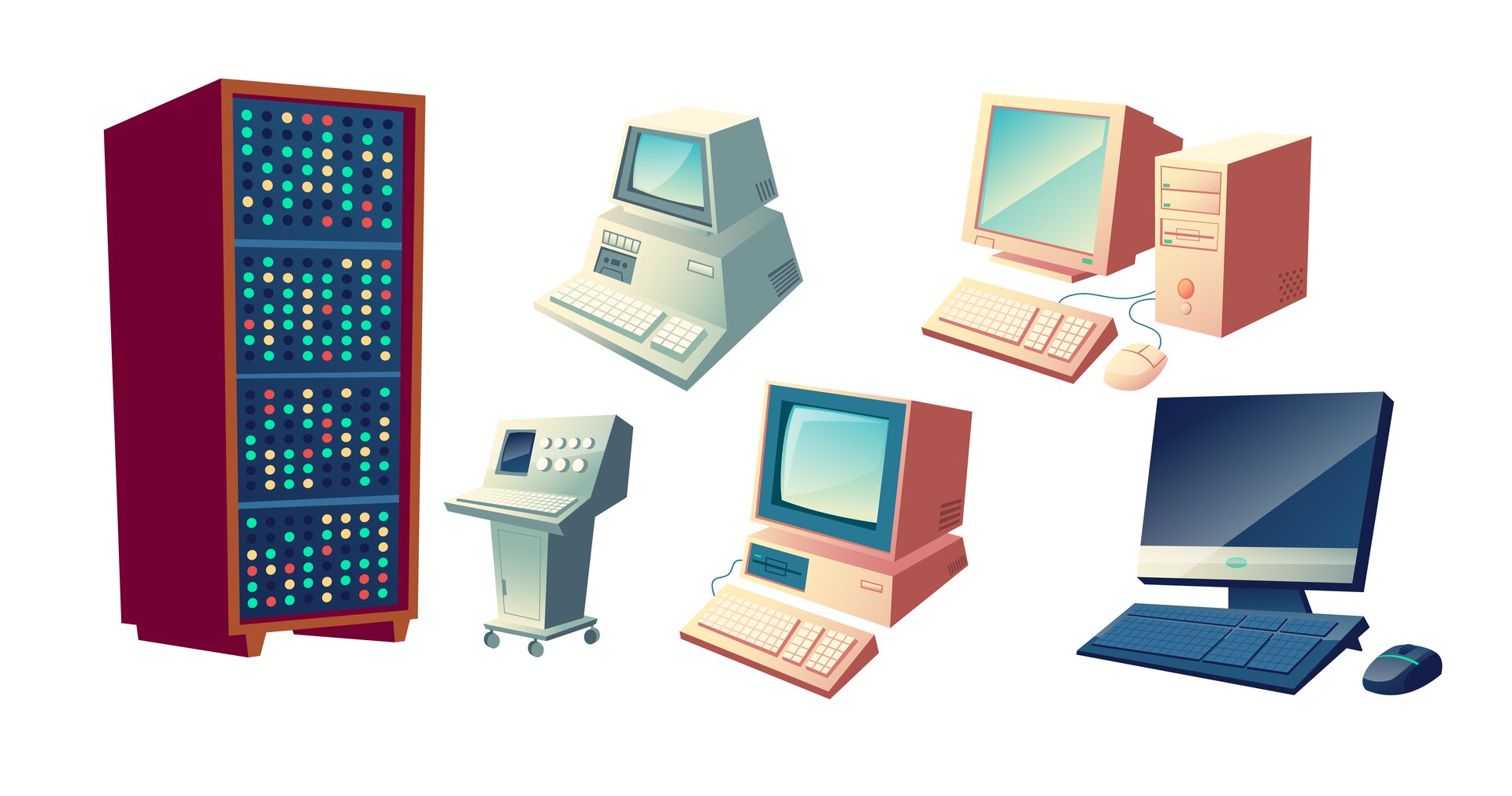
Digital HistoryCan abacusabacus or the early mechanical counting machines be called the first computers? It depends how you define a computer and hencehence the opinions about it are divided. Before we dive into the history of the most useful, as some say, invention in the history of mankind, let’s try to define what is and what isn’t a computer. The term computer comes from the Latin word computare, which means to calculate. Modern era computers are described as electronic deviceselectronic devices which can be programmed to accept inputs of raw dataaccept inputs of raw data, process it according to the built‑in instructionsbuilt‑in instructions, and produce certain outputproduce certain output. They also have memory to store the results ofstore the results of the operations for future use.
Charles Babbage is commonly considered to be the father of the computer. This English mathematician, philosopher, and engineer, born in 1791, first came up with the ideacame up with the idea of a calculating enginecalculating engine and laid outlaid out the mathematical and mechanical principlesprinciples which subsequently led to the creation of more and more complex computing machines. That was back in the mid‑nineteenth century.
Around the same time, in 1854 to be precise, another prominent figureprominent figure made an appearancemade an appearance on the computer science stage. George Boole was a self‑taughtself‑taught English mathematician and logician to whom we owe the foundations of the modern information age. What we call Boolean logic is a theory according to which everything can be represented by allocating a value of either 1 or 0 to bits, that is basic units of informationbasic units of information. That's the binary number systembinary number system which constitutes the basis of all computer science.
Fast forward to the mid‑twentieth century (although in the meantime there were many interesting and important inventions which definitely contributed tocontributed to the development of the science behind modern machines), First Generation Computers started to take uptake up a lot of space in people’s lives. Literally. They were huge, ran on vacuum tubesran on vacuum tubes, and generated large amounts of heat. Transporting them anywhere was not an option and they had extremely limited programming capabilities. They used punch cardspunch cards by means of which data was entered into those early computers. A card reader interpreted a sequence of holes in a card and converted it intoconverted it into digital information. It was costly, not very time‑efficient, and unreliable, so scientists spared no effort tospared no effort to further develop computer technology.
TransistorsTransistors started to replace the earlier solutions. From then on, everything started to become smaller, faster, and, however surprisingly it may sound, cheaper. Each subsequent generation of machines was also more energy‑efficient than its predecessor. The invention of semiconductorssemiconductors and integrated circuitsintegrated circuits was the breakthroughbreakthrough that caused unprecedented acceleration ofunprecedented acceleration of the development of computers. In 1965, Gordon Moore, an engineer, made a very significant statement. He predicted that computing power would double every two years while the cost of it would drop by half in the same period of time. It turned out to be a very accurate forecast for decades and is nowadays referred to as Moore’s law. Although chip densitychip density is no longer doubling every two years, it’s not true to say that the law is obsoleteobsolete. The pace of growthpace of growth is just slower.
The size and capacitycapacity of the devices we use nowadays, as well as their proliferationproliferation to every sphere of our lives, is a result of the semiconductor revolution. Although digitalisationdigitalisation of many services is far from complete in many parts of the world, people ask these days what the future holds. Are we going to transfer into virtual reality? Will quantum computersquantum computers replace our current devices? Or perhaps there are solutions we cannot conceive ofconceive of yet?
Źródło: Anna Posyniak‑Dutka, licencja: CC BY-SA 3.0.
a) there are different definitions of computers.
b) all electronic devices are computers.
c) only devices which can be used for counting can be called computers.
d) computers are as old as the Latin language.
2. What does computer science owe to Charles Babbage?
a) His sons invented modern computers.
b) He created the philosophical foundations of computer science.
c) He formulated numerical and engineering rules which gave
rise to computers.
d) He put forward the idea that computers should be used
for mathematical operations.
3. Which sentence is true about Boolean logic?
a) It can be interpreted in two different ways.
b) According to it, everything can be depicted using only two numbers,
that is 1 and 0.
c) It is the part of mathematics that George Boole taught himself.
d) Back in the mid-19th century it was a completely new way
of running calculations.
4. Which sentence is not true about First Generation Computers?
a) They were used for heating places.
b) They occupied lots of room.
c) They had no keyboards; data was entered by punching holes in cards.
d) It was impossible to move them from place to place.
5. What change did the invention of semiconductors and integrated circuits bring about to the computer world?
a) Smaller computers became slower than the big ones.
b) Engineers started making predictions about the future of computers.
c) People understood that they would have to pay more for computers.
d) It made things happen much faster than before.
6. Moore’s law
a) states that every two years there are twice as many computers on earth
as two years before.
b) is not valid any more.
c) for many years accurately described the pace at which
computing power increased.
d) described how many chips can fit into a computer.
Answer the questions below in 3–5 sentences.
According to the text, what is the definition of a computer?
How did Charles Babbage and George Boole contribute to computer science?
What is Moore’s law? Is it still valid nowadays?
Słownik
/ ˈæbəkəs /
liczydło
/ əkˈsept ˈɪnpʊts əv rɔː ˈdeɪtə /
przyjmować nieprzetworzone dane wejściowe
/ ˌbeɪsɪk ˈjuːnɪts əv ˌɪnfəˈmeɪʃn̩ / / ˌbeɪsɪk ˈjuːnɪt əv ˌɪnfəˈmeɪʃn̩ /
podstawowe jednostki informacji [podstawowa jednostka informacji]
/ ˈbaɪnəri ˈnʌmbər ˈsɪstəm /
dwójkowy system liczbowy
/ ˈbreɪkthetaruː /
przełom
/ bɪlt ˈɪn ɪnˈstrʌkʃn̩z / / bɪlt ˈɪn ɪnˈstrʌkʃn̩ /
wbudowane instrukcje [wbudowana instrukcja]
/ ˈkælkjʊleɪtɪŋ ˈendʒɪn /
maszyna licząca
/ ˈkeɪm ˈʌp wɪð ði aɪˈdɪə / / ˈkʌm ˈʌp wɪð ən aɪˈdɪə /
wpadł/wpadła na pomysł [wpaść na pomysł]
/ kəˈpæsɪti /
wydajność
/ tʃɪp ˈdensɪti /
zagęszczenie czipów
/ kənˈsiːv ɒv /
wyobrazić sobie
/ kənˈtrɪbjuːtɪd tuː / / kənˈtrɪbjuːt tuː /
wniósł/wniosła wkład w [wnieść wkład w]
/ kənˈvɜːtɪd ˈɪt ˈɪntə / / kənˈvɜːt ˈsʌmthetaɪŋ ˈɪntə ˈsʌmthetaɪŋ /
zamieniał/zamieniała to w [zamieniać coś w coś]
/ ˌdɪdʒɪtəlʌɪˈzeɪʃn /
cyfryzacja
/ ˌɪlekˈtrɒnɪk dɪˈvaɪsɪz / / ˌɪlekˈtrɒnɪk dɪˈvaɪs /
urządzenia elektroniczne [urządzenie elektroniczne]
/ hens /
z tego powodu
/ ˈɪntɪɡreɪtɪd ˈsɜːkɪts / / ˈɪntɪɡreɪtɪd ˈsɜːkɪt /
układy scalone [układ scalony]
/ leɪd ˈaʊt / / ˈleɪ aʊt /
przedstawił/przedstawiła [przedstawić]
/ ˈmeɪd ən əˈpɪərəns / / ˈmeɪk æn əˈpɪərəns /
pojawił/pojawiła się [pojawić się]
/ ˈɒbsəliːt /
przestarzały/przestarzała
/ peɪs əv ɡrəʊtheta /
tempo wzrostu
/ ˈprɪnsəpl̩z / / ˈprɪnsəpl̩ /
zasady [zasada]
/ prəˈdjuːs ˈsɜːtn̩ ˈaʊtpʊt /
produkować dane wyjściowe
/ prəˌlɪfəˈreɪʃn̩ /
rozprzestrzenianie
/ ˈprɒmɪnənt ˈfɪɡə /
ważna osoba
/ ˈpʌntʃ kɑːdz / / ˈpʌntʃ kɑːd /
karty perforowane [karta perforowana] (nośnik danych używany do programowania komputerów do lat 80. XX wieku)
/ ˈkwɒntəm kəmˈpjuːtəz / / ˈkwɒntəm kəmˈpjuːtə /
komputery kwantowe [komputer kwantowy]
/ ræn ˈɒn ˈvækjʊəm tjuːbz / / ˈrʌn ˈɒn ˈvækjʊəm tjuːbz /
działały na bazie lamp próżniowych [działać na bazie lamp próżniowych]
/ self tɔːt /
samouk
/ ˌsemɪkənˈdʌktəz / / ˌsemɪkənˈdʌktə /
półprzewodniki [półprzewodnik]
/ speəd ˈnəʊ ˈefət tuː / / ˈspeə ˈnəʊ ˈefət tuː /
nie szczędzili/szczędziły wysiłku, żeby [nie szczędzić wysiłku, żeby]
/ stɔː ðə rɪˈzʌlts ɒv / / stɔː ðə rɪˈzʌlt ɒv /
przechowywać rezultaty [przechowywać rezultat]
/ ˈteɪk ˈʌp /
zajmować miejsce
/ trænˈzɪstəz / / trænˈzɪstə /
tranzystory [tranzystor]
/ ʌnˈpresɪdentɪd əkˌseləˈreɪʃn̩ ɒv /
bezprecedensowe przyspieszenie
Źródło: GroMar Sp. z o.o., licencja: CC BY‑SA 3.0