Przeczytaj
Although tsunami waves are sometimes referred to as tidal waves, the only thing these two have in common is the fact that they occur in the ocean. Besides that, the mechanism of formation of tsunamis is quite different from tidal waves. Tsunamis are as spectacular as deadly. The power with which they can hit the coasts causes damage that cannot be compared to anything else. Learn more about this incredible force of nature.
Fale wywołane przez tsunami są czasami nazywane falami pływowymi, jednak jedyną rzeczą, która łączy te dwa zjawiska, jest to, że oba powstają na oceanie. Poza tym elementem mechanizmy ich powstawania są zupełnie różne. Tsunami są zarazem i spektakularne, i śmiercionośne. Siłę, z jaką uderzają w wybrzeża, trudno porównać z czymkolwiek innym. Dowiedz się więcej o tym niezwykłym zjawisku natury.
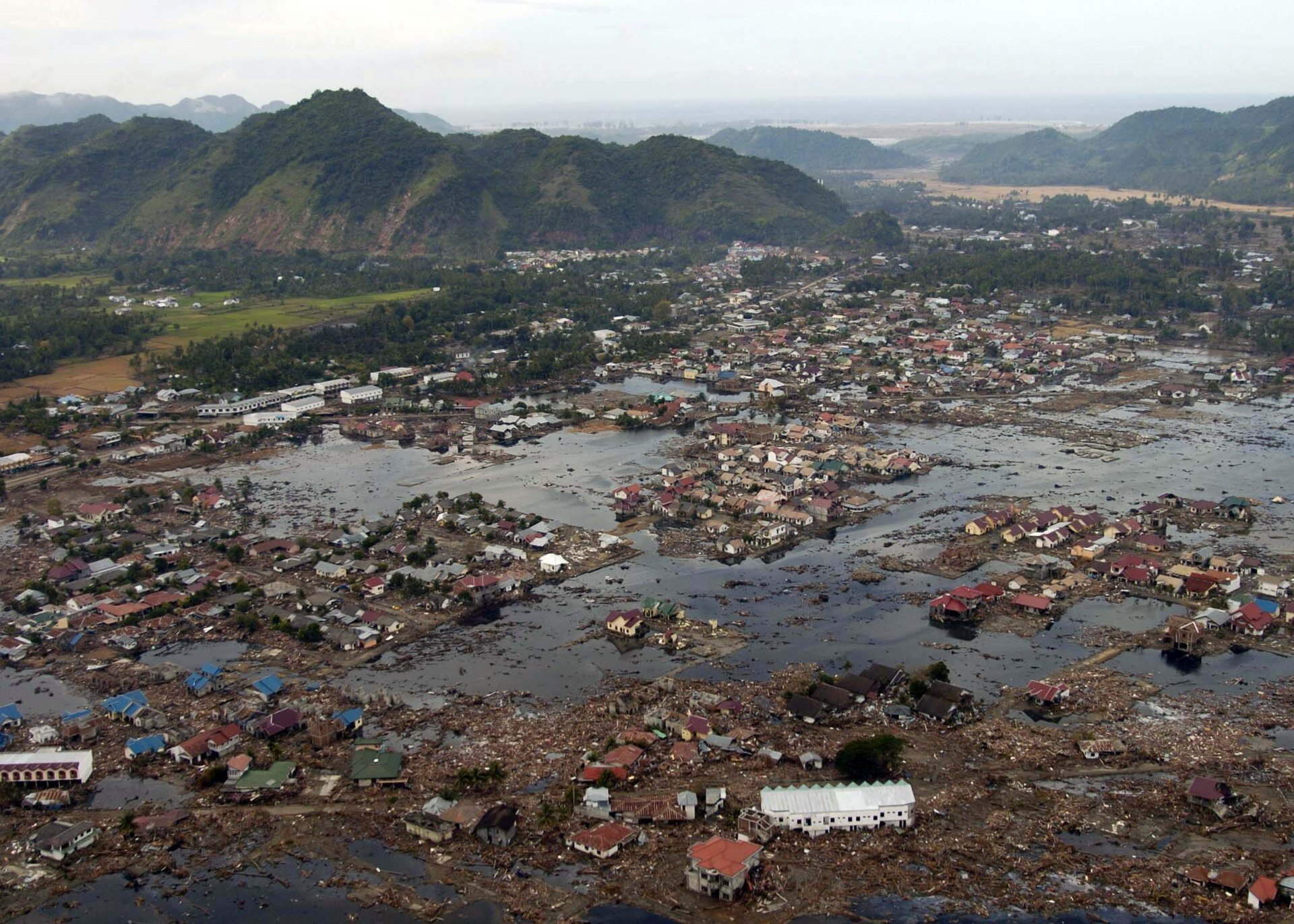
TrueFalse
2. The name tsunami comes from the Japanese language.
TrueFalse
3. Tsunamis can capsize ships many kilometres away from the coast.
TrueFalse
4. The Pacific Ocean is the most active tsunami region.
TrueFalse
5. A tsunami can travel as fast as a jet aeroplane.
TrueFalse
Read the text and do the exercises below.
Tsunami
The Name
Nowadays we know quite a lot about the mechanisms behind the formation of tsunami wavestsunami waves, but the name of the phenomenon was coinedcoined at the time when people had no means to track down the origin of natural events. However, it’s only fair to say that the name tsunami, which means harbour wave, hasn’t lost its adequacy. We know now that tsunami waves are barely noticeablebarely noticeable on the high seashigh seas, while their staggering potencystaggering potency can cause catastrophic damage on the coast.
Mechanism of Creation
Tsunami waves are caused by a number of natural phenomena. Among them there are earthquakes on the ocean’s floorearthquakes on the ocean’s floor, eruptions of underwater volcanoeseruptions of underwater volcanoes, submarine landslidessubmarine landslides, and meteorite hitsmeteorite hits. It’s worth mentioning that tsunamis can also be triggeredtriggered by human activity. Nuclear testing programmesNuclear testing programmes, during which underwater explosions were carried out, caused tsunamis at Bikini Atoll in 1946 and at Mururoa Atoll in 1970. What do these natural phenomena and nuclear blastsnuclear blasts have in common to create giant destructive waves? The answer is quite simple: it’s a generated impulse. All of these events release huge amounts of energyrelease huge amounts of energy which displaces enormous masses of waterdisplaces enormous masses of water. The energy pushes water up to the surface and further above the ocean level where gravity pulls it down again. That breaks the mass of water into waves and the tsunami comes into existencecomes into existence.
Characteristics
Tsunamis are most common in the basin of the Pacific Ocean. In the open ocean, tsunami waves are not only hard to spot but also rather harmlessharmless. Nevertheless, they still have huge proportions and can travel at incredible speeds. They can reach above 500 mph, which is almost 900 kmh. The waves can be hundreds of kilometres long, but their height at this point is hardly ever bigger than a couple of dozen centimetres. When the waves approach the land, frictionfriction with the rising sea bottom makes them slow down. That in turn increases the waves’ amplitudeswaves’ amplitudes. The waves that hit the land can be as high as a couple of dozen metres. The highest tsunami wave ever recorded was 524 metres high and occured in the Lituya Bay in Alaska in 1958.
The Impact
Sometimes before the main wave hits the land, the water will withdrawwithdraw farther than normal. It’s definitely a sign that should warn people in close proximityin close proximity to the coast. It might be just enough time to escape to a higher land. Depending on the potencypotency of the wave and the terrain it enters, a tsunami can flood an area many miles inside the land. It will drown people and animals, level houseslevel houses, uproot treesuproot trees, and damage everything else on its way. What’s more, the water will retreatretreat, carrying with it all newly created debrisdebris and causing further damage.
Prevention and Protection
Countries frequently affected by tsunamis make efforts to monitor and detect any events that can potentially lead to the formation of tsunami waves. They issue alertsissue alerts and evacuate people who are most likely to be in danger of losing their lives. Some countries, such as Japan, construct special seawallsseawalls and flood gatesflood gates which are expected to lessen the impact oflessen the impact of an approaching wave before it reaches the coast. Another solution is channels, the purpose of which is to divert incoming and outflowing water surgedivert incoming and outflowing water surge saving the infrastructure from being inundatedinundated. Unfortunately, as the incident from 2011 shows, it’s not always effective.
Źródło: Anna Posyniak‑Dutka, licencja: CC BY-SA 3.0.
a) was created by people who knew a lot about the creation of waves.
b) was created by someone who was paid money for it.
c) still accurately depicts the nature of this phenomenon.
d) has changed its meaning over time.
2. Tsunami waves
a) are only caused by natural phenomena.
b) are initiated by displaced water masses.
c) only occur near atols.
d) are triggered by energy which comes from various events.
3. In the open ocean
a) tsunami waves are almost undetectable.
b) friction accelerated tsunami waves.
c) tsunami waves are higher than near the coast.
d) tsunami waves’ amplitudes fluctuate.
4. If water suddenly disappears from the beach,
a) it’s a great opportunity to explore the sea bottom.
b) people should evacuate as quickly as possible.
c) it means the area is safe.
d) it indicates the tsunami is already over.
5. Which solution is NOT used to protect people and lands from tsunamis?
a) Warnings based on observations of natural phenomena
b) Man-made constructions
c) Canals directing water away from people’s habitats
d) Systems monitoring nuclear events
Answer the questions in 3–4 sentences each.
Where and how was the word “tsunami” coined?
What can cause a tsunami?
How do people try to protect themselves from tsunami waves?
Słownik
/ ˈbeəli ˈnəʊtɪsəbl̩ /
niemal niedostrzegalny/niedostrzegalna (almost impossible to spot)
/ kɔɪnd / / kɔɪn /
wynaleziony/wynaleziona, wymyślony/wymyślona (nowy wyraz, nazwę) (to create a new word to name sth)
/ ˈkʌmz ˈɪntə ɪɡˈzɪstəns / / ˈkʌm ˈɪntə ɪɡˈzɪstəns /
powstaje [powstać] (to start to exist, to be created)
/ de'bri: /
szczątki, ruiny (the scattered remains of something that has been destroyed)
/ dɪsˈpleɪsɪz ɪˈnɔːməs ˈmæsɪz əv ˈwɔːtə / / dɪsˈpleɪs ɪˈnɔːməs ˌmæs əv ˈwɔːtə /
przemieszcza ogromne masy wody [przemieścić ogromną masę wody] (to force a huge amount of water from one place to another)
/ daɪˈvɜːt ˌɪnˈkʌmɪŋ ənd aʊtˈfləʊɪŋ ˈwɔːtə sɜːdʒ /
zmienić bieg napływajacej i odpływającej wody (to change the route along which water flows in and out of somewhere)
/ ˈɜːthetakweɪks ˈɒn ði ˈoʃənz flɔː / / ˈɜːthetakweɪk ˈɒn ði ˈoʃənz flɔː /
trzęsienia ziemi na dnie oceanu [trzęsienie ziemi na dnie oceanu] (the shaking of the ground which happens at the bottom of the ocean)
/ ɪˈrʌpʃn̩z əv ˈʌndəwɔːtə vɒlˈkeɪnəʊz / / ɪˈrʌpʃn̩z əv ənˈʌndəwɔːtə vɒlˈkeɪnəʊ /
wybuchy podwodnych wulkanów [wybuch podwodnego wulkanu] (a volcano exploding underwater)
/ flʌd ɡeɪts / / flʌd ɡeɪt /
śluzy przeciwpowodziowe [śluza przeciwpowodziowa](a gate which is used for controlling the flow of water)
/ ˈfrɪkʃn̩ /
tarcie (the rubbing between two objects that move touching each other)
/ ˈhɑːmləs /
nieszkodliwy/nieszkodliwa (not causing any harm)
/ ˌhaɪ siːz /
pełne morze (the sea far away from any land)
/ ɪn kləʊs prɒkˈsɪmɪti /
w bliskim sąsiedztwie (near sth)
/ ɪmˈpækt /
impakt, siła uderzenia (the action of one object coming forcibly into contact with another)
/ ˈɪnʌndeɪtɪd / / ˈɪnʌndeɪt /
zalany/zalana [zalać] (to flood)
/ ˈɪʃuː əˈlɜːts / / ˈɪʃuː ən əˈlɜːt /
wydać ostrzeżenia [wydać ostrzeżenie] (to officially warn sb)
/ ˈlesn̩ ði ɪmˈpækt ɒv /
zmniejszyć impakt, siłę uderzenia czegoś (to make something have a milder effect than initially)
/ levl ˈhaʊzɪz / / levl ə ˈhaʊs /
zrównuje z ziemią domy [zrównać z ziemią dom] (to flatten a house, to destroy a house completely)
/ ˈmeɪdʒə ˈnjuːklɪər ˈæksɪdənt /
poważny wypadek atomowy (an accidental nuclear explosion)
/ ˈmiːtɪəraɪt hɪts / / ˈmiːtɪəraɪt hɪt /
uderzenia meteorytów [uderzenie meteorytu](a phenomenon when a piece of rock flying through space hits Earth)
/ ˈnjuːklɪə blɑːsts / / ˈnjuːklɪə blɑːst /
wybuchy atomowe [wybuch atomowy] (a nuclear explosion)
/ ˈnjuːklɪə ˈtestɪŋ ˈprəʊɡræmz / / ˈnjuːklɪə ˈtestɪŋ ˈprəʊɡræm /
programy prób atomowych [program prób atomowych] (a programme in which trial nuclear explosions are carried out)
/ ˈpəʊtnsi /
moc (the power of sth)
/ rɪˈliːs hjuːdʒ əˈmaʊnts əv ˈenədʒi / / rɪˈliːs hjuːdʒ əˈmaʊnt əv ˈenədʒi /
uwalniają ogromne ilości energii [uwalniać ogromną ilość energii] (to set a huge amount of energy free)
/ rɪˈtriːt /
wycofać się (to move back, to withdraw)
/ ˈsiːˈwɔːls / / ˈsiːˈwɔːl /
opaski brzegowe [opaska brzegowa] (a wall built near the coast to protect it from waves)
/ ˈstæɡərɪŋ ˈpəʊtnsi /
olbrzymia siła (a huge power)
/ ˌsʌbməˈriːn ˈlændslaɪdz / / ˌsʌbməˈriːn ˈlændslaɪd /
podwodne osuwiska [podwodne osuwisko] (collapse of soil or stones from a mountain which happens underwater)
/ ˈtrɪɡəd / / ˈtrɪɡə /
wywołany/wywołana [wywołać] (to cause to happen, to initiate sth)
/ tsuːˈnɑːmi weɪvz / / tsuːˈnɑːmi weɪv /
fale tsunami [fala tsunami] (a wave caused by an underwater movement of the ground)
/ ˌʌpˈruːt triːz / / ˌʌpˈruːt ə triː /
wyrywa drzewa z korzeniami [wyrwać drzewo z korzeniami] (to remove a tree from the ground together with its roots)
/ weɪvz ˈæmplɪtjuːdz / / weɪvz ˈæmplɪtjuːd /
amplitudy fal [amplituda fali] (height of a wave)
/ wɪðˈdrɔː /
wycofać się (to move back)
Źródło: GroMar Sp. z o.o., licencja: CC BY‑SA 3.0