Przeczytaj
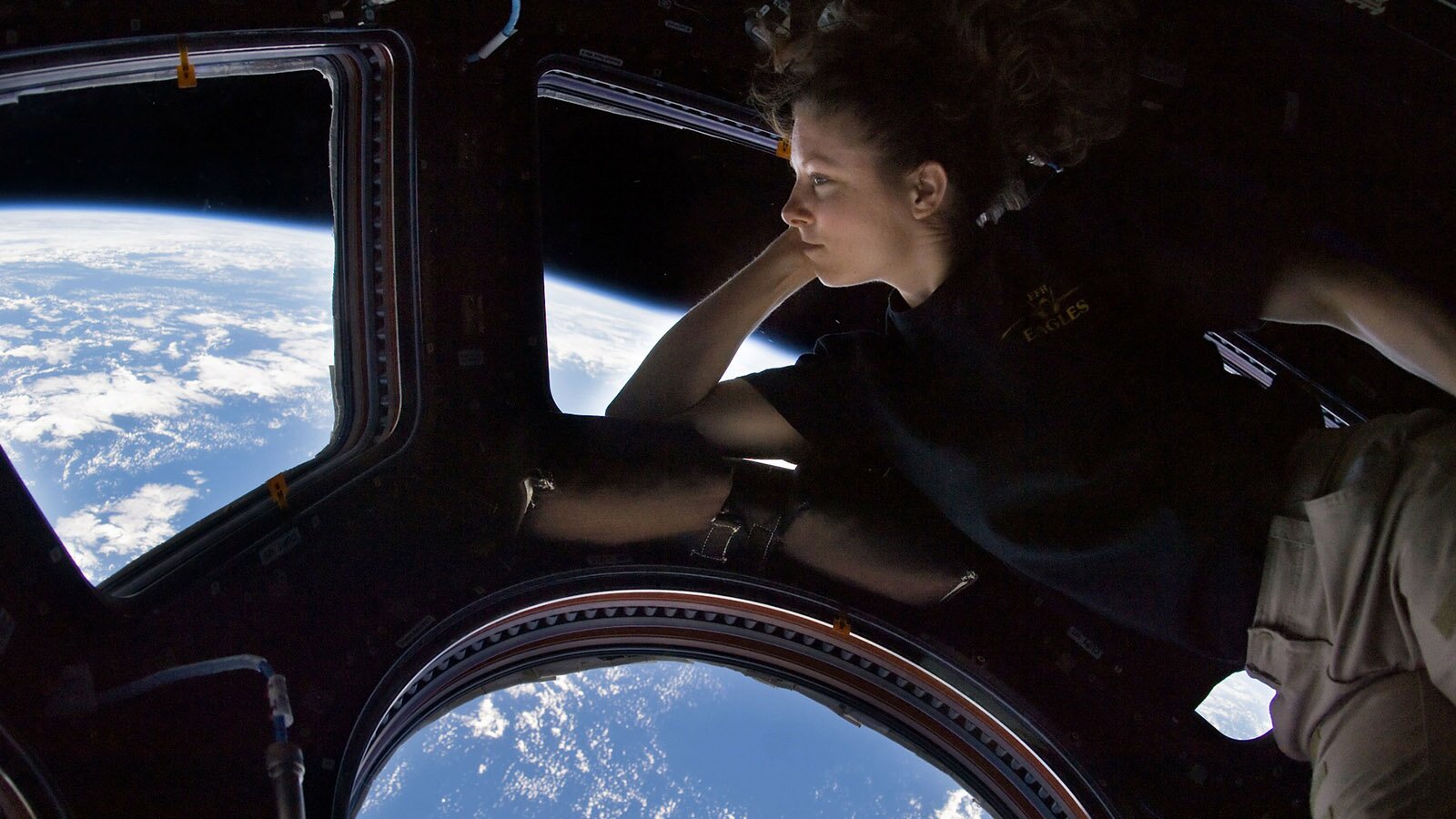
The picture below depicts an astronaut admiring the view from a space shuttle. Did you know that we have been visiting space for only about 60 years now? In this section you are going to read a text about space tourism, a new form of tourism gaining popularity nowadays. Do you think it will ever be available to common people?
Poniższe zdjęcie przedstawia astronautkę podziwiającą widok z promu kosmicznego. Czy wiesz, że latamy w kosmos dopiero od około 60 lat? W tej sekcji przeczytasz tekst dotyczący turystyki kosmicznej – nowej formy podróżowania, która obecnie zdobywa popularność. Czy sądzisz, że będzie ona kiedykolwiek dostępna dla zwykłych ludzi?
Read the text to learn some facts about space tourism.
One Return To The Moon, PleaseSpace tourism is a niche segment of the aviation industryaviation industry, which has been on the rise in recent years. It offers tourists an opportunity to experience space travel and become astronauts, if only for a short time. According to some sources, such as the Space Tourism Guide, it may also include activities we can do here on Earth, such as watching a rocket launchrocket launch, going stargazing, or travelling to a space‑focused destination. Generally, however, the meaning of the term involves leaving the planet. There are three types of this form of tourism: orbital tourismorbital tourism, suborbital tourismsuborbital tourism, and lunar space tourismlunar space tourism.
The differences lie mainly in the speed, length, and destination. When you take an orbital flight, the spacecraftspacecraft must achieve orbital velocityorbital velocity, that is the speed an object must keep in order to stay in orbitstay in orbit around a planet. Such a flight is technically extremely complex, so as a result it is very expensive (from $55 million up) and usually lasts several days, a week, or even longer. Suborbital flight, in contrast, requires much lower speeds, as it never makes it into orbit. It’s merelymerely a leapleap to a certain height and then a return to the ground. Consequently, such flights are cheaper (between $125,000 and $300,000) and usually last only a couple of hours. Even though the flight is relatively short, passengers in a suborbital spacecraft are able to experience a few minutes of weightlessnessweightlessness when they are at the top of their flight arc. Lunar space tourism obviously involves tourist flights to the moon and back, but for the time being, it is still at the stage of planning. This would be the most expensive type (around $150 million for a seat), but at the same time it may pay offpay off tremendously. However, the first commercial flight around the moon and the first return to the moon by humans since the last Apollo mission in 1972 are yet to happen.
Since 1961, when the first man travelled into space, less than 600 people have done so too. This number is likely to increase rapidly in the near future, as space tourism becomes commonplacecommonplace and more and more people can afford to travel into space. At present, the major companies offering or planning tourist flights to space are: Virgin Galactic, Blue Origin, SpaceX, Boeing, Axiom Space and Space Perspective. While the first two concentrate on suborbital flights, Axiom and Boeing are preparing projects connected to orbital missions, and SpaceX founder Elon Musk famously has his sights set onhas his sights set on Mars.
What drives people to pay exorbitant pricesexorbitant prices for the seats aboard a spacecraft? There are many reasons, but the most often cited motivational factor behind space tourism is to experience the vision of Earth from space and see what a zero‑gravity statezero‑gravity state feels like. Some people have this unique experience on their bucket listbucket list or want to experience super high speed travel, but there are also those for whom scientific contribution is important. Many scientists are excited at the prospect of using commercial suborbital vehicles for microgravity researchmicrogravity research. Such tests would be far less expensive than sending experiments and people to the International Space Station onboard a space shuttlespace shuttle.
With a steadily growing interest in space tourism, this area is soon expected to become a multimillion dollar industry. At the moment, it is a part of adventure tourismadventure tourism, but it will continue to develop as it increasingly becomes economically affordable. However, the realisation of this projected expansionprojected expansion will heavily depend on the safety of the flights.
Źródło: Agnieszka Sękiewicz‑Magoń , licencja: CC BY-SA 3.0.
Answer the questions in 2–3 sentences.
What do you think of the idea of travelling into space as a tourist?
Which of the three types of space tourism seems the most attractive to you and why?
Do you think that space tourism will soon become economically affordable? Why? Why not?
Słownik
/ ədˈventʃə ˈtʊərɪzəm /
turystyka przygodowa (a type of tourism involving travel to remote or exotic locations in order to take part in physically challenging outdoor activities)
/ ˌeɪviˈeɪʃn̩ ˈɪndəstri /
przemysł lotniczy (the business sector dedicated to manufacturing and operating all types of aircraft)
/ ˈbʌkɪt lɪst /
lista rzeczy do zrobienia w ciągu życia (a list of experiences or achievements that a person wants to have before they die)
/ ˈkɒmənpleɪs /
powszechny/powszechna (ordinary)
/ ɪɡˈzɔːbɪtənt ˈpraɪsɪz / / ɪɡˈzɔːbɪtənt praɪs /
wygórowane ceny [wygórowana cena] (extremely high prices)
/ ˈhæz ɪz saɪts set ɒn / / həv wʌnz saɪts set ɒn /
mierzy wzrokiem, kieruje wzrok ku [mierzyć wzrokiem, kierować wzrok ku] (to decide on a goal that you want to achieve or something you want to have)
/ liːp /
skok, sus (a forceful jump)
/ ˈluːnə speɪs ˈtʊərɪzəm /
turystyka księżycowa (type of tourism aimed to offer trips to the moon)
/ ˈmɪəli /
zaledwie, jedynie (just; only)
/ ˈmʌɪkrəʊˌɡravɪti rɪˈsɜːtʃ /
badania dotyczące mikrograwitacji (research on the condition in which people or objects appear to be weightless)
/ ˈɔːbɪtl̩ ˈtʊərɪzəm /
turystyka orbitalna (type of tourism with flights involving days or weeks in orbit)
/ ˈɔːbɪtl̩ vəˈlɒsɪti /
prędkość orbitalna (the speed required to achieve orbit around a celestial body)
/ ˈpeɪ ɒf /
opłacić się (yield good results; succeed)
/ prəˈdʒektɪd ɪkˈspænʃn̩ /
prognozowany rozwój, ekspansja (estimated growth)
/ ˈrɒkɪt lɔːntʃ /
wystrzelenie rakiety (the act of propelling the rocket with force; blastoff, shot)
/ ˈspeɪskrɑːft /
statek kosmiczny (a vehicle used for travelling in space)
/ speɪs ˈʃʌtl̩ /
prom kosmiczny (a rocket‑launched spacecraft able to land like an unpowered aircraft, used to make repeated journeys between the earth and space)
/ ˈsteɪ ɪn ˈɔːbɪt /
pozostać na orbicie (to be in orbit)
/ ˌsʌbˈɔːbɪtl̩ ˈtʊərɪzəm /
turystyka suborbitalna (type of tourism with flights reaching an altitude of about 100 kilometres)
/ ˈweɪtləsnəs /
nieważkość (condition experienced while in free‑fall, in which the effect of gravity is cancelled by the inertial force resulting from orbital flight)
/ ˈzɪərəʊˌɡrævɪtɪ steɪt /
stan nieważkości (the state or condition of lacking apparent gravitational pull)