Przeczytaj
Read the text to find out about Oxford and Cambridge universities.
Przeczytaj tekst, aby dowiedzieć się więcej o uniwersytetach w Oksfordzie i Cambridge.
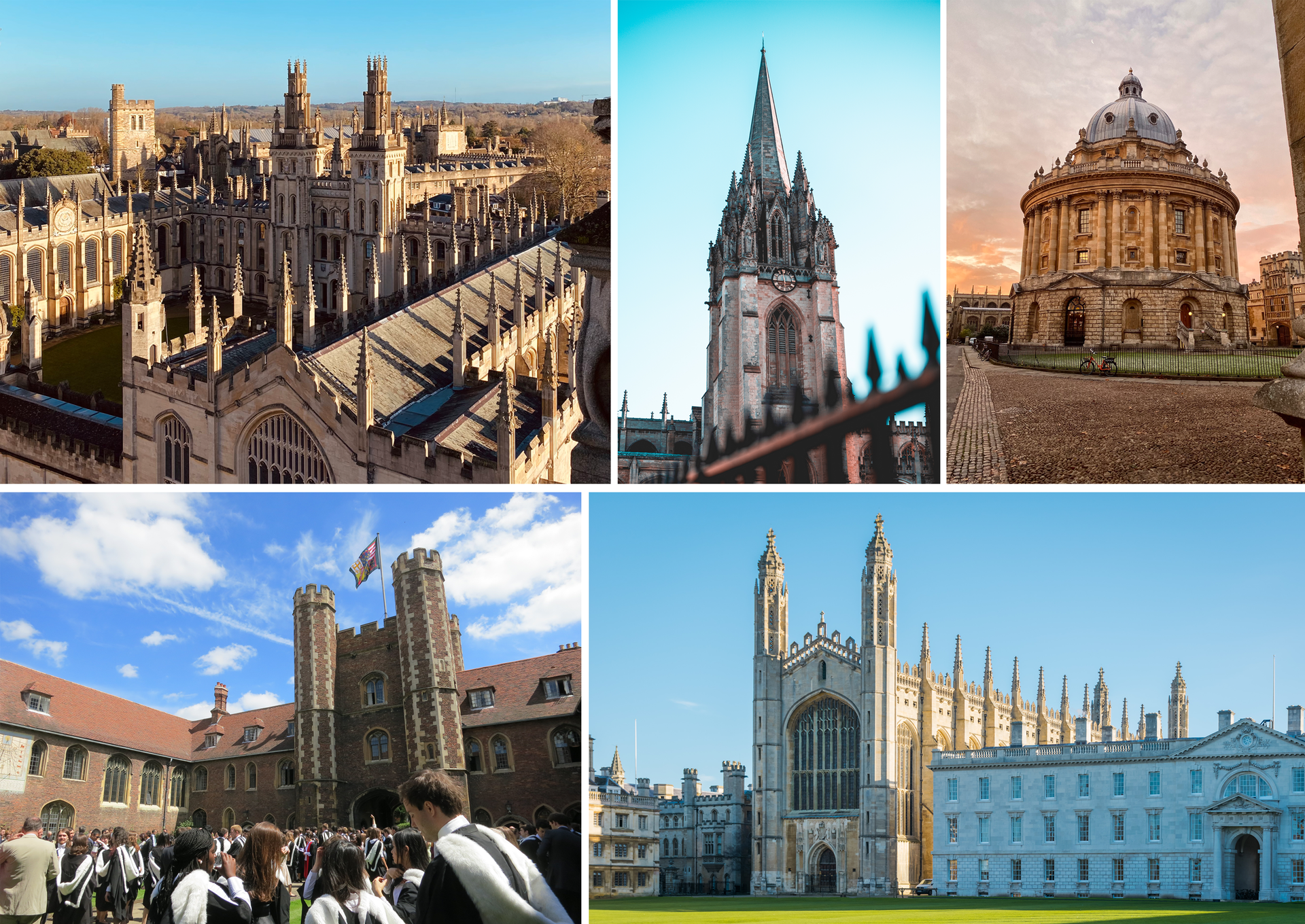
Drag the following phrases to match them with their translation.
Przeciągnij poniższe wyrazy, łącząc je z ich tłumaczeniami.
Oxbridge1.
Do you know anyone who has been to Oxbridge? If your answer is “no”, you have nothing to worry about because there is no such a town on the map of England! The name Oxbridge should sound familiarfamiliar, though. This termterm is a combination of Oxford and Cambridge, the UK’s most famous and renownedrenowned universities. Both of them are among the top ten universities in the world and have many centuriescenturies of tradition. By saying Oxbridge, we mean the highest quality education, history and unique atmosphere of the two ancientancient cities.
2.
Oxford and Cambridge are both made up of colleges. These are separate sections or academic communitiescommunities of each university or, as students like to say, uniuni. Colleges have traditional names, such as Trinity College in Cambridge or Christ Church in Oxford, and are located in beautiful historic buildings. Each college has its own student accommodationaccommodation, dining hallsdining halls, common roomscommon rooms, libraries and many other facilitiesfacilities for students. Most colleges have about 300‑500 students at a time but they focus on teaching in very small groups. Teachers in these groups are called tutorstutors. Tutors are very often well‑known professors famous for their books and discoveries. The lectureslectures, classes or one‑to‑one sessionsone‑to‑one sessions given by tutors are called tutorialstutorials in Oxford and supervisions in Cambridge.
3.
Some colleges are as old as 700 years and they have their own peculiarpeculiar customscustoms. At special ceremonies, such as graduationgraduation or formal dinners, students and tutors use LatinLatin and wear traditional uniforms called gownsgowns. Oxford students may wear a flower pinned to their gowns — a white carnationcarnation for their first examexam, a red one for the last exam and pink for all the other ones. Students and tutors often use special words that may not be understood outside their community.
4.
Oxbridge students feel proud of their colleges and very often competecompete with each other in different sport disciplines. The most famous Oxbridge sports event is the Boat Race — an annualannual set of rowingrowing racesraces between Cambridge University and Oxford University boat clubs. The races are usually held on the River Thames in London. There are eight rowersrowers in each boat. Members of each team are traditionally known as “blues”. Cambridge boats are light blue and Oxford boats are dark blue. It is a great honourhonour to be a “blue” and represent your college and university during the races.
5.
Both Oxford and Cambridge students have a great opportunity to enjoy prestigiousprestigious sporting events and have a rich social life but most of all they are offered the best education in the world. Many famous Nobel Prize winners, politicians, scientists or writers are Oxbridge graduatesgraduates. J.R.R. Tolkien, the author of “Hobbit” and the “Lord of the Rings” was a student and professor at Oxford while Sir Isaac Newton graduated fromgraduated from Cambridge. Luckily, studying at Oxbridge is not just an option for the world’s upper classesupper classes. Both universities are open to giftedgifted and hardworking young people from all over the world and there are many scholarshipscholarship programs for the less well‑offwell‑off.
Źródło: Anna Lech, licencja: CC BY-SA 3.0.
Read the text and decide which title is the best for each paragraph.
Drag and drop the paragraph titles to match them with paragraph numbers 1–5. There is one extra title you don’t need.
Przeczytaj tekst i dobierz do każdego akapitu właściwy tytuł, przeciągając go w luki oznaczone numerami 1–5. Jeden tytuł został podany dodatkowo.
2. 1. Unusual traditions, 2. Where is Oxbridge?, 3. Oxbridge students now and then, 4. How is it organised?, 5. Old universities, 6. On the river
3. 1. Unusual traditions, 2. Where is Oxbridge?, 3. Oxbridge students now and then, 4. How is it organised?, 5. Old universities, 6. On the river
4. 1. Unusual traditions, 2. Where is Oxbridge?, 3. Oxbridge students now and then, 4. How is it organised?, 5. Old universities, 6. On the river
5. 1. Unusual traditions, 2. Where is Oxbridge?, 3. Oxbridge students now and then, 4. How is it organised?, 5. Old universities, 6. On the river
Read the sentences below and choose the correct answers.
Przeczytaj zdania i wybierz prawidłowe odpowiedzi.
- Oxbridge is a town in England a special name for two universities.
- Teachers at Oxbridge are called tutors tutorials.
- Some Oxbridge words are unusual in old English.
- Gowns are flowers uniforms.
- International students Only English students can study at Oxbridge.
Drag and drop the expressions to the correct category.
Przeciągnij wyrażenia do odpowiednich kategorii.
Answer the questions. Your answers should be one or two sentences long.
Odpowiedz na poniższe pytania. Każda odpowiedź powinna mieć długość 1–2 zdań.
What university facilities can students use?
Who are Oxbridge tutors?
Who are Oxbridge graduates?
Słownik
/ əˌkɒməˈdeɪʃn̩ /
zakwaterowanie
/ ˈeɪnʃənt /
starożytny/starożytna
/ ˈænjuəl /
coroczny/coroczna
/ kɑːˈneɪʃn̩ /
goździk
/ ˈsentʃəri / / ˈsentʃərɪz /
wiek [wieki]
/ ˈkɒmən ru:mz / / ˈkɒmən ru:m /
świetlice [świetlica]
/ kəˈmjuːnɪtɪz / / kəˈmjuːnɪti /
społeczności [społeczność]
/ kəmˈpiːt /
współzawodniczyć
/ ˈkʌstəmz / / ˈkʌstəm /
zwyczaje [zwyczaj]
/ ˈdaɪnɪŋ hɔːlz / / ˈdaɪnɪŋ hɔːl /
jadalnie [jadalnia]
/ ɪɡˈzæm /
egzamin
/ fəˈsɪlɪtɪz / / fəˈsɪlɪti /
obiekty [obiekt]
/ fəˈmɪlɪə /
znajomy/znajoma
/ ˈɡɪftɪd /
utalentowany/utalentowana
/ ɡaʊnz / / ɡaʊn /
togi [toga]
/ ˈɡrædʒʊeɪtɪd frɒm / / ˈɡrædʒʊeɪt frɒm /
ukończył/ukończyła szkołę, uniwersytet
/ ˈɡrædʒʊəts / / ˈɡrædʒʊət /
absolwenci [absolwent/absolwentka]
/ ˌɡrædʒʊˈeɪʃn̩ /
ukończenie studiów
/ ˈɒnə /
honor, zaszczyt
/ ˈlætɪn /
łacina
/ ˈlektʃəz / / ˈlektʃə /
wykłady [wykład]
/ ˌwʌntəˈwʌn ˈseʃn̩z / / ˌwʌntəˈwʌn ˈseʃn̩ /
sesje indywidualne [sesja indywidualna]
/ pɪˈkjuːlɪə /
dziwaczny/dziwaczna
/ preˈstɪdʒəs /
prestiżowy/prestiżowa
/ ˈreɪsɪz / / reɪs /
wyścigi [wyścig]
/ rɪˈnaʊnd /
uznany/uznana, z reputacją
/ ˈrəʊəz / / ˈrəʊə /
wioślarze [wioślarz/wioślarka]
/ ˈrəʊɪŋ /
wioślarstwo
/ ˈskɒləʃɪp /
stypendium
/ tɜːm /
termin
/ tjuːˈtɔːrɪəlz / / tjuːˈtɔːrɪəl /
zajęcia
/ ˈtjuːtəz / / ˈtjuːtə /
nauczyciele, mentorzy [nauczyciel/nauczycielka, mentor/mentorka]
/ ˈjuːni /
uniwerek (potocznie o uniwersytecie)
/ ˈʌpə ˈklɑːsɪz /
klasy wyższe [klasa wyższa]
/ wel ɒf /
zamożny/zamożna